
Conference paper·Archaeological Research Unit - University of Cyprus·2017·In Greek
Innovative Educational Programmes in Museums: The Ministry of Education and the Leventis Municipal Museum
Μουσειακή αγωγή: Καινοτόμος δράση του Υπουργείου Παιδείας και Πολιτισμού
Tereza Lambrianou and Jenny Lymperopoulou
Chapters
About the video
This talk, given in Greek, presents two papers from the second part of a study day on educational programmes in museums, research institutions and cultural organisations in Cyprus.
Tereza Lambrianou, President of the Museum Education Committee of the Ministry of Education and Culture, outlines the primary school museum education programmes operated by the Ministry since 1996 in partnership with the Department of Antiquities, municipal and private museums, and public art galleries. She describes the three-stage pedagogical structure of preparation in the classroom, active group work in the museum, and follow-up creative work at school. She then surveys the fourteen history and archaeology programmes and the visual arts programmes run across Cyprus, covering subjects from Chalcolithic figurines at Lemba, the cult of Aphrodite at Palaepaphos, and ancient symposia at Kition, to medieval Nicosia, the Kyrenia shipwreck, Byzantine icons and the Kanakaria mosaics at the Archbishop Makarios III Foundation, and twentieth-century Cypriot painters. In the discussion that follows, participants raise the extension of museum visits into secondary schools, the approval procedure for independent museum programmes such as those of the Centre of Visual Arts and Research, and the need for closer collaboration between the Ministry and archaeologists at the University of Cyprus.
In the second paper, Jenny Lymperopoulou, educational programmes officer at the Leventis Municipal Museum of Nicosia, reviews the museum's educational work since its founding in 1989. She describes activities designed for adults, school groups and families, including workshops on traditional weaving, Lapithos glazed pottery, and printed headscarves, as well as self-guided family trails and interactive touch stations. She focuses on the museum's annual October educational month, detailing three recent projects: a theatrical discovery game on the Venetian queen Caterina Cornaro linked to a temporary portrait exhibition; a hands-on archaeology and pottery programme using augmented reality developed with the Cyprus Institute, which also travelled to children in the Solea region; and an art workshop based on a traditional Nicosia folktale recorded in 1939. A concluding exchange considers the balance between digital technology and direct engagement with original museum objects.
Background
Where to read more on this site before or after watching.
The site
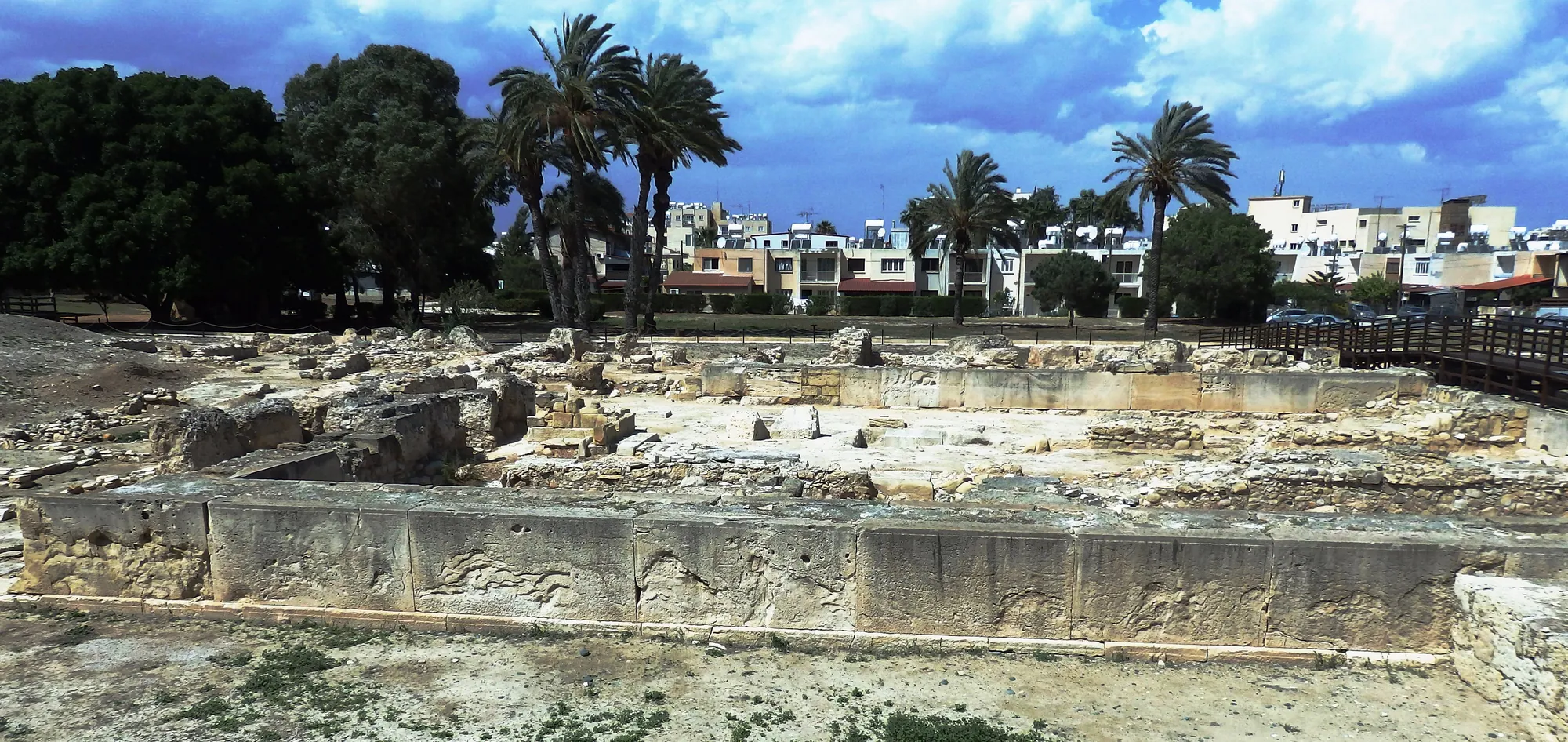
Kition
Kition lies under modern Larnaca on the south-east coast. It was founded as a harbour town in the 13th century BC, with temples and copper workshops in its sacred quarter at Kathari. After a long gap the Phoenicians rebuilt the main temple for Astarte, and from the 5th century BC the city was the seat of a Phoenician dynasty with a war harbour of ship sheds at Bamboula. Its last king was put to death by Ptolemy I in 312 BC, but the city lived on into the Roman period and beyond.
The period
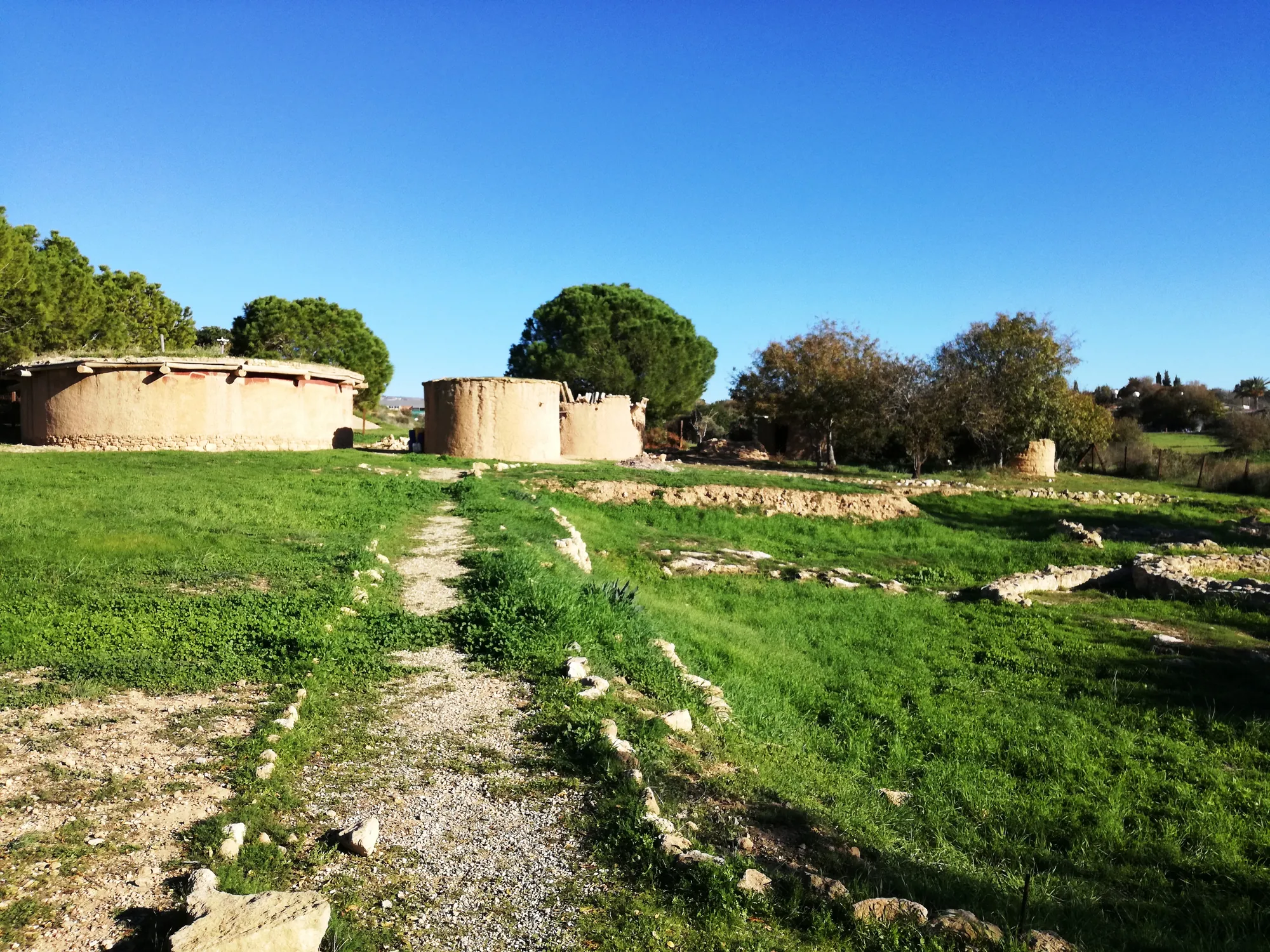
Chalcolithic
The period c. 3900–2500 BCE of circular villages, Red-on-White pottery, picrolite cruciform figures and the island's first small-scale copper working.
Map of Cyprus
Places discussed in the talk
- Has a page on this site
- Other places
- Ground above 200, 500, 1,000 m
Places
- 1Limassol (approx.)
- 2Kition
- 3Kyrenia
- 4Lemba (approx.)
- 5Palaepaphos
- 6Kiti (approx.)
- 7Lapithos