
Research·Roundup
This Week in Cypriot Archaeology: 28 September–4 October 2026
A cloth-wrapped Bronze Age hoard from the Karpas, the first Tombs of the Kings volume, a new Cyprus Museum pushed to 2028 and antiquities shown at the Presidential Palace.



A paper on the cloth and cord wrapped round a Late Bronze Age bronze hoard from the Karpas came out on 29 September; the first volume of the Tombs of the Kings excavation report was presented in Athens; MPs heard that the new Cyprus Museum will not be handed over before 2028; and the Presidential Palace in Nicosia opened its exhibition of art and antiquities to a public tour.
Map of Cyprus
This week's stories
- Research
- Books
- Ground above 200, 500, 1,000 m
Sites on this map
- 1Galinoporni-Vasili (approx.)
- 2Tombs of the Kings, Paphos
Research
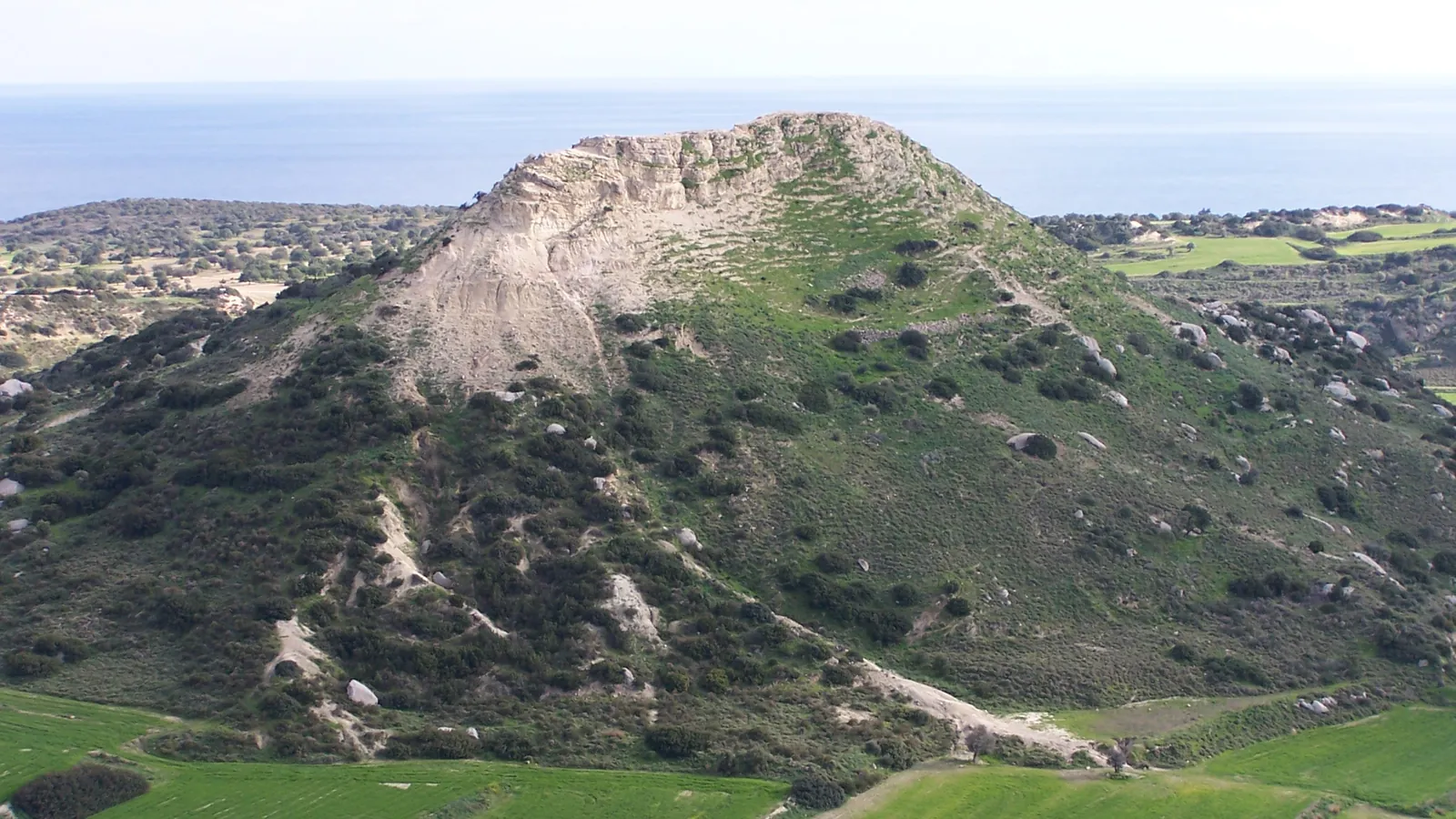
Five authors led by Bülent Kızılduman, with Karina Grömer, Jaroslav Peška, Neşe Topal-Kusku and Kayleigh Saunderson, published online in the journal TEXTILE a study of the mineralised cloth on the bronze hoard found in 2014 on Vasili hill (Kral Tepesi) at Galinoporni (Kaleburnu), on the Karpas peninsula, in the area occupied by Turkey since the 1974 invasion. At least 111 bronzes lay in and around a storage jar set in a rock-cut well. Under the microscope the authors identify 13 to 15 tabby cloths and several kinds of cord, and they map how objects were wrapped, tied in bundles and packed with grass between stacked bowls. It is the second hoard from the hill, after one in a pithos found in 2004 (our brief).
Books
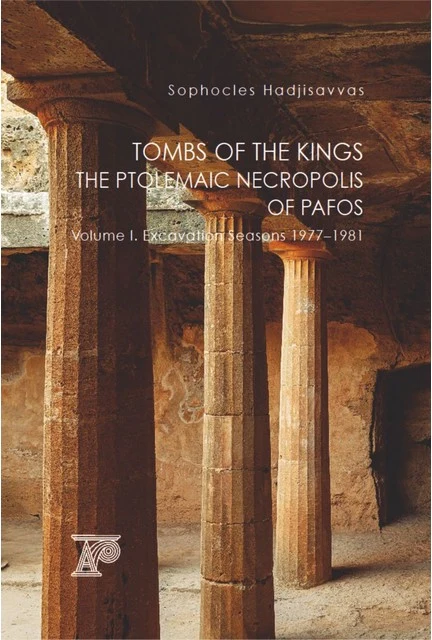
Tombs of the Kings: The Ptolemaic Necropolis of Pafos, Volume I. Excavation Seasons 1977–1981 was presented at the House of Cyprus in Athens, the Deputy Ministry of Culture announced on 30 September. Its author, Sophocles Hadjisavvas, began the Department's excavations in the cemetery in 1977 and later became Director of the Department of Antiquities. The book covers the site's history, the peristyle tombs open to visitors and the first five seasons. It gives particular weight to Tomb 8, which the Ministry says has been attributed to the burial of Ptolemy of Cyprus (80–58 BCE) (our brief).
Museums
MPs on the House education committee heard on 30 September, at a meeting with Deputy Culture Minister Clea Papaellina, that the new building of the Cyprus Museum in Nicosia, due for completion by 3 February 2027, will not be handed over before 2028. The committee chairman, Chrysanthos Savvides, said it might not open to the public until 2030. Officials told the same session that shelters over the Unesco-listed Paphos mosaics could not go ahead for technical and legal reasons (our brief).
On 3 October the Presidential Palace in Nicosia held the first guided tour of a pilot programme launched by the First Lady, Philippa Karsera Christodoulides, with 150 places in three groups. The curators, Kostas Mantzalos and Konstantinos Kounnis, led visitors round the exhibition "Cyprus: the World, the Place, the Word, the Matter", where modern Cypriot art hangs beside figurines and sculptures lent by the Department of Antiquities, dated from the 4th millennium to the 1st century BCE. A second public visit had been planned for International Museum Day in May 2027, and four school visits a month for sixth-grade pupils run from October to June. After the tour the palace said more visits were being considered.
Original sources
- Textile-Wrapped Wealth: A Late Bronze Age Hoard from Kaleburnu-Kral Tepesi/Galinaporni-Vasili, Cyprus (TEXTILE)
Paper·
- Deputy Ministry of Culture: Presentation of the first volume of the final publication of the Tombs of the Kings excavations
Official release·
- Cyprus Mail: New Cyprus museum in 2028 at the soonest
Press·
- Cyprus Mail: Presidential palace to open its art, antiquities to the public
Press·
- Cyprus Mail: Art tour of presidential palace hailed a success
Press·
On ancientcyprus.com
More in Research
- Wheat traces at Chlorakas-Palloures question the view that cereals were minor in Chalcolithic Cyprus
- Strabo's Arsinoe near Palaepaphos probably never existed, argues study of a Ptolemaic queen's cult
- Charred barley and chaff in a Pyla shaft point to stored animal fodder around 1200 BCE
- Late Bronze Age hoard of at least 111 bronzes at Galinoporni was packed in cloth, cord and grass
- Bronze Age tombs at Hala Sultan Tekke held what may be burnt bouquets of grain and wild flowers