
Conference paper·Archaeological Research Unit - University of Cyprus·2022
1st Graduate Forum for Mediterranean Archaeology: Egyptian Blue, Minoan Pottery, Hellenistic Lamps, and Ottoman Pipes
Ilya, Semiramis Chofra, Ani Hevlogasian and Nolwenn Guedeau
Chapters
About the video
This session, the first on the second day of the 1st Graduate Forum for Mediterranean Archaeology hosted by the Archaeological Research Unit of the University of Cyprus, focuses on aspects of material culture.
The first speaker, Ilya, presents his doctoral research within the PlaCe-ITN project on the production of Egyptian blue, the earliest synthetic inorganic pigment. Made by heating lime, silica, a copper source, and an alkali flux under strict temperature control, Egyptian blue leaves scarce evidence of its manufacture despite its widespread use in ancient art. Drawing on collaborative work with his supervisor and colleagues, he proposes a two-stage model separating primary production sites, which made raw cakes and pellets, from secondary processing workshops that ground or refired the pigment. He surveys archaeological finds of ingots, cakes, and spherical pellets from the Bronze Age to Roman times, along with lime-rich calcareous crucibles from Qantir and layered crucibles from Memphis.
Semiramis Chofra of the National and Kapodistrian University of Athens examines the production and distribution of utilitarian pottery in East Crete during the Neopalatial period (Middle Minoan III to Late Minoan IB). Reviewing published macroscopic and petrographic analyses by Peter Day and others across Petras, Makrygialos, Zakros, Palaikastro, Mochlos, Pseira, Gournia, Kavousi, and Kommos, she traces local phyllite- and granodiorite-tempered fabrics alongside imports from Knossos and the Mirabello Bay area, considering how smaller workshops related to palatial centers.
Ani Hevlogasian of the University of Geneva compares Hellenistic terracotta lamps from the 1930s excavations at Antioch-on-the-Orontes, Daphne, and Seleucia Pieria with Cypriot parallels. Focusing on 700 contextualized lamps studied through the excavation archives and the Princeton University Art Museum, she identifies three groups in Frederick Waagé's typology (Waagé 13, 19a, and 21), including imitation Ephesian lamps, that have parallels at Nea Paphos (around the House of Dionysos, the House of Orpheus, the theatre, and Fabrika Hill) and in the Cyprus Museum. She notes that another widespread type, Waagé 24-25, has no published examples from Cyprus.
The final speaker, Nolwenn Guedeau, presents a study of over 400 Ottoman clay smoking pipes conserved in the Cyprus Museum from excavations in central Nicosia, including the Archbishop's Palace, Eleftheria Square, and Paphos Gate. After outlining the 17th-century introduction and regulation of tobacco in the Ottoman Empire, she classifies imported pipes found in Nicosia: 19th-century red-slipped and gilded Tophane wares from Istanbul, 18th-century purple-slipped Levantine pipes, late 19th-century trilobed pipes from Iraq, stamped Şişman pipes, and rare yellow-glazed examples. She also identifies two unslipped or rouletted fabric groups not attested elsewhere in the Middle East, which she argues represent local Cypriot pipe production. A joint question-and-answer session follows the four papers.
From our collection
Pieces in the Drakopoulos collection of the kinds and periods this talk covers: Hellenistic.
The Drakopoulos collection →Background
Where to read more on this site before or after watching.
The site
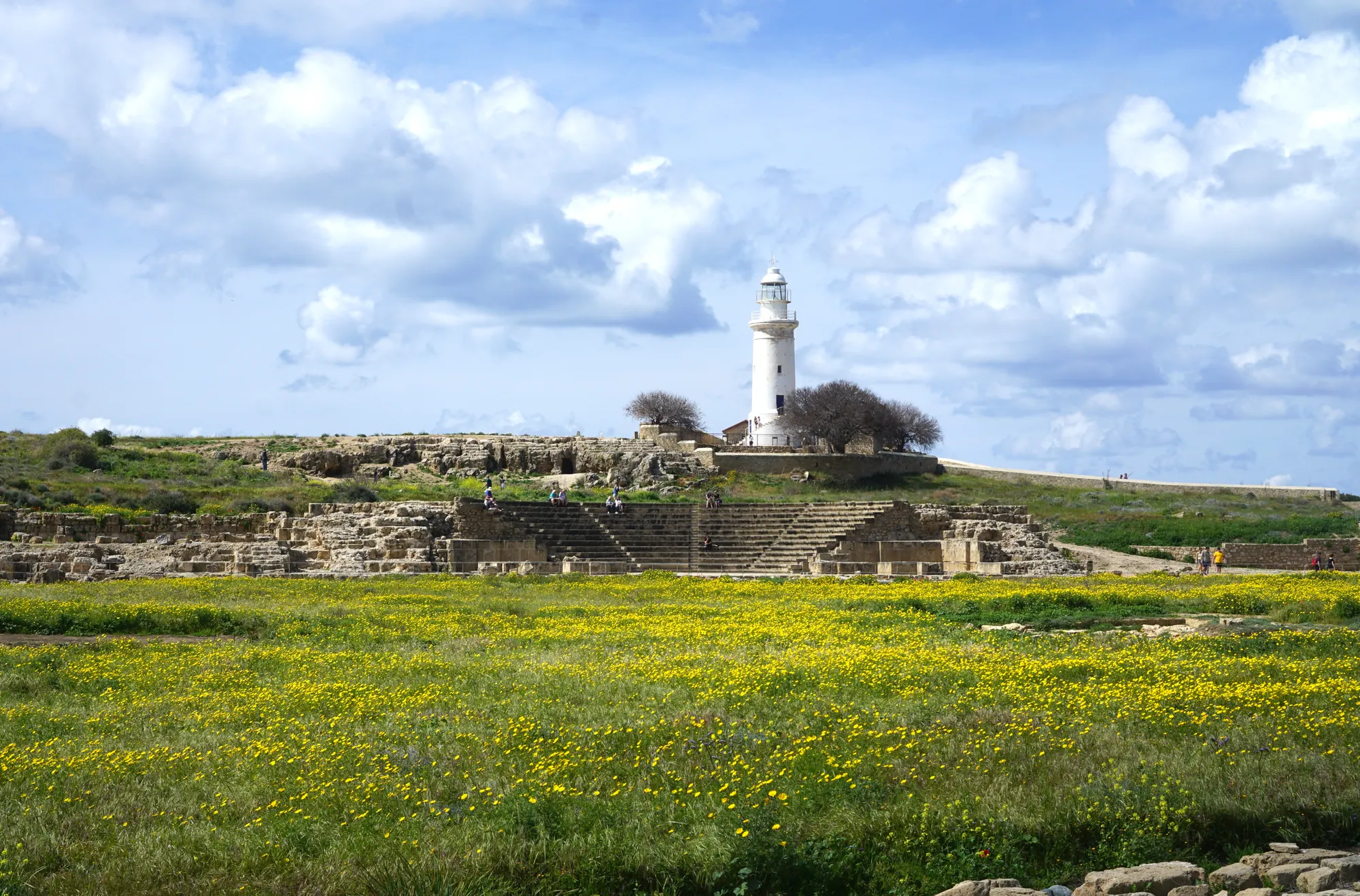
Nea Paphos
Nea Paphos, New Paphos, lies under Kato Paphos on the south-west coast of Cyprus. Founded about 320 BC as a harbour town for the kingdom of Paphos, it became the seat of the Ptolemaic governors of the island and then the capital of the Roman province until the 4th century AD. Its walls, theatre, civic centre, mosaic-floored houses and rock-cut tombs are part of the UNESCO World Heritage Site of Paphos, inscribed in 1980.
In the compendium
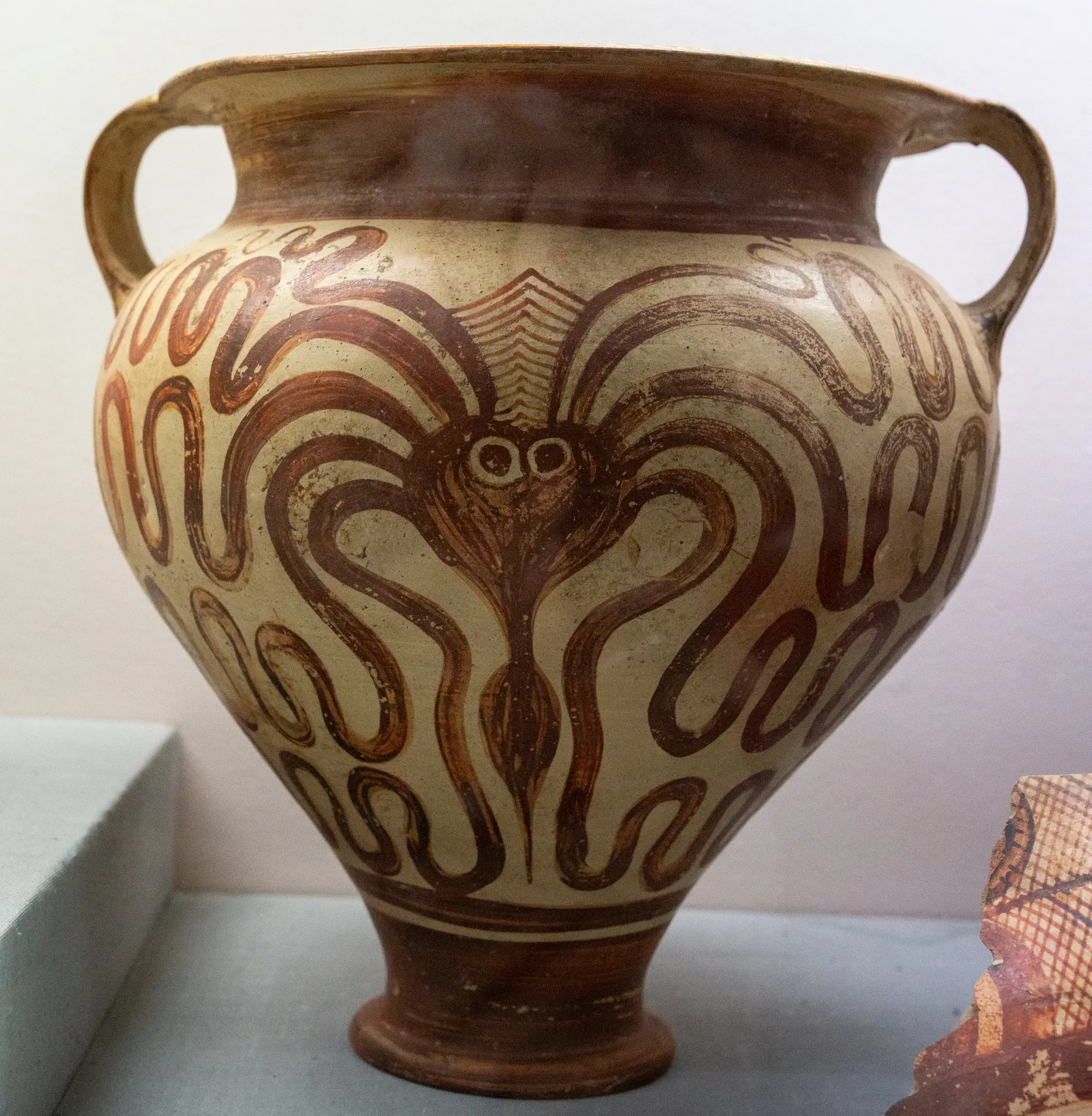
The Minoans
The palatial Bronze Age civilization of Crete, which took Cypriot copper and passed writing to Cyprus in the early Late Bronze Age.
In the compendium
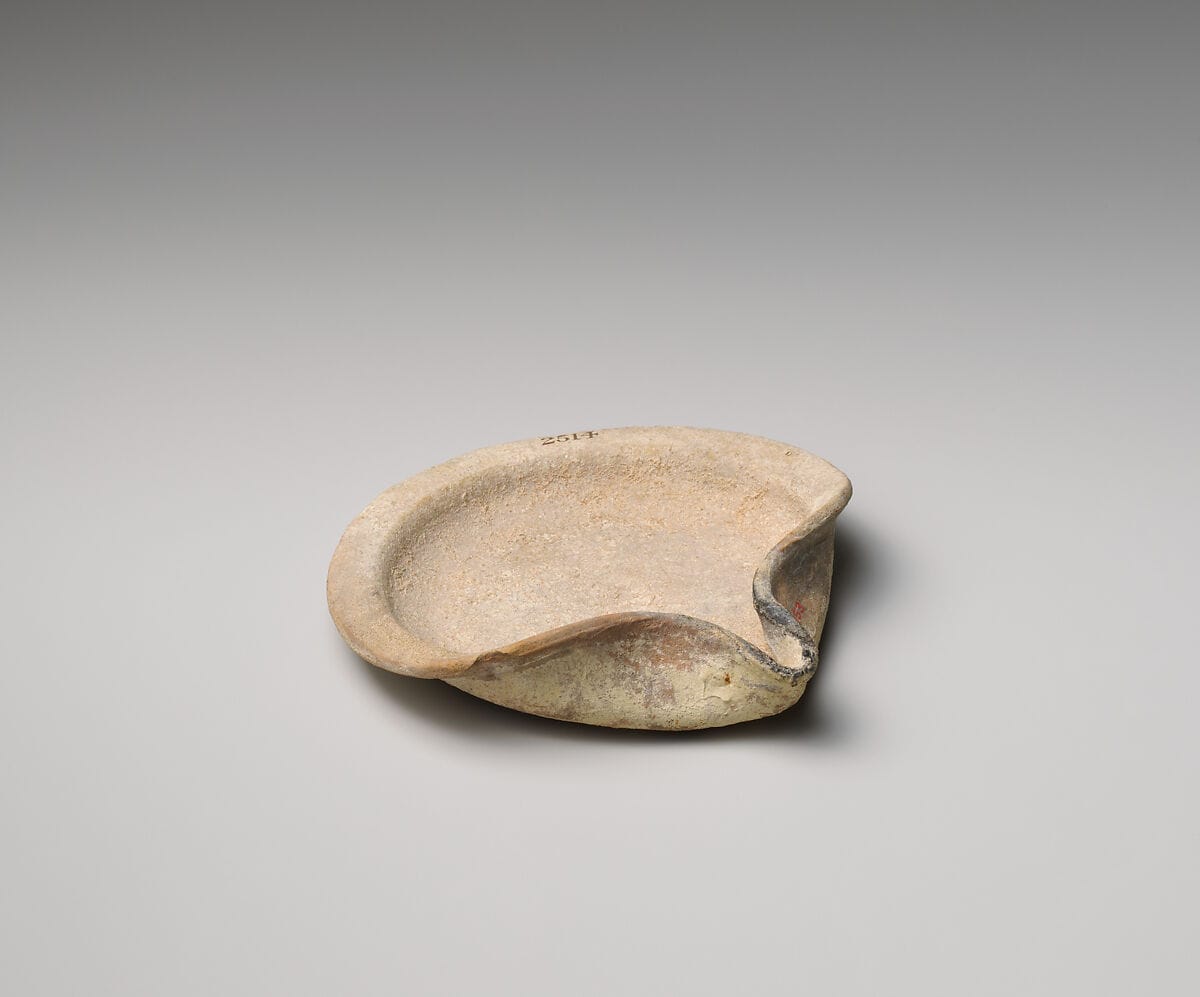
Lamps
A small hand-held vessel that burned oil or fat on a wick, made in Cyprus as an open saucer from the Late Bronze Age and as a closed lamp from the Hellenistic period.
In the compendium
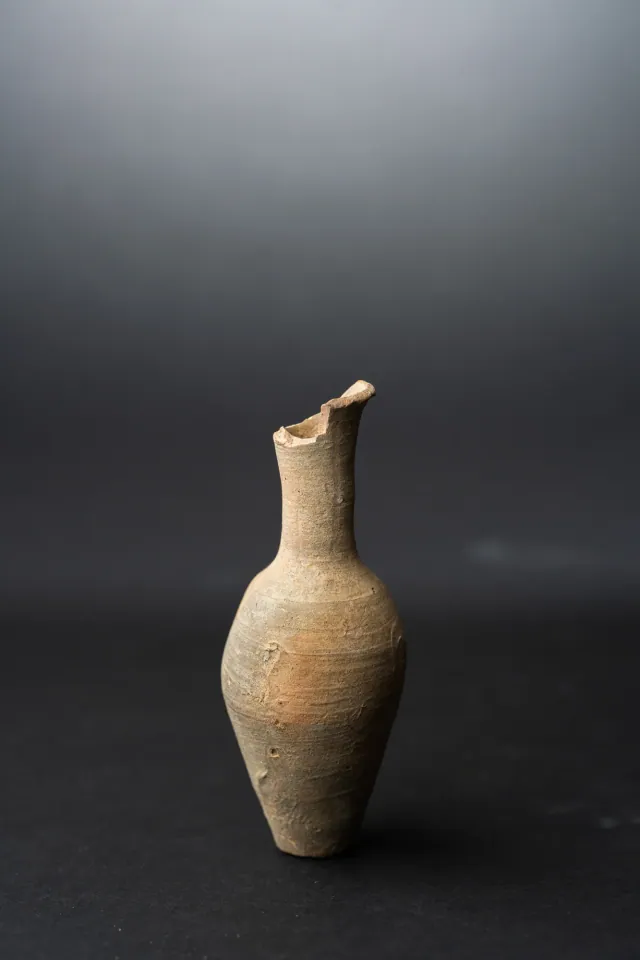
Hellenistic and Roman Pottery in Cyprus
Cyprus used a succession of slipped fine wares from c. 310 BCE to the 7th century CE, some made on the island and many imported from Syria, Cilicia and Pamphylia.