
Fieldwork·In brief
A dog's paw prints survive on a 4,000-year-old mudbrick from a burnt house at Tavşanlı Höyük
The brick, pressed by a dog while still soft, once stood in the wall of a Bronze Age house in western Türkiye that later burned down, Türkiye's culture minister said.



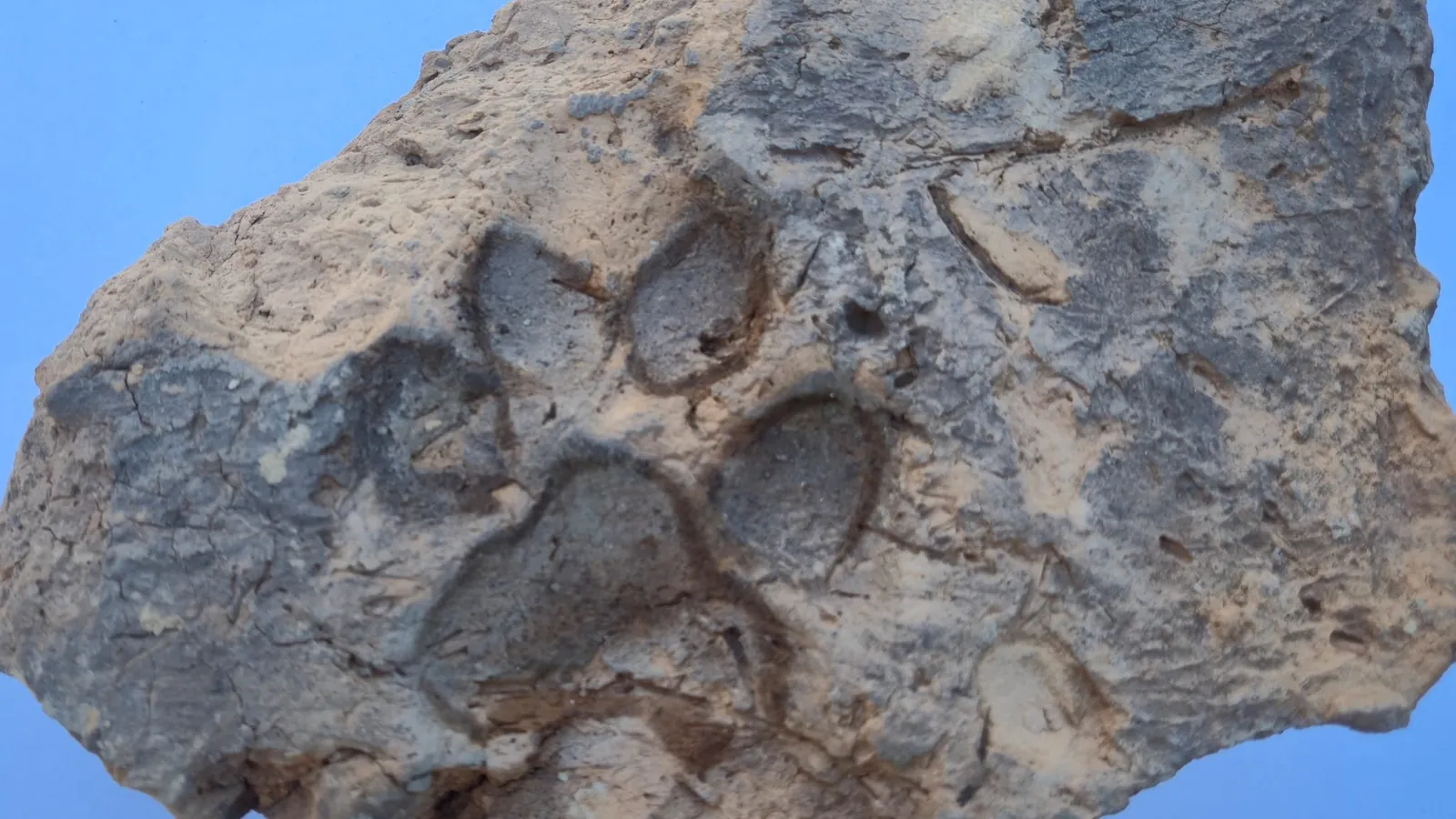
A dog stepped on a mudbrick at Tavşanlı Höyük, a Bronze Age mound in Kütahya province in western Türkiye, while the clay was still wet, and its paw prints have survived for about 4,000 years. Mehmet Nuri Ersoy, Türkiye's Minister of Culture and Tourism, announced the find on 26 October 2026.
Once dry, the brick went into the wall of a house. According to the minister, the building later caught fire and collapsed during the Bronze Age, and the excavators found the brick in its rubble. He calls Tavşanlı Höyük one of the largest Bronze Age cities of western Anatolia.
Prof. Dr. Erkan Fidan, who heads the archaeology department at Bilecik Şeyh Edebali University, has directed the excavation since 2021. A 2025 study he co-wrote, of 1,361 animal bones from the 2021 and 2022 seasons, describes a town that lived mainly on sheep, goats, cattle and pigs, with limited hunting of deer and wild boar.
Dogs reached Cyprus more than six thousand years earlier. The earliest on the island, according to its excavators, is a small dog from Ayios Tychonas-Klimonas, a Neolithic site near Limassol dated to about 8700 BCE [1, p. 3]. The team, among them Jean-Denis Vigne and Jean Guilaine, suggests that it lived with people and may have helped them hunt the island's small wild boar [1, p. 15]. Dogs remained part of village life through the rest of the Aceramic Neolithic, as the island's early diet shows.
Original sources
- Mehmet Nuri Ersoy, Minister of Culture and Tourism of Türkiye, post on X
Social media·
- Baykara, D., Agras, M. K. and Fidan, E. (2025). Tunç Çağı Tavşanlı Höyük Yerleşiminin Hayvansal Geçim Ekonomisi. Gaziantep Üniversitesi Sosyal Bilimler Dergisi 24(2), 444–457
Paper
- Bilecik Şeyh Edebali University, 4 Thousand Year Old Seal Found in Tavşanlı Höyük Excavations
Official release·
On ancientcyprus.com
- People
- Jean-Denis Vigne
- Periods
- Neolithic, Early Bronze Age, Middle Bronze Age
References
- 1.Vigne, J.-D., Briois, F., Zazzo, A., Carrère, I., Daujat, J. and Guilaine, J. (2011). A new early Pre-Pottery Neolithic site in Cyprus: Ayios Tychonas – Klimonas (ca. 8700 cal. BC). Neo-Lithics 1/11, 3–18.
More in Fieldwork
- Excavators near Kophinou find a domed church of the 8th–10th centuries and a potters' clay tank
- Hexagonal church of Apsinthiotissa and Byzantine Agios Prokopios restored in the occupied north
- Bronze Age Pyla-Kokkinokremos, beside a British firing range, will not open to visitors
- Kourion's mosaic conservators are to get two prefabricated buildings in a €113,447 tender
- 167 Roman granite column fragments trace the main streets of ancient Paphos