
Fieldwork·Roundup
This Week in Cypriot Archaeology: 5–11 January 2026
Over 700 kg of Late Roman amphora sherds from the harbour at Pegeia, an Iron Age sanctuary near Agia Marina Xyliatou, and Nicosia's Famagusta Gate restored.



Two field projects reported their 2025 seasons this week: New York University's work at the harbour of Agios Georgios, Pegeia, in the far west of the island, and the Life at the Furnace project in the copper country of the Troodos foothills. The Cyprus Institute joined a European study of Byzantine seals, and in Nicosia the restored Famagusta Gate was presented while the Department of Antiquities announced an evening to show the renewed galleries of the Cyprus Museum.
Map of Cyprus
This week's stories
- Fieldwork
- Museums and monuments
- Ground above 200, 500, 1,000 m
Sites on this map
- 1Agios Georgios (Pegeia), Cape Drepanon (approx.)
- 2Peristerona valley (Kato Moni) (approx.)
- 3Nicosia (approx.)
Fieldwork
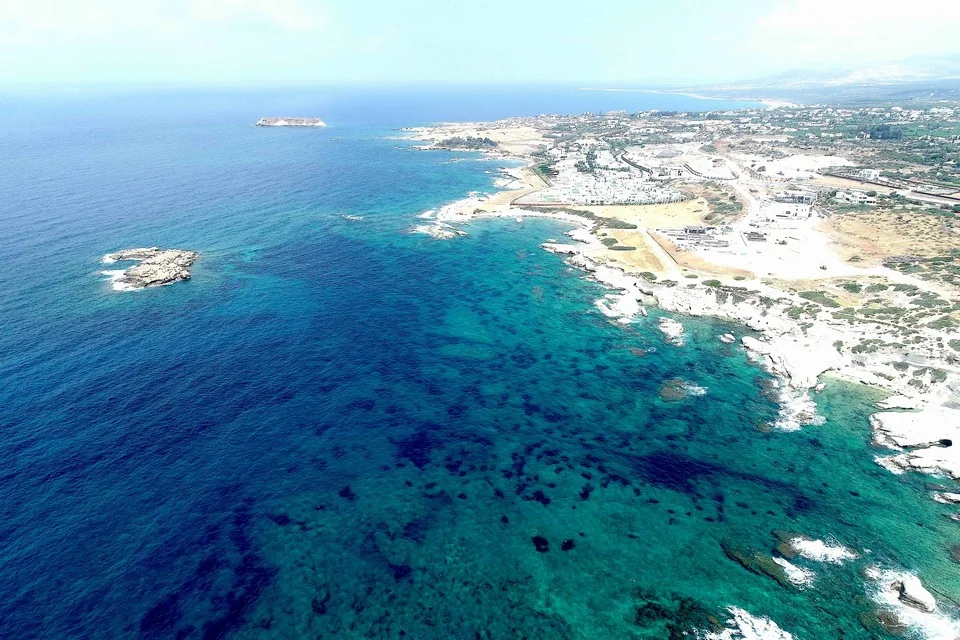
The Department of Antiquities announced on 7 January that the New York University mission under Joan Breton Connelly had finished a six-week season of survey, excavation and study at Agios Georgios, Pegeia. A team led by Stella Demesticha of the University of Cyprus sorted and weighed over 700 kilos of Late Roman amphora sherds from the ancient harbour at Maniki, all dated to the 6th century AD. Most are Late Roman 1 jars made around Paphos and in Cilicia; others came from Palestine, among them LR4 and LR5 types from Gaza. Sixty-eight carry dipinti, inscriptions painted in red ink.
According to the Department, the broken jars were tipped in as fill to level the sloping bedrock for harbour works and piers, through which marble from Proconnesus arrived, in blocks, column drums and capitals, for the basilicas built on Cape Drepanon under Justinian in the 6th century. Those basilicas were excavated by the Department under A. H. S. Megaw between 1949 and 1955; the same NYU team earlier dug the late Hellenistic complex on the offshore islet of Geronisos.
The season also returned to a rock-cut tomb found by the team in 2018, whose pottery spans the 1st century BC to the 5th century AD. Robbed from the Roman period into the 20th century, it still held some precious metal, now under analysis by scientists of the Cyprus Institute, and bones of sheep, goat, pig, hare, fish and chicken placed there during its funerary use, many of them heavily burnt. A walking survey of Cape Drepanum and the Meletis necropolis retraced the route that David George Hogarth described in Devia Cypria (1889).
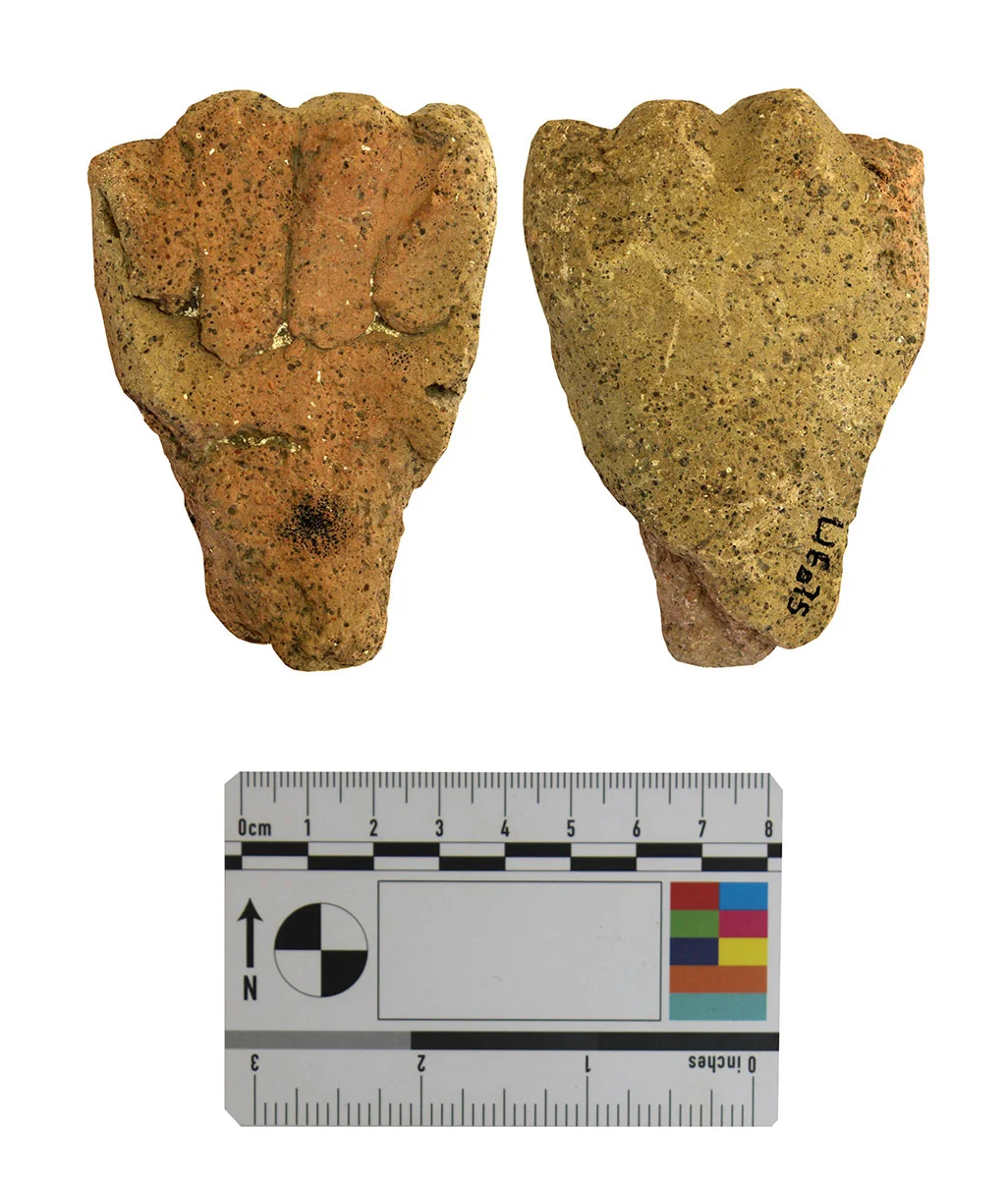
The Department also reported the end, on 7 November 2025, of a season of the Life at the Furnace project of the University of Copenhagen and Uppsala University, directed by Kristina Winther-Jacobsen and Angus Graham with the Cyprus Institute. The project asks how Roman-period copper production changed society and environment in the Peristerona valley. On a plateau north of Agia Marina Xyliatou, figurine fragments (handmade horses, a bull, pieces of large human figures and a mould-made Astarte) marked an Iron Age sanctuary, later replaced by a settlement of the Hellenistic to Early Roman and Late Roman periods whose slag suggests copper working. On a knoll at the Mavrovouni slag heap, three artificial terraces held basins, cisterns and plastered water installations. Most of the fill later dumped into them is Late Hellenistic to Middle Roman in date; how the system related to copper smelting is still to be worked out.
Research
On 8 January the Cyprus Institute announced its part in Byz-GOVAG, a European Research Council Advanced Grant led by Olga Karagiorgou of the Academy of Athens. The project, "Agents of Cohesion in the Governance of an Empire", uses seals from Greece, Cyprus and Turkey to map how Byzantium was run from the 7th to the 12th century. The Institute's team is led by Nikolas Bakirtzis.
Museums and monuments
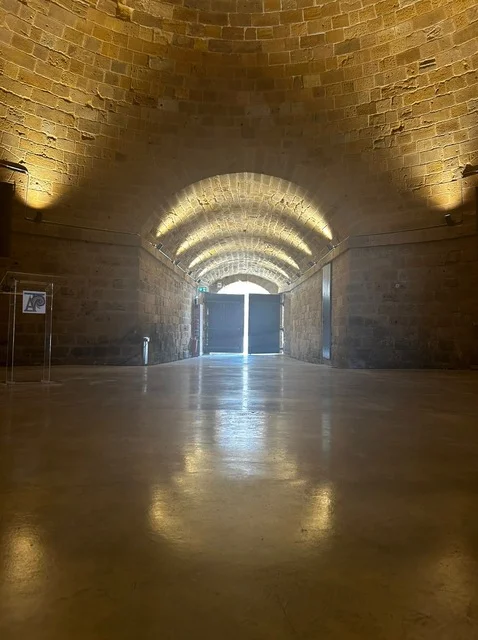
On 9 January the Deputy Ministry of Culture announced that it had presented the restored Famagusta Gate in the Venetian walls of Nicosia at a small ceremony. The Department of Antiquities began the work in 2019; the gate, a municipal cultural centre since 1981, had seen no substantial conservation since then and was badly affected by a flood in 2018. The project cost almost 1 million euros: masonry and the great doors were conserved, modern additions removed, and a new floor, wiring and lighting put in. Deputy Minister Vasiliki Kassianidou said the state will put the gate to use in several ways during Cyprus's presidency of the Council of the EU; opening hours are to follow.
The same day the Department announced an evening at the Cyprus Museum on 17 January to present upgrades to its permanent exhibition: new finds from excavations, recently repatriated antiquities, new texts, better lighting and renewed cases. The programme included tours and a staged reading drawn from the archive of the Swedish Cyprus Expedition, with the Medelhavsmuseet as an adviser. On 15 January the Department postponed the evening because of the public mourning declared for former President Giorgos Vassiliou, and it later set a new date of 7 February.
Original sources
- Department of Antiquities: Completion of the archaeological excavation at Agios Georgios, Pegeia
Official release·
- Archaeology Wiki: Cyprus, Life at the Furnace project
Press·
- The Cyprus Institute: Exploring Byzantine anthropogeography in ERC Advanced Grant
Official release·
- Deputy Ministry of Culture: The Famagusta Gate monument is ready to welcome visitors again
Official release·
- Department of Antiquities: Celebrating the Cyprus Museum
Official release·
- Department of Antiquities: Events on Celebrating the Cyprus Museum postponed
Official release·
- Department of Antiquities: Celebrating the Cyprus Museum (7 February)
Official release·
On ancientcyprus.com
- Excavations
- Geronisos (Yeronisos): the New York University excavations, Agios Georgios (Pegeia), Cape Drepanon: the Department's excavation of the basilicas
- People
- Joan Connelly, Stella Demesticha, David George Hogarth, Arthur Hubert Stanley Megaw, Kristina Winther Jacobsen, Nikolas Bakirtzis, O. Karagiorgou, Vassiliki Kassianidou
- Institutions
- Department of Antiquities of Cyprus, The Cyprus Institute, University of Copenhagen, Uppsala University, Academy of Athens, Cyprus Museum, Medelhavsmuseet (Museum of Mediterranean and Near Eastern Antiquities)
- Periods
- Hellenistic, Roman
More in Fieldwork
- Hellenistic quarry under Paphos's Fabrika hill became an unused tomb, then a church
- This Week in Cypriot Archaeology: 31 August–6 September 2026
- Hollows cut into a Bronze Age threshold at Erimi match a senet game board
- This Week in Cypriot Archaeology: 27 July–2 August 2026
- Grape seeds and unfired loom weights found in Bronze Age work complex at Erimi-Pitharka