
Fieldwork·Brief
Over 700 kg of broken jars levelled the rock for a harbour serving Justinian's basilicas at Pegeia
New York University's 2025 season near Pegeia recorded 68 red-ink inscriptions on the 6th-century jars and studied a Hellenistic and Roman rock-cut tomb.



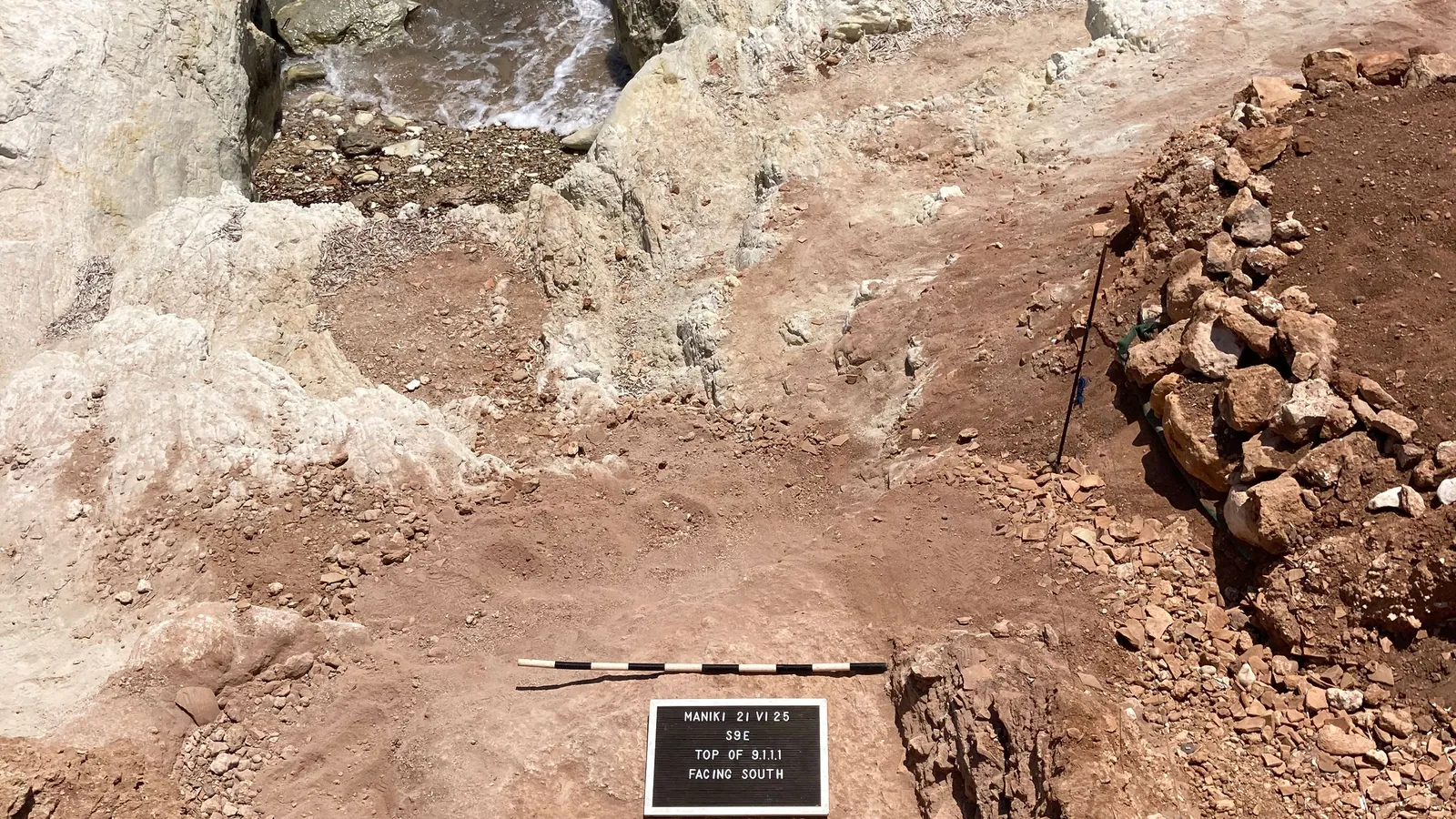
More than 700 kilos of broken transport jars were dumped on the rock at Maniki, a cove on Cape Drepanon near Pegeia, to level it for a 6th-century AD harbour, according to New York University's team. The Department of Antiquities announced the results of the six-week 2025 season, directed by Joan Breton Connelly, Professor of Classics, on 7 January 2026.
The amphorae from Maniki
Professor Stella Demesticha of the University of Cyprus led the sorting, weighing and counting of the sherds. Late Roman 1 amphorae, two-handled jars made both around Paphos and in Cilicia, make up most of them. Next come imports from Palestine, among them LR5 jars and LR4 jars from Gaza. The Department dates the whole group to the 6th century AD.
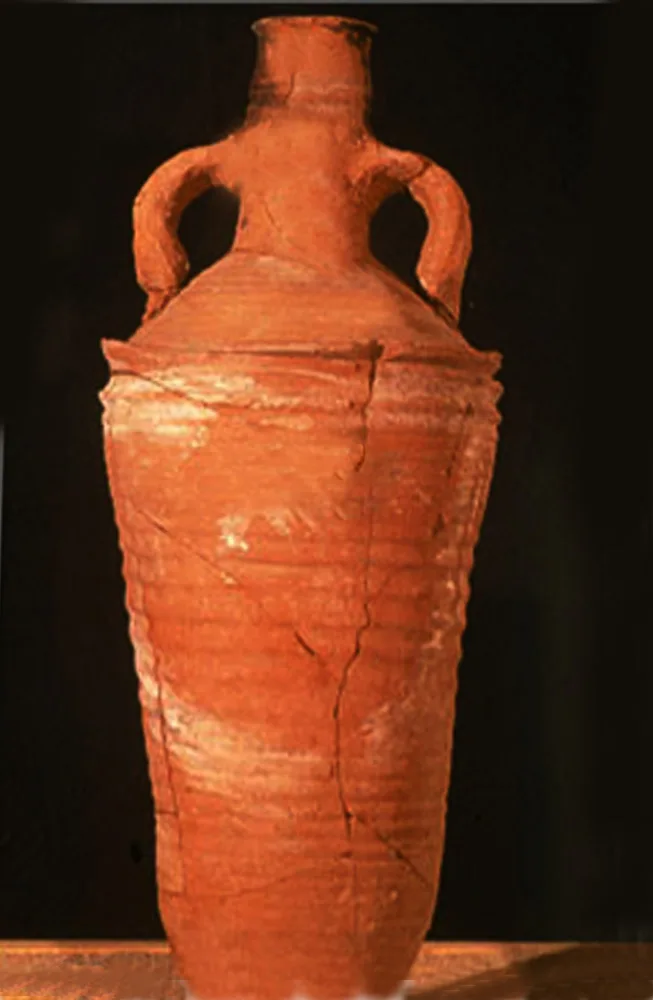
The jars carry 68 dipinti, notes painted in red ink. The Department says such inscriptions of this period have had little study in Cyprus.
In the team's reading the sherds are construction fill, packed in to give the steep bedrock a level surface on which piers and other harbour works could stand. Those works, the Department says, let large loads of Proconnesian marble (blocks, column drums and capitals) be landed for the basilicas built on Cape Drepanon under the Emperor Justinian.
Earlier work on Cape Drepanon
David George Hogarth was the first to visit Agios Georgios, the Early Christian settlement on the cape, and wrote of it in Devia Cypria (1889). Between 1949 and 1955 A. H. S. Megaw excavated three basilicas of Justinian's reign and later, and a bath-house, for the Department. In 1991 a Greek expedition from the Aristotle University of Thessaloniki took up work beside basilicas A and C and the baths [1, p. 26].
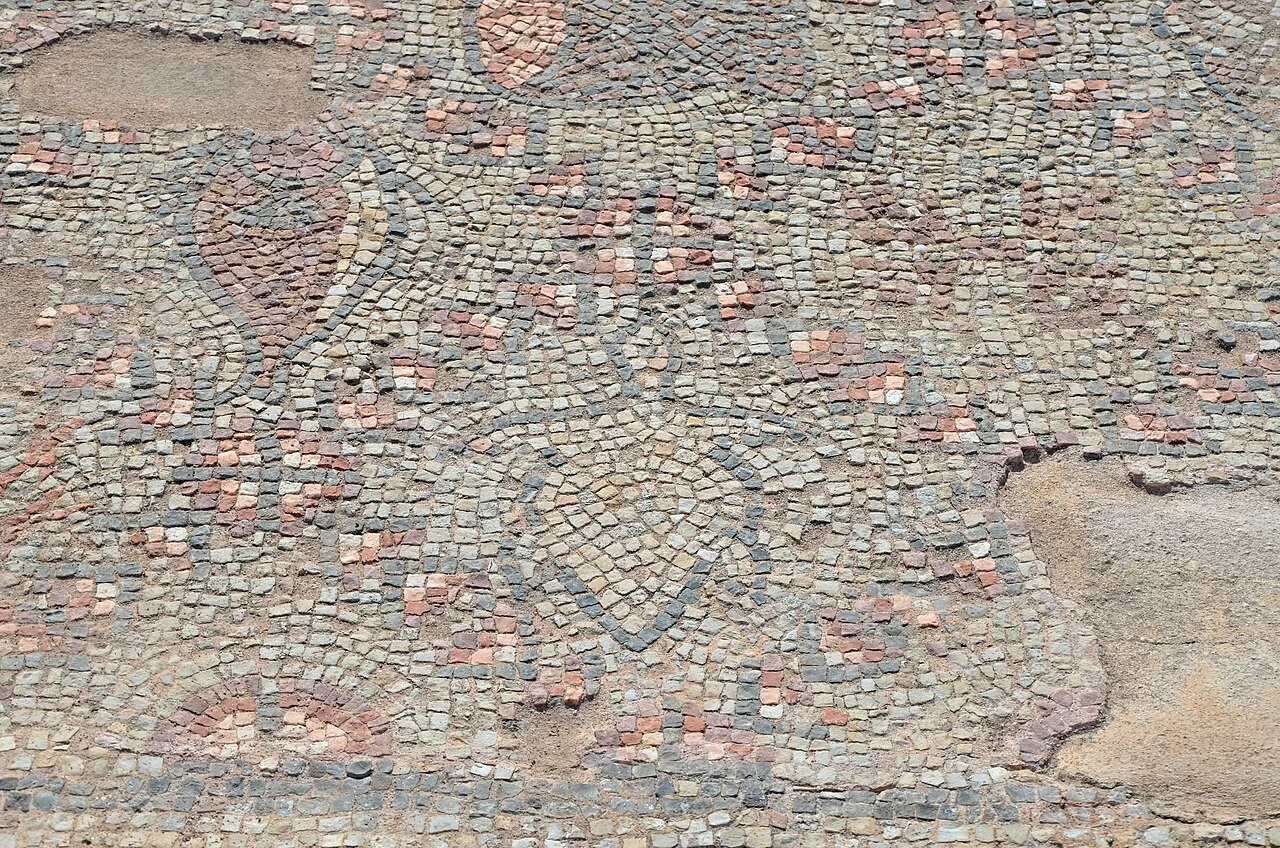
Charalambos Bakirtzis, who led that expedition, wrote in 2020 that the settlement's harbour had not been located, though coves such as Lara and Maniki gave anchorage [1, pp. 25–26]. He argues that the cape was a station for the annona, the fleet carrying Egyptian grain to Constantinople, and notes that Basilica A's columns, capitals and marble ambo came from Proconnesos [1, pp. 27, 31–32]. In his account the station was abandoned after the Arabs took Egypt in 640; the last coin from the site dates to 637 [1, p. 32].
The tomb and the surveys
The season's other focus was a rock-cut tomb of Hellenistic and Roman date, found by the NYU team in 2018. Professor Jolanta Młynarczyk of the University of Warsaw is studying its pottery, dated between the 1st century BC and the 5th century AD. Her Warsaw colleague Dr Mariusz Burdajewicz is recording its glass, mostly Roman Imperial bowls, cups, bottles and unguentaria (small perfume flasks).
Though robbed from Roman times to the 20th century, the tomb still held some precious metal. Dr Marianna Dági of the Museum of Fine Arts, Budapest is studying it, with analyses by Dr Thilo Rehren and Dr Meghna Desai of the Cyprus Institute. Dr Efi Nikita, also of the Cyprus Institute, is working on the human remains. The animal bones, studied by Dr Paul Croft of the University of Cyprus, include sheep, goat, pig, hare, fish and chicken; many are heavily burnt and distorted, which the team reads as the deliberate burning of possible offerings to the dead or meals of the living.
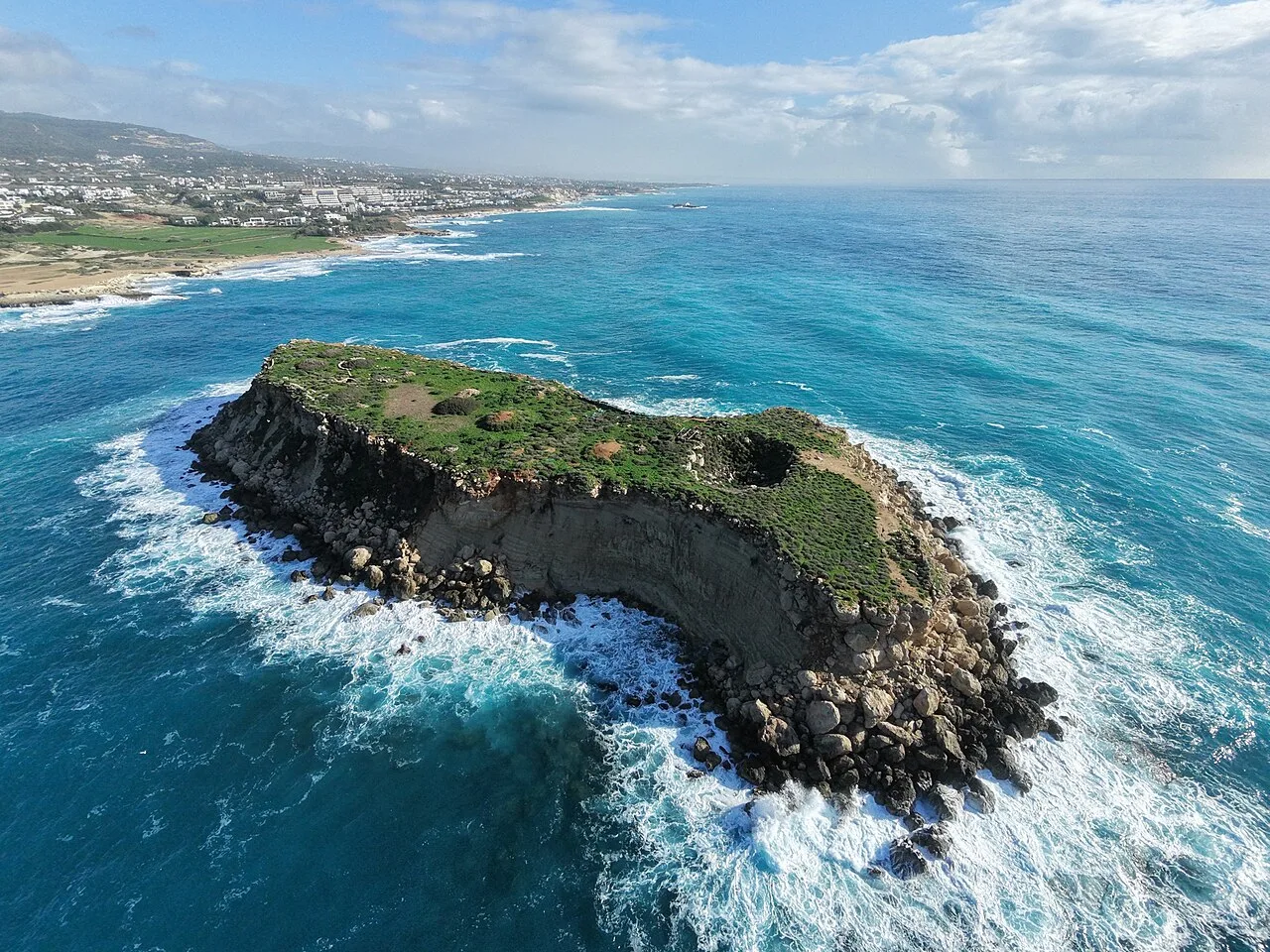
The team takes its name from Geronisos, the islet offshore where the university has worked since 1990. Professor Thomas Tartaron of the University of Pennsylvania again led students in surveying the Meletis necropolis and is preparing his surveys there and around Maniki for publication. Connelly, with Lorenzo Calvelli of the University of Venice and George Marshall Peters of the Explorers Club, also walked across the cape along the route Hogarth recorded in 1889.
Original sources
On ancientcyprus.com
- Excavations
- Geronisos (Yeronisos): the New York University excavations, Agios Georgios (Pegeia), Cape Drepanon: the Department's excavation of the basilicas, Agios Georgios (Pegeia): the University of Thessaloniki excavation
- People
- Joan Connelly, Stella Demesticha, Jolanta Młynarczyk, Burdajewicz, Thilo Rehren, Paul Croft, Lorenzo Calvelli, David George Hogarth, Arthur Hubert Stanley Megaw, Charalambos Bakirtzis
- Institutions
- Department of Antiquities of Cyprus, University of Cyprus, The Cyprus Institute, University of Warsaw, Museum of Fine Arts, Budapest, University of Pennsylvania
- Periods
- Hellenistic, Roman
References
- 1.Bakirtzis, C. (2020). Sea Routes and Cape Drepanon: Excavations at Agios Georgios tis Pegeias, Paphos, Cyprus. In L. Nasrallah, A. Luijendijk and C. Bakirtzis (eds), From Roman to Early Christian Cyprus: Studies in Religion and Archaeology, 25–32. Tübingen: Mohr Siebeck.
More in Fieldwork
- Hellenistic quarry under Paphos's Fabrika hill became an unused tomb, then a church
- This Week in Cypriot Archaeology: 31 August–6 September 2026
- Hollows cut into a Bronze Age threshold at Erimi match a senet game board
- This Week in Cypriot Archaeology: 27 July–2 August 2026
- Grape seeds and unfired loom weights found in Bronze Age work complex at Erimi-Pitharka