
Books·New book
New book publishes Kition houses lived in through the end of the Bronze Age, c. 1250–1000 BCE
The French mission's final report on its Bamboula trench in Larnaca also records Nile perch, three splinters of elephant bone and what the authors call the island's oldest chicken.



The book
- Title
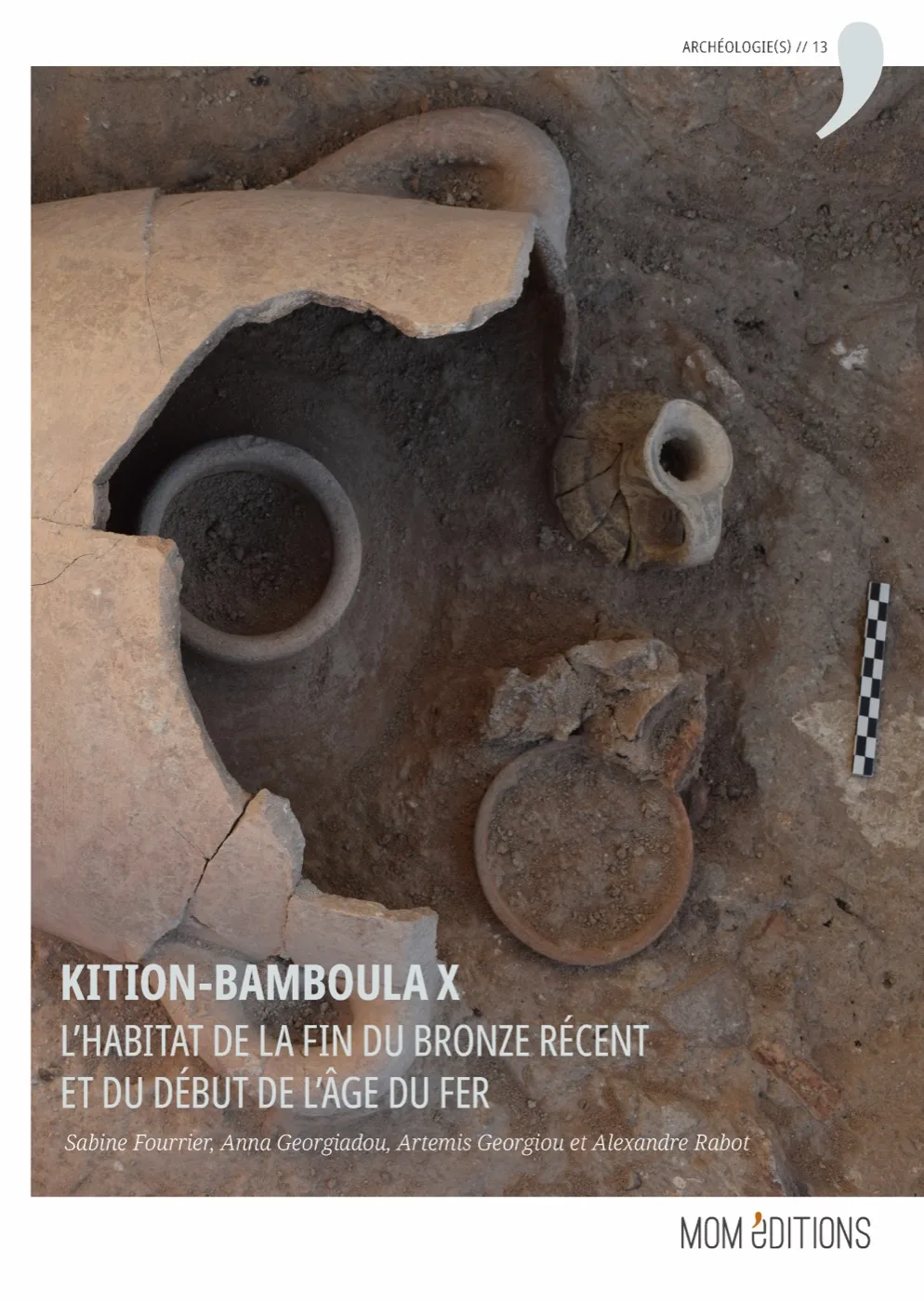
- Kition-Bamboula X: L’habitat de la fin du Bronze récent et du début de l’âge du Fer
- By
- Sabine Fourrier, Anna Georgiadou, Artemis Georgiou and Alexandre Rabot
- Publisher
- MOM Éditions, 2026
- Series
- Archéologie(s) 13
- Pages
- 380
- ISBN
- 978-2-35668-093-8
- Access
- Open access
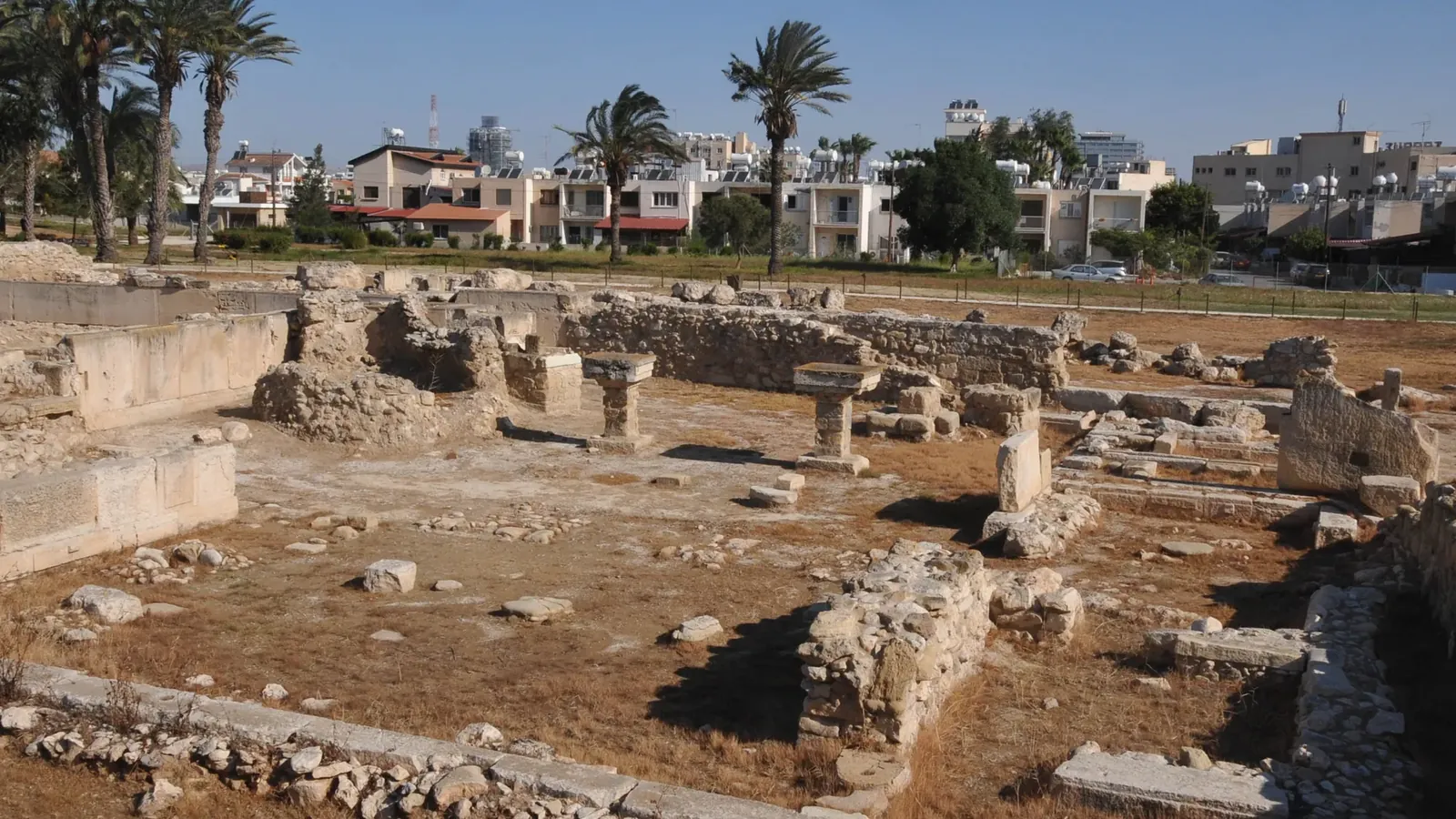
A block of houses on the Bamboula hill at Kition, under modern Larnaca, was lived in from about 1250 BCE to about 1000 BCE, across the end of the Late Bronze Age and the start of the Iron Age, according to Kition-Bamboula X, the final report on the trench where the French mission found it. The book, by Sabine Fourrier, Anna Georgiadou, Artemis Georgiou and Alexandre Rabot, came out from MOM Éditions in Lyon on 19 March 2026 and can be read free online. The authors count Kition among the few towns on Cyprus occupied through the whole period, and call it the only one excavated so far that documents houses as well as tombs and sanctuaries.
Sondage 10
The mission went back in 2016 to the north end of the hill, where Marguerite Yon's team had cut a trench (L-N 13) in 1976 and 1977. The new trench, Sondage 10, had three month-long seasons from 2016 to 2018 and a last one in 2021, after a year in which the pandemic stopped fieldwork. About 210 square metres were opened, down to bedrock in the central part.
The aim was to find and date the Late Bronze Age city wall that the 1970s work had placed here. There was none: the authors rule out a north–south rampart at this point and suggest that the defences ran further west or that Bamboula lay outside them.
The trench gave a sequence of houses instead. In the earliest phase, the second half of Late Cypriot IIC (c. 1250–1200 BCE), narrow wells were cut into the bedrock at the foot of the slope beside the harbour basin; cores taken in 2024 showed that they filled from the sides, with water held in the sands and rock above an impermeable marl. Four were excavated, and one is securely dated to this phase. A layer of pebbles then covered the whole area. The 1985 publication had read it as rubbish thrown against the wall; the authors now suggest, as a hypothesis, that it was laid in a ritual act to close the old level.
In the 12th century (Late Cypriot IIIA) the first buildings whose plan can be followed went up on either side of a street. From Late Cypriot IIIB to Cypro-Geometric I (c. 1100–1000 BCE) a southern and a northern house stood here, with stone footings under mud-brick walls and rooms of about 2 by 2 metres at most; the authors reconstruct units of at least six rooms. In the corner of one room a round hearth was edged with long, narrow refractory bricks. In another, found in 1976, Levantine transport jars lay where they had been left, sealed when the roof and walls fell in. Newborn infants were buried in jars in the passages, at the foot of the outer walls.
Around 1000 BCE the houses were abandoned and left to collapse. The area was occupied again only from the end of Cypro-Geometric III, about 800 BCE, perhaps after a gap.
Pottery, imports and a town of 14 hectares
In the pottery chapter, by Georgiou, Georgiadou and Fourrier, the 12th-century levels show the handmade White Slip and Base Ring wares falling away sharply as a locally made Aegean-style pottery, White Painted Wheelmade, takes over. The authors link tall-necked pithoi, storage jars some of which carry relief bands, to central management of farm produce. Aegean and Egyptian imports stop in the 11th century, while Levantine transport jars keep arriving in numbers through the 12th and 11th. Fragments of a jar used to make purple dye lay out of place in a fill; the authors call it unique at Kition and on the whole island; without an analysis of its clay they cannot say it was made locally, and so cannot show that the dye itself was produced at Kition.
In their conclusion the four authors draw two larger points. Bamboula was a quarter of the Late Bronze Age town, which they now see as a compact core of about 14 hectares on the northern plateau, the size of walled Enkomi and much smaller than the "mega-site" a continuous wall line had suggested. And in the Early Iron Age Kition's pottery is closest to that of Salamis; it takes on a Phoenician character only from the early 8th century BCE, and Levantine influence came to it later and more radically than to other parts of the island. They reject the higher, Levantine-based chronology J.S. Smith proposed in Art and Society in Cyprus from the Bronze Age into the Iron Age (2009).
Fish from the Nile, an elephant and a chicken
Chapter 6, by Armelle Gardeisen, Lluis Garcia Petit and Tatiana Theodoropoulou, studies 5,308 mammal, bird and fish remains from the trench, 1,946 of them identified. Sheep and goats lead throughout, with 1,254 bones, followed by cattle with 255. Pigs are rare (25 bones), and nearly all come from the Bronze Age levels. Fallow deer, the island's favourite game, seem to have reached the town already cut into joints. The authors find nothing in Kition's meat supply that sets it apart from the rest of Cyprus.
The fish tell more. Most of the fish in the Bronze Age levels came from the Nile, Nile perch above all, with some Bagrus catfish, and carp from Eurasian rivers also appears; the authors take them as evidence of trade with Egypt and the Levantine coast. Nile fish fell by about two thirds after Late Cypriot IIC and became rare in the Iron Age, when local fishing took over, mostly for sea breams and groupers.
Three splinters of elephant bone, perhaps from a single bone, came from the 12th-century phase. Protein analysis could not tell whether the animal was African or Asian. The authors point out that elephants then lived in the northern Levant, along the Orontes and the Euphrates, and that elephant bone is poor material for carving; they suggest the animal came alive as a gift, or that a traveller brought the bone as a curiosity or trophy.
A leg bone of a domestic chicken came from the same phase, c. 1200–1100 BCE. Set against the Aegean evidence, where earlier claims for the bird rest partly on vase paintings and are disputed, the authors call it the oldest zooarchaeological evidence of the chicken, and the earliest on Cyprus. They would like a direct radiocarbon date to confirm it.
Earlier work at Bamboula
The Swedish Cyprus Expedition dug the first trench on the hill in 1929 and 1930 and struck a deposit of votive sculpture, several pieces showing Herakles-Melqart. Yon opened the French excavations in 1976, and Fourrier has directed the mission since 2008. Until Sondage 10, Late Bronze Age finds at Bamboula had come without any buildings, and the town of that period was known from Kathari and Chrysopolitissa, where Vassos Karageorghis and the Department of Antiquities dug from 1959. The authors see Chrysopolitissa as a second residential quarter that, like Bamboula, was lived in without a break into the early Iron Age. The mission is still at work on the hill: its 2026 season reached walls of the 8th and 7th centuries BCE in Sondage 11, north-west of this trench.
The book is volume 13 of MOM Éditions' series Archéologie(s), 380 pages, ISBN 978-2-35668-093-8 (print) and 978-2-35668-148-5 (digital). Its text is under a CC BY-NC-ND licence on OpenEdition Books, and the excavation data are open on the portal chypre.mom.fr.
Original sources
- Fourrier, Georgiadou, Georgiou and Rabot, Kition-Bamboula X (MOM Éditions, OpenEdition Books)
Book·
- Fourrier, Chapitre 1. Les phases d’occupation, in Kition-Bamboula X
Book·
- Gardeisen, Garcia Petit and Theodoropoulou, Chapitre 6. Archéozoologie du sondage 10 de Kition-Bamboula
Book·
- Fourrier, Georgiadou, Georgiou and Rabot, Conclusion, in Kition-Bamboula X
Book·
On ancientcyprus.com
- Sites
- Kition
- Excavations
- Kition-Bamboula: the French Mission, Kition-Bamboula: the Swedish Cyprus Expedition, Kition: the Department of Antiquities Excavations at Kathari and Chrysopolitissa
- People
- Sabine Fourrier, Anna P. Georgiadou, Artemis Georgiou, Alexandre Rabot, Marguerite Yon, Armelle Gardeisen, Lluis Garcia Petit, Tatiana Theodoropoulou, Vassos Karageorghis
- Institutions
- French Mission at Kition-Bamboula
- Periods
- Late Bronze Age, Cypro-Geometric, Cypro-Archaic
More in Books
- Paralimni guide maps three walks and 27 stops, from Neolithic Nissia to Byzantine hermitages
- Amulets, ivories and lead objects from the Met’s Cesnola Collection get their own catalogue
- Catalogue to accompany a new Kykkos gallery for David Johnson's donated Cypriot antiquities
- Cypriot votive terracottas get one chapter in an Archaeopress volume on clay figures in motion
- Early Neolithic groups gathered seasonally at Ais Giorkis in the Troodos foothills, final report argues