
Books·In brief
Paralimni guide maps three walks and 27 stops, from Neolithic Nissia to Byzantine hermitages
The Greek and English guide by Dr Angelos Smagas runs 6 km along the Protaras coast, 8 km through the hills and 1 km round the centre of Paralimni.



The book
- Title
- Archaeological Walks in Paralimni / Αρχαιολογικοί Περίπατοι στο Παραλίμνι
- By
- Angelos Smagas
- Publisher
- Paralimni-Deryneia Municipality, 2025
- Pages
- 36
- Access
- Open access
The Paralimni-Deryneia Municipality has published Archaeological Walks in Paralimni, a 36-page Greek and English guide to three routes with 27 numbered stops. Its author, the philologist and archaeologist Dr Angelos Smagas, presented it on Wednesday 18 November in the "Nikos Vlittis" hall of the Municipal Hall, the municipality announced.
Walk A has 11 stops on 6 km of coastal path between Fig Tree Bay at Protaras and Konnos Bay, mostly prehistoric and ancient: the so-called Queen's Tomb, the tombs at Vyzakia, the Neolithic settlement at Nissia, the wrecks off Nissia and Konnos, the Perneres quarries and the sanctuary of Lefkolla. Walk B follows 8 km of dirt road from Mazeri to Panagiotissa, with seven mainly Byzantine and medieval stops, among them the hermitages at Poxamas and Morovikli, the cave church of Agioi Saranta and the Panagiotissa aqueduct. Walk C has nine stops on a 1 km circuit of the town centre, from its churches to the Municipal Museum of National History.
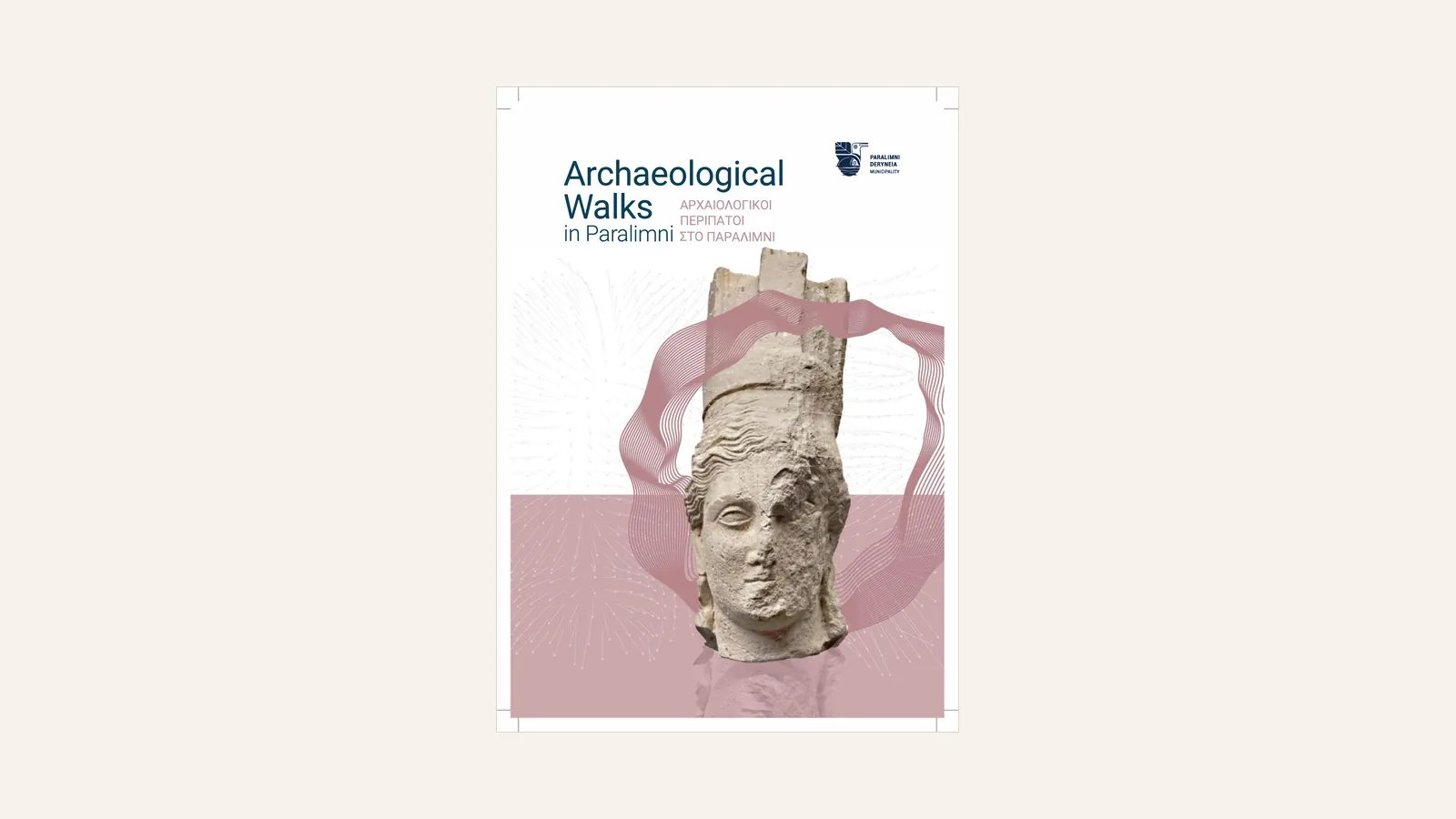
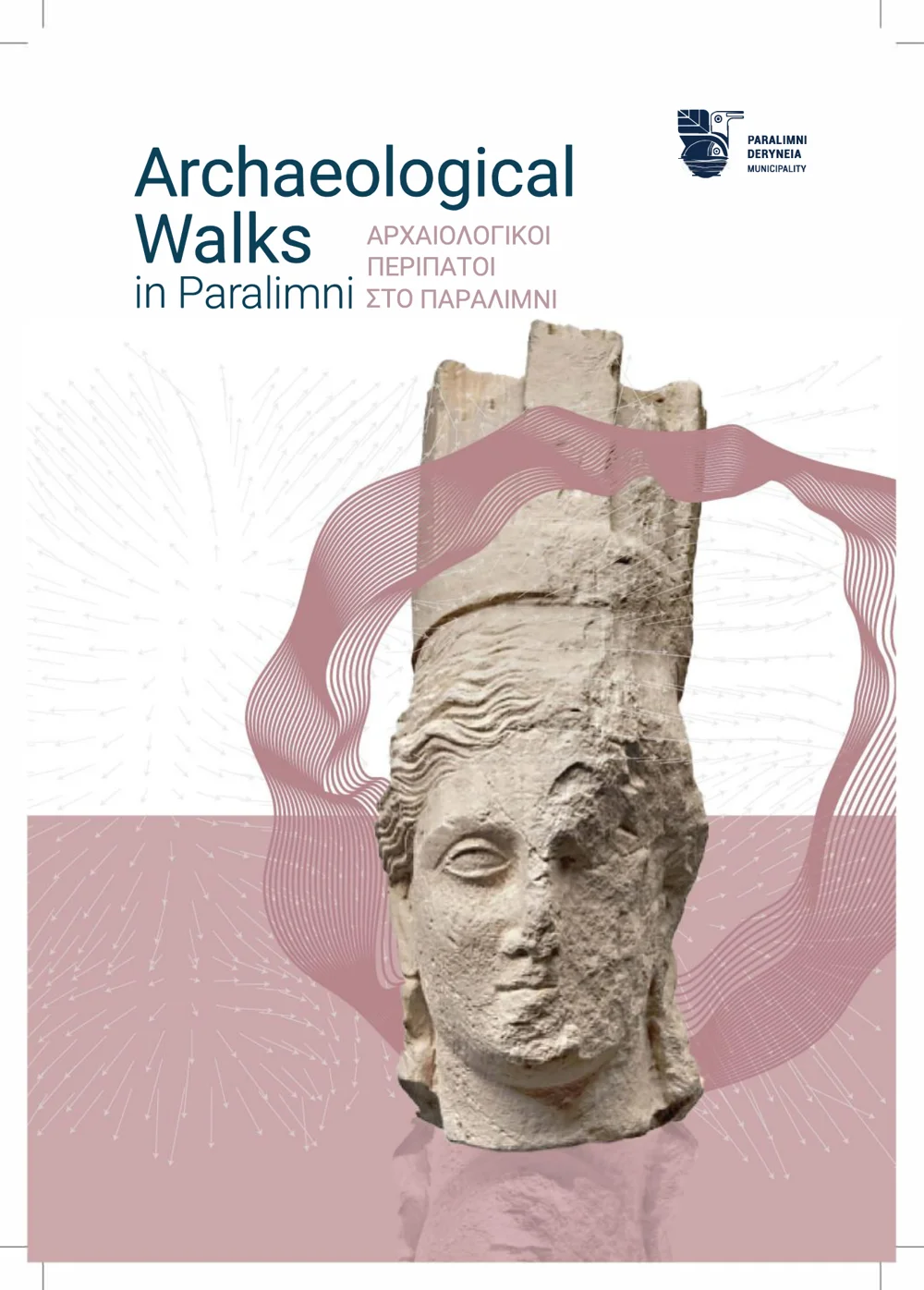
The cover shows a colossal 4th-century BCE limestone head wearing a crown shaped like a city wall. The guide calls it Aphrodite, found at Lefkolla, and says it is in the Neues Museum in Berlin.
Nissia, a coastal village of the Ceramic Neolithic, was excavated by the Department of Antiquities from 1995 under Pavlos Flourentzos, who uncovered an 83 m enclosure wall with a gateway.
The guide can be read on the municipality's website.
Original sources
On ancientcyprus.com
More in Books
- New book publishes Kition houses lived in through the end of the Bronze Age, c. 1250–1000 BCE
- Amulets, ivories and lead objects from the Met’s Cesnola Collection get their own catalogue
- Catalogue to accompany a new Kykkos gallery for David Johnson's donated Cypriot antiquities
- Cypriot votive terracottas get one chapter in an Archaeopress volume on clay figures in motion
- Early Neolithic groups gathered seasonally at Ais Giorkis in the Troodos foothills, final report argues