
Books·New book
Amulets, ivories and lead objects from the Met’s Cesnola Collection get their own catalogue
Annie Caubet, curator emerita at the Louvre, catalogues more than 200 Cypriot objects in New York in the fifth volume of the Met’s Cesnola series, due on 1 December 2026.



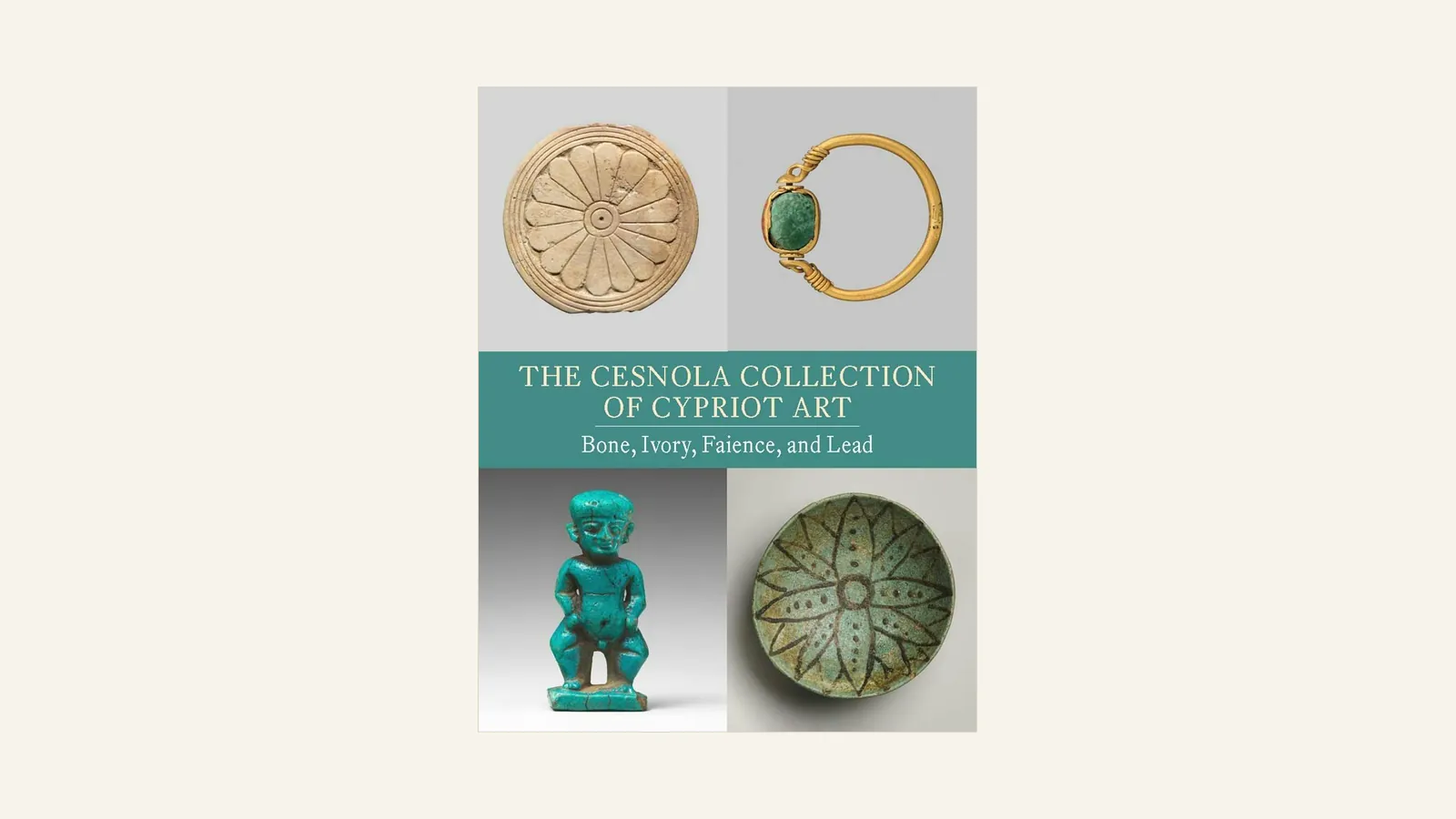
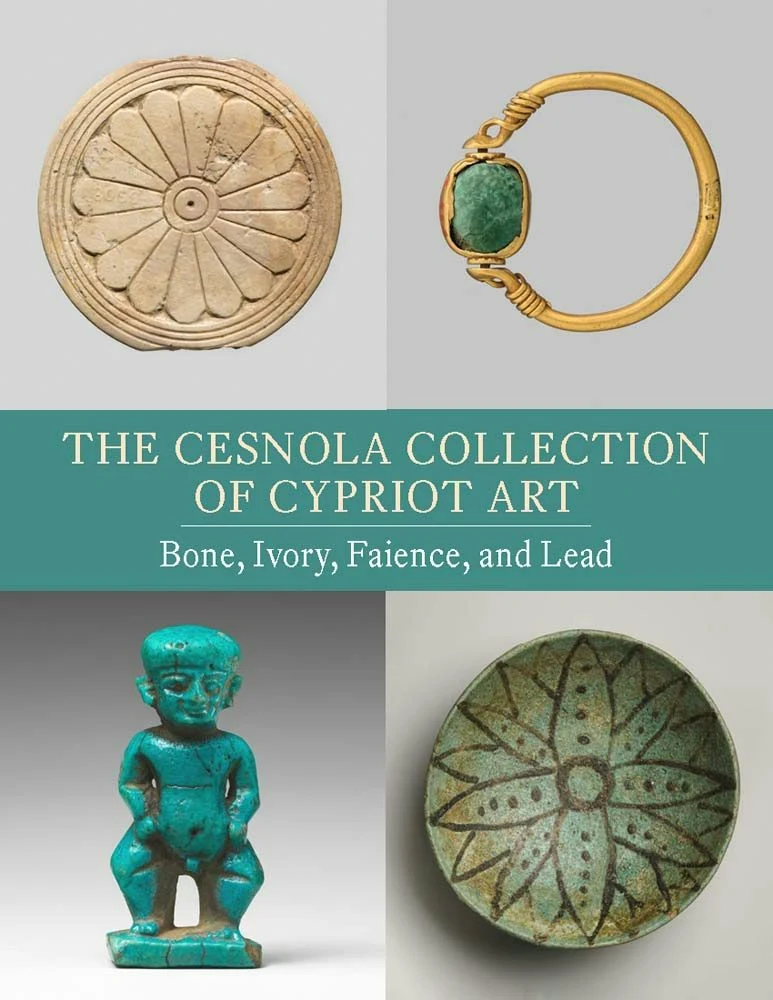
The book
- Title
- The Cesnola Collection of Cypriot Art: Bone, Ivory, Faience, and Lead
- By
- Annie Caubet
- Publisher
- The Metropolitan Museum of Art, 2026
- Series
- The Cesnola Collection of Cypriot Art
- Pages
- 300
- ISBN
- 9781588398277
Annie Caubet has written the catalogue of the Cesnola Collection's objects in bone, ivory, faience and lead, the small Cypriot pieces in New York that range in use from personal ornaments and amulets to containers and the weights of spindles. The Cesnola Collection of Cypriot Art: Bone, Ivory, Faience, and Lead covers more than two hundred objects in these and other materials. The Metropolitan Museum of Art is the publisher and Yale University Press the distributor, whose catalogue page gives a publication date of 1 December 2026: a paperback of 300 pages with 275 colour illustrations, ISBN 9781588398277, priced at $100.
Caubet is a professor at the École du Louvre and curator emerita of the Near Eastern antiquities department at the Louvre.
What the volume covers
According to the publisher, Caubet studies how Cypriot workshops used imported materials and took up motifs from other cultures, and what the objects show of the island's dealings with its neighbours: Egypt and the Phoenician cities, Assyria and Anatolia, Greece and Rome. She also compares the New York pieces with finds from recent excavations on the island. Yale describes the result as a picture of everyday life around the Mediterranean in the Late Bronze Age, and as a reference work for telling where such objects were made, from what, and by which techniques. Readers who want the background on one of the materials can start with our page on faience in ancient Cyprus.
The fifth volume of the Met's Cesnola catalogue
The objects reached New York through Luigi Palma di Cesnola, who sold the museum two collections of Cypriot antiquities in the 1870s and directed it from 1879 until his death in 1904. About 6,000 objects were left after a sale in 1928. In 1997 Vassos Karageorghis was appointed consultant for their reinstallation, working with Joan R. Mertens, the Met's curator of Greek and Roman art; about 1,200 pieces went on show in four permanent galleries that opened in April 2000.
Since 2014 the museum has been publishing the collection in volumes by material. Stone Sculpture, by Antoine Hermary and Mertens, came first in 2014. Terracottas, by Karageorghis with Gloria S. Merker and Mertens, followed in 2016, then two books by Christopher S. Lightfoot, Ancient Glass in 2017 and Terracotta Oil Lamps in 2021. Caubet's book is the fifth in the series, according to the publisher.
Original sources
On ancientcyprus.com
More in Books
- Catalogue to accompany a new Kykkos gallery for David Johnson's donated Cypriot antiquities
- Cypriot votive terracottas get one chapter in an Archaeopress volume on clay figures in motion
- Early Neolithic groups gathered seasonally at Ais Giorkis in the Troodos foothills, final report argues
- Jennifer Webb's forthcoming book studies 3,327 Early and Middle Bronze Age metal finds from Cyprus
- Children painted some 'crude' Bronze Age pots at Kalopsidha, new book on Cypriot ceramics argues