
Events·Event
British Museum curator to speak on Grigoris Antoniou, foreman of 1880s digs in Cyprus, in London
A free day at Cyprus House on 22 November pairs an art film about Antoniou's imagined archive with SKAMMATA, a Department of Antiquities documentary.



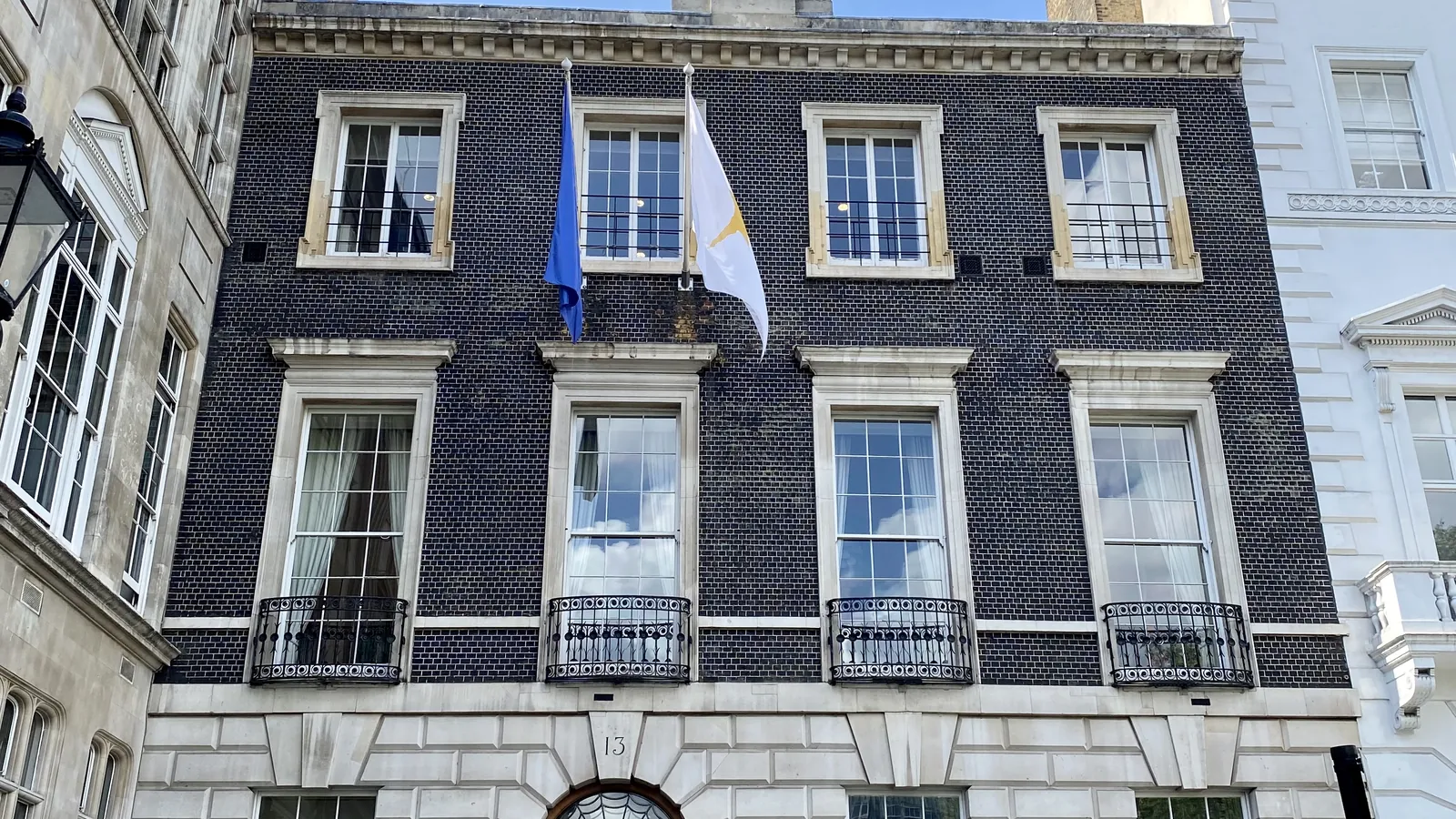
Lecture
- When
- 22 November 2026 In 33 days
- Where
- Cyprus House, 13 St James's Square, London
- Admission
- Free
The British Museum's curator of Cypriot antiquities, Dr Thomas Kiely, will give a lecture in London on Sunday 22 November 2026 on Grigoris Antoniou, the Cypriot who led the workmen on British excavations on the island in the 1880s and 1890s. The talk sits inside a day of films and discussion at Cyprus House, which the Cultural Section of the Cyprus High Commission announced for its series Discovering Ancient Cyprus: A Month of Archaeology, Mythology and Cultural Heritage. The organisers present Antoniou as a foreman whose share in the island's excavations has gone largely without credit.
The programme
After a welcome at 11:00, Professor Theopisty Stylianou-Lambert presents The Archive of Grigoris Antoniou: A Speculative Archive, the art and research project she made with Alexia Achilleos. It combines archival work, objects in museums and images generated by artificial intelligence, and asks how archives come into being and where a record of the past shades into invention.
The project's short film, The Archive of Grigoris Antoniou: Notes of an Archivist (2025, 13 minutes), follows at 11:20. Commissioned by the Hasselblad Foundation in Sweden, it has Martha, an invented museum archivist, and an AI "Museum Bot" sort a neglected set of Cypriot lantern slides from the early twentieth century, running into contradictions and glitches along the way. The work was shown in 2025 in Bugs & Metamorphosis: Glitching Photography at the Hasselblad Foundation, and from June to December that year at Kunsthal Aarhus in Denmark.
At 11:35 Kiely, who looks after the Cyprus Collection at the British Museum, speaks on Antoniou's life and the archaeology behind the project. An audience discussion and a coffee break follow.
From 12:50 the afternoon is given to SKAMMATA (2024, 87 minutes), directed by Danae Stylianou and produced by the Department of Antiquities. The documentary follows the archaeologists, conservators and researchers at work on excavations across Cyprus. A question session closes the day at 14:45. The High Commission aims the event at a general audience; entry is free, and places must be booked in advance.
Who Antoniou was
Antoniou came from Larnaca, and the excavation reports write his name as Gregorios, Gregori or Gregorio. He learned the work under Max Ohnefalsch-Richter, the German excavator and dealer, before the Cyprus Exploration Fund hired him. In 1888 he went with the Fund's team as foreman to Kouklia, the site of ancient Palaepaphos [1], and in 1889 he was foreman at Polis [2]. When the British Museum began digging at Amathus at the end of 1893 it took him on at once [3]; he was superintendent of its excavations in 1896 and 1897 [4]. In 1897 he opened a tomb in the Mari and Kalavasos area that held Mycenaean pottery.
His skills travelled. From 1902 he was foreman for Arthur Evans at Knossos in Crete [5], and in 1904 and 1905 he worked for David Hogarth at Ephesus [4]. Kiely himself, writing in 2015 about the Kouklia finds in the British Museum, called him "the redoubtable and indispensable Gregorios Antoniou" [6, p. 69].
Original sources
On ancientcyprus.com
References
- 1.Hogarth, D. G. (1888). The first season's work: preliminary narrative. In Gardner, E. A., Hogarth, D. G., James, M. R. and Elsey Smith, R., Excavations in Cyprus, 1887–88. Journal of Hellenic Studies 9, 149–174.
- 2.Childs, W. A. P., Smith, J. S. and Padgett, J. M. (eds) (2012). City of Gold: The Archaeology of Polis Chrysochous, Cyprus. Princeton: Princeton University Art Museum.
- 3.Goring, E. S. (1983). Late Cypriot Goldwork, vol. 1. PhD thesis, Bedford College, University of London.
- 4.Tatton-Brown, V. (ed.) (2001). Cyprus in the 19th Century AD: Fact, Fancy and Fiction. Oxford: Oxbow.
- 5.Lapatin, K. (2002). Mysteries of the Snake Goddess: Art, Desire, and the Forging of History. Boston: Houghton Mifflin.
- 6.Kiely, T. (2015). Finds from Kouklia in the British Museum. Cahiers du Centre d'Études Chypriotes 45, 63–80.
More in Events
- Leiden hosts PoCA 2026, the 23rd Postgraduate Cypriot Archaeology Meeting, on 11–13 November
- Today in Cypriot Archaeology: 19 October 2026
- Pylon exhibition in Limassol traces the Episkopi men J. Lawrence Angel measured in 1949
- Oxford's Amy Styring talks on crop isotopes and past farming at the Cyprus Institute on 30 October
- Cesnola's biographer Anna Marangou lectures on him and the Ohnefalsch-Richters on 2 November