
Lecture·Archaeological Research Unit - University of Cyprus·2018·In Greek
The Mosaics of the House of Aion and the House of Achilles from Nea Paphos: A Case of an Interpretive Bubble?
Τα ψηφιδωτά της οικίας του Αιώνα και της οικίας του Αχιλλέα από τη Νέα Πάφο: Μια περίπτωση ερμηνευτικής φούσκας;
Georgios Deligiannakis
Chapters
About the lecture
In this lecture, given in Greek, Georgios Deligiannakis of the Open University of Cyprus reviews the historiography and iconography of the Roman mosaic floor in the House of Aion at Nea Paphos. Dated stratigraphically by coins of Licinius I and Constantius II to the second quarter of the fourth century AD and destroyed by the earthquakes of the late 360s, the floor decorates a triclinium with five mythological panels: Leda and the Swan, Hermes holding the infant Dionysos, the beauty contest of Cassiopeia and the Nereids judged by Aion, the triumph of Dionysos, and Apollo with Marsyas.
Deligiannakis traces how the excavator, Wiktor Daszewski, and later Glen Bowersock read the floor as a unified religious manifesto promoting Dionysos as a monotheistic or henotheistic saviour god in opposition to Christianity, drawing on texts by Proclus, Macrobius, and Nonnus of Panopolis. He then examines the Neoplatonic interpretation developed by Jean Ch. Balty and Janine Balty, who compared the Paphos floor with Cassiopeia mosaics from Apamea and Palmyra and read the panels as an allegory of the soul's incarnation, triumph over matter, and return to the divine sphere.
Testing these readings against the ancient philosophical texts they cite, Deligiannakis argues that neither the embrace of Odysseus and Penelope at Apamea nor the myth of Cassiopeia appears in the relevant Neoplatonic passages, and that the five panels at Paphos do not form a single philosophical or anti-Christian programme. Following the critique of Johannes Deckers and Günther Zuntz, he shows that four of the panels recycle stock motifs, imperial iconography, and personifications suited to a banquet hall and elite self-presentation in Late Antiquity. For the central panel, he suggests that the victorious Cassiopeia and the figure of Aion reflect a Syro-Phoenician mythological tradition, comparable to the Phoenician History of Philo of Byblos or a lost local epic.
In a long discussion afterwards, a speaker introduced as Mr Anastassiades connects the Cassiopeia tradition with Pausanias's reference to the sanctuary of Poseidon and the Nereids at Gabala on the Syrian coast, while another respondent argues from the lack of mosaicists' signatures and Diocletian's Price Edict that mosaic floors were regarded in antiquity as craft decoration rather than high art.
Background
Where to read more on this site before or after watching.
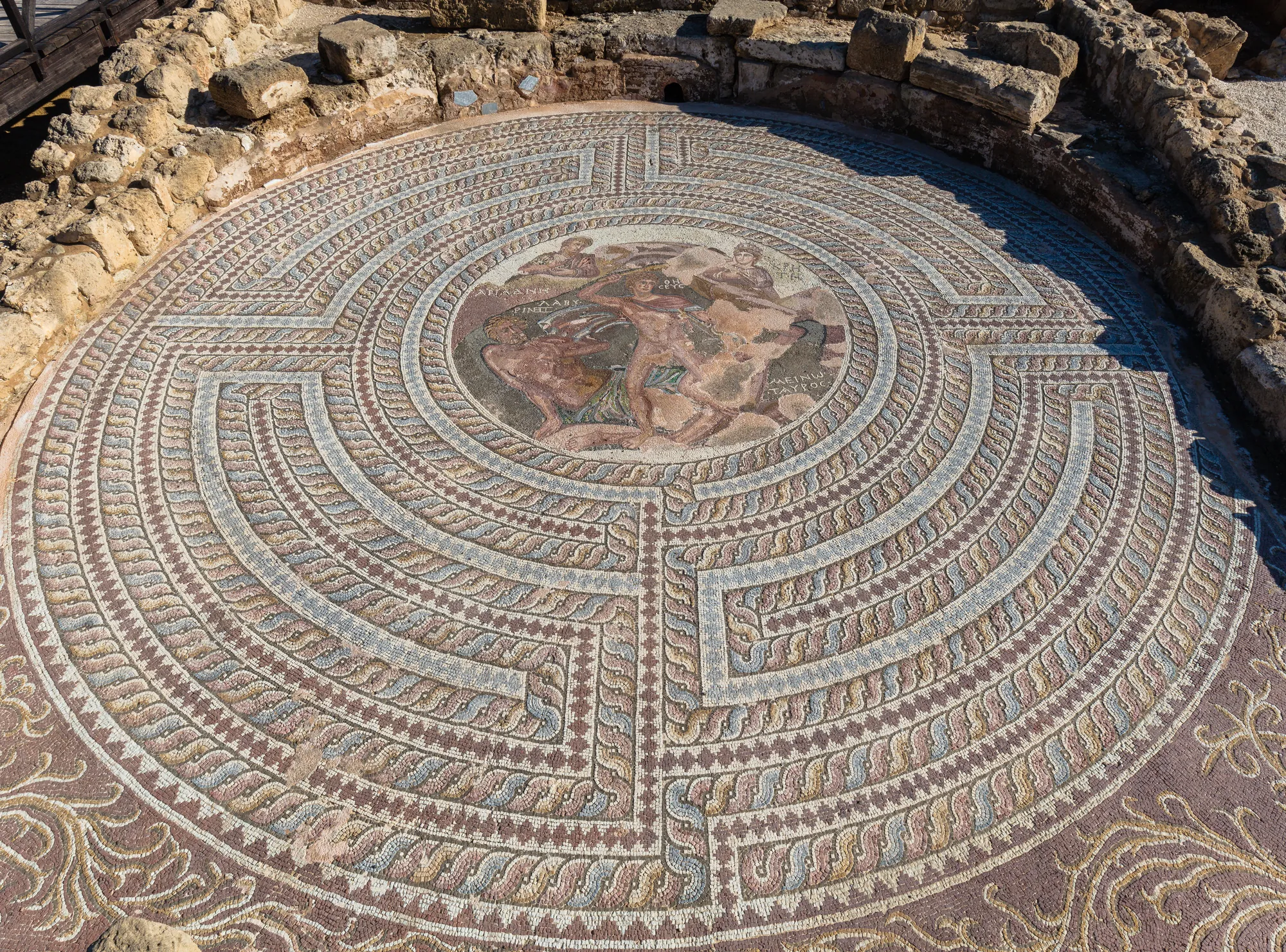
In the compendium
Hellenistic and Roman Houses
Town houses on Cyprus from the founding of Nea Paphos in the late 4th century BC to the earthquakes of the 4th century AD, from mosaic-floored peristyle houses to a mudbrick house at Kourion.
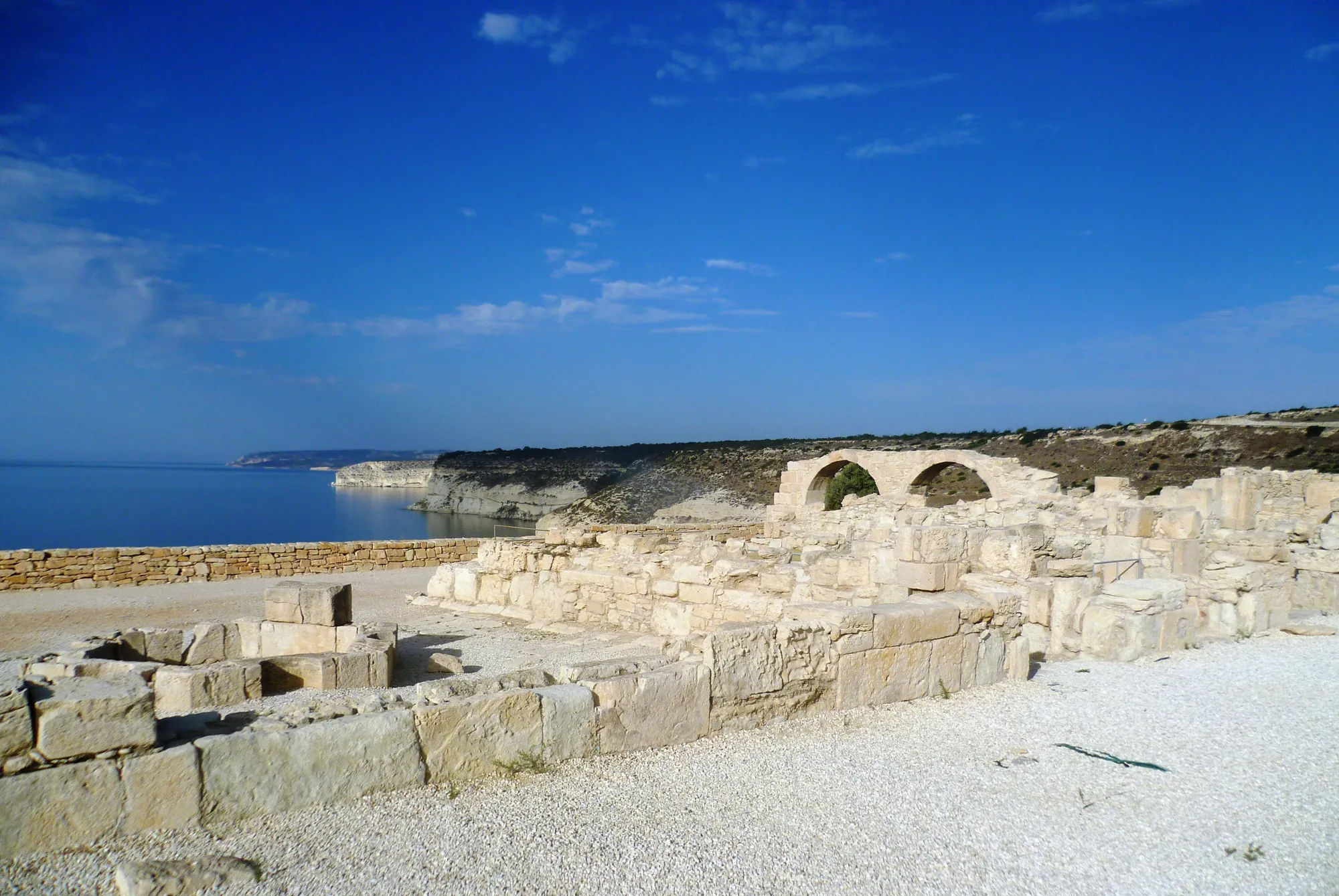
In the compendium
Earthquakes in Ancient Cyprus
The earthquakes proposed for ancient Cyprus, from disputed Bronze Age destructions to the 4th-century CE shocks that left Kourion in ruins.
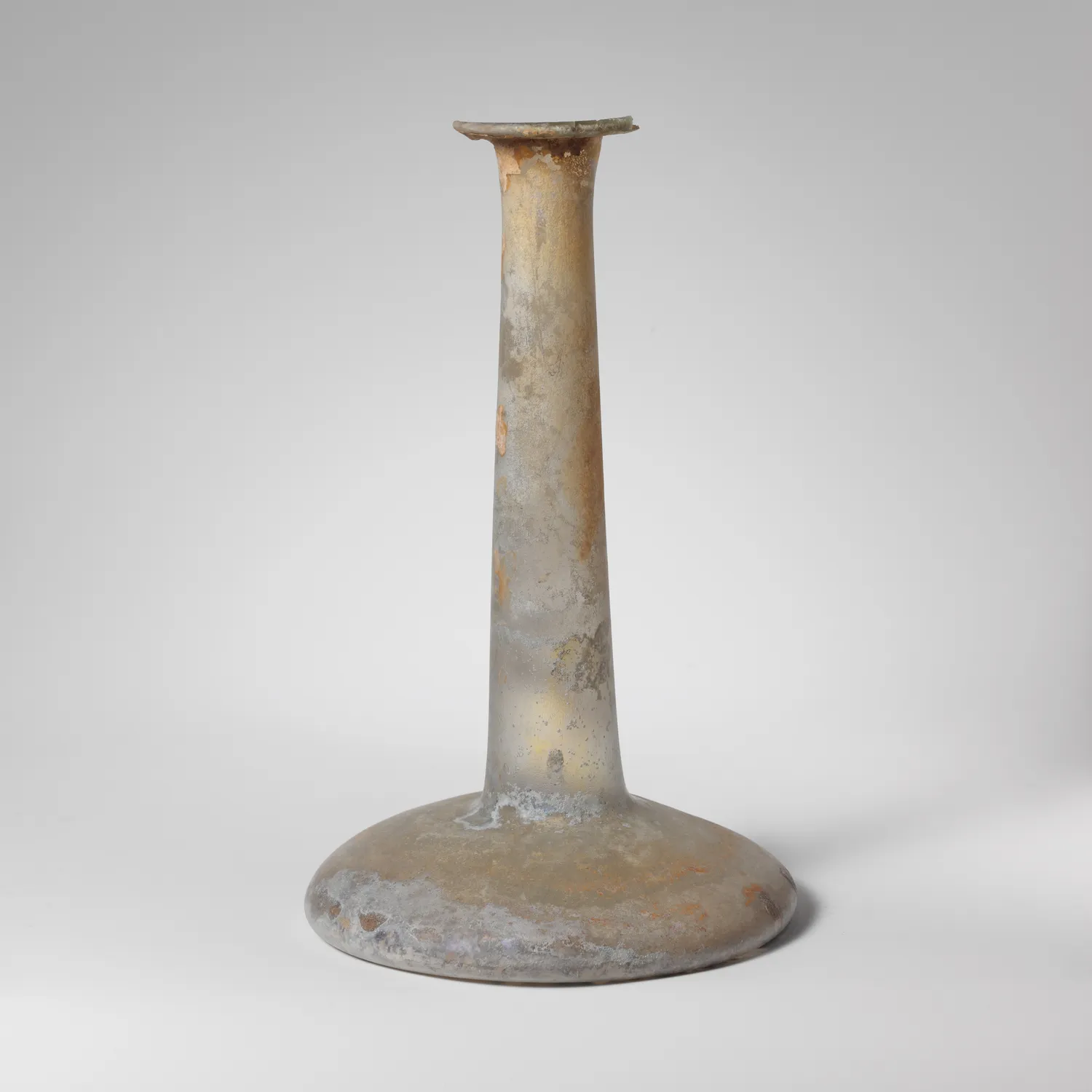
The period
Roman
Cyprus as a Roman province from 58 BCE to the fourth century CE, governed from Nea Paphos, mined for copper, and finally wrecked by earthquakes.