
Video essay·Dig.·2025
Phoenician Tyre: The Rise, Reach, and Fall of a Maritime Power
This video covers more than Cyprus. The description below concentrates on its Cypriot parts, the first of which begins at 20:20.
Chapters
About the video
This video essay from the channel Dig. surveys the history of the Phoenician island city of Tyre from its Bronze Age origins and purple-dye industry to its capture by Alexander the Great. Alongside Tyre's relations with Sidon, Israel, Babylon, and Carthage, the narrator returns several times to Cyprus during the Cypro-Archaic and Cypro-Classical periods.
In the account of the 9th century BC, the video notes that under King Ittobaal I, Tyre held sovereignty over Sidon, parts of the Byblos area, and parts of Cyprus. Reviewing the classical foundation myth of Carthage, the narrator recounts how Elissa (Dido) and Tyrian aristocrats fled King Pumayyatan (Pygmalion) and stopped on Cyprus on their way to North Africa.
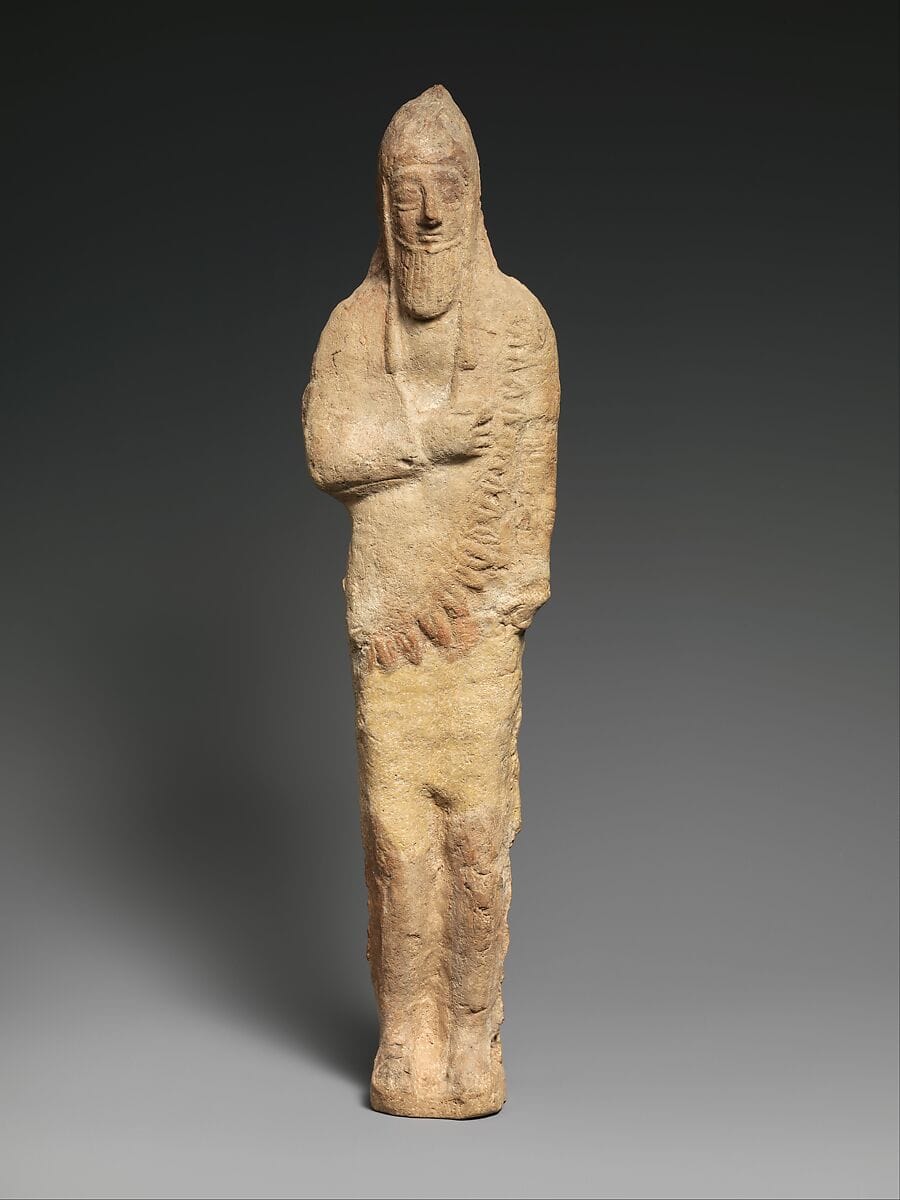
The longest Cypriot segment concerns the Neo-Assyrian Empire. Sargon II made an expedition to Cyprus and erected a stele at the Tyrian colony of Kition commemorating the submission of the kings of the Cypriot city-kingdoms; the narrator argues that Sargon could hardly have mounted this expedition without Tyre's assistance. Toward the end of Sargon's reign, the Tyrian king Luli faced a revolt by Kition, which probably objected to paying double tribute to Tyre and Assyria. Sargon put down the revolt in Cyprus, received Sidon's submission, and besieged Tyre with sixty ships supplied by Cyprus and Phoenician client states. When Sargon's successor Sennacherib arrived, Luli fled to Cyprus.
Under Achaemenid Persia, Cypriot and Phoenician fleets aided Cambyses in Egypt, while Tyre assisted Persia in conquering Cyprus and Ionia. In the late 5th and early 4th centuries BC, Evagoras I, king of Salamis, rebelled against Persia, seized much of Cyprus, and took Tyre before making peace in 376 BC.
From our collection
Pieces in the Drakopoulos collection of the kinds and periods this talk covers: Cypro-Archaic.
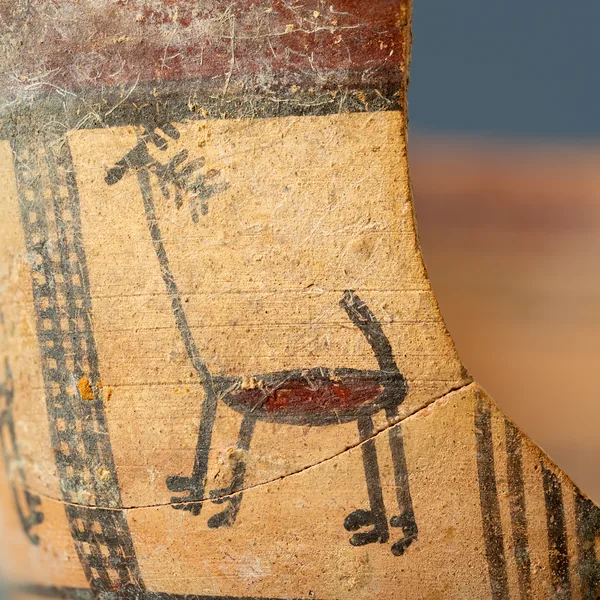
Bichrome Skyphos with Stags in Metopes
Cypro-Archaic
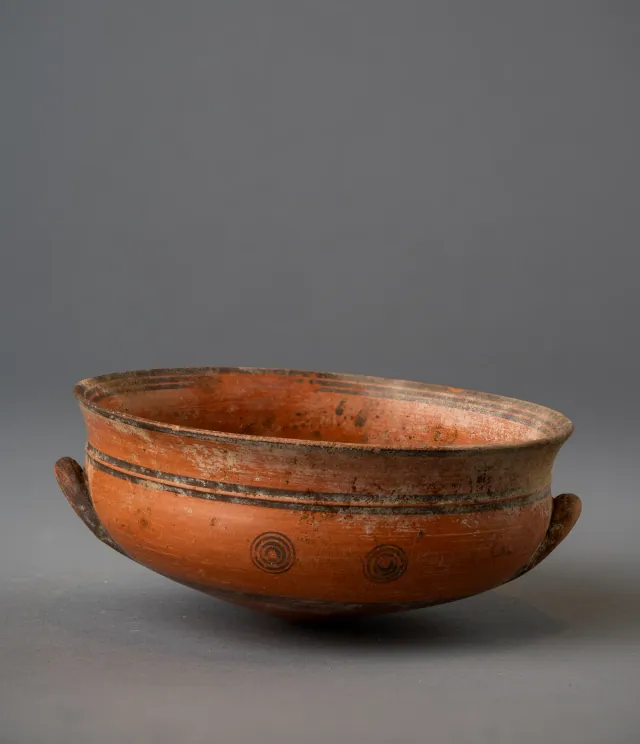
Black-on-Red Two-Handled Bowl with Raised Flaring Rim
Cypro-Archaic
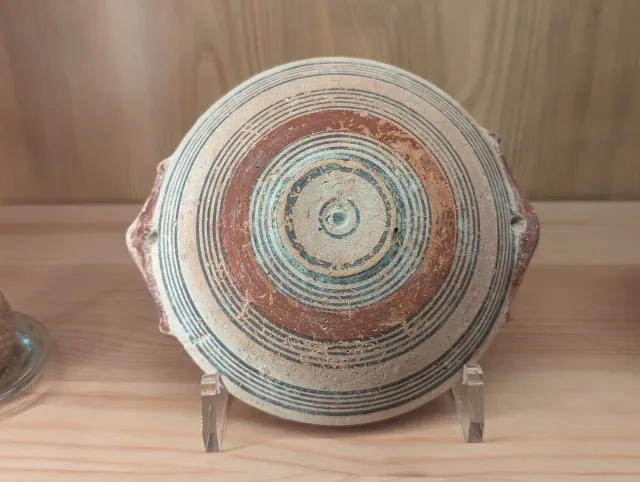
Bichrome IV Bowl with Red-Painted Pierced Lug Handles
Cypro-Archaic
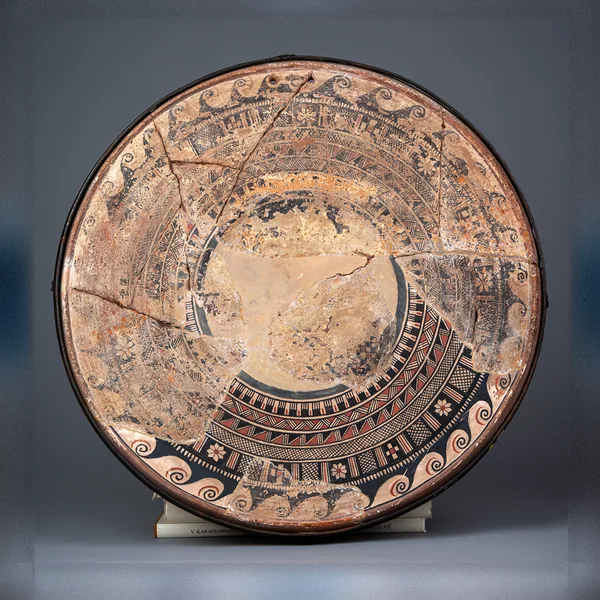
Large Bichrome Plate from Salamis with a Wave Band and Rosette Metopes
Cypro-Archaic
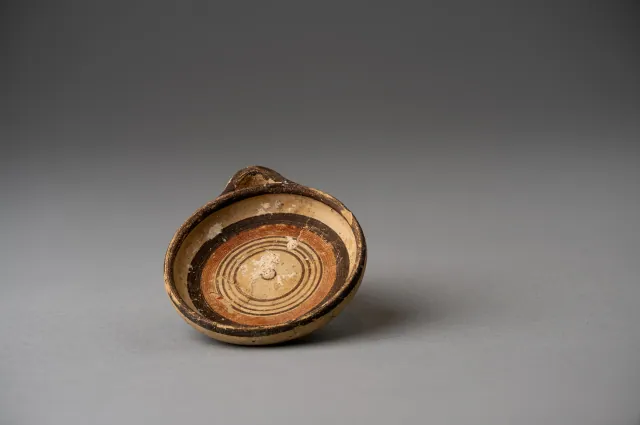
Miniature Bichrome Plate with Concentric Circles
Cypro-Archaic
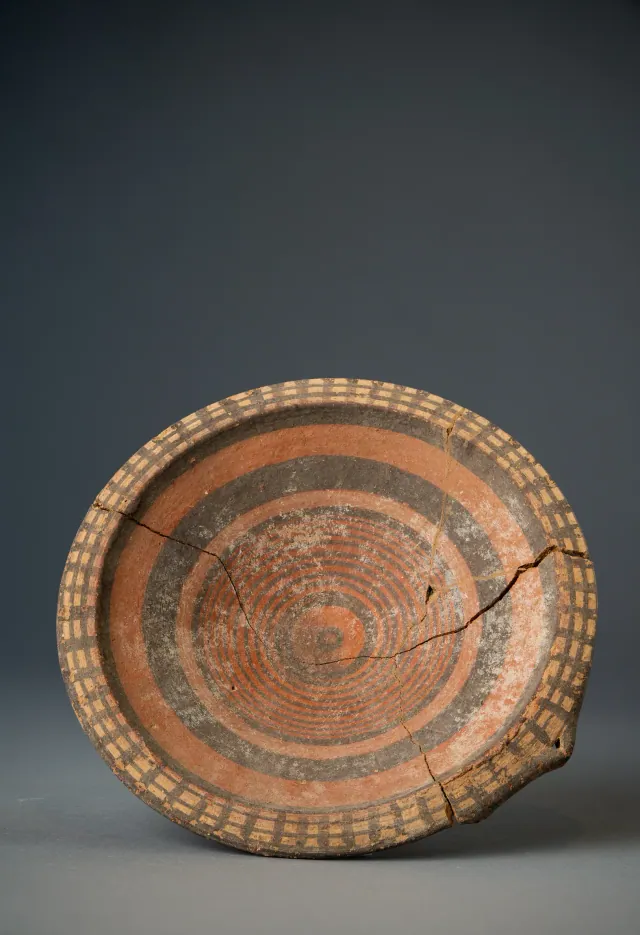
Black-on-Red Plate with Barred Rim and Concentric Circles
Cypro-Archaic
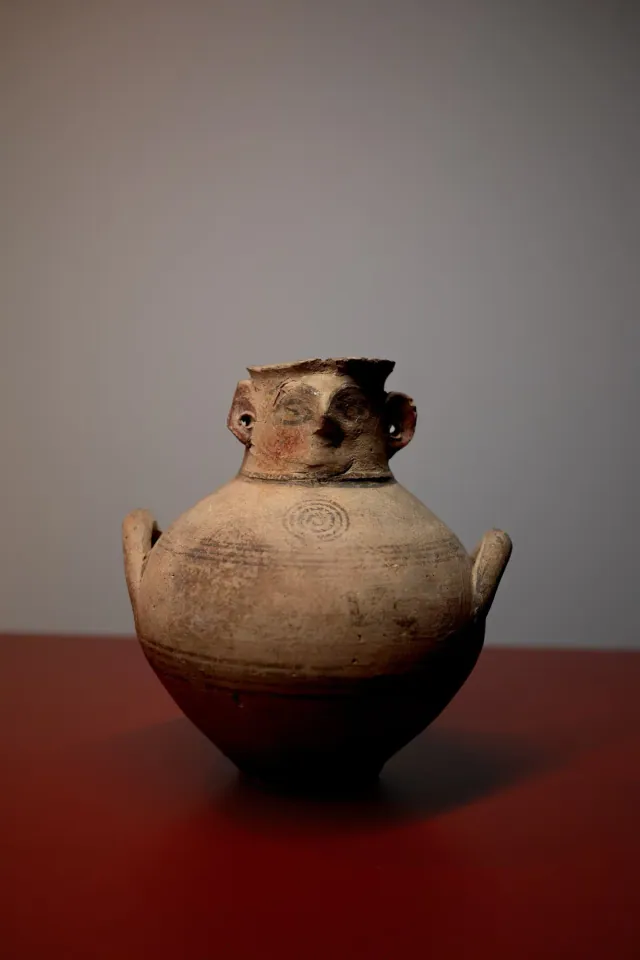
Bichrome IV Face-Neck Jar of the Kourion Type
Cypro-Archaic
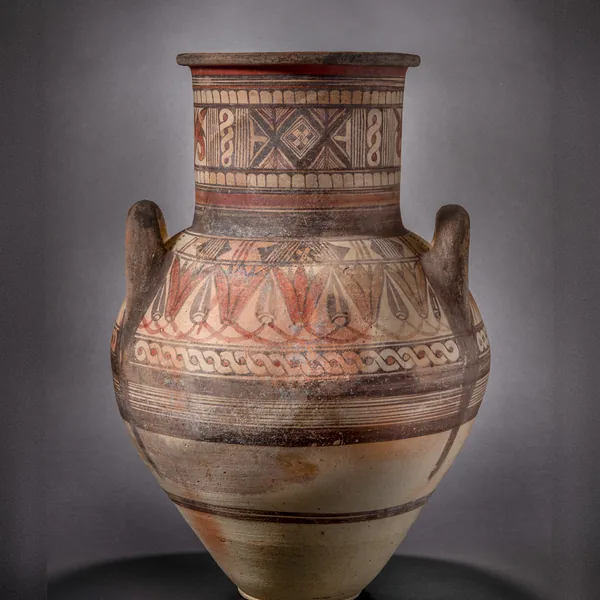
Bichrome IV Amphora with a Lotus-and-Bud Shoulder Frieze
Cypro-Archaic
Found at the places discussed
Objects in our catalogue, in museum collections, recorded as found at these sites.



Background
Where to read more on this site before or after watching.
The site
Kition
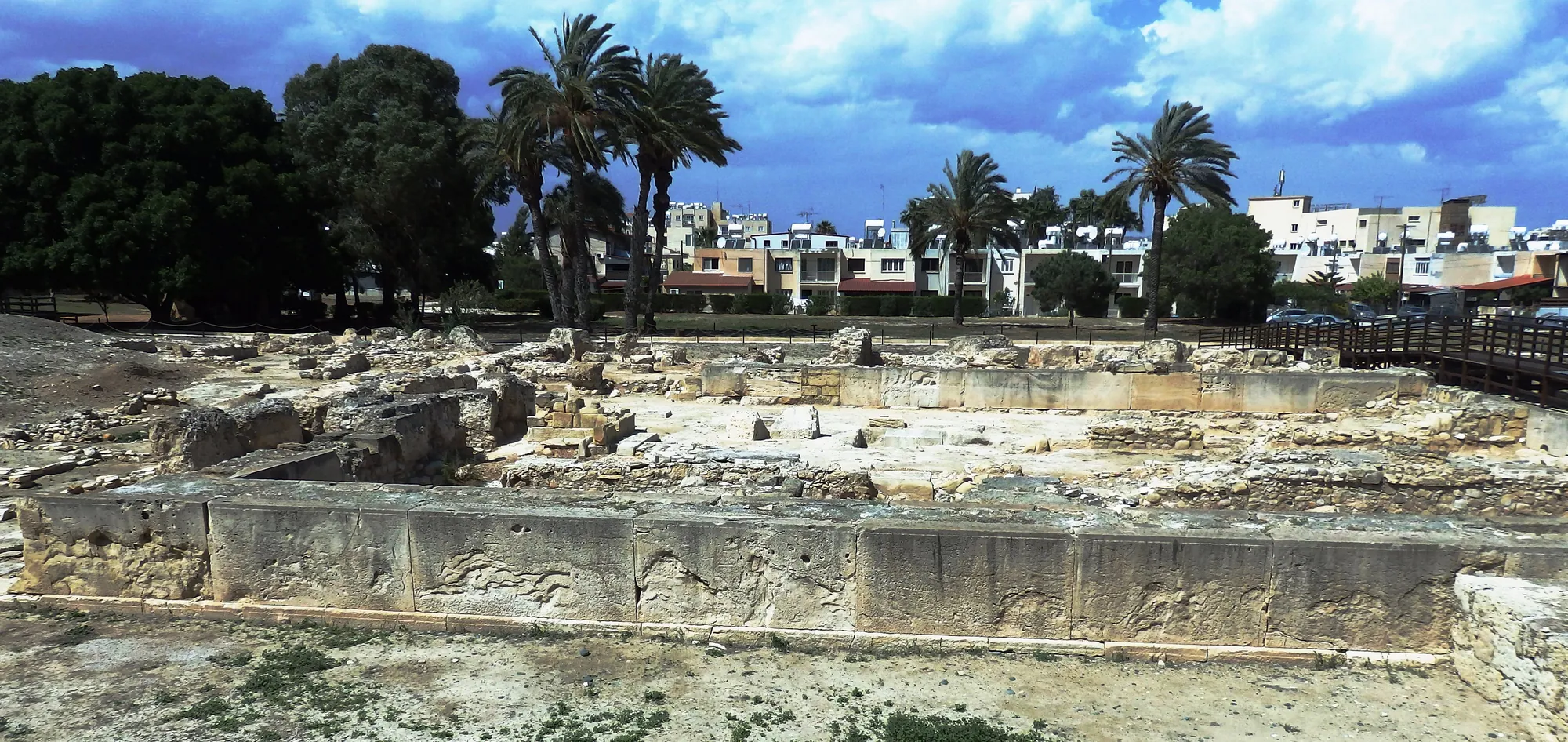
Kition lies under modern Larnaca on the south-east coast. It was founded as a harbour town in the 13th century BC, with temples and copper workshops in its sacred quarter at Kathari. After a long gap the Phoenicians rebuilt the main temple for Astarte, and from the 5th century BC the city was the seat of a Phoenician dynasty with a war harbour of ship sheds at Bamboula. Its last king was put to death by Ptolemy I in 312 BC, but the city lived on into the Roman period and beyond.
In the compendium
Iron Age Cities and Palaces
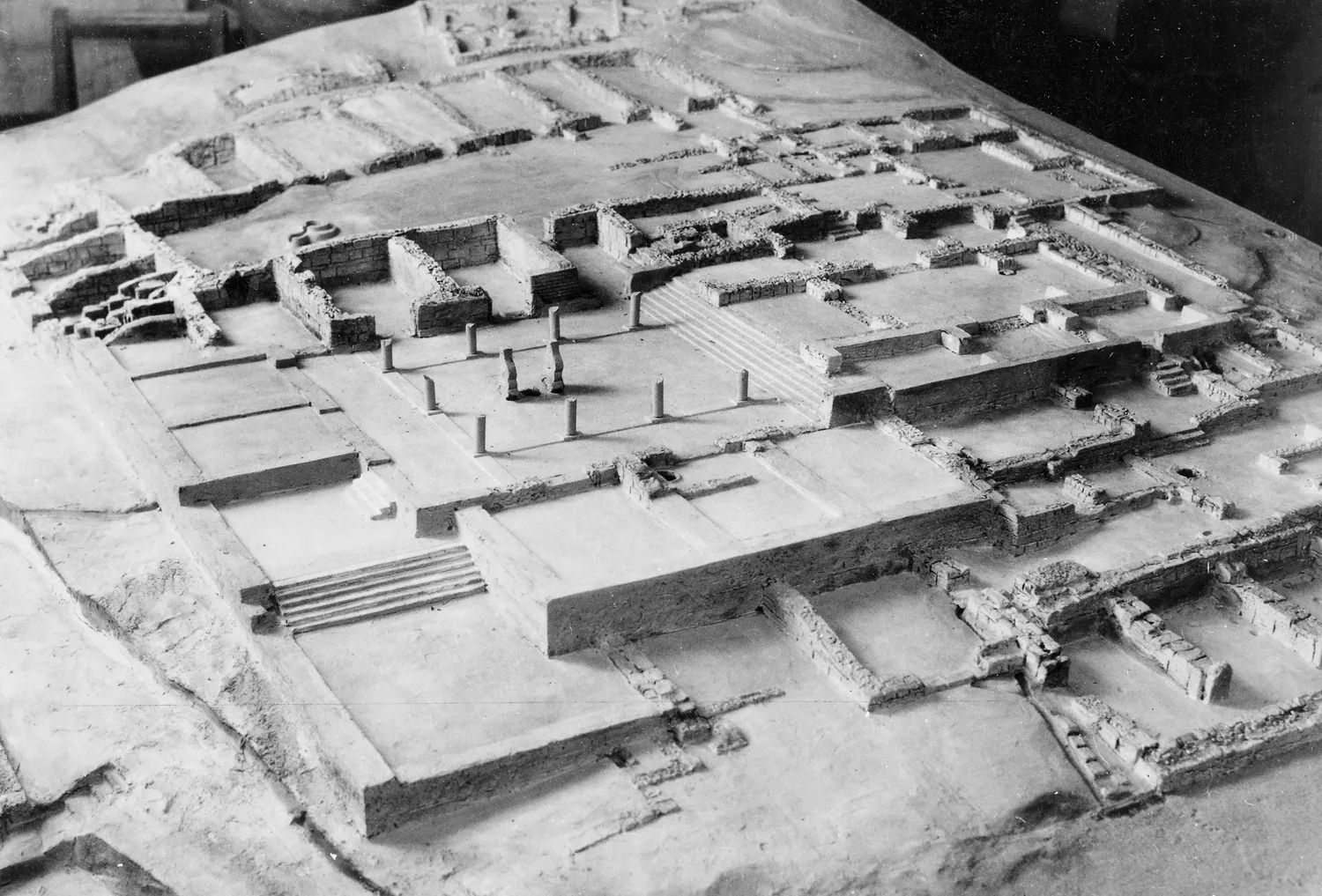
The capitals of the Iron Age kingdoms of Cyprus, their palaces at Vouni, Amathus, Idalion and Palaepaphos, their houses, and the volute and Hathor capitals of the period.
In the compendium
Achaemenid Persia
The Persian Empire, which held the Cypriot city-kingdoms as tribute-paying client states from c. 545 or 525 BCE until 332 BCE.
In the compendium
Neo-Assyrian Empire and Cyprus
The Mesopotamian empire to which the Cypriot kings submitted around 709 BCE, ruling them indirectly as tribute-paying clients.