
Video·Wanax TV·2025
Identity of the Sea Peoples (Bronze Age Collapse)
This video covers more than Cyprus. The description below concentrates on its Cypriot parts, the first of which begins at 14:00.
Chapters
About the video
In this two-hour livestream, the host of Wanax TV examines the identity of ten groups associated with the Sea Peoples during the collapse of the Late Bronze Age, tracing the chronology from the Battle of Kadesh to the c. 1175 BC invasion of Egypt under Ramesses III and the Onomasticon of Amenope.
Cyprus enters the talk in the overview of the 12th-century BC campaigns, where the host states that the Sea Peoples destroyed the kingdom of Alashiya on Cyprus before destroying Ugarit and the Hittite Empire. In the chronological section, he argues that the subsequent colonization of Cyprus by Mycenaean Greeks indicates that Greeks formed a major part of the Sea Peoples coalitions.
The main discussion of Cyprus comes in the section on the Sherden, whom the host links to Sardinia and the Nuragic civilization. He connects the Sherden to Pyla-Kokkinokremos, between Enkomi and Kition, occupied briefly between c. 1175 and 1150 BC after the fall of Alashiya. Citing Nuragic pottery found at the site, he suggests the settlement was abandoned after a few decades because Greek colonists took over most of the island. He adds that Phoenicians and Greeks later cohabited and ruled together at Kition in the Cypro-Archaic and Cypro-Classical periods, while inland cities retained remnants of the native population of Alashiya (whom he calls Eteocretans). Discussing the Peleset, he notes that mid-12th-century BC pottery and megaron architecture in Philistia match those of Mycenaean settlers on Cyprus. In the Tjeker section, he briefly mentions the Story of Wenamun (dated here to 1000 BC), in which the traveller is attacked by a mob on Cyprus.
From our collection
Pieces in the Drakopoulos collection of the kinds and periods this talk covers: Cypro-Archaic.
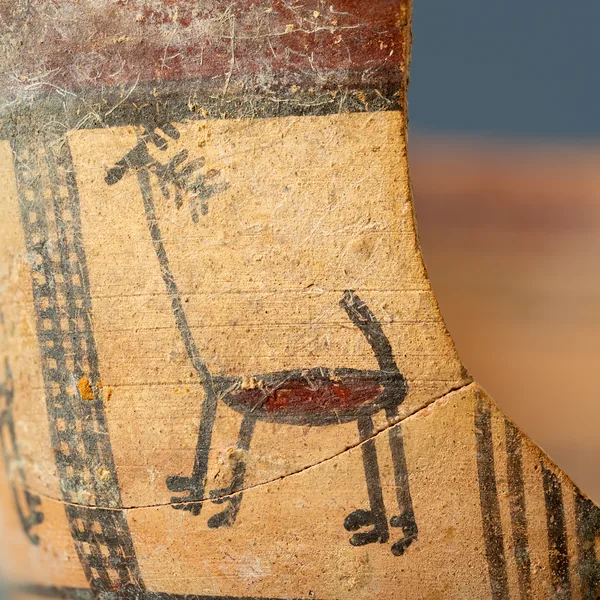
Bichrome Skyphos with Stags in Metopes
Cypro-Archaic
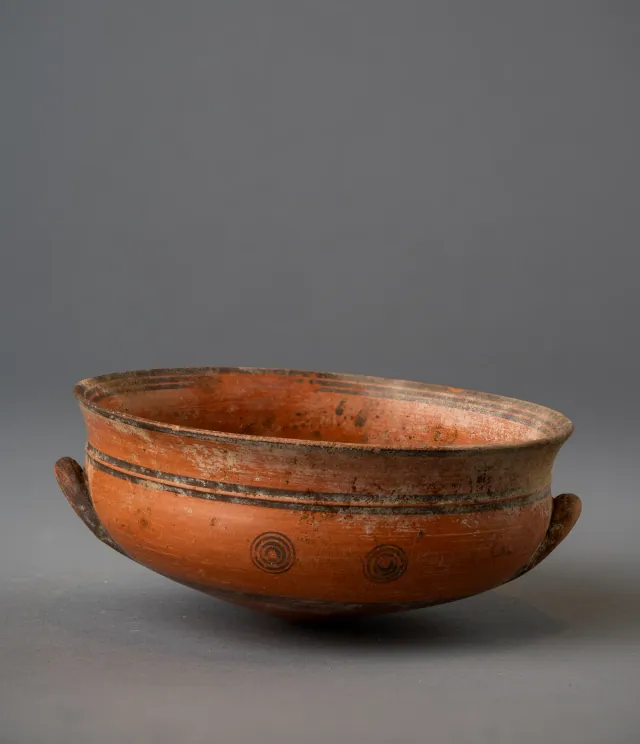
Black-on-Red Two-Handled Bowl with Raised Flaring Rim
Cypro-Archaic
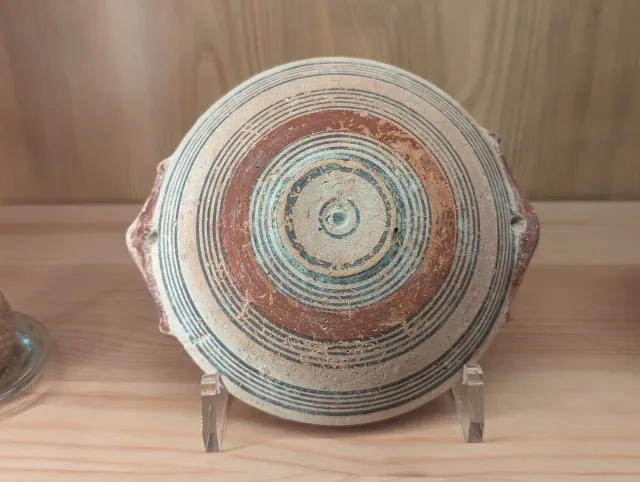
Bichrome IV Bowl with Red-Painted Pierced Lug Handles
Cypro-Archaic
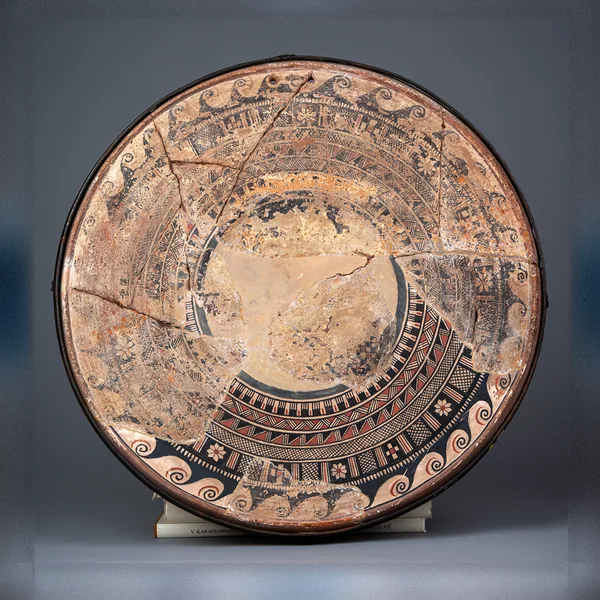
Large Bichrome Plate from Salamis with a Wave Band and Rosette Metopes
Cypro-Archaic
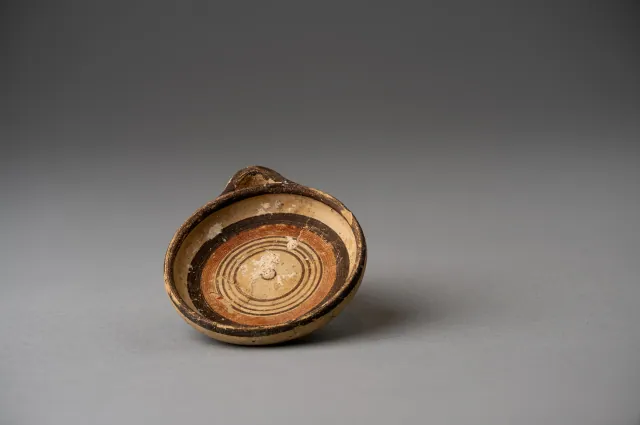
Miniature Bichrome Plate with Concentric Circles
Cypro-Archaic
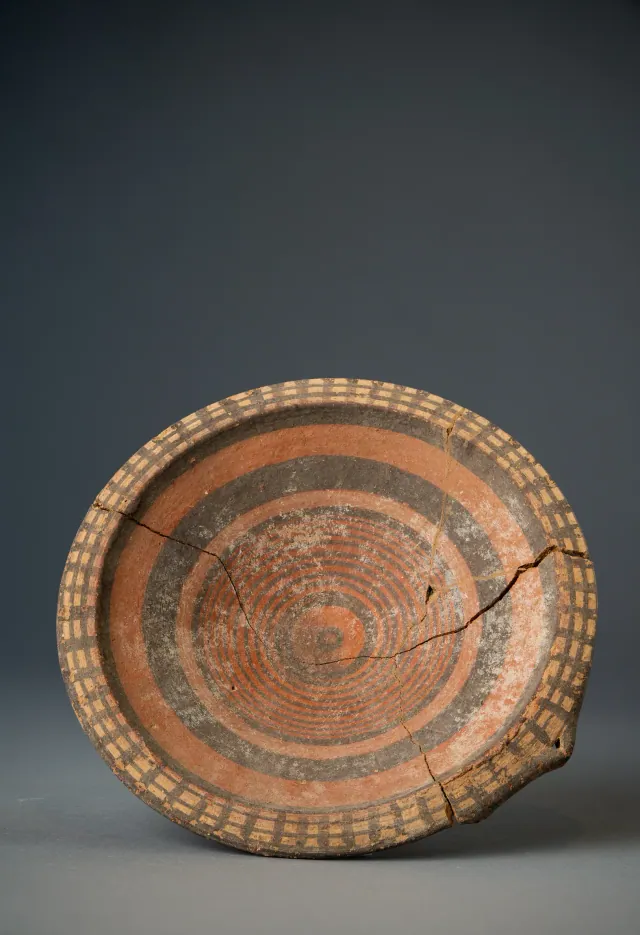
Black-on-Red Plate with Barred Rim and Concentric Circles
Cypro-Archaic
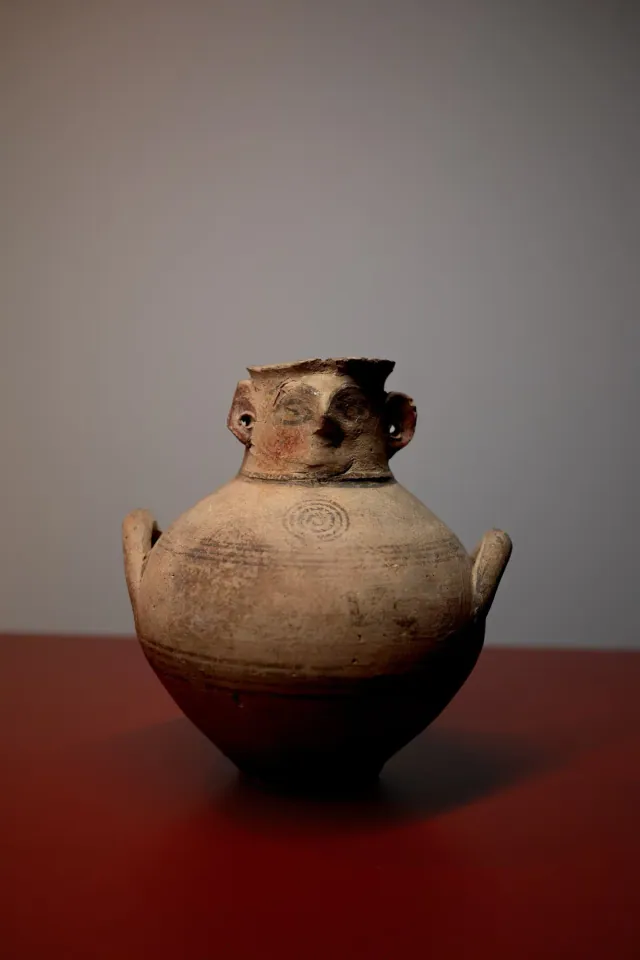
Bichrome IV Face-Neck Jar of the Kourion Type
Cypro-Archaic
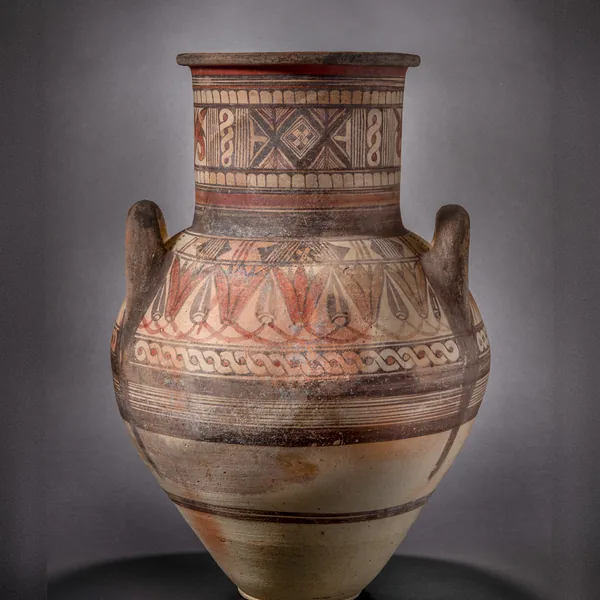
Bichrome IV Amphora with a Lotus-and-Bud Shoulder Frieze
Cypro-Archaic
Found at the places discussed
Objects in our catalogue, in museum collections, recorded as found at these sites.



Background
Where to read more on this site before or after watching.
The site
Kition
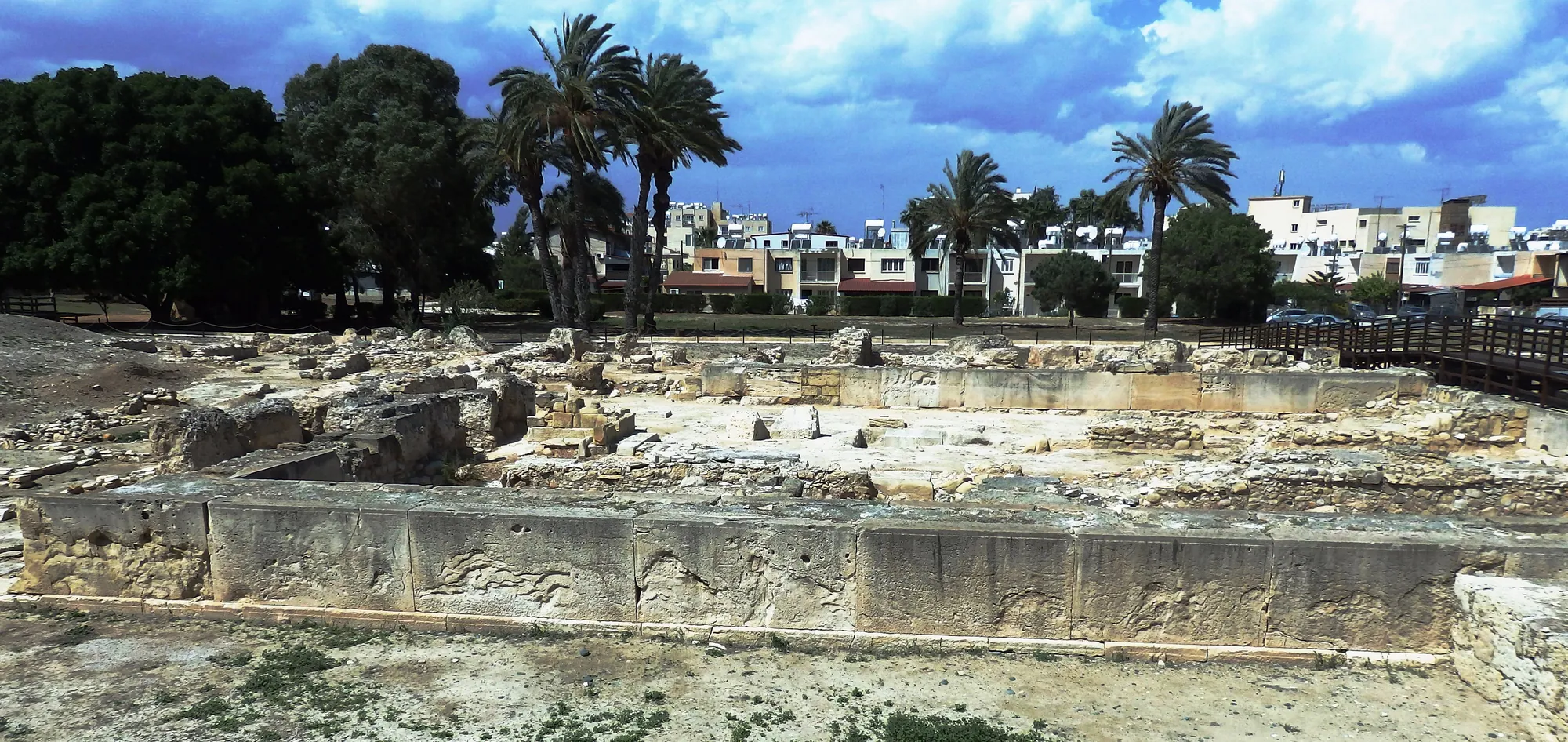
Kition lies under modern Larnaca on the south-east coast. It was founded as a harbour town in the 13th century BC, with temples and copper workshops in its sacred quarter at Kathari. After a long gap the Phoenicians rebuilt the main temple for Astarte, and from the 5th century BC the city was the seat of a Phoenician dynasty with a war harbour of ship sheds at Bamboula. Its last king was put to death by Ptolemy I in 312 BC, but the city lived on into the Roman period and beyond.
In the compendium
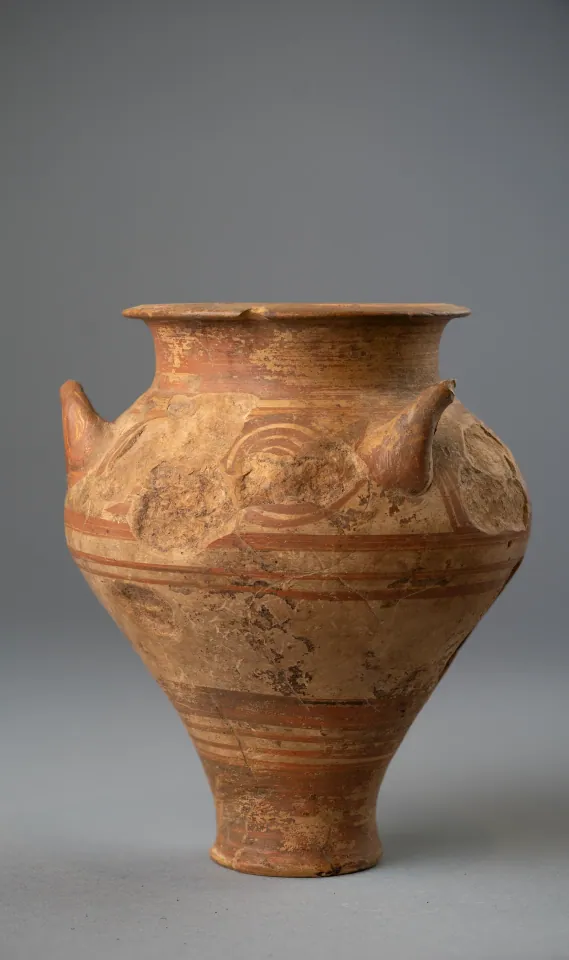
The Philistines
The 12th-century BCE newcomers to the southern Levantine coast, whose Aegean-style pottery, hearths and houses derive most directly from Cyprus.
In the compendium
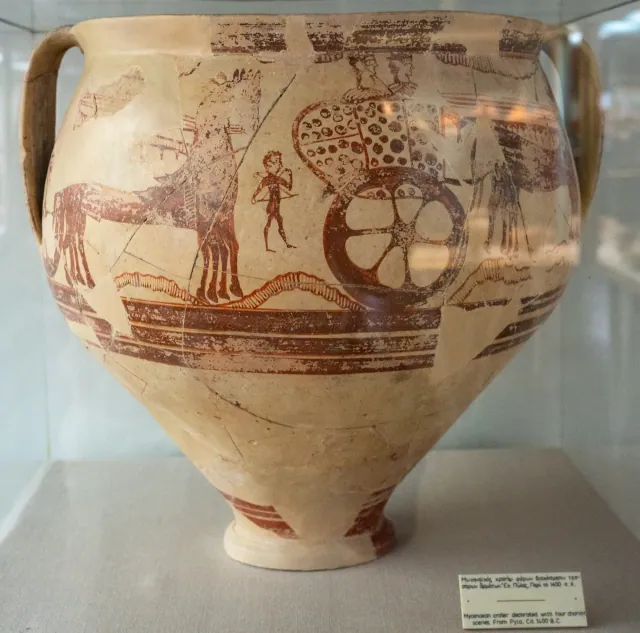
The Mycenaeans and Cyprus
The palatial Late Bronze Age societies of mainland Greece, whose pottery flooded Cypriot coastal towns in the 14th and 13th centuries BCE.
In the compendium
The Phoenicians
The Iron Age city-states of the Levantine coast, whose traders and settlers made Kition a Phoenician kingdom and shared a hybrid culture with Cyprus.
Map of Cyprus
Places discussed in the talk
- Has a page on this site
- Other places
- Ground above 200, 500, 1,000 m
Places
- 1Pyla-Kokkinokremos
- 2Kition