
Middle Bronze Age II
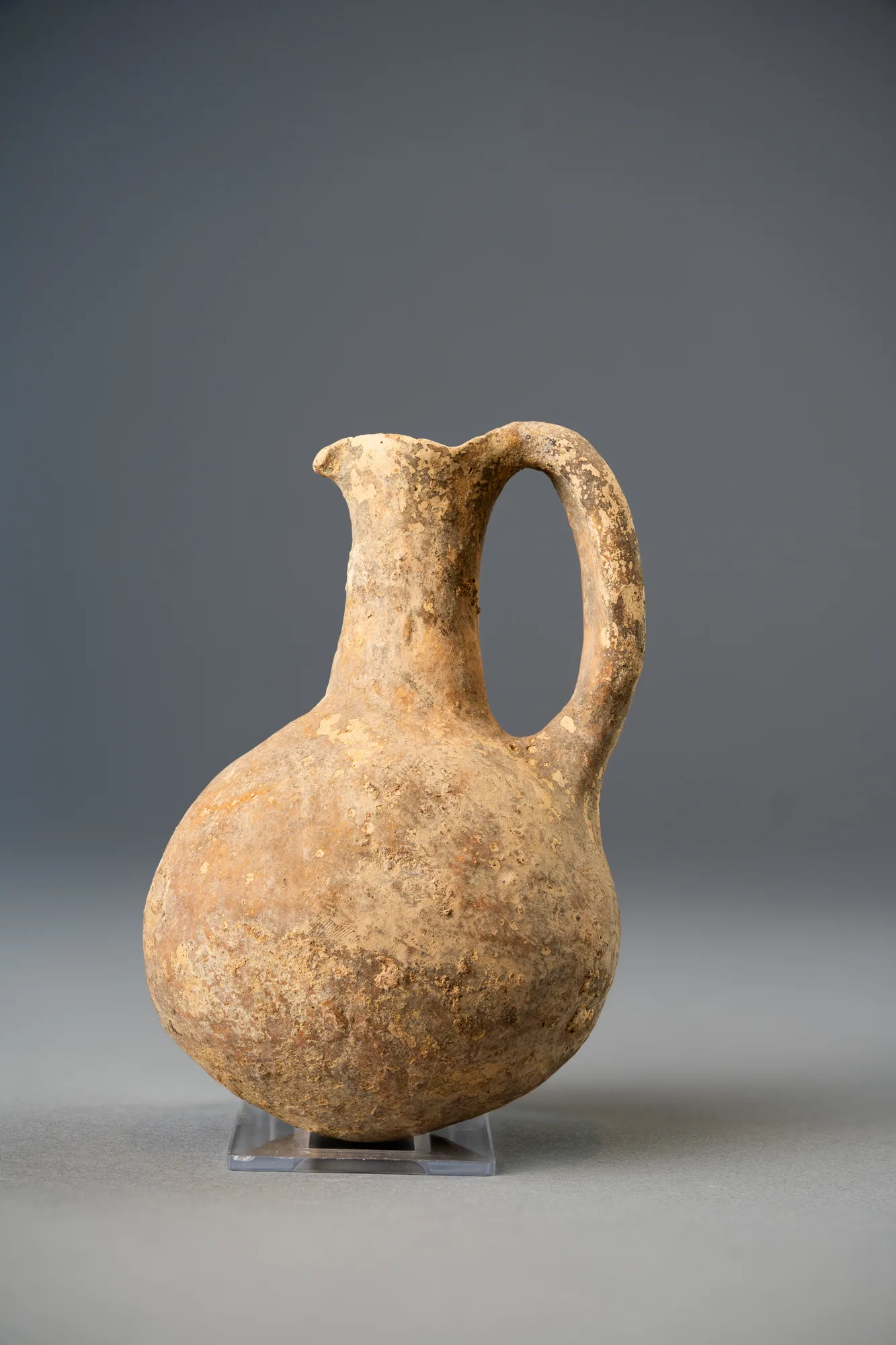
Small Red-Slipped Jug with Beaked Mouth
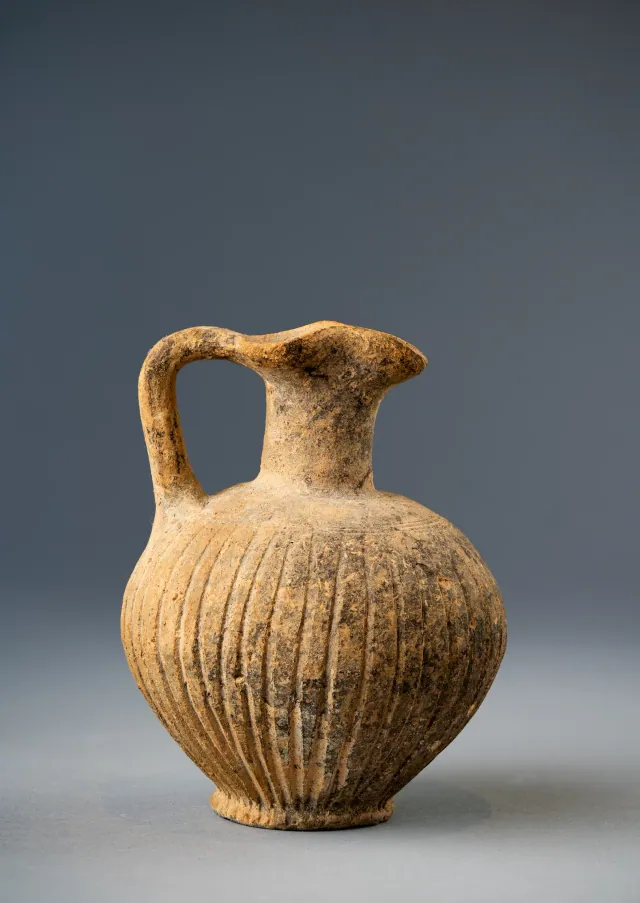
Small handmade Middle Cypriot jug with a round body, tall tapering neck, beaked mouth and rim-to-shoulder handle; slip largely lost under lime deposit.
Classification
- Object type
- Pottery vessel
- Shape
- Jug
- Material
- Clay
- Date
- 1850 - 1650 BC
- Place of production
- Cyprus
Collection
Alexis Drakopoulos
Identifiers
- Inventory no.
- JUG-BA-013
Middle Cypriot, probably MC II–III, c. 1850–1650 BCE · Red Polished family, probably Red Slip · Handmade
A small jug with a full, almost spherical body resting on a rounded base, so that it needs a stand to sit upright. From a narrow shoulder the neck rises tall and slender, tapering to a small mouth that is drawn forward into a short beak on the side away from the handle. A flat loop handle leaves the back of the rim and arcs down to the shoulder, its top level with the lip.
The surface is pale buff to pinkish, clouded by a heavy crust of lime deposit and pitted over much of the body. Only faint warm patches of red survive where a slip once covered the pot. The profile is slightly uneven, as it is on most handmade vessels of the period.
Commentary
The shape places the jug among the small handmade pouring vessels of the Middle Cypriot period: round base, beaked mouth, and a handle running from the rim to the shoulder. In Cyprus these features belong to the late Red Polished tradition and to the wares that grew out of it in the Middle Bronze Age, Black Slip, Red Slip and the painted Red-on-Black and Red-on-Red wares of the east [2][4].
The ware cannot be fixed from the present surface, because the slip is almost entirely gone. The pale body with traces of red suits Red Slip, which Paul Åström defined at Kalopsidha as "a red variant of Black Slip III Ware", with buff clay and a matt red slip; on the same page he describes Middle Cypriot jug fragments with tapering necks and everted rims [1]. Two Middle Cypriot III jugs from Ayios Iakovos in Stockholm offer close parallels for the silhouette: a Red Slip jug from Tomb 4A, complete and worn, and a Red-on-Black jug from Tomb 8 whose slip is "almost entirely worn off", which shows how far such surfaces can be lost in a tomb [6]. The Red Slip jugs of the Middle Cypriot II–III period in the State Historical Museum in Moscow give the broader family [5].
A date in the Middle Cypriot period, c. 1900–1650 BCE, is well supported by the shape; MC II–III, c. 1850–1650 BCE, is the likeliest range for this slender-necked, plain form. The Red Polished numerals used in older catalogues do not work as a chronological ladder, so the date rests on the shape [3].
Complete jugs of this kind come almost entirely from chamber tombs, where they were placed with the dead after use as ordinary household pourers. What this one held is unknown.
The jug's ware remains the open question. Examination in hand, looking for burnish under the crust, the colour of the fabric at a chip and any trace of painted lines, would decide between Red Slip, Black Slip and a worn painted ware. Similar round-based jugs with high handles were also made in the southern Levant and western Anatolia in the Early and Middle Bronze Age, so a Cypriot origin, though the most probable reading, is not proven by the shape alone.
References
- 1.Åström, P. (1966) Excavations at Kalopsidha and Ayios Iakovos in Cyprus (Studies in Mediterranean Archaeology 2). Lund, p. 84.
- 2.Stewart, J.R. (1962) The Early Cypriote Bronze Age. The Swedish Cyprus Expedition IV:1A. Lund: Swedish Cyprus Expedition.
- 3.Merrillees, R.S. (1991) in Barlow, J.A., Bolger, D.L. and Kling, B. (eds) Cypriot Ceramics: Reading the Prehistoric Record. Philadelphia: University Museum, p. 239.
- 4.Morris, D. (1985) The Art of Ancient Cyprus. Oxford: Phaidon, pp. 16, 48.
- 5.Karageorghis, V. et al. (2005) Ancient Cypriote Art in Russian Museums. Nicosia: A.G. Leventis Foundation, cat. SHM 33–37.
- 6.Stockholm, Medelhavsmuseet, A.J. 004A:001 (Red Slip jug, Ayios Iakovos Tomb 4A) and A.J. 008:049 (Red-on-Black jug, Ayios Iakovos Tomb 8), collection records.
Corrections and additions
Do you know this object?
We are always looking for more of an object's history: who owned it, where it was sold or shown, and where it was published.
We would like to hear about
- Earlier owners, sales or exhibitions
- Publications that illustrate or mention it
- Where it is now, if it has moved
- Better photographs, or a close parallel
- A mistake in what we say about it
Messages are read by us alone and kept confidential, unless the law requires otherwise. Tell us if you would like to be thanked by name on the page.
Similar pieces
 Red Polished JugletBritish Museum
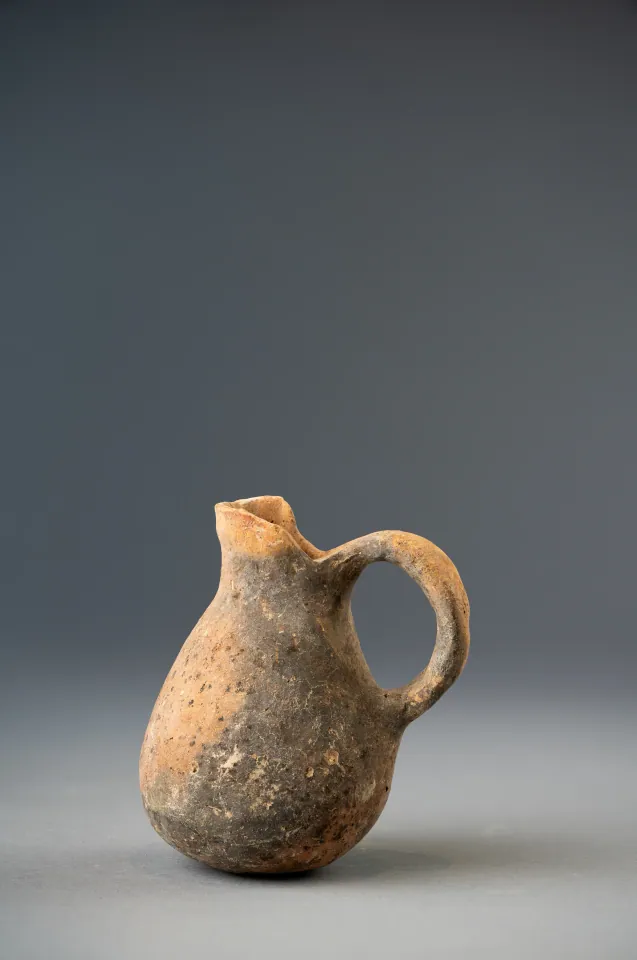 Plain Handmade Bronze Age JugletDrakopoulos Collection
 Plain White Hand-made JugletBritish Museum
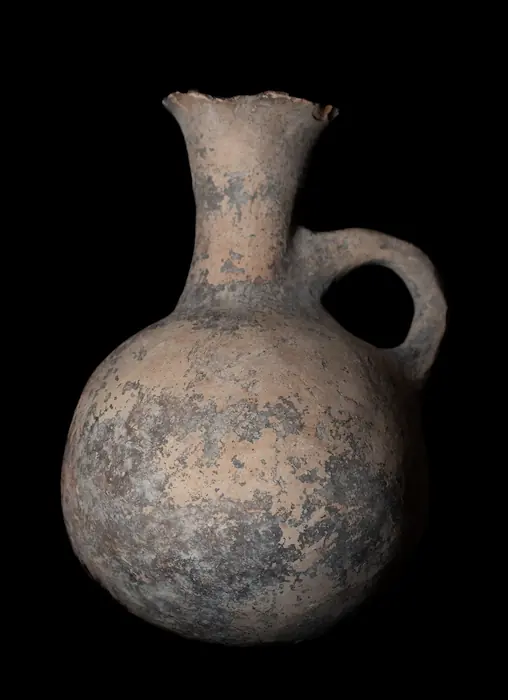 Jug with Flaring Neck, probably Black Slip WareDrakopoulos Collection
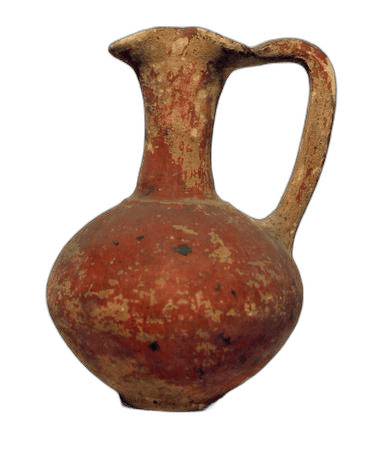 "Red Slip II Biconical Jug"British Museum
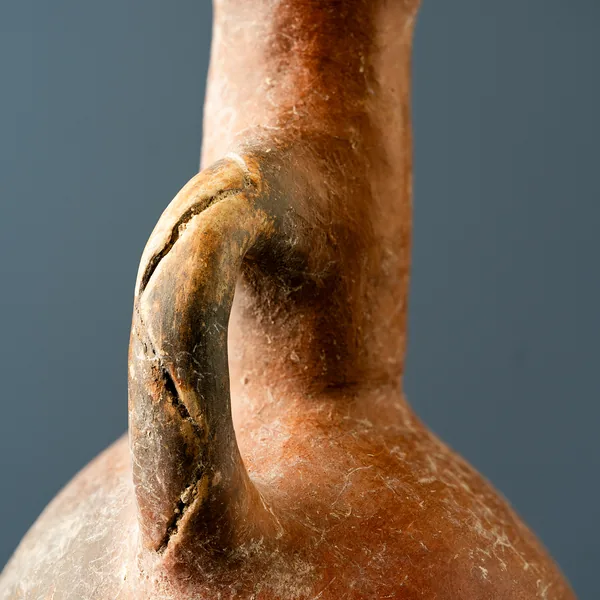 Plain Red Polished JugDrakopoulos Collection
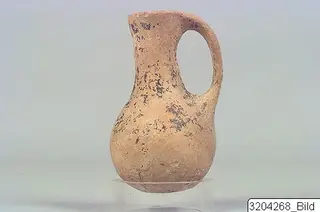 Red-on-Black globular jug with concave neckMedelhavsmuseet (Museum of Mediterranean and Near Eastern Antiquities)
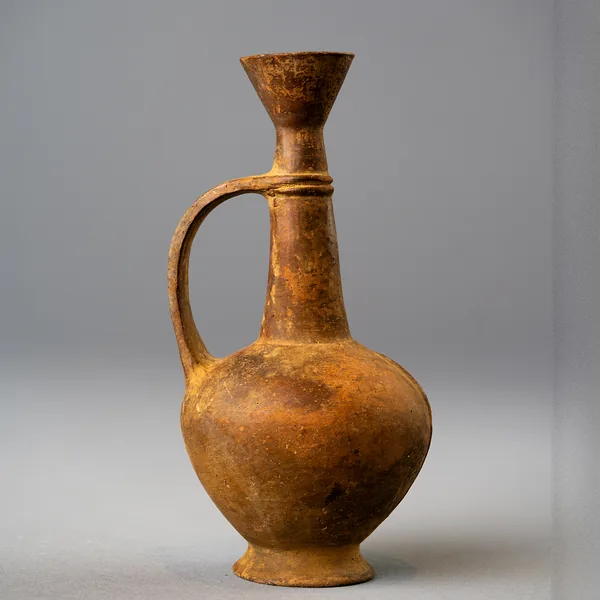 Base Ring Bilbil Juglet with Funnel Mouth and Neck RidgeDrakopoulos Collection
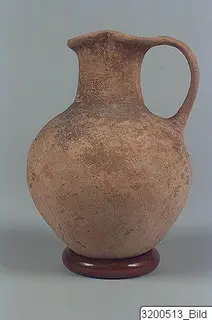 Monochrome oval jug with flattened baseMedelhavsmuseet (Museum of Mediterranean and Near Eastern Antiquities)
 Black Slip Bucchero Jug with Trefoil Mouth and Fluted BodyDrakopoulos Collection
).webp) Red Polished IV JugletAshmolean Museum
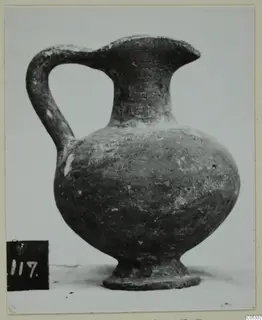 Grey Polished jugLapithos-Kastros, SCE Tomb 403
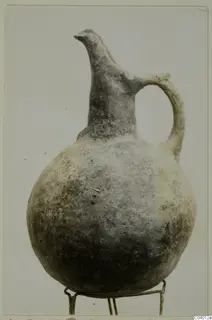 Red Polished III globular jug with beaked mouthLapithos-Vrysi tou Barba, SCE Tomb 323
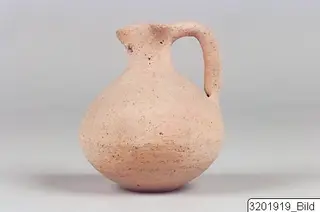 Plain White IV depressed jugMedelhavsmuseet (Museum of Mediterranean and Near Eastern Antiquities)
 Large Red Polished JugLarnaca Museum
 JugLiverpool Museum
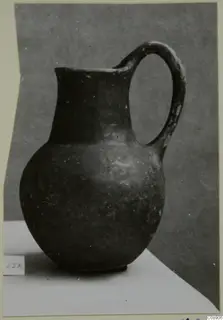 Pottery vesselSwedish Cyprus Expedition
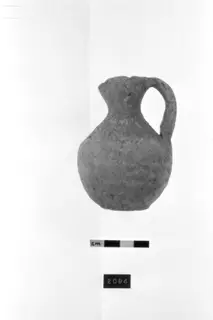 Clay jugSalamis
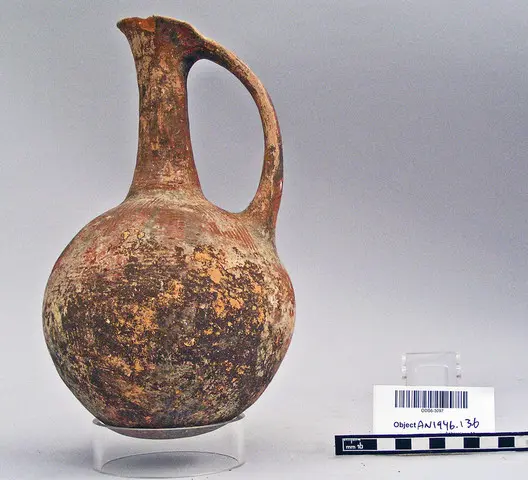 Red on Black ware jug with long neckAshmolean Museum
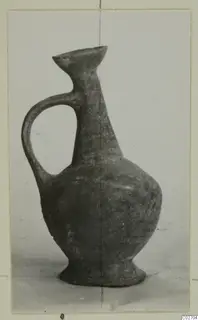 Base-ring I globular jugAyios Iakovos-Melia, SCE Tomb 14