
Research·In brief
Khirokitia among eight European heritage sites mapped in 3D to model hazard risk
Drones recorded the Neolithic village for the EU's TRIQUETRA project, while a Cyprus-led project combines satellites, drones and AI to watch coastal ruins.



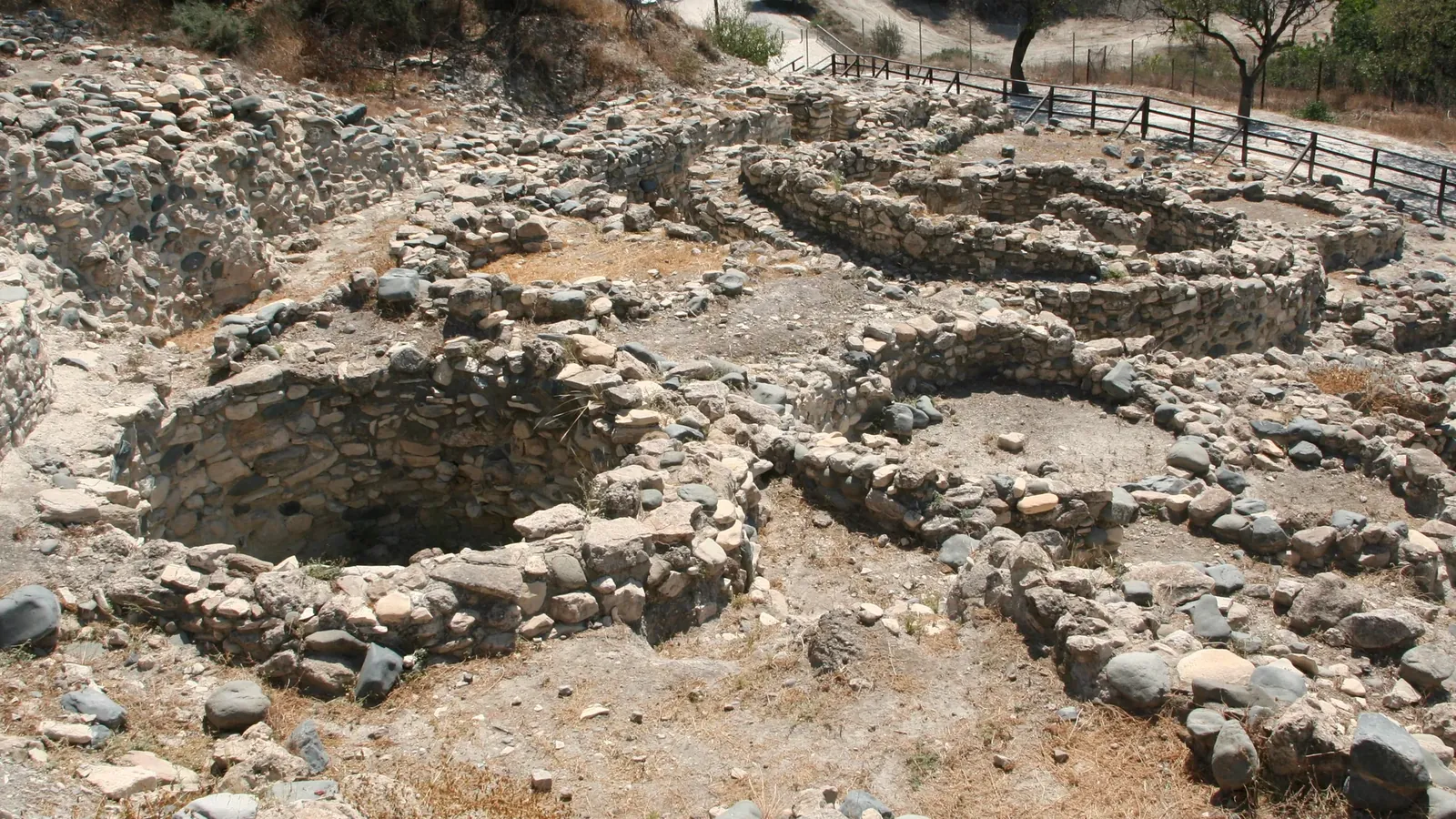
The Neolithic village of Khirokitia is one of eight European heritage sites whose 3D survey for the EU-funded TRIQUETRA project is set out in a paper by Styliani Verykokou, Charalabos Ioannidis and 29 co-authors, published in Results in Engineering in November. The others lie in Greece, Italy, Poland, Germany and Switzerland.
The authors class Khirokitia as an inland river-valley site exposed to heavy winter rain, weathering and falling rock. It was one of the few sites flown by drone more than once, as tracking slow ground creep requires; territorial ravens hindered the flights. The authors draw a seven-phase workflow from the eight campaigns and put its point clouds and surface models to five uses, from flood and tsunami modelling to slope stability. The Aceramic Neolithic village above the Maroni river has been a UNESCO World Heritage Site since 1998.
A second EU project turns to the coast. COASTLINE, a staff exchange run from 2024 to 2027 by the Cyprus University of Technology with partners in Greece and Italy and coordinated there by Dr Apostolos Papakonstantinou, combines satellite images, drone surveys, divers' samples and AI. On the coasts of Limassol and Paphos the team is using public data to gauge risks to archaeological sites, the European Commission reported on 12 November. Its web platform, already online with preliminary results, is meant to show authorities where planned building or flooding could threaten them.
Original sources
- Verykokou, S., et al. (2026). 3D geometric documentation of cultural heritage sites at risk: Cross-environment workflow and hazard-related applications. Results in Engineering 32, 114290
Paper·
- European Commission, Horizon magazine: From ancient ruins to vanishing beaches: mapping risks to Europe's shores
Official release·
- CORDIS: Coastal Zone Environment and Geo-Sciences (COASTLINE), grant 101130576
Official release
On ancientcyprus.com
- Sites
- Khirokitia
- Institutions
- Cyprus University of Technology
- Periods
- Neolithic
More in Research
- Storage jar from Pyla bears four signs in Cyprus’s undeciphered Bronze Age script
- Men on bronze stands and cylinder seals show the elite ideal of Late Bronze Age Cyprus, paper argues
- Farm soil near Soloi in Cilicia held about 1,000 fragments of jars that look Cypriot
- Five Hala Sultan Tekke tombs held Mycenaean pots, Mittani-style seals and lead fishing lures
- 22 girls in a Phoenician account tablet from Kition took part in a substitution rite, study argues