
Books·New book
Jennifer Webb's forthcoming book studies 3,327 Early and Middle Bronze Age metal finds from Cyprus
The SIMA monograph, in press with Astrom Editions, comes with an open database at the University of Cyprus and handheld XRF analyses of 768 copper-base objects.



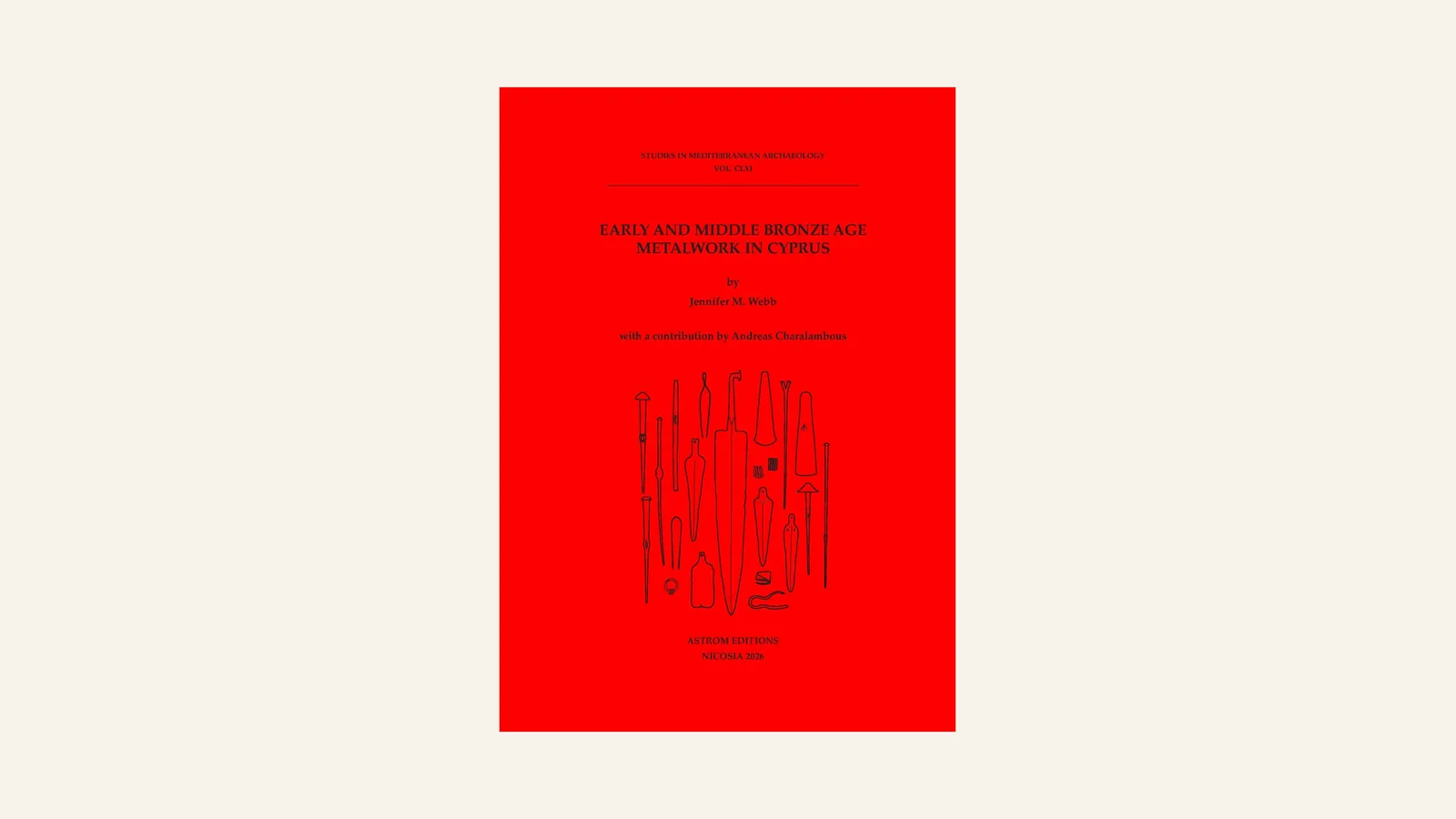
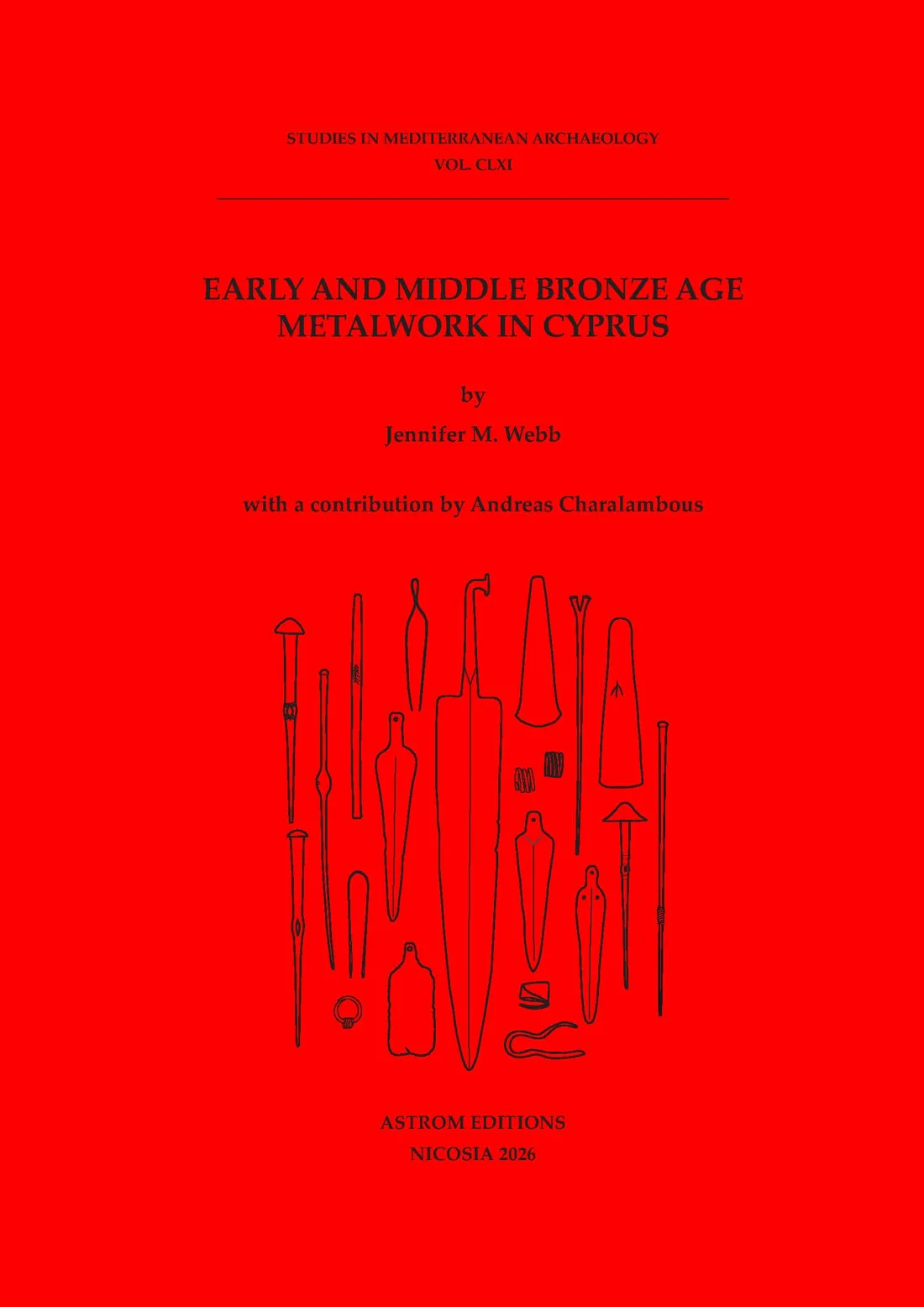
The book
- Title
- Early and Middle Bronze Age Metalwork in Cyprus
- By
- Jennifer M. Webb
- Publisher
- Astrom Editions, 2026
- Series
- Studies in Mediterranean Archaeology (SIMA) M161
- Pages
- 384
- ISBN
- 978-9925-8236-2-8
A study of 3,327 metal objects, every provenanced and published piece of Early and Middle Bronze Age date from Cyprus, is in press with Astrom Editions. Early and Middle Bronze Age Metalwork in Cyprus is by Jennifer M. Webb, who edits the publisher's Studies in Mediterranean Archaeology (SIMA) monograph series with David Frankel, and it carries a chapter by Andreas Charalambous. The publisher's page lists it as volume M161 of the series: Nicosia, 2026, 384 pages, in English, ISBN 978-9925-8236-2-8.
What the volume contains
The corpus takes in objects of lead and of precious metals as well as copper and its alloys. Alongside the book, the Archaeological Research Unit of the University of Cyprus hosts an open-access database built for the project, giving for each object its form, findspot, date and, where it has been analysed, its composition.
Webb opens with the problems any count of early metal faces: typology, dating, and the bias in what has been recovered. Thirteen chapters then take the objects type by type, each asking where the type came from, how its shape changed over time, what it was used for and how it was made, with many illustrations; Chapter 15 gathers the oddments. Composition runs through all of them. In Chapter 16, Charalambous reports handheld X-ray fluorescence (XRF) readings on 768 copper-base objects from many sites, and the type chapters combine these with results obtained by other methods, for 1,273 analysed objects in all.
The last chapter is Webb's synthesis of the prehistoric metal industry: mining and smelting, who made and circulated objects, the move from copper and arsenical copper to tin bronze, the use of precious metals, and how people's sense of what metal was worth changed over the period.
Why one corpus matters
The book and its database put the whole published assemblage of the period into one typology, with composition figures for 1,273 of the 3,327 objects, a little over a third. The move from arsenical copper to tin bronze, and the changing value placed on metal, can then be followed across every site at once, each object with its findspot and date.
Webb's previous volume in the series, M160 (2025), completed the publication of the Early and Middle Bronze Age tombs excavated in 1913 at Lapithos Vrysi tou Barba, on the north coast in the area occupied by Turkey since the 1974 invasion. According to the publisher, the tombs dug there in 1913 and 1917 held over 1,100 metal artefacts among more than 2,500 pots.
Earlier work on the period's metal
In 2013 Webb and Frankel published Ambelikou Aletri: Metallurgy and Pottery Production in Middle Bronze Age Cyprus as SIMA 138, their publication of the 1942 excavation by the Department of Antiquities under Dikaios at a Middle Cypriot copper mine. They judged the evidence for mining there in the Middle Cypriot period conclusive, citing the stone axes and ring hammers found in the shafts, and read a fragment of furnace wall and a piece of slag as proof that copper was smelted at the site several centuries before the Late Cypriot workshop at Politiko-Phorades [1, p. 206].
Charalambous has used the same handheld method on older metal. Working with Vasiliki Kassianidou, he analysed sixteen Chalcolithic objects, among them one from Kissonerga-Mosphilia, catalogued KM2174, that contains 3.30 per cent tin and so counts as bronze [2, p. 677]. How Cyprus went from those beginnings to the copper trade of the Late Bronze Age is told in Under a Kilogram; the techniques are described under copper metallurgy and metals beyond copper.
Webb's association with the series goes back four decades: her 1986 catalogue Cypriote Antiquities in the Abbey Museum, Queensland, Australia appeared as SIMA XX:12 from Paul Åströms Förlag in Göteborg, the publishing house Paul Åström founded in 1962, known today as Astrom Editions.
Original sources
On ancientcyprus.com
- Sites
- Lapithos, Kissonerga
- Periods
- Early Bronze Age, Middle Bronze Age
References
- 1.Webb, J. M., & Frankel, D. (2013). Ambelikou Aletri: Metallurgy and Pottery Production in Middle Bronze Age Cyprus (Studies in Mediterranean Archaeology 138). Uppsala: Åströms Förlag.
- 2.Düring, B. S., De Ceuster, S., Degryse, P., & Kassianidou, V. (2021). Transformative copper metallurgy in Chalcolithic Cyprus: a reappraisal. Antiquity, 95(381), 670–685.
More in Books
- Children painted some 'crude' Bronze Age pots at Kalopsidha, new book on Cypriot ceramics argues
- Bronze Age wells and pits at Hala Sultan Tekke were filled on purpose, new book argues
- New Tombs of the Kings volume centres on the Paphos tomb linked to Ptolemy, king of Cyprus
- This Week in Cypriot Archaeology: 7–13 September 2026
- Cyprus's first Director of Antiquities was sacked within a year; his memoir is now in print