
Conference paper·Archaeological Research Unit - University of Cyprus·2017
Under the Mediterranean: The Syracusia, the Abu Rawash Boat, Hull Framing, and the Roman Spritsail
Emmanuel Nantet, Mohamed Abdel Magid, Kevin Melia-Teevan and Christopher John Davey
A guest lecture in the University of Cyprus series on a subject outside Cyprus.
Chapters
About the video
This session on shipbuilding at the October 2017 Honor Frost Foundation Conference on Mediterranean Maritime Archaeology, dedicated to the memory of Yaacov Kahanov, presents four papers on ancient naval architecture and rigging.
Emmanuel Nantet of Le Mans University reassesses the tonnage of the Syracusia, the giant third-century BCE vessel built by Archimedes for Hiero II of Syracuse and sent to Ptolemy III in Egypt. The surviving description by Athenaeus, copying Moschion, lists 60,000 measures of grain without naming the unit, alongside 10,000 jars of Sicilian salt fish and cargoes of wool and other goods measured in talents. Nantet rejects earlier estimates based on a 52-litre medimnos (giving around 4,000 tons) and Lionel Casson's use of the Roman modius (around 2,000 tons, which makes the grain load too small for a grain freighter). Using either the Egyptian artaba of 29 litres or a Sicilian measure of 32 litres, a 40-kilogram tubular amphora, and a 20-kilogram Hellenistic talent, he calculates a cargo weight between 2,500 and 2,700 tons.
Mohamed Abdel Magid of the Central Department of Underwater Archaeology in Alexandria presents the First Dynasty boat excavated in 2012 by Yann Tristant and the IFAO north of Mastaba 6 at Abu Rawash. Dated to c. 2950 BC by radiocarbon and a seal of King Den, the acacia-wood hull fragment (6.53 by 1.30 metres, now at the Grand Egyptian Museum) has a flat bottom of two central strakes assembled with L-shaped stitching channels, unpegged mortise-and-tenon joints, and pairs of V-shaped channels for lashing frames. Abdel Magid compares the vessel with the Abydos boat graves and Tarkhan timbers.
Kevin Melia-Teevan of Texas A&M University examines framing across more than ninety Mediterranean shipwrecks from the fourth century BCE to the tenth century CE. Starting with full floor timbers alternating with paired half-frames on the Kyrenia wreck, he traces five phases: early homogeneous framing with strong edge joinery; asymmetrical framing timbers from the first or second century CE; overlapping scarfed half-frames in the sixth century on the Dor 2001/1 and Yassıada wrecks; seventh-century integration of frames and wales; and L-shaped inline framing at Yenikapı in Constantinople by the eighth or ninth century.
Christopher John Davey of the University of Melbourne argues that the Roman spritsail (artemon), rigged on a bowsprit secured into a hull slot, was a manoeuvring sail for steering and tacking upwind rather than a driving foresail. Drawing on Mechanica Problem 7, Ostian iconography, and the Kyrenia II and Mayflower II replicas, he links its second-century BC adoption to the growth of large Roman merchant ships.
Background
Where to read more on this site before or after watching.
In the compendium
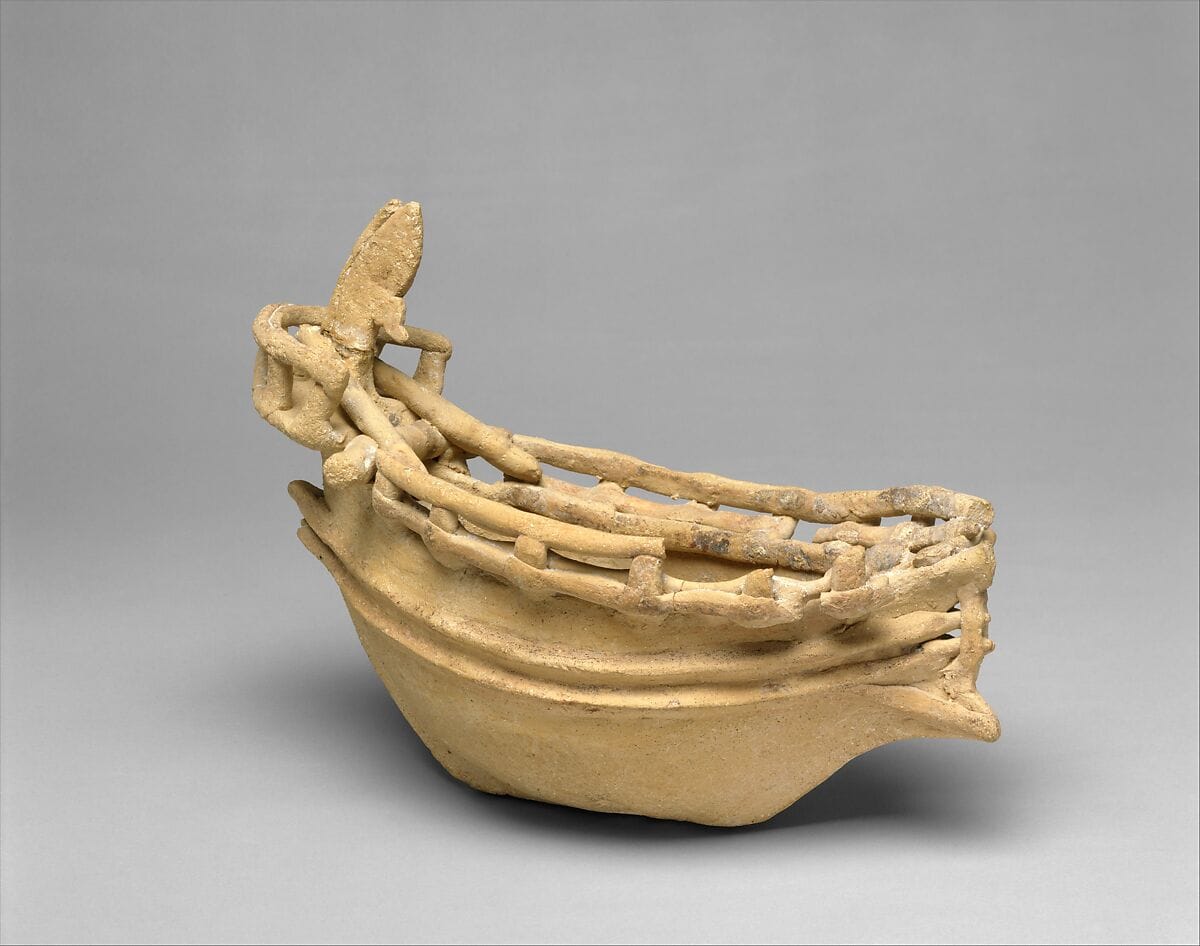
Seafaring and Ships in Ancient Cyprus
The evidence for boats and seafaring around Cyprus from the first crossings to the Classical period, from anchors, models and graffiti to wrecks and shipsheds.
In the compendium
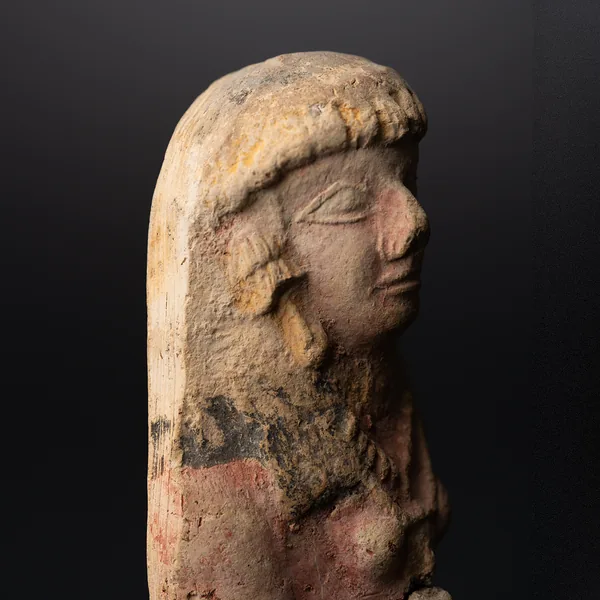
Egypt
Ancient Egypt, Cyprus's partner in copper, pottery and prestige goods from the Middle Kingdom to the Ptolemies, who annexed the island.