
Conference paper·Archaeological Research Unit - University of Cyprus·2017
Under the Mediterranean: Honor Frost's Legacy at Byblos, Tyre, Arwad and Anfeh
Martine Francis-Allouche, Nicolas Grimal, Ibrahim Noureddine, Nicolas Carayon, Nadine Panayot-Haroun and Lucy Semaan
A guest lecture in the University of Cyprus series on a subject outside Cyprus.
Chapters
About the video
This session from the 2017 conference Under the Mediterranean, held by the Honor Frost Foundation and the University of Cyprus to mark the centenary of Honor Frost's birth, brings together four papers on her coastal and underwater work in the Levant and the recent projects that have built on it.
Martine Francis-Allouche and Nicolas Grimal present the Byblos and the Sea project, launched in 2011 to follow up Frost's search for the Bronze Age harbour of Byblos. After testing five coastal bays and three offshore anchorages, Frost had favoured an offshore anchorage where cargo ships waited for timber towed out by smaller boats. Drawing on the Egyptian Tale of Wenamun, which speaks of twenty ships moored inside a harbour, along with Ernest Renan's 1860 map and the southern river valleys down which cedar and juniper could be floated, the team re-examined the silted southern bay below the tell. Geophysical survey, thirty-nine sediment cores, tomography, bathymetry with the University of Patras, and excavation at the city's southern gate traced a buried harbour basin extending a hundred metres inland under five metres of sediment.
Ibrahim Noureddine reports on underwater surveys north of the harbour of Tyre, begun in 2001 with the late Michel El-Helou for the Directorate General of Antiquities of Lebanon and guided by Frost's letters. Using metal probes, glass-bottomed viewing buckets and Antoine Poidebard's 1930s aerial photographs, they recorded a submerged double-walled jetty built of mortarless header blocks over two metres long, filled with rubble and sand to a width of fourteen metres. A test pit in 2005 exposed at least five courses carrying Iron Age quarry and mason's marks, suggesting a seventh- or eighth-century BC date comparable to Athlit and Tabbat al-Hammam. Noureddine closes with a warning that treasure hunters have recently dislodged blocks from the structure.
Nicolas Carayon examines Frost's role in the geoarchaeology of Phoenician ports. Starting at Arwad in the 1960s, and continuing at Tyre, Sidon and Byblos, she treated reefs, island quarries, rock-cut esplanades, sea walls and silted bays as parts of wider harbour systems, and used submerged walls, fissures and biological sea-level indicators such as vermetid trottoirs to reconstruct relative sea-level change and tectonic subsidence.
Nadine Panayot-Haroun and Lucy Semaan present land, underwater and ethnographic work at the peninsula of Anfeh in northern Lebanon. Excavations around the chapel of Saydet er-Rih uncovered Early and Middle Bronze Age deposits, Phoenician-period rock-cut water cisterns, a sixth- to seventh-century AD phase of the chapel, and a medieval fortress with wine-making installations. Offshore surveys mapped rock-cut slipways, quarries, a submerged notch and forty-four stone anchors with one, two or three holes weighing between twelve and over five hundred kilograms, alongside a field school and the declaration of a community-protected area.
Background
Where to read more on this site before or after watching.

In the compendium
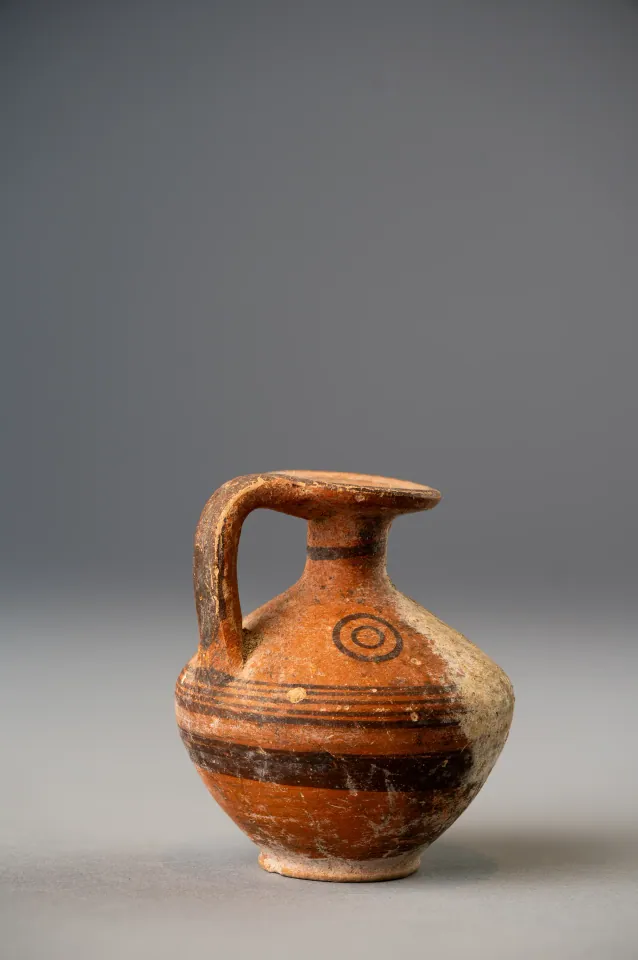
Ugarit and the Levant
The Syrian port kingdom of Ugarit and the wider Levantine coast, Cyprus's closest Bronze Age trading partners across the water.
In the compendium
The Phoenicians
The Iron Age city-states of the Levantine coast, whose traders and settlers made Kition a Phoenician kingdom and shared a hybrid culture with Cyprus.
In the compendium
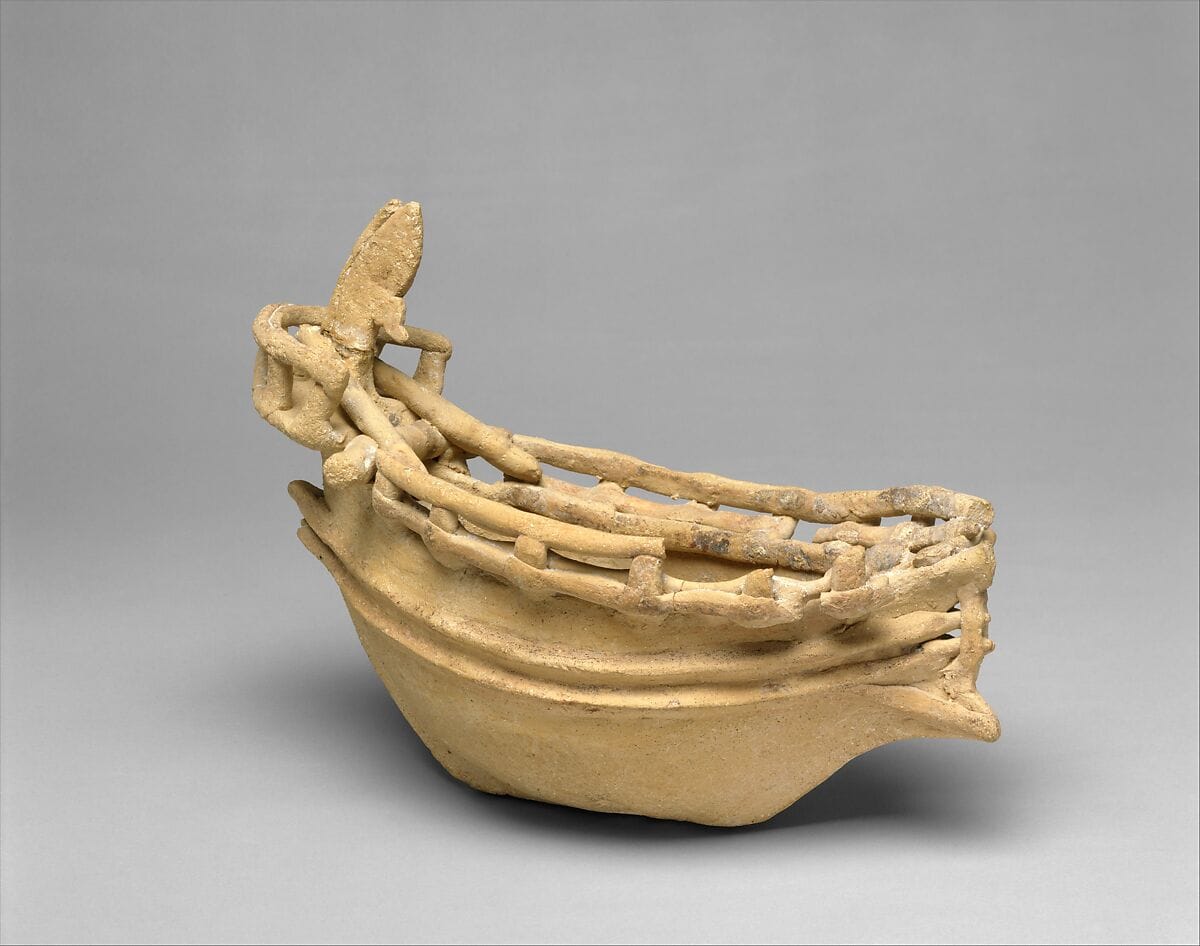
Seafaring and Ships in Ancient Cyprus
The evidence for boats and seafaring around Cyprus from the first crossings to the Classical period, from anchors, models and graffiti to wrecks and shipsheds.