
Geometric III
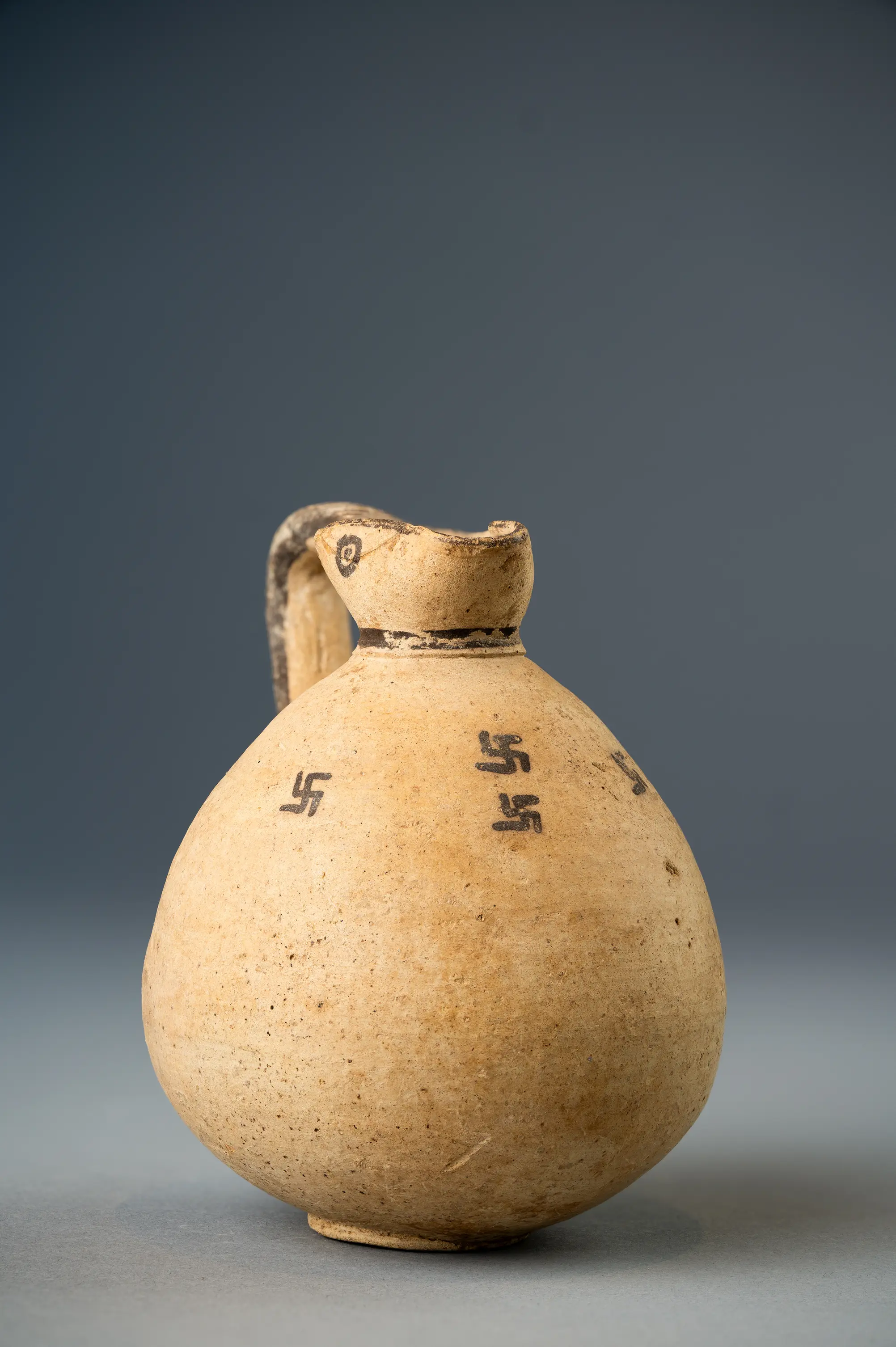
White Painted Trefoil Jug with Painted Eyes and Swastikas
Small pear-shaped White Painted jug with a trefoil mouth marked by a painted eye and small swastikas scattered over the shoulder, late 9th to 7th century BCE.
Date
850 - 600 BC
Accession No.
JUG-GE-009
Collection
Alexis Drakopoulos
Provenance
- 1965–1969, The Goodman Collection, formed in Cyprus; retained in the collection until 2025
- 2025–present, Alexis Drakopoulos, London
Late Cypro-Geometric to Cypro-Archaic I, c. 850–600 BCE · White Painted ware · Wheel-made
A small jug with a full, pear-shaped body that is widest low down and sits on a narrow ring base. A short neck carries a trefoil mouth, its rim chipped. On the side lobe the painter placed a single eye, a small circle around a dot. The strap handle runs from rim to shoulder and is painted dark along its edges; a pair of dark lines rings the base of the neck.
The body is otherwise left bare except for small rectilinear swastikas, at least four of them in this view, scattered across the upper shoulder in a loose, uneven arrangement: one to the left, two stacked near the centre, one at the far right. The pale buff surface is lightly pitted, with a few dark inclusions and a short scratch low on the belly. The paint is well preserved.
Commentary
The jug belongs to the White Painted ware of the Cypriot Iron Age, dark matt paint on a light, unslipped ground, and to the family of small trefoil-mouthed jugs that Gjerstad described across his Types III and IV [1]. Its ornament is reduced to two elements: the eye on the mouth and a handful of free-floating swastikas on the shoulder. There is no frame, no zone and no band on the body, which gives the swastikas the status of isolated signs.
Painted eyes on the lobes of a trefoil mouth are a well-established Cypriot convention of the late Geometric and Archaic periods. Once the eye is added, the pinched mouth reads as a face, with the spout as a beak or snout. A Bichrome IV free-field jug in the Cyprus Museum, catalogued with "an 'eyelet' ... painted on either side of the spout", shows the same device on a finer vessel [3]. Only one eye is visible from this side; a matching eye would be expected on the other lobe.
The swastika in this setting is an ancient geometric sign with no connection to its modern use. It belongs to a set of small stock motifs that a recent study of Iron Age pictorial pottery from Salamis, where they occur mainly on Bichrome ware, describes as "often very small and appear individually in panels or as supplementary ornaments", among which "pairs or groups of swastikas" are listed [2]. On this jug they carry the whole decoration of the body.
The closest museum parallels combine the same two elements. A small White Painted oinochoe in the British Museum (1905,1206.8) has a pair of eyes on the mouth and a plant motif flanked by swastikas below the spout; the museum dates it to Cypro-Geometric III [4]. A White Painted trefoil jug in the Pitt Rivers Museum (1884.38.61) pairs swastikas with a hatched triangle and is dated Cypro-Archaic I [5], and a jug of similar size in the Brooklyn Museum (12583) sets swastikas beside a chevron group [6]. Taken together, these place the type in the late ninth to seventh century BCE. The plain piriform body and the absence of a central figure give no firm reason to prefer one end of that range, so we give c. 850–600 BCE.
Jugs of this size were table pourers for water, wine or oil, and like almost all complete Cypriot vessels of the period they survive because they were placed in tombs. The findspot of this jug is not recorded.
References
- 1.Gjerstad, E. (1948) The Swedish Cyprus Expedition IV.2: The Cypro-Geometric, Cypro-Archaic and Cypro-Classical Periods. Stockholm: Swedish Cyprus Expedition, pp. 47, 51–52.
- 2.Georgiadou, A. and Dikomitou-Eliadou, M. (2022) 'The Iron Age pictorial pottery of Salamis within and beyond', in G. Bourogiannis (ed.) Beyond Cyprus: Investigating Cypriot Connectivity in the Mediterranean from the Late Bronze Age to the End of the Classical Period (AURA Supplement 9). Athens, pp. 335–348, at p. 344.
- 3.Bombardieri, L. and Panero, E. (eds) (2021) Cyprus. Crossroads of Civilizations. Exhibition catalogue. Turin: Musei Reali, cat. 094, p. 288.
- 4.British Museum, London, 1905,1206.8. White Painted oinochoe with plant motif flanked by swastikas and a pair of eyes on the mouth, Cypro-Geometric III, H. 15.8 cm.
- 5.Pitt Rivers Museum, Oxford, 1884.38.61. White Painted trefoil jug with swastikas and hatched triangle, Cypro-Archaic I, H. 23.5 cm.
- 6.Brooklyn Museum, New York, 12583. Cypriot oinochoe with swastikas and a chevron group, Cypro-Archaic I, H. 13.6 cm.
More from the Catalogue
Browse related objects
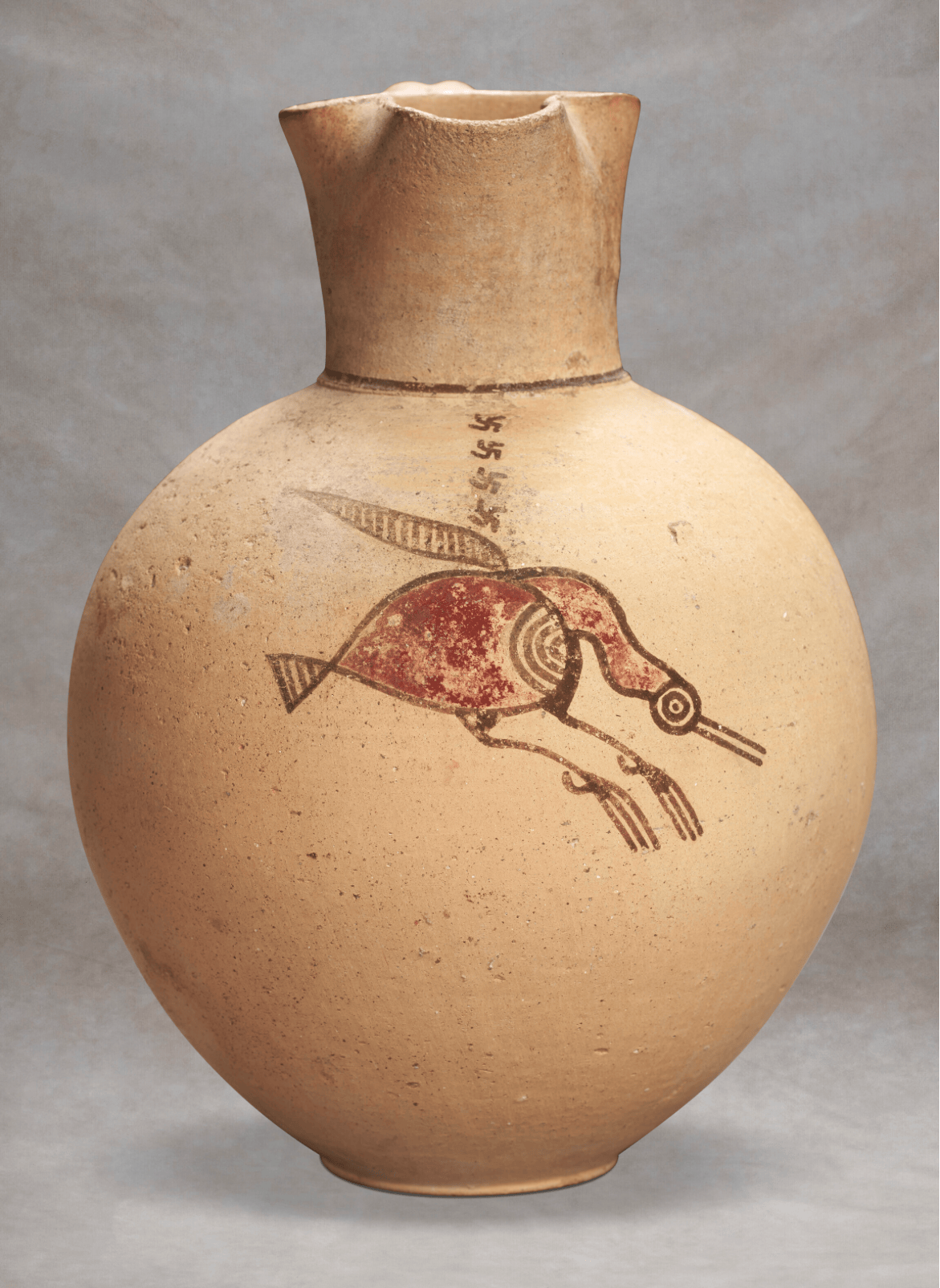
Bichrome Oinochoe
Archaic I
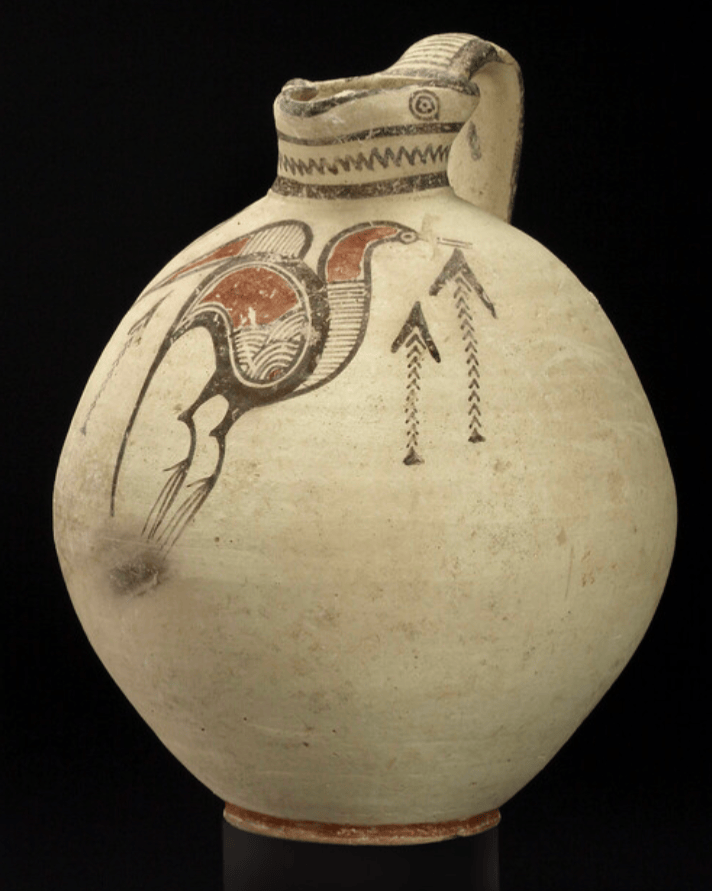
Free-field bichrome jug with image of an Ibis bird and reeds
Archaic
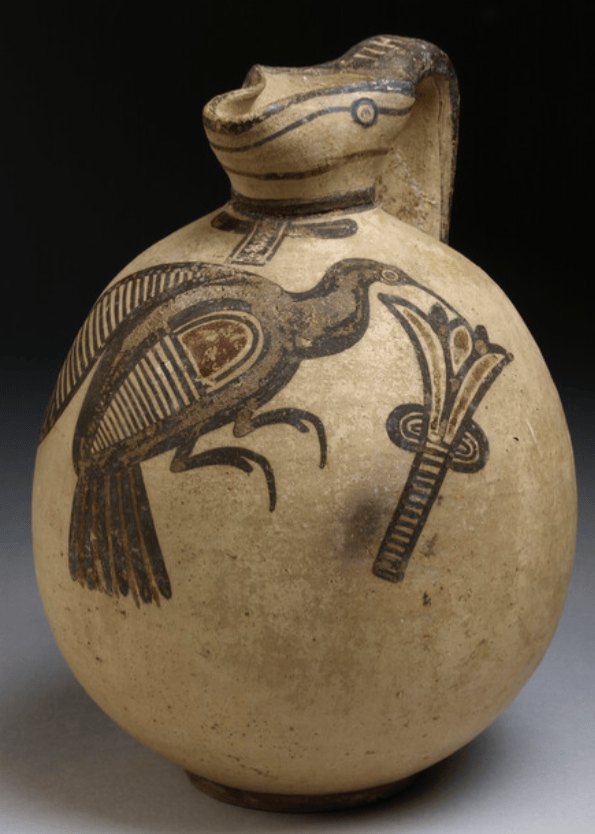
Squat bichrome jug in free-field style with image of bird picking a lotus flower
Archaic
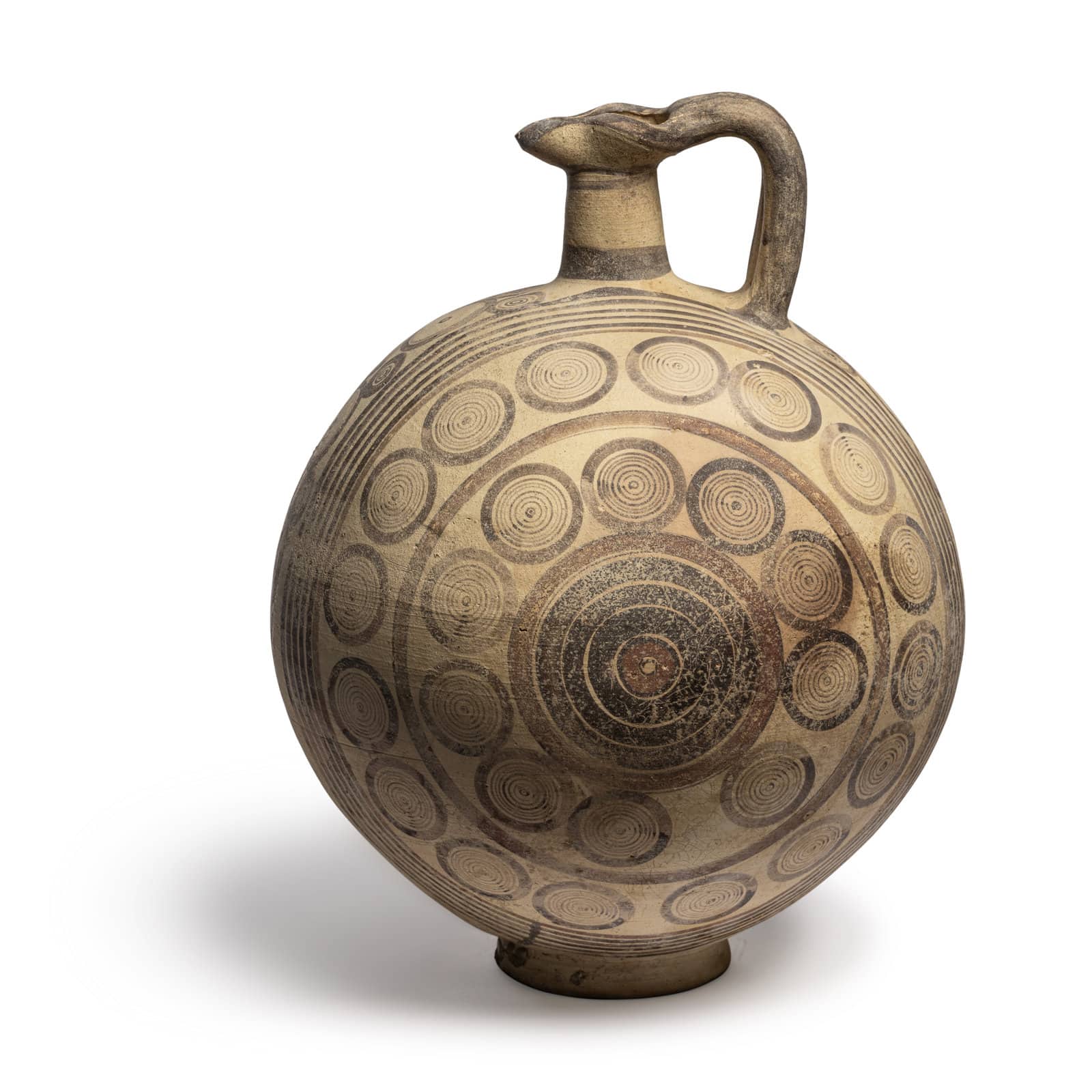
A Cypriot Bichrome-Ware Oinochoe Jug
Archaic I
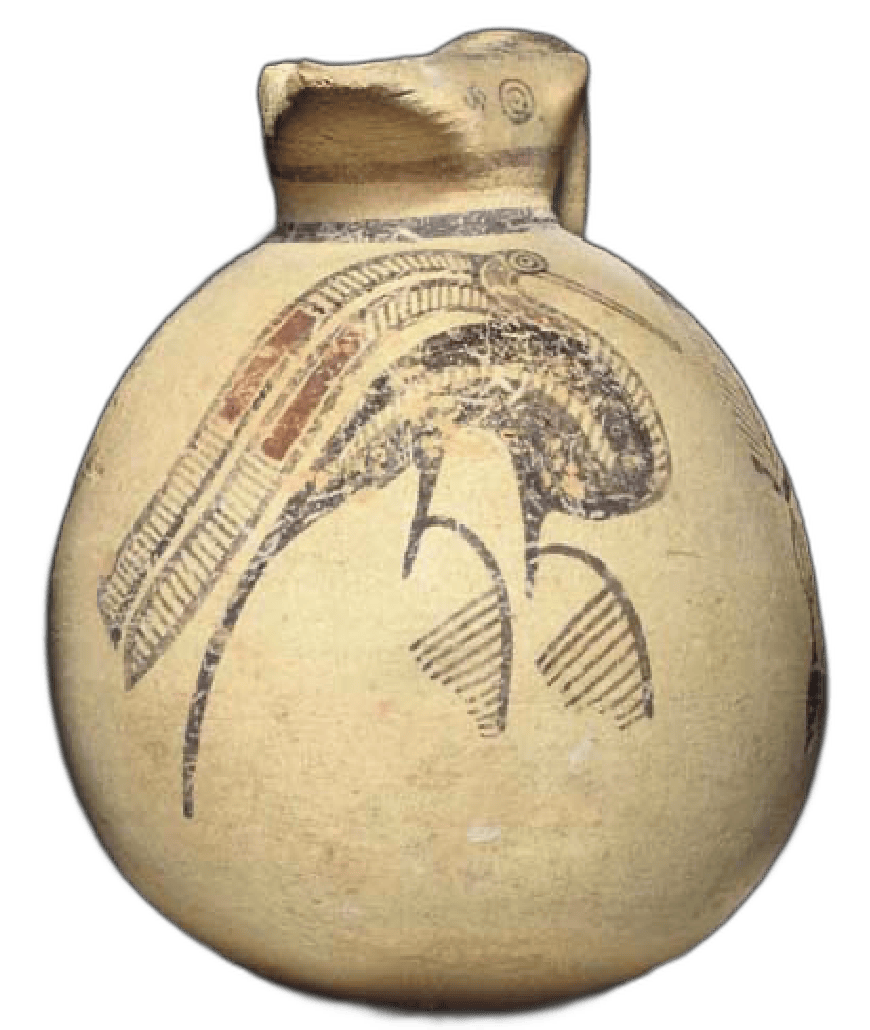
Oinochoe with Free Field Bird
Archaic I
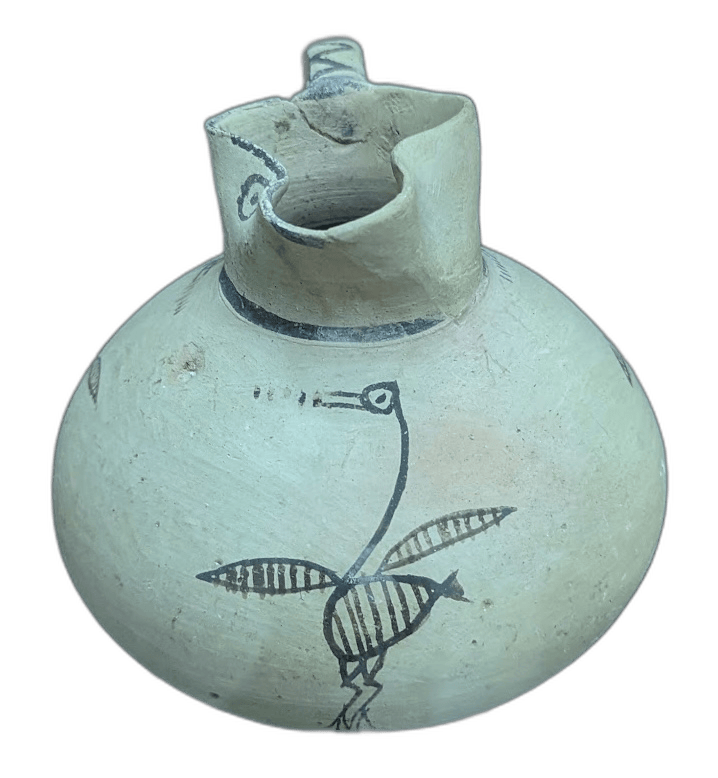
Small Oinochoe with Free Field Bird
Archaic I
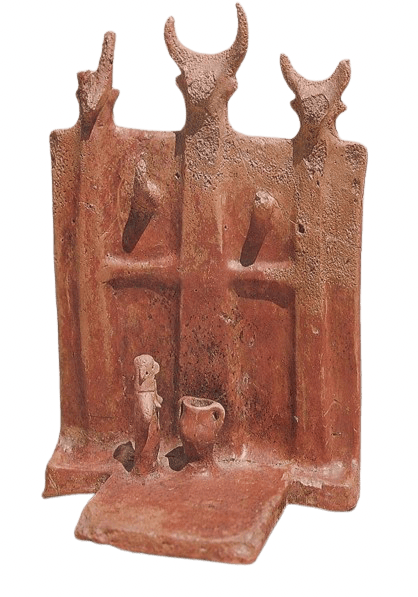
Red Polished Shrine
Middle Bronze Age I
Black-On-Red Geometric Jug Sherd
Geometric II
Bichrome Jug
Geometric
Bichrome Juglet
Geometric
Bichrome Oinochoe
Geometric
Juglet
Archaic II
Oinochoe
Geometric III
Jug
Archaic I
Juglet
Archaic I
Jug
Geometric I
Terracotta jug
Early Bronze Age I
Juglet
Geometric I