
Middle Bronze Age II
Red-Slipped Juglet with Cutaway Spout
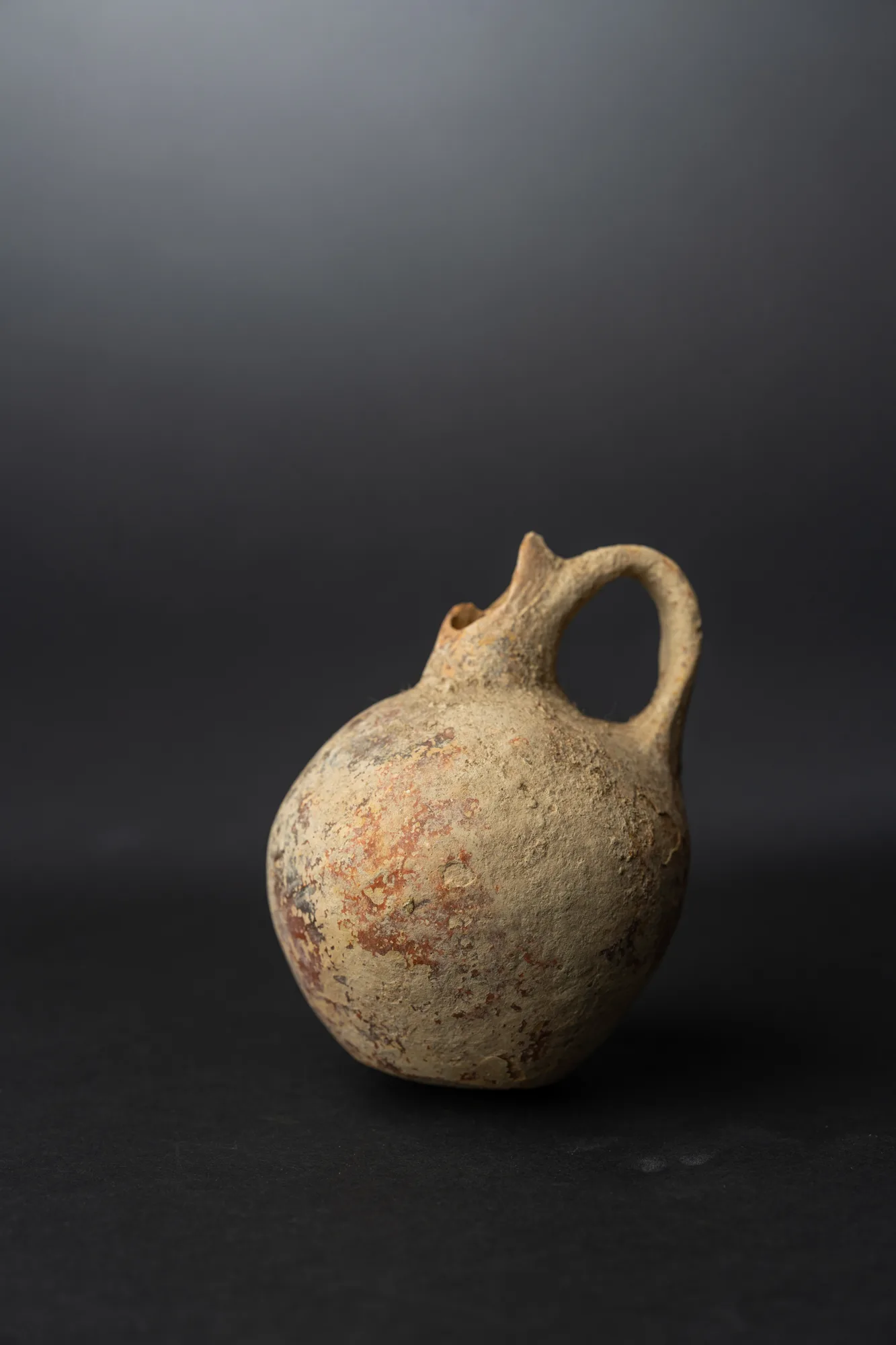
Small handmade Middle Cypriot juglet with a round body, loop handle and broken cutaway spout, its red slip largely hidden under lime crust.
Date
1900 - 1650 BC
Accession No.
JUG-BA-023
Collection
Alexis Drakopoulos
Middle Cypriot, c. 1900–1650 BCE · Handmade red-slipped ware of the Red Polished family
A small juglet with a full, almost spherical body that comes down to a rounded base, so that it rests slightly tilted. A short neck rises from the shoulder into a tall, narrow spout cut away at the front; the spout is broken at its tip and along one side, leaving a jagged, open mouth. A slender loop handle springs from the top of the neck and drops to the shoulder.
The surface is held under a pale buff-grey lime crust. Where the crust has lifted, a red to brownish-red slip shows through in broad patches, smooth in places, with a few darker grey patches low on one side. A crisp line crossing the shoulder may mark the edge of the slip, a painted band or a fine crack. The body appears otherwise intact.
Commentary
The juglet is handmade and slipped red, with a round base, a loop handle from neck to shoulder and a tall cutaway spout. That combination places it among the small handmade jugs of the Early and Middle Cypriot tomb repertoire [1]. It is hard to name the ware more closely while most of the surface lies under burial deposit. The late derivatives of Red Polished, namely Red Slip (the red variant of Black Slip III), Black Slip, Red-on-Black and Red-on-Red, share the same small jug shapes, and once the slip is worn or hidden they cannot be told apart from photographs. Åström defined Red Slip at Kalopsidha as differing "from Black Slip III only in the red colour of the slip", on a buff, sometimes grey clay [2]. The visible slip here fits that description, but a painted band would make it Red-on-Red, and a partly reduced firing could leave red patches on a Black Slip pot. The best place to settle the question is the break at the spout, where the fabric is exposed.
Small round-bodied jugs of this family are well represented in Middle Cypriot II–III tombs, and the Swedish excavations produced several of comparable size: a Red-on-Red jug from Ayios Iakovos Tomb 6 (Medelhavsmuseet A.J. 006:085, H. 9.6 cm, MC III, with most of the neck and the handle missing), a Black Slip II jug from Lapithos Tomb 702 (L. 702:035, H. 12.5 cm, MC II–III, rim chipped), and a worn, chipped Red-on-Black jug from Nitovikla Tomb 2 (N. 002:012, H. 8.4 cm, MC III) [3]. Red Slip jugs of MC II–III in the State Historical Museum, Moscow, share the proportions and the small handle [4]. The Roman numerals of the Red Polished and Red Slip series were never a dependable chronological ladder [5][6], so the date here rests on shape and ware family: Middle Cypriot, c. 1900–1650 BCE, most probably MC II–III. A wider bracket from EC III to MC III cannot be excluded.
Almost every complete Cypriot jug of this period comes from a chamber tomb, and the heavy lime crust on this one is consistent with long burial. Small juglets held and poured liquids in daily life and were placed with the dead; oils or scented liquids are a common guess for the smallest sizes, though no residue analysis has been made on this piece and its contents are unknown.
Two caveats apply. Round-based juglets with high spouts and small handles were also made in the Early Bronze Age southern Levant and in western Anatolia, so Cypriot manufacture is probable from shape and surface, but unproven. The crust may also conceal old repairs; none is visible.
References
- 1.Stewart, J.R. (1962) The Early Cypriote Bronze Age. In The Swedish Cyprus Expedition IV:1A. Lund: Swedish Cyprus Expedition.
- 2.Åström, P. (1966) Excavations at Kalopsidha and Ayios Iakovos in Cyprus (Studies in Mediterranean Archaeology 2). Lund, p. 84.
- 3.Medelhavsmuseet, Stockholm, inv. A.J. 006:085 (Red-on-Red jug, Ayios Iakovos Tomb 6), L. 702:035 (Black Slip II jug, Lapithos Tomb 702) and N. 002:012 (Red-on-Black jug, Nitovikla Tomb 2); Swedish Cyprus Expedition collection records.
- 4.Karageorghis, V. et al. (2005) Ancient Cypriote Art in Russian Museums. Nicosia: A.G. Leventis Foundation, cat. SHM 33–37.
- 5.Morris, D. (1985) The Art of Ancient Cyprus. Oxford: Phaidon, pp. 16, 29, 48.
- 6.Merrillees, R.S. (1991) Response. In J.A. Barlow, D.L. Bolger & B. Kling (eds), Cypriot Ceramics: Reading the Prehistoric Record. Philadelphia: University Museum, p. 263.
More from the Catalogue
Browse related objects
Bichrome Oinochoe
Archaic I
Free-field bichrome jug with image of an Ibis bird and reeds
Archaic
Squat bichrome jug in free-field style with image of bird picking a lotus flower
Archaic
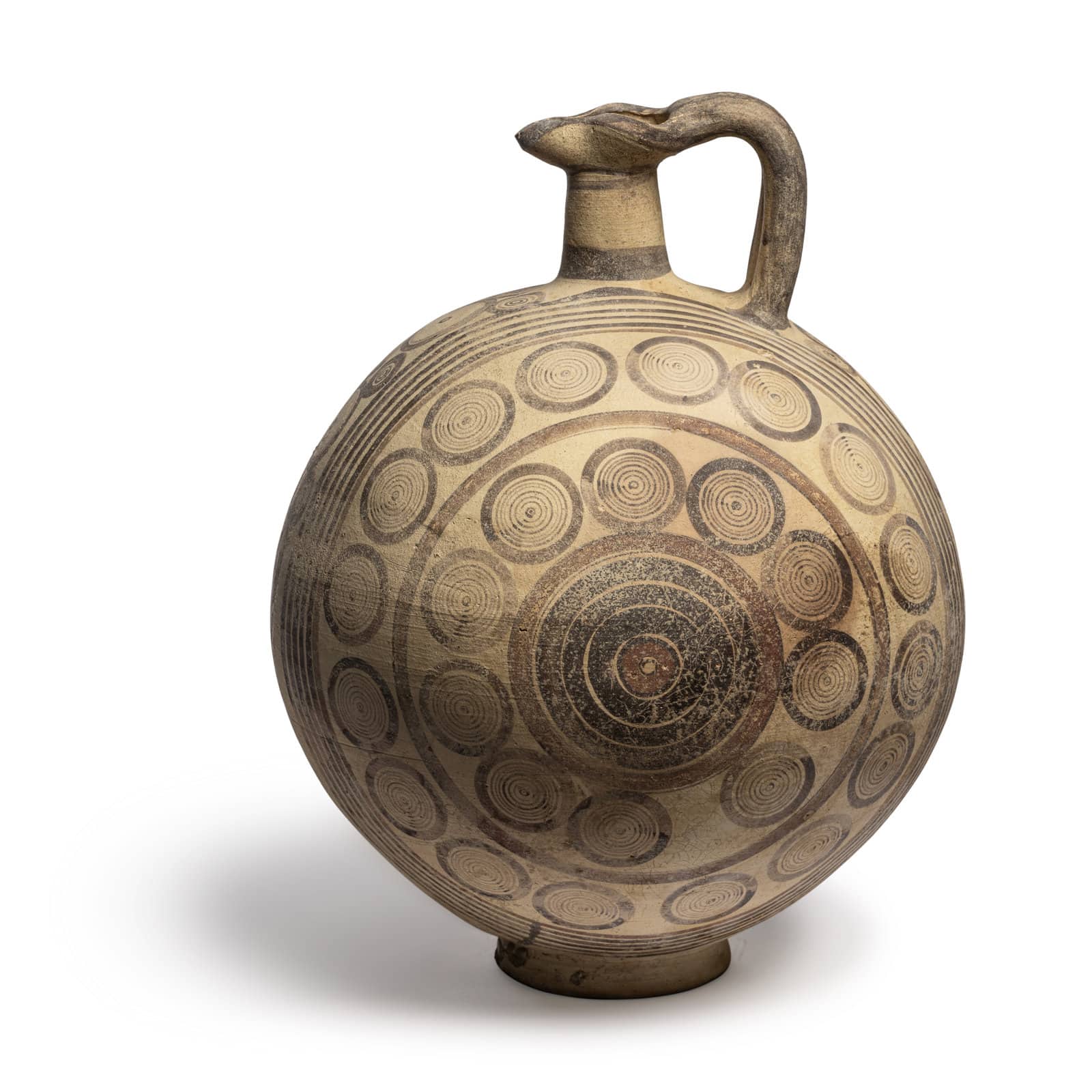
A Cypriot Bichrome-Ware Oinochoe Jug
Archaic I
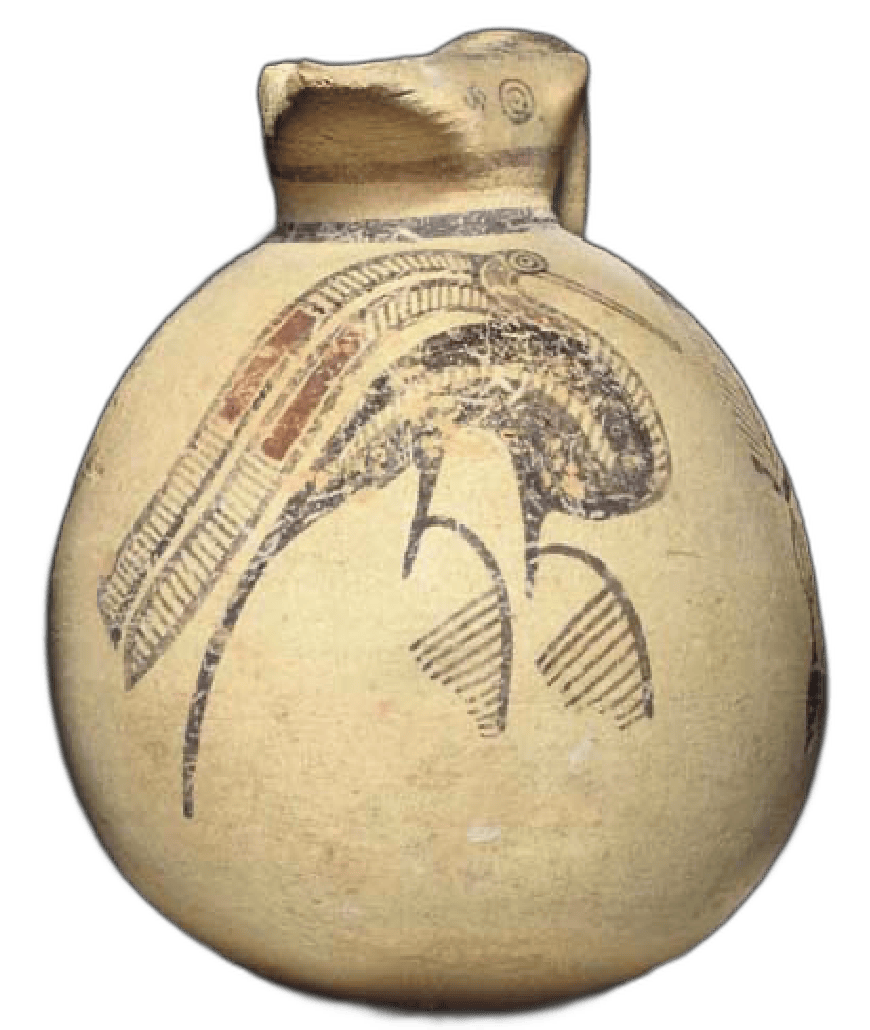
Oinochoe with Free Field Bird
Archaic I
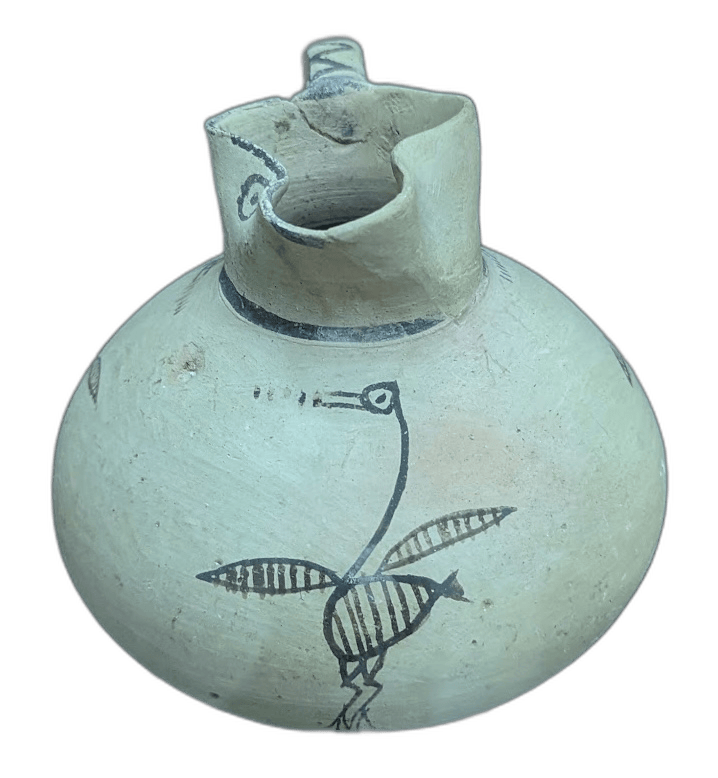
Small Oinochoe with Free Field Bird
Archaic I
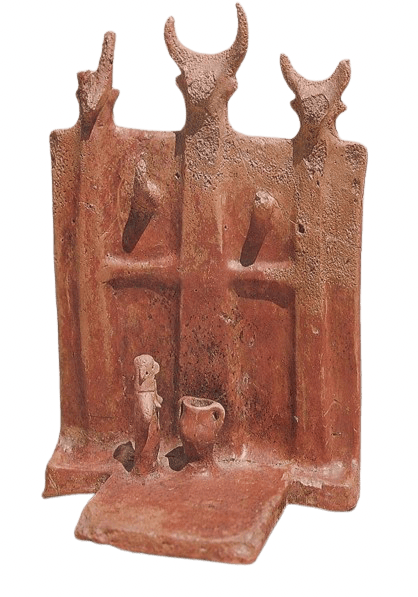
Red Polished Shrine
Middle Bronze Age I
Black-On-Red Geometric Jug Sherd
Geometric II
Bichrome Jug
Geometric
Bichrome Juglet
Geometric
Bichrome Oinochoe
Geometric
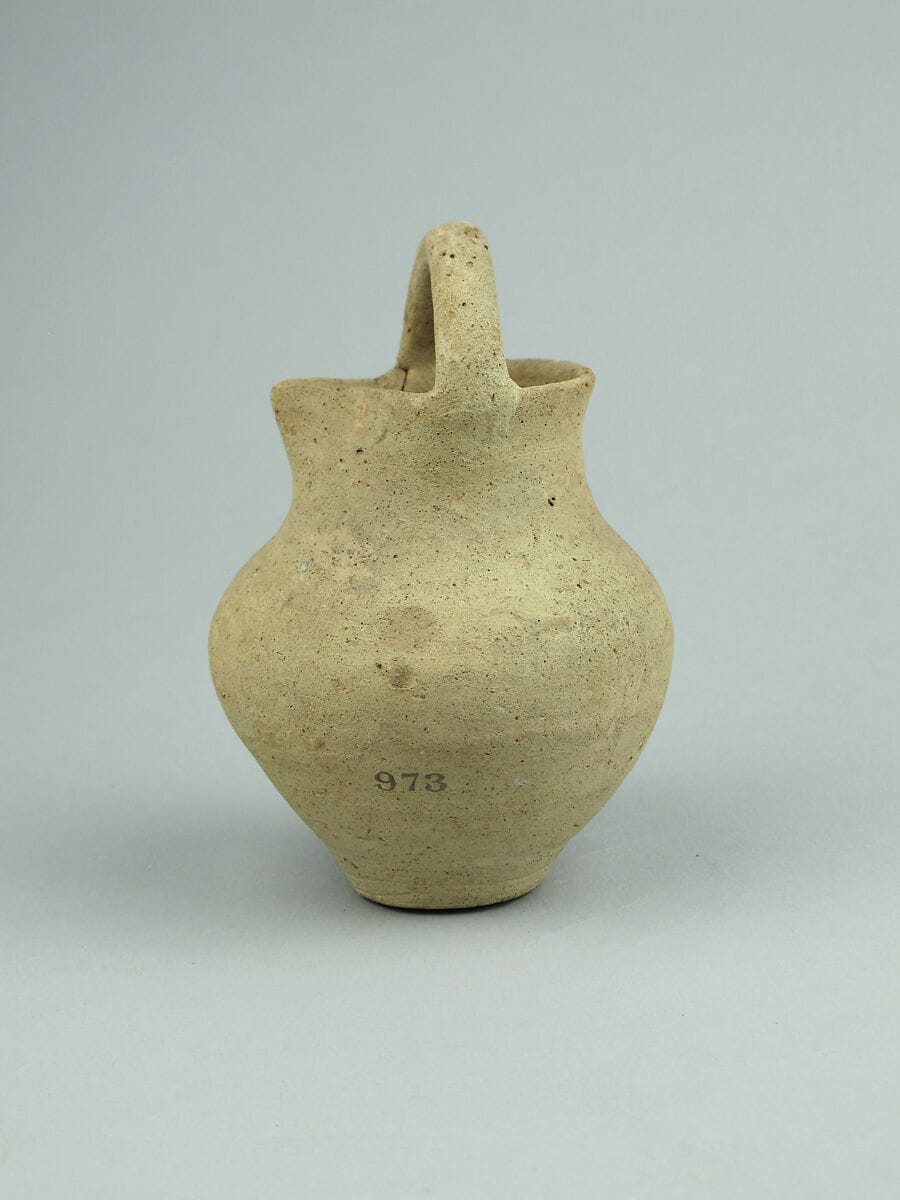
Juglet
Archaic II
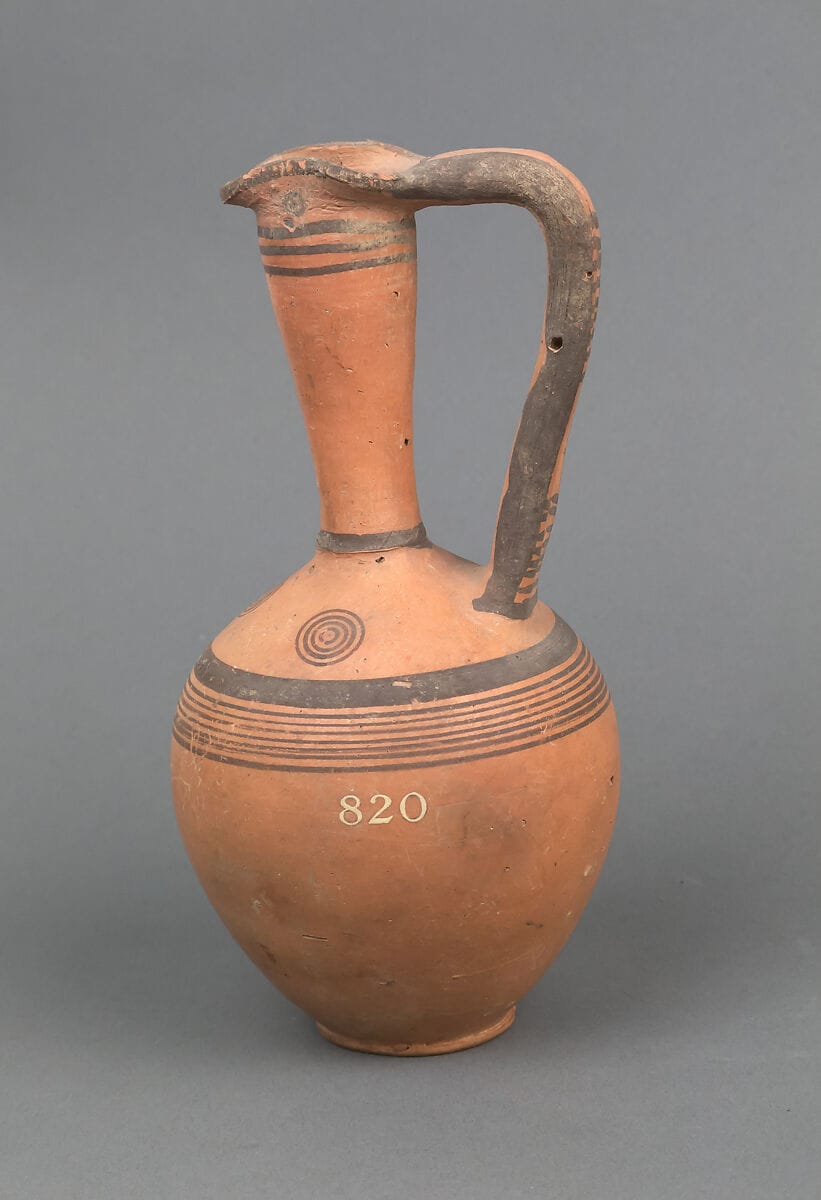
Oinochoe
Geometric III
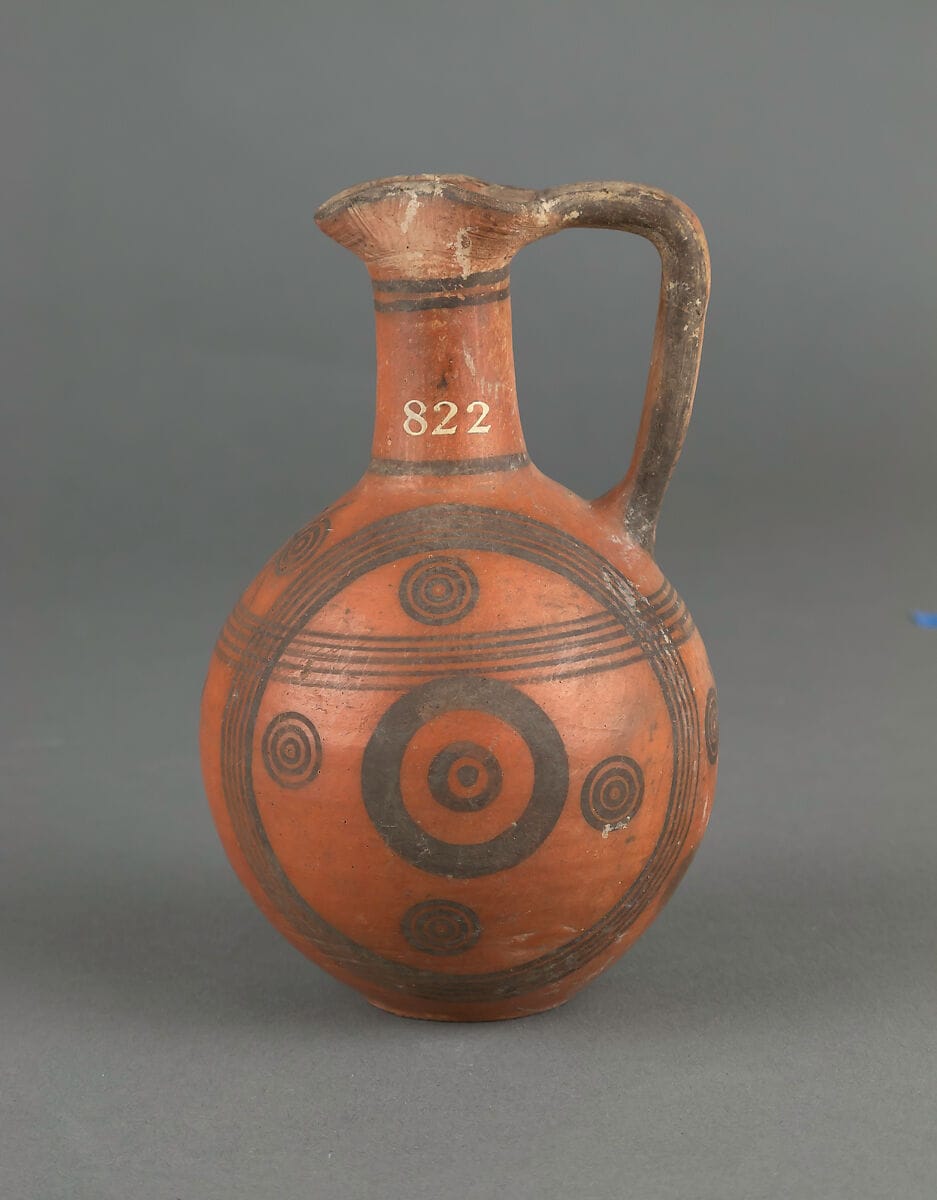
Jug
Archaic I
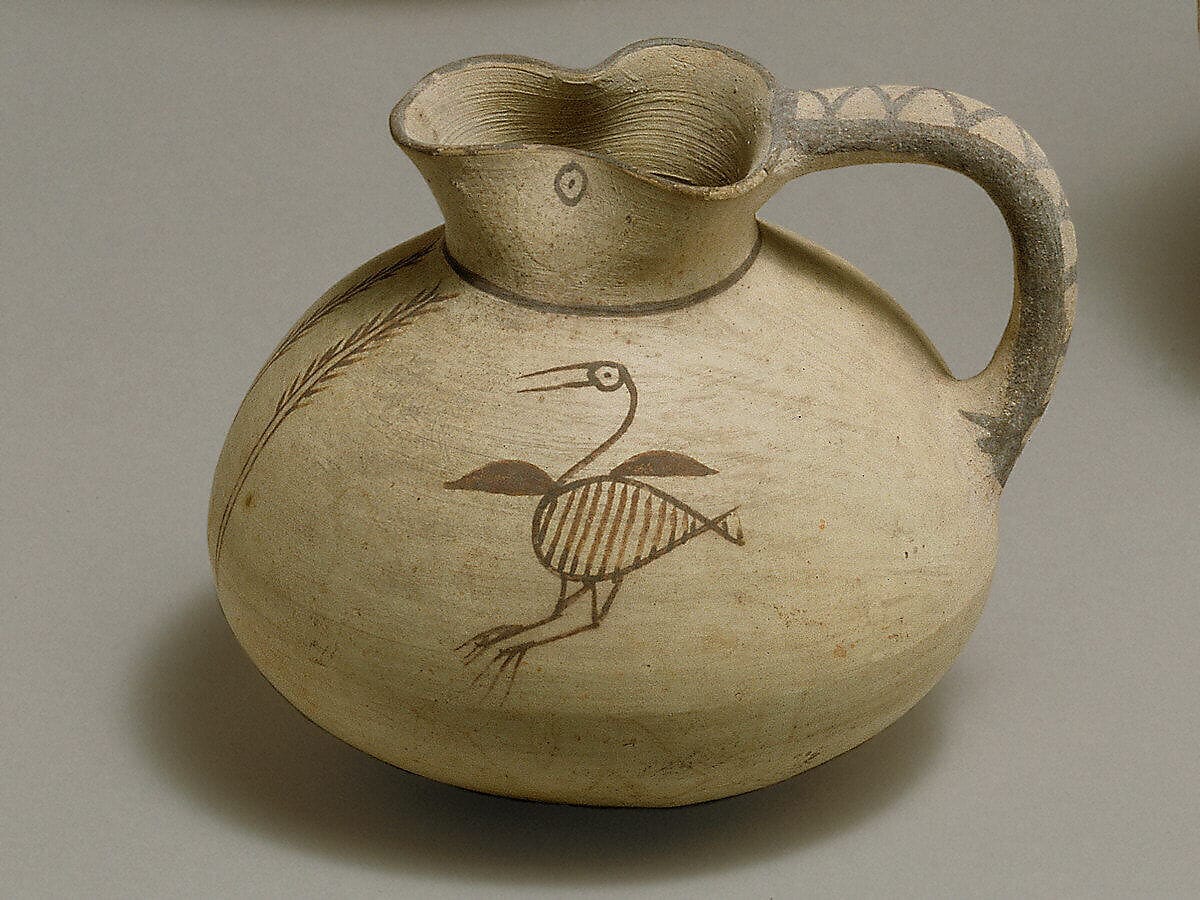
Juglet
Archaic I
Jug
Geometric I
Terracotta jug
Early Bronze Age I
Juglet
Geometric I