
Events·Event
Lapithos symposium on 7 November follows the occupied town from antiquity to displacement
The Municipality of Lapithos holds a one-day scholarly meeting at the Kykkos Monastery's Archangelos Cultural Foundation, under the auspices of the Deputy Minister of Culture.



Conference
- When
- 7 November 2026 In 2 days
- Where
- Ceremony hall, Archangelos Cultural Foundation of the Holy Monastery of Kykkos, Nicosia
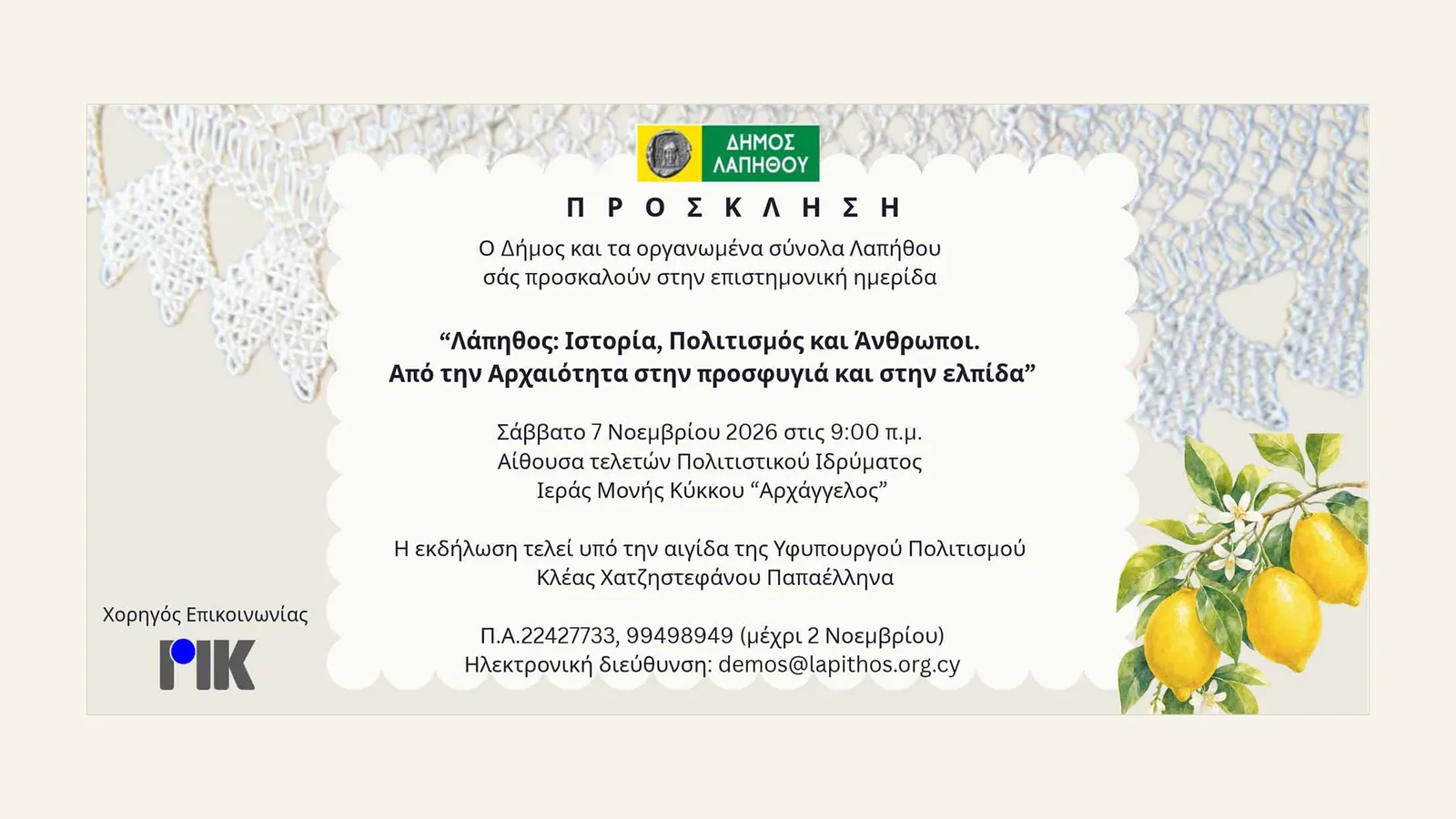
The Municipality of Lapithos and the town's organised groups hold a one-day scholarly symposium on Saturday 7 November 2026, from 9:00, in the ceremony hall of the Kykkos Monastery's Archangelos Cultural Foundation. It is called «Λάπηθος: Ιστορία, Πολιτισμός και Άνθρωποι. Από την Αρχαιότητα στην προσφυγιά και στην ελπίδα» ("Lapithos: History, Culture and People. From Antiquity to Displacement and Hope"), and the Deputy Minister of Culture, Klea Hadjistephanou Papaellina, has placed it under her auspices.
Lapithos, on the north coast, has been illegally occupied by Turkey since the 1974 invasion. The municipality now works from a temporary address in Nicosia, at 36 Prodromou Street.
What the day covers
The municipality announced the symposium on 23 October. Scholars and researchers are to speak on how Lapithos was founded, on its archaeology, on its traditional crafts and on the people who shaped its history; the stated aim is to leave a body of scholarly work for later generations of Lapithiots.
Residents of the town and anyone else interested are invited. The invitation set 2 November as the closing date for registering by telephone (22427733 or 99498949); the municipality's email address is demos@lapithos.org.cy. CyBC is the media sponsor.
Ancient Lapethos
The ancient city, Lapethos, lay around the modern town, about 14 km west of Kyrenia [1, p. 330]. In the Iron Age it was one of the kingdoms of Cyprus, ruled by kings with Phoenician and Greek names, until Ptolemy I abolished it in 312 BCE [2, p. 243; 3, p. 440]. Most of what is known of it comes from its cemeteries [2, p. 252]. The Early and Middle Bronze Age tombs at Vrysi tou Barba have yielded about five times as much metal as those of Vounous [4, pp. 132–133].
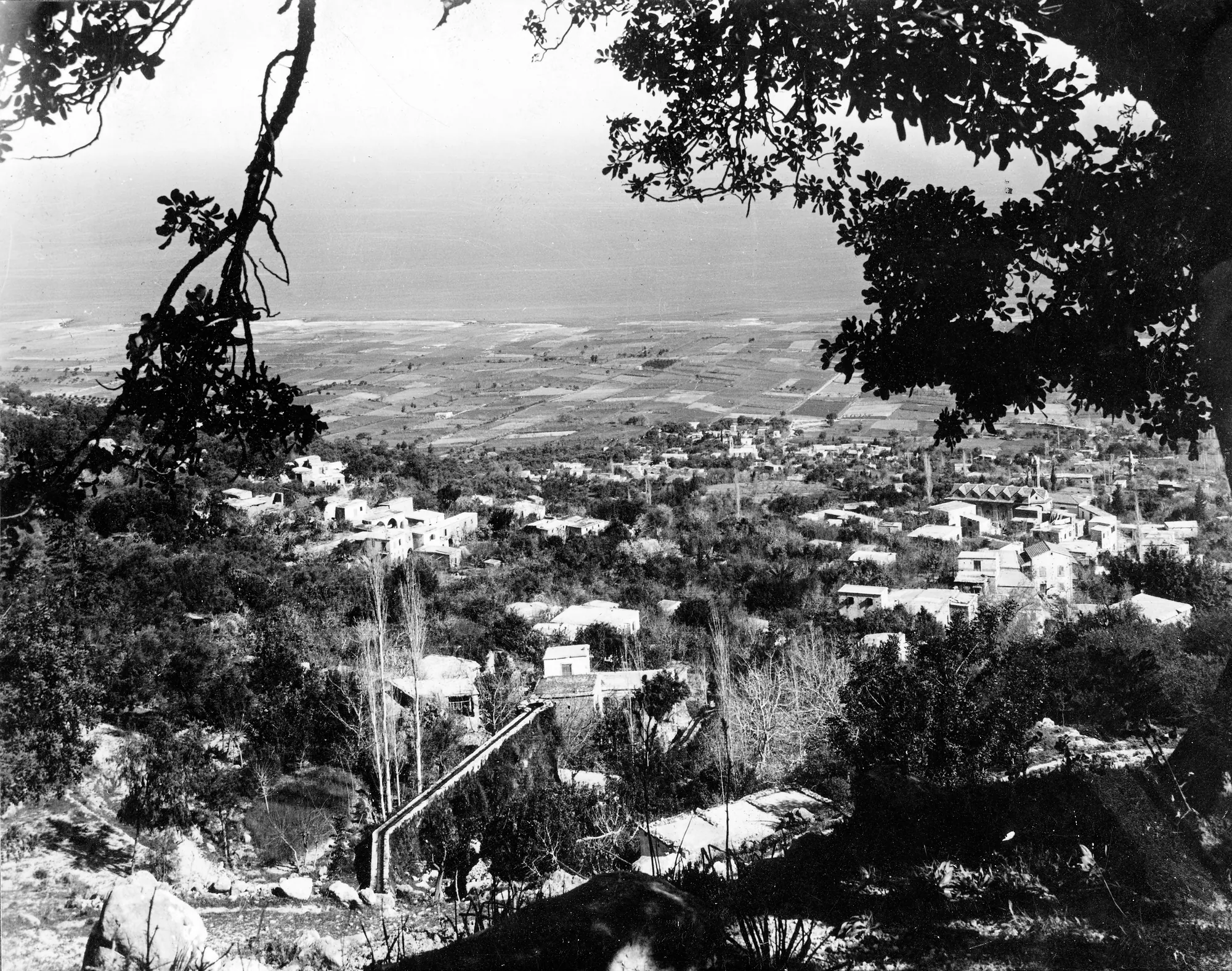
In 1927 the Swedish Cyprus Expedition dug at Lapithos, where Erik Sjöqvist excavated the cemeteries. Its Iron Age tombs became the basis of the standard pottery sequence for the Cypro-Geometric period [2, p. 248]. No legal excavation has been possible there since 1974 [2, p. 241]. When Stella Diakou took stock in 2019, half of the 136 Bronze Age tombs excavated there had been studied [2, p. 251].
Original source
On ancientcyprus.com
- Sites
- Lapithos
- Excavations
- Lapithos: the Swedish Cyprus Expedition
- People
- Erik Sjöqvist, Stella Diakou
- Institutions
- Swedish Cyprus Expedition
References
- 1.Herscher, E. (1997). Lapithos. In E. M. Meyers (Ed.), The Oxford Encyclopedia of Archaeology in the Near East, vol. 3, 330–331. Oxford University Press.
- 2.Diakou, S. (2019). The Archaeology of the North Coast of Cyprus. The Evidence from Lapithos. In C. Kearns & S. W. Manning (Eds.), New Directions in Cypriot Archaeology, 241–265. Cornell University Press.
- 3.Gjerstad, E. (1948). The Swedish Cyprus Expedition, Vol. IV Part 2: The Cypro-Geometric, Cypro-Archaic and Cypro-Classical Periods. The Swedish Cyprus Expedition.
- 4.Webb, J. M. (2017). Vounoi (Vounous) and Lapithos: north-coast cemeteries of the Early and Middle Cypriot Bronze Age. In D. Pilides & M. Mina (Eds.), Four Decades of Hiatus in Archaeological Research in Cyprus: Towards Restoring the Balance, 128–139. Verlag Holzhausen.
More in Events
- Nicosia conference on 6–7 November hears new work on Erimi, Ayia Irini and the "Achaeans"
- Kassianidou, Reeve and Ulbrich to discuss Cypriot antiquities in UK museums in London on 7 December
- Three coin curators trace money from Asia Minor to Byzantium in a Nicosia lecture on 9 November
- Engraver Panayiotis Andreou leads two free coin-engraving workshops at Nicosia's Leventis Museum
- Leventis Foundation screens Papapetrou's films; he recalls Karageorghis's return to Salamis