
Fieldwork·In brief
Works at the Paphos lighthouse uncover a Roman cistern, pebble floor and water channel
The Department of Antiquities has restored the old keepers' houses at the Paphos lighthouse; pottery dates the water works found round the tower to the 1st–2nd century CE.



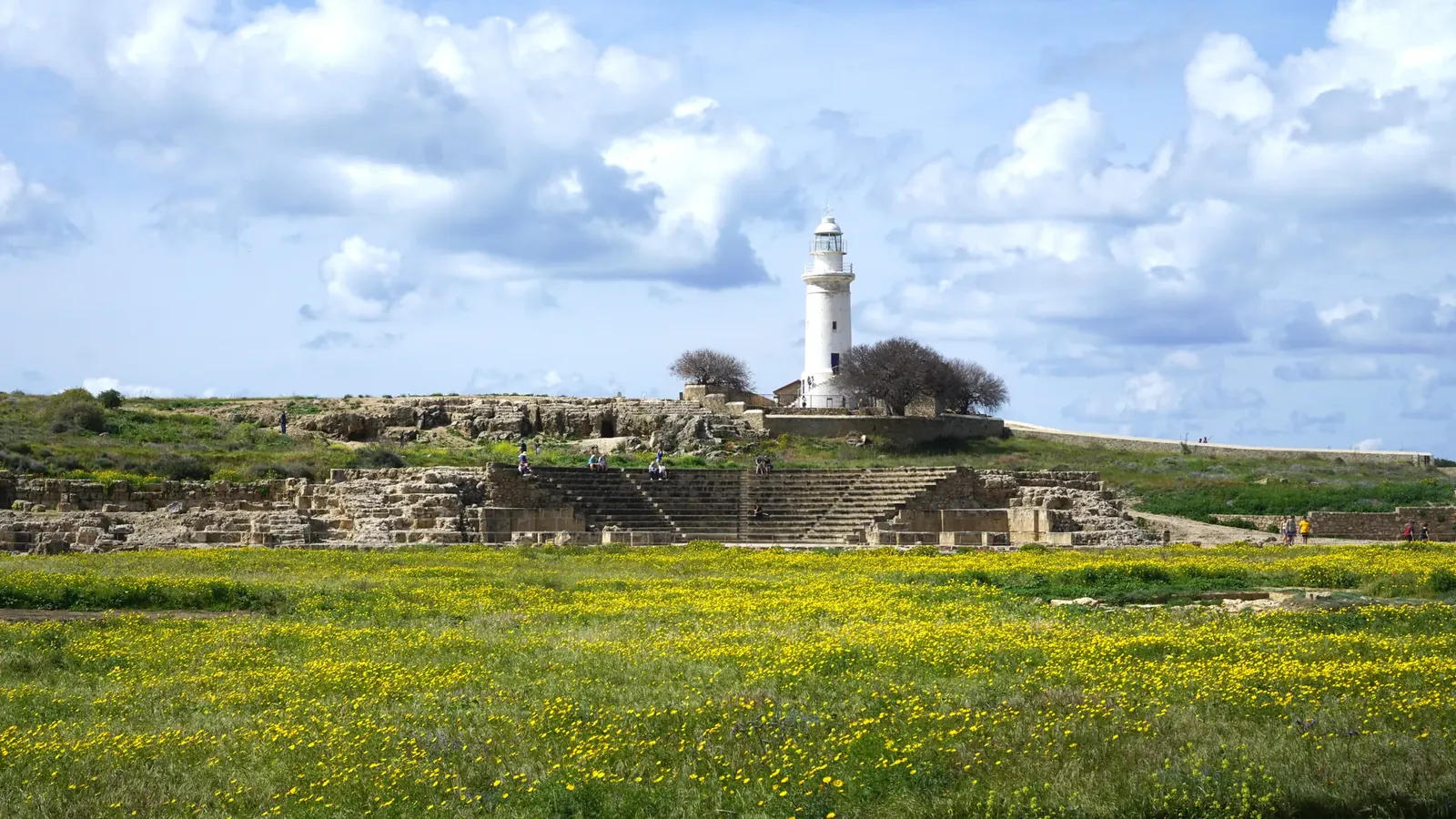
Landscaping round the Paphos lighthouse has exposed a cistern, a pebble floor and a channel, which the Department of Antiquities excavated. The three appear to have belonged to an ancient system for managing water. According to the Department, pottery from the channel dates them to the Early Roman period, the 1st–2nd century CE.
The finds came from works the Department announced on 14 September: the restoration of the lighthouse's auxiliary buildings, new planting round the tower and paths leading up to it. Those buildings housed the keepers and their families, who looked after the light and its equipment until automation in 1982, said Theofano Markou, Port Officer of the Cyprus Ports Authority at Paphos. The tower, about 20 metres high and built under British rule in the late 1880s, still guides shipping.
Efstathios Raptou, Senior Archaeological Officer at the Department, called it the largest and most recognisable lighthouse in Cyprus. The tower itself is a later structure and is not classed as an ancient monument, he added, although it stands inside the archaeological site of Kato Paphos.
That site is Nea Paphos, founded about 320 BCE as a harbour town and later the capital of Roman Cyprus. The lighthouse stands at the highest point of Fanari, an oval hillock some 20 metres above sea level on the city's western seafront [1, p. 122]. The agora and odeion of the Roman city lie at its foot.
On ancientcyprus.com
- Sites
- Nea Paphos
- Institutions
- Department of Antiquities of Cyprus
- Periods
- Roman
References
- 1.Młynarczyk, J. (2022). Fanari Hill in the Urban Plan of Hellenistic and Early Roman Nea Paphos and the Question of the 'Two Akropoleis' of Nea Paphos. Études et Travaux 35, 119–134. https://doi.org/10.12775/EtudTrav.35.006
More in Fieldwork
- French team finds 8th–7th century BC walls beneath Classical stone robbing at Kition
- Heritage committee to restore Maronite churches and an Armenian monastery in the occupied north
- Geophysical survey searches for buried remains at Agia Marina Xyliatou, a Roman copper-smelting site
- Karavas churches of 1804 and 1854 restored by Greek Cypriot and Turkish Cypriot conservators
- New Central Prisons at Agios Sozomenos to be kept apart from the Bronze Age site