
Fieldwork·Brief
Stone-knapping floor found in place at Akamas coastal site used at least 8,000 years ago
The October 2025 season at Drouseia-Skloinikia also yielded beads and worked bone and shell, and divers began surveying a reef that was dry land when the site was in use.



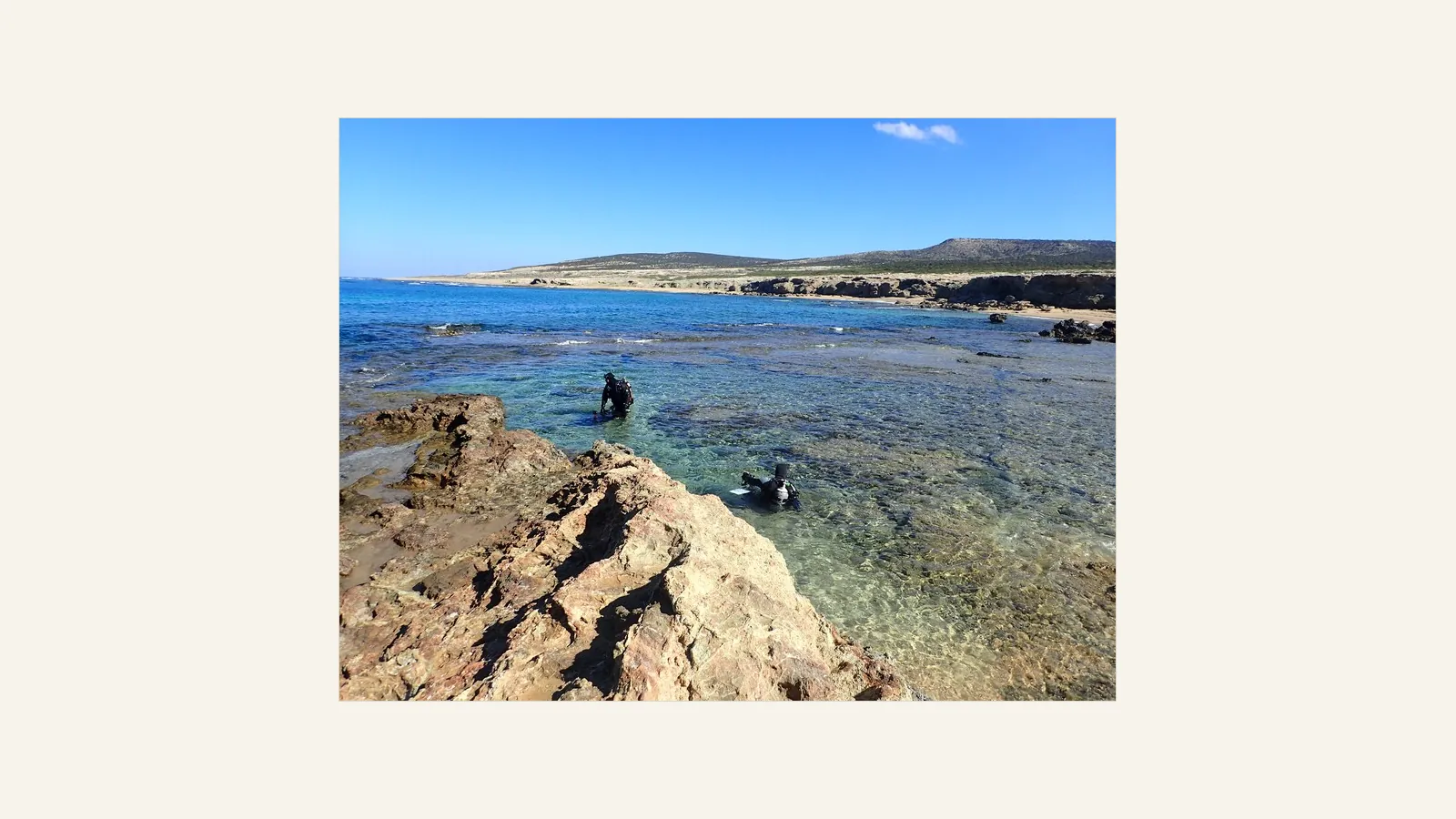
A stone-knapping floor has been found in place at Drouseia-Skloinikia, a newly identified prehistoric site on the north-west coast of the Akamas peninsula. The Department of Antiquities announced the results on 5 February 2026, for a season dug in October 2025.
The work was directed by Dr Theodora Moutsiou, Special Scientist at the Archaeological Research Unit of the University of Cyprus, with Dr Christian Reepmeyer of the German Archaeological Institute. It belongs to Project TOPOS, on the role of coasts in early Cypriot prehistory, funded by the A.G. Leventis Foundation Overseas. Students from the universities of Cyprus, Athens, Cologne and Roma Tre took part.
Nine trenches and a knapping floor
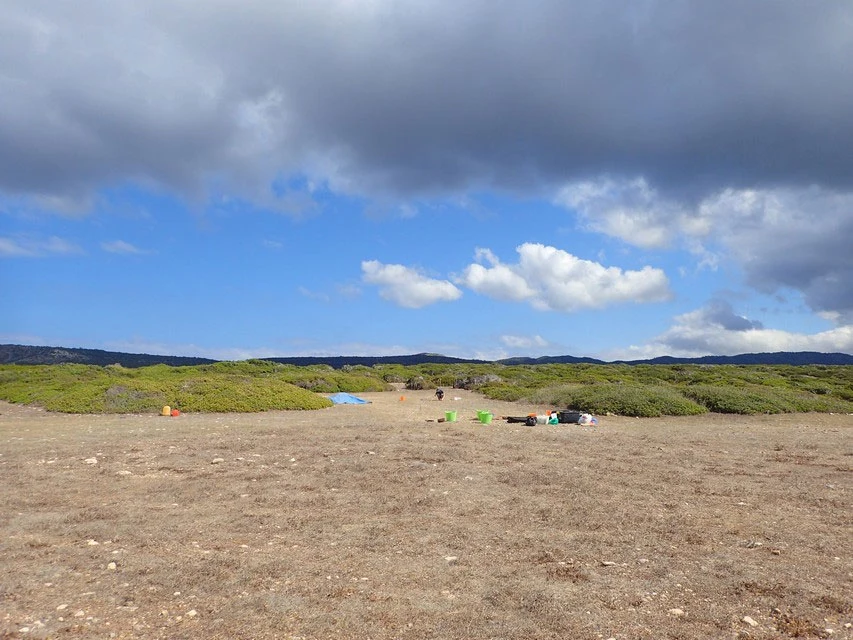
The team opened nine new trenches. One went down to bedrock, and sediment samples from it will be studied for how the deposits formed. The other eight were kept shallow, about 20 cm, to explain an odd magnetic signal picked up by the geophysical survey of 2024. These shallow trenches exposed the knapping floor, a working surface where stone was flaked into tools: blocks of raw stone, cores, hammerstones and the flakes struck from them, still where they had been left.
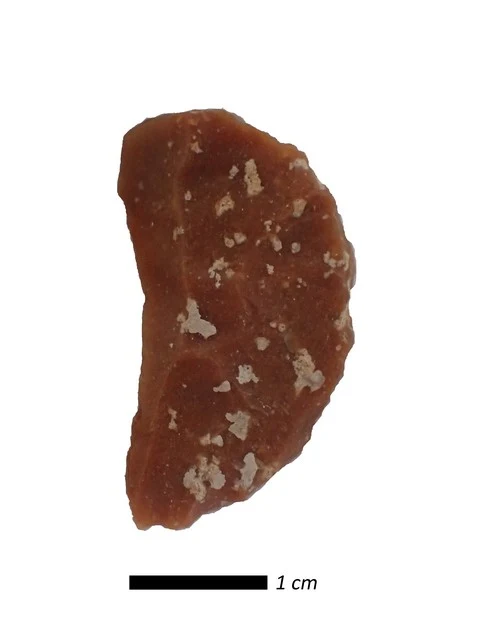
Beads and unfinished beads, ground stone and other stone implements, and worked bone and shell came from the same season, along with a very large quantity of shells, which the Department says raises questions about how many kinds of resources the occupants exploited. Hundreds of stone artefacts, among them a lunette, a small crescent-shaped tool, have been recorded on site. Their form and technique place them provisionally at the end of the Pleistocene and the start of the Holocene, about 12,000 to 8,000 years ago. The first AMS radiocarbon dates give a latest limit of about 8000 cal BP (calibrated years before present) for the occupation.
A coastline now under water
When the site was occupied, according to the Department, the sea stood about 15 m below its present level, so the reef in front of Skloinikia was then dry land. Divers Filip Hájek, of Masaryk University and the Czech Academy of Sciences, and Christos Patsalides made a first survey there. According to the Department, their first observations point to a complex record of human use of the sea there, which warrants systematic underwater work in the near future.
Earlier work in the Akamas
The University of Cyprus has worked in the area since a survey of 2020. In 2024 a geophysical survey by the University's GeoInformatics lab, under Professor Apostolos Sarris, guided five trenches up to 60 cm deep that yielded chipped stone, beads, shells and bone artefacts.
Elsewhere on the Akamas coast, early stone tools were already known. At Aspros, Albert Ammerman's team from Colgate University found chipped stone on aeolianite, fossilised sand dune, and in summer 2007 divers recovered 40 pieces of chipped stone from 6 to 15 m below present sea level [1, pp. 95, 97]. Bernard Knapp counted Aspros and Nissi Beach among possible coastal sites of the Late Epipalaeolithic, when seafaring fisher-foragers visited the island before the first farmers, while stressing that they lacked firm radiocarbon dates [1, pp. 95, 97]. The Department places Skloinikia among the excavations adding to knowledge of the island's early Neolithic.
The Department said the third University of Cyprus season at the site was expected in September 2026, with the changing Akamas coastline as its focus.
Original sources
On ancientcyprus.com
- Excavations
- Akamas: the PLEICY survey and the Drouseia-Skloinikia excavation (University of Cyprus), Akamas-Aspros and Nissi Beach: the Colgate University survey
- People
- Theodora Moutsiou, Christian Reepmeyer, Apostolos Sarris, Albert J. Ammerman, A. Bernard Knapp
- Institutions
- Department of Antiquities of Cyprus, Archaeological Research Unit, University of Cyprus, Deutsches Archäologisches Institut, A. G. Leventis Foundation
- Periods
- Neolithic
References
- 1.Knapp, A. B. (2010). Cyprus's Earliest Prehistory: Seafarers, Foragers and Settlers. Journal of World Prehistory 23, 79–120.
More in Fieldwork
- Hellenistic quarry under Paphos's Fabrika hill became an unused tomb, then a church
- This Week in Cypriot Archaeology: 31 August–6 September 2026
- Hollows cut into a Bronze Age threshold at Erimi match a senet game board
- This Week in Cypriot Archaeology: 27 July–2 August 2026
- Grape seeds and unfired loom weights found in Bronze Age work complex at Erimi-Pitharka