
Fieldwork·News
Iconostasis and monk-painted walls restored at the monastery of Saint Barnabas near Salamis
The EU-funded work by the bicommunal Technical Committee also repaired the church roof at the shrine of the apostle, in the occupied north of Cyprus.



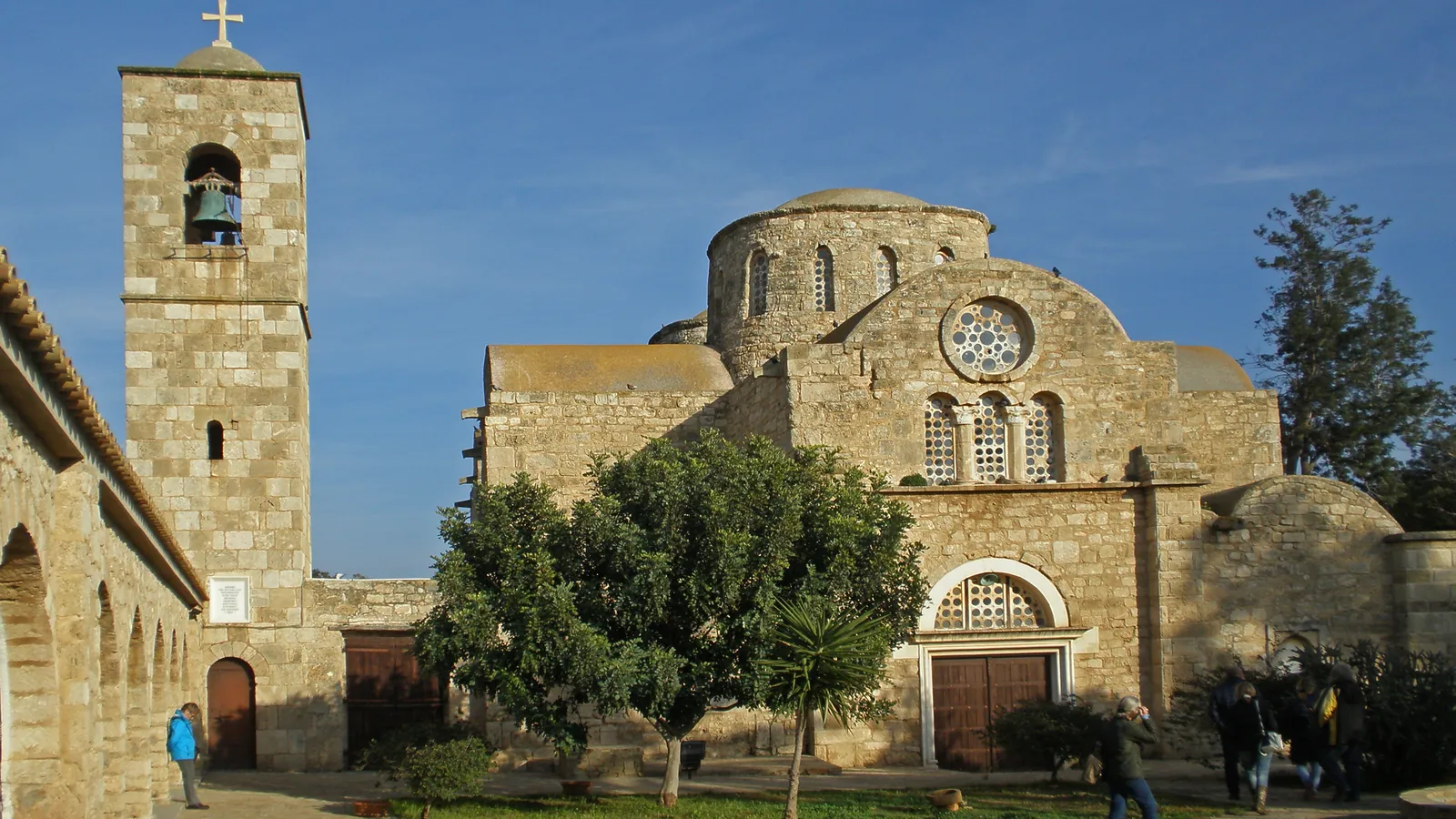
Conservators have finished work on the church of the Monastery of Apostolos Varnavas, the shrine of Saint Barnabas on the plain west of ancient Salamis, in the district of Famagusta. On 2 November 2026 Sotos Ktoris, the Greek Cypriot co-chair of the bicommunal Technical Committee on Cultural Heritage, announced that its carved wooden iconostasis and its wall paintings had been conserved and its roof repaired.
The monastery lies in the part of Cyprus that Turkey has illegally occupied since its invasion of the island in 1974.
Roof first, then the interior
Funding came from the European Union, with the United Nations Development Programme (UNDP) overseeing the work on its behalf. The roof was tackled before anything else. Ktoris said in late April that work on it had started, and by June, after staff from UNDP, members of the Committee and its advisory board had inspected the site, UNDP said the roof insulation was nearly done.
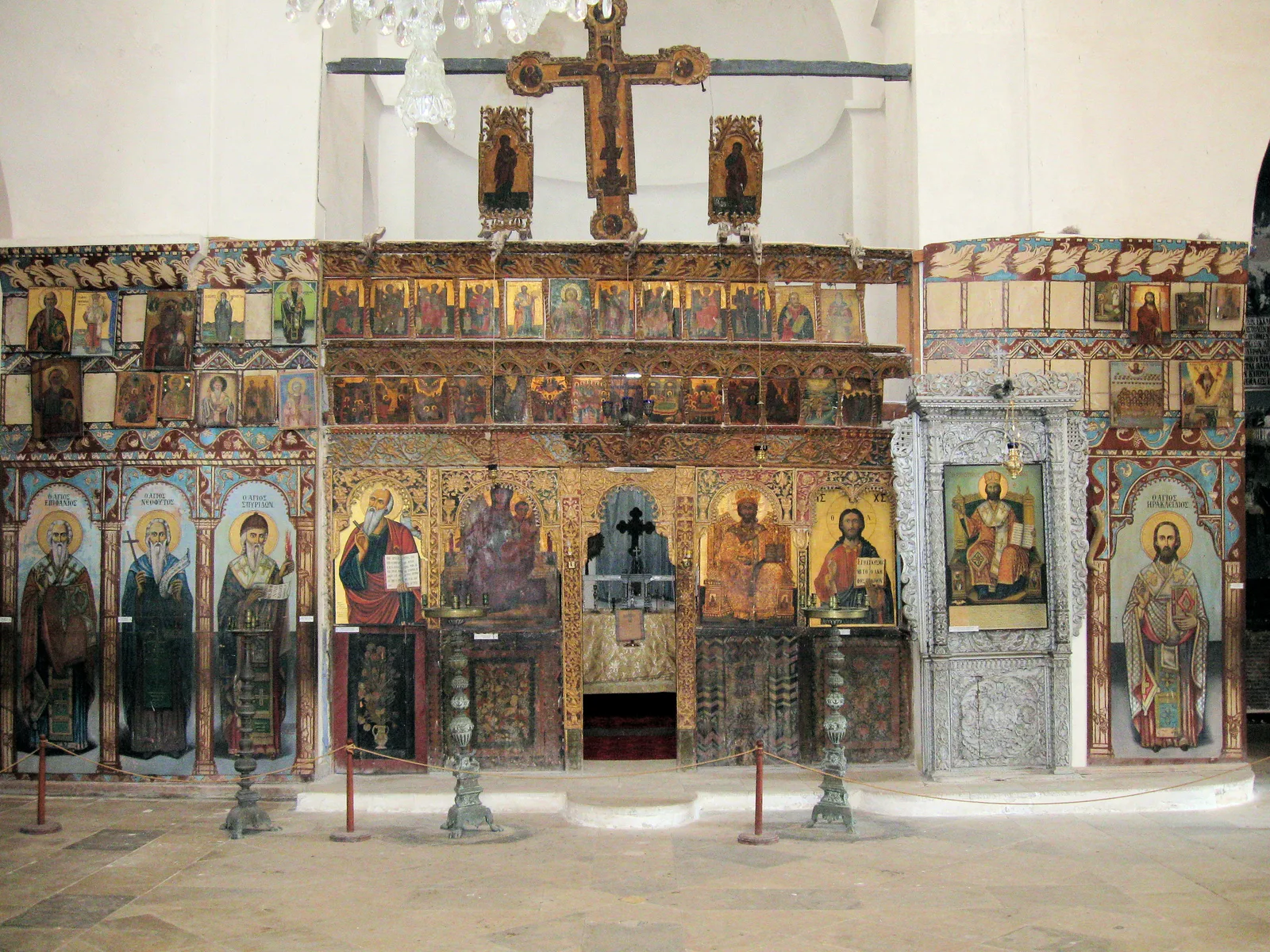
The second stage moved indoors. The iconostasis is the wooden screen, carved and gilded, that stands in front of the sanctuary and carries the icons. The paintings cover large areas of the walls. According to Ktoris, they are 20th-century work by three monks from the village of Afania: Chariton, Stephanos and Barnabas. The church itself now houses an icon museum.
The tomb and the founding of the monastery
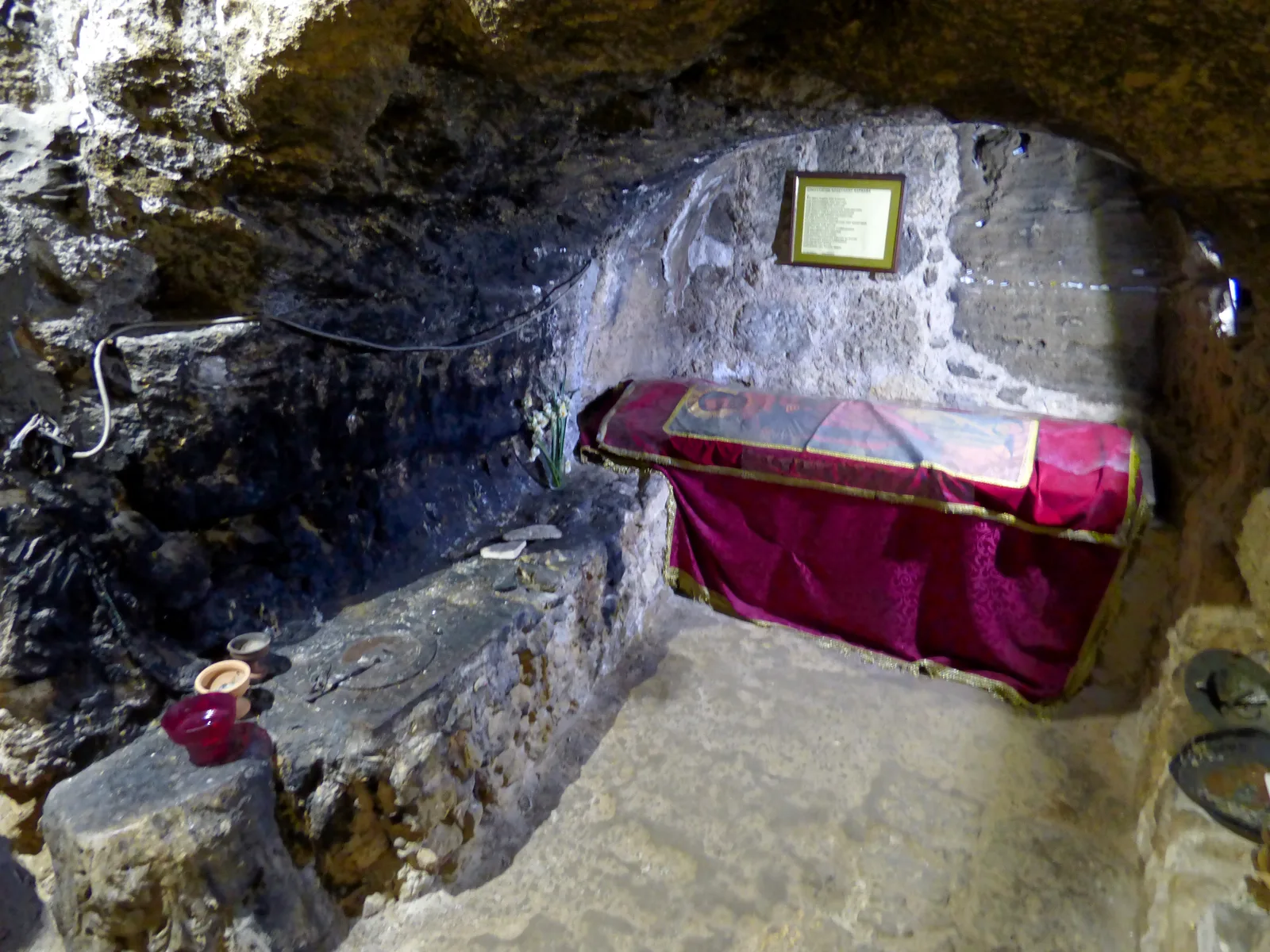
The monastery grew up beside a rock-cut tomb that tradition holds to be the grave of Barnabas, Paul's companion and the founder of the Church of Cyprus. In that tradition, Archbishop Anthemios discovered the apostle's relics at Salamis in 488, together with a manuscript of the Gospel of Matthew, and carried them to Constantinople for the emperor Zeno. Zeno granted the archbishop three imperial privileges, a red mantle, a signature in red ink and a sceptre, and so confirmed the autocephalous status of the Cypriot Church [1, p. 240]. The historian Stephanos Efthymiadis describes Anthemios as the leading champion, in 488, of that Church's independence from the patriarchate of Antioch [2, p. 107].
Building followed the cult. An inscription from the monastery, first published by Mitford, records a further charitable work completed under an archbishop named Philoxenos, known from no other source; Efthymiadis takes him to have followed Anthemios in office [2, p. 107]. In the sixth century Alexander the Monk, who belonged to the brotherhood of Saint Barnabas outside Constantia, as Salamis was then called, wrote an encomium of the saint. His text describes the monastery's western atrium and names Zeno as its founder [3, pp. 176–177].
A later church on an old site
The church standing today is later than Zeno. Eleni Procopiou, who spent 25 years with the Department of Antiquities, groups it with two other multi-domed basilicas on the island, Agia Paraskevi at Geroskipou and Saints Barnabas and Hilarion at Peristerona. She dates all three after the eighth century and very possibly to the ninth or tenth [4, p. 74]. Its two drum domes rise over the plain between Salamis and the Late Bronze Age town of Enkomi.
The Committee's wider programme
Greek Cypriot and Turkish Cypriot members have sat together on the Committee since its creation in 2008. Its previous handover, in October, was of two Byzantine churches, Panagia Apsinthiotissa and Agios Prokopios; at that point the Committee put its count of religious monuments restored at over 210.
On ancientcyprus.com
- People
- Sotos Ktoris
- Institutions
- Technical Committee on Cultural Heritage, Church of Cyprus
References
- 1.Solomidou-Ieronymidou, M. and Philotheou, G. (2020). The Representation and Memory of Saints Paul, Barnabas, Epiphanios, and Others on Wall Paintings of Byzantine and Medieval Cyprus. In L. Nasrallah, A. Luijendijk and C. Bakirtzis (eds.), From Roman to Early Christian Cyprus: Studies in Religion and Archaeology. Tübingen: Mohr Siebeck.
- 2.Efthymiadis, S. (2018). The Cult of Saints in Early Byzantine Cyprus as Mirrored in Church Building and Epigraphy. In M. Horster, D. Nicolaou and S. Rogge (eds.), Church Building in Cyprus (Fourth to Seventh Centuries): A Mirror of Intercultural Contacts in the Eastern Mediterranean. Münster: Waxmann.
- 3.Kyriacou, C. (2018). Spirituality and Hexis: Tracing the Christian Habitus in the Basilicas of Early Byzantine Cyprus. In M. Horster, D. Nicolaou and S. Rogge (eds.), Church Building in Cyprus (Fourth to Seventh Centuries): A Mirror of Intercultural Contacts in the Eastern Mediterranean. Münster: Waxmann.
- 4.Procopiou, E. (2018). New Evidence for the Early Byzantine Ecclesiastical Architecture of Cyprus. In M. Horster, D. Nicolaou and S. Rogge (eds.), Church Building in Cyprus (Fourth to Seventh Centuries): A Mirror of Intercultural Contacts in the Eastern Mediterranean. Münster: Waxmann.
More in Fieldwork
- Works at the Paphos lighthouse uncover a Roman cistern, pebble floor and water channel
- Excavators near Kophinou find a domed church of the 8th–10th centuries and a potters' clay tank
- A dog's paw prints survive on a 4,000-year-old mudbrick from a burnt house at Tavşanlı Höyük
- Hexagonal church of Apsinthiotissa and Byzantine Agios Prokopios restored in the occupied north
- Bronze Age Pyla-Kokkinokremos, beside a British firing range, will not open to visitors