
Research·In brief
Archbishopric seeks permit to refit Phaneromeni school for University of Cyprus archaeologists
Drawn up in 2021 for the architecture school, the plan now brings the department of history and archaeology, with some 200 students, inside the walls of Nicosia.



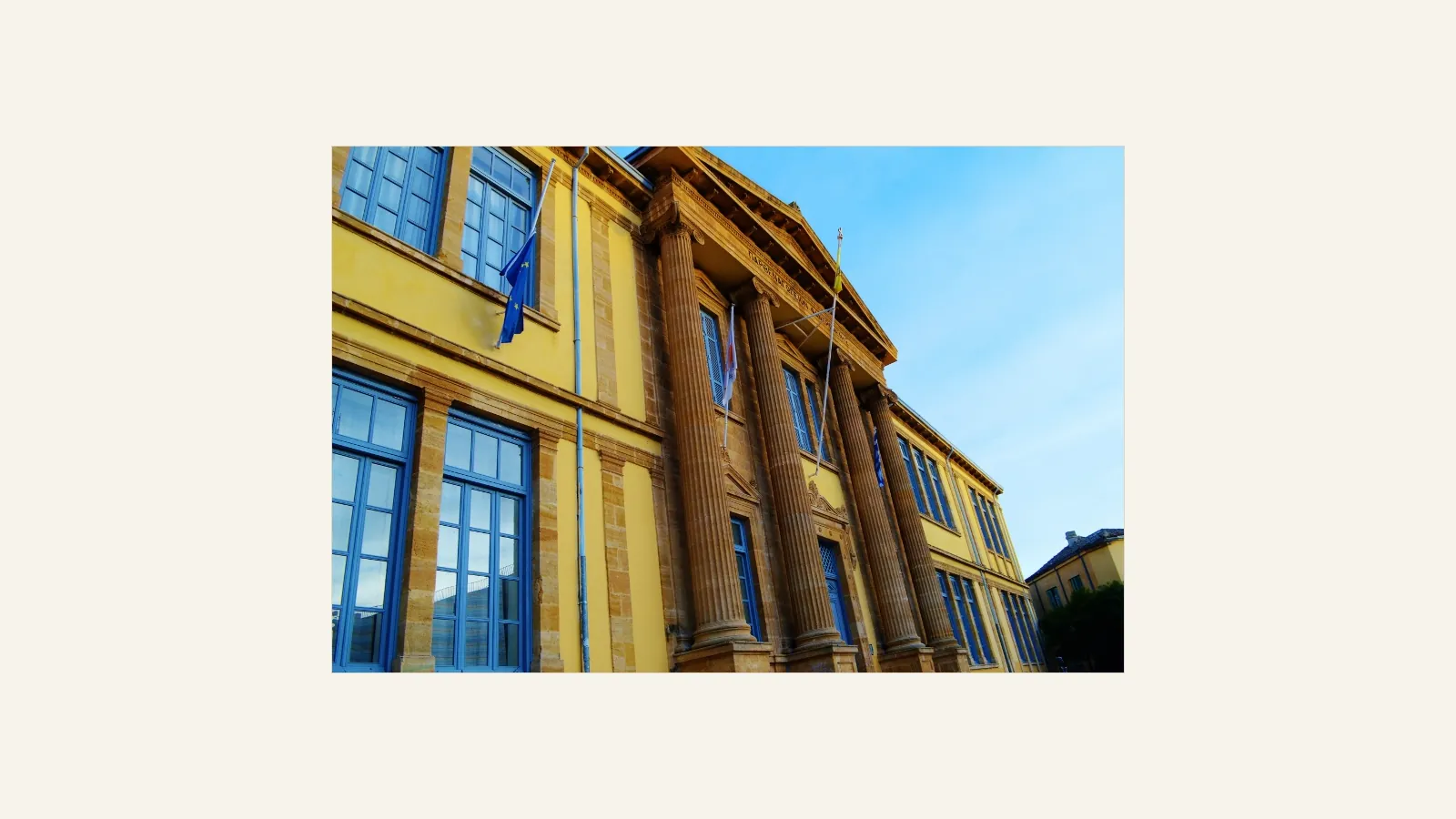
The Archbishopric of Cyprus has asked for planning permission to restore the old Phaneromeni school inside the Venetian walls of Nicosia, a building now earmarked for the University of Cyprus department of history and archaeology. The application also turns the basketball court behind it into a public square and upgrades the 123-space car park beneath. Engineers from the Archbishopric and from the university will run the project jointly.
Architecture was the first intended tenant. In April 2021 the government, the church, the university and Nicosia Municipality signed a memorandum under which the state would lease the school from the Archbishopric on the university's behalf. The architecture department, in cramped rented rooms on Ledra Street since 2005, welcomed the move as a way to keep the university in the old town. The architects wanted laboratories, seminar rooms and postgraduate space the old building could not hold, and the scheme stalled. In November 2025 Archbishop Georgios said the finance ministry had decided against paying for a new building behind the school.
This January the university put forward history and archaeology, a department of about 200 students, in place of architecture. The Archbishop said the church wanted "a solution that ensures the arrival of many students". Finance Minister Makis Keravnos has since confirmed that the department is the one due to move in.
The university has taught archaeology since 1992, when Vassos Karageorghis took up its first chair in the subject and became director of its Archaeological Research Unit.
Original source
On ancientcyprus.com
- People
- Vassos Karageorghis
- Institutions
- Church of Cyprus, University of Cyprus, Nicosia Municipality
More in Research
- Akrotiri was once an island off Cyprus, and its salt lake an arm of the sea, NASA says
- Saint Therapon's underground tomb in Larnaca lies on a petrol station's plot
- The Peleset Sea People came from the Anatolian coast facing Cyprus, new paper argues
- Famagusta's Lusignan walls have lost far more stone to sea salt than its Venetian walls, study finds
- Network study of 299,171 km of Roman roads puts Byzantium and Antioch ahead of Rome