
Keynote·CAARI Cyprus·2020
Records of Cypriot archaeology at the National Archives of the United Kingdom
Juliette Desplat
Chapters
About the lecture
In this keynote lecture for the CAARI and British Museum conference Empire and Excavation, Juliette Desplat, head of modern collections at the National Archives of the United Kingdom, explains what records the archive holds on the history of archaeology in Cyprus and how researchers can locate them.
Desplat begins by comparing archival research to archaeological excavation, noting that both combine serendipity with systematic investigation of administrative layers. She outlines the history of the National Archives, from the medieval Curia Regis to the nineteenth-century establishment of the Public Record Office with the help of Henry Cole. Because Cyprus passed from Venetian to Ottoman rule, was handed to Britain for administration, annexed in 1914, recognised as a crown colony after the Treaty of Lausanne, and became an independent republic in 1960, its files are divided across the Foreign Office, Colonial Office, Dominions and Commonwealth Relations Offices, War Office, Cabinet Office, and Treasury.
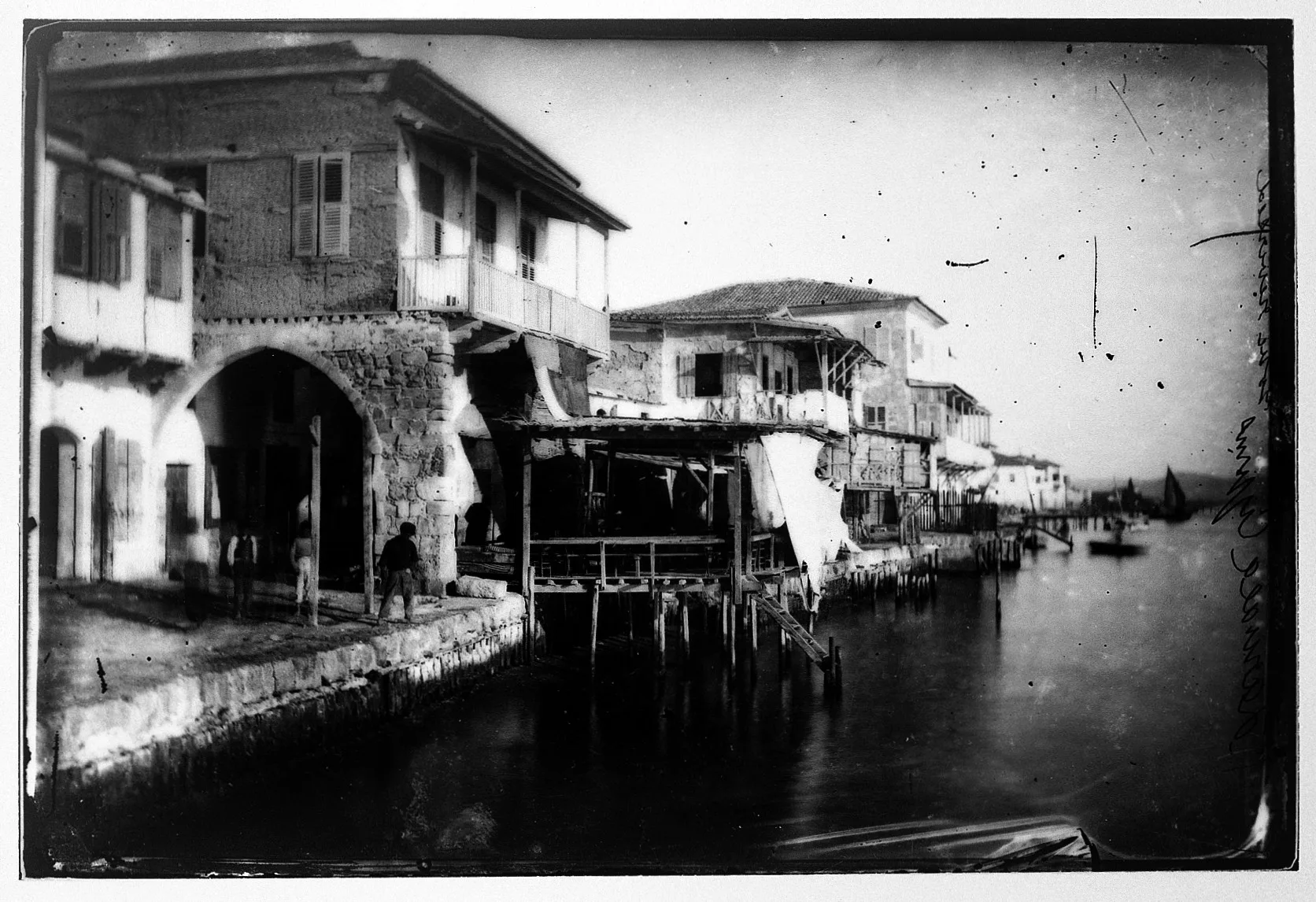
The talk surveys the material relating to Cypriot archaeology in these files: official correspondence and sharp-tongued internal minutes; reports by colonial officials and antiquities directors; drafts and gazetted texts of antiquities legislation; correspondence with the British Museum and recruitment files for the Department of Antiquities; and visual material, including an 1878 map marking ancient sites, plans enclosed in correspondence, and the Foreign and Commonwealth Office Library Photograph Collection (CO 1069).
Desplat then demonstrates how to trace records poorly described in the online catalogue, Discovery. For the Ottoman period before 1906, correspondence lies in the 5,491 volumes of FO 78, which has no separate Cyprus sub-series; researchers must use the microfilm indexes and registers in FO 605/247 under Turkey, illustrated by an entry for a firman authorising excavation in Rhodes and Cyprus. For the British period up to 1926, when catalogue descriptions improve, researchers must consult the chronological registers in CO 512 to find file numbers in the main Cyprus correspondence series, CO 67, such as an August 1878 telegram on antiquities. She also introduces FCO 141, the migrated archives created by the colonial administration in Cyprus.
The lecture closes with the political context of the 1930s, quoting a 1933 minute by Sir Arthur Dawe on Cypriot monuments as the Empire's only fragment of classical Greek civilisation, and Governor Richmond Palmer on political complications surrounding antiquities. Unlike colonial records for Egypt, Iraq, or Syria, the Cyprus files frequently name local archaeologists and curators, and record episodes such as repairs to the walls of Nicosia and Ronald Storrs sending Cypriot artefacts to Sweden via the Colonial Office bag.
Background
Where to read more on this site before or after watching.
In the compendium
Firmans and Partage: The Lawful Export of Antiquities from Ottoman Cyprus, 1860s to 1905
The firmans, landowners' rights and the division of finds in thirds under which consuls, excavators and museums lawfully exported Cypriot antiquities from the 1860s until the law of 1905.
In the compendium
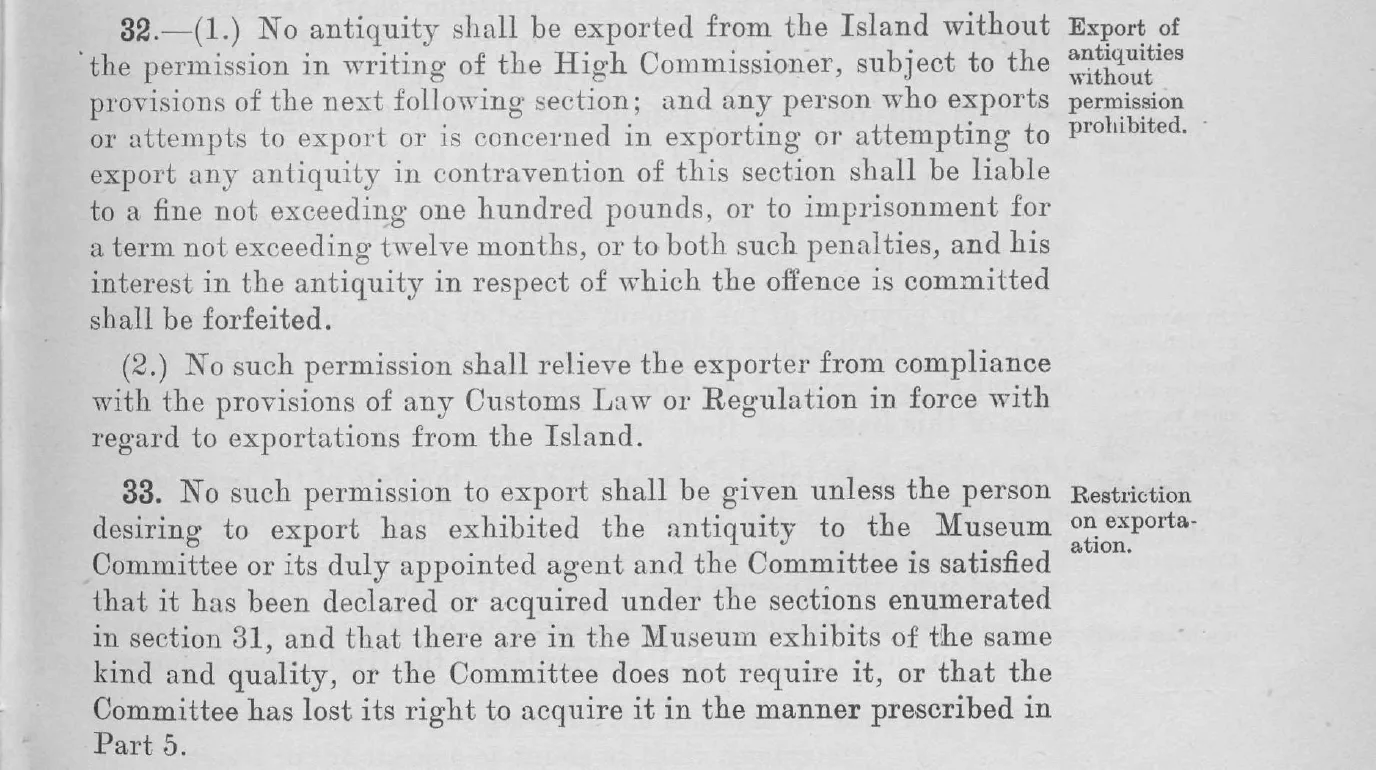
The Antiquities Laws of 1905 and 1935
What the Antiquities Laws of 1905 and 1935 said about ownership, finds, excavation, dealing, collections and export, and how they were amended up to 1996.