

Classical
Head from a votive statue
Head from a votive statue: A male head from a votive statue. Much of the facial details of the head are broken. The hair on the crown and back is made in shallow locks and in spiral curls on the forehead. (Overall: 300 mm x 200 mm) - Made of Limestone Culture: Cypriot
Classification
- Object type
- Stone sculpture
- Place of production
- Cyprus
- Date
- 500 - 400 BC
Collection
Provenance
Identifiers
- Accession no.
- 16.5.72.26, Liverpool Museum
Corrections and additions
Do you know this object?
We are always looking for more of an object's history: who owned it, where it was sold or shown, and where it was published.
We would like to hear about
- Earlier owners, sales or exhibitions
- Publications that illustrate or mention it
- Where it is now, if it has moved
- Better photographs, or a close parallel
- A mistake in what we say about it
Messages are read by us alone and kept confidential, unless the law requires otherwise. Tell us if you would like to be thanked by name on the page.
Similar pieces
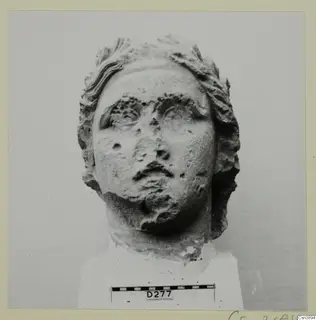
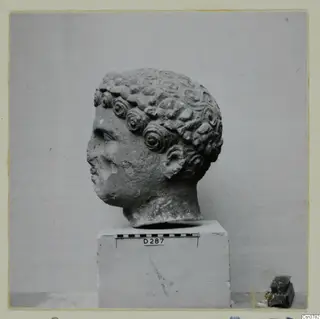 Stone sculpture, headSwedish Cyprus Expedition
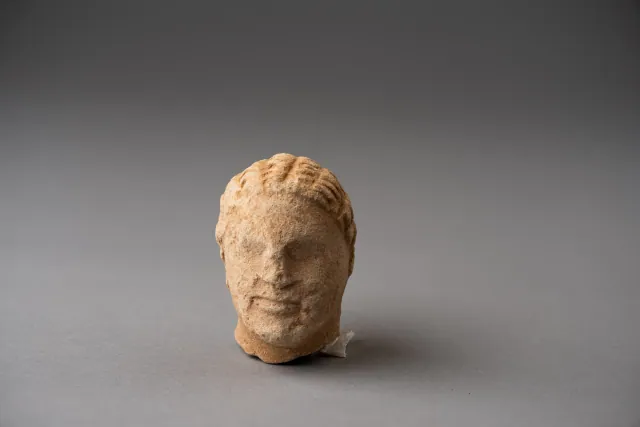
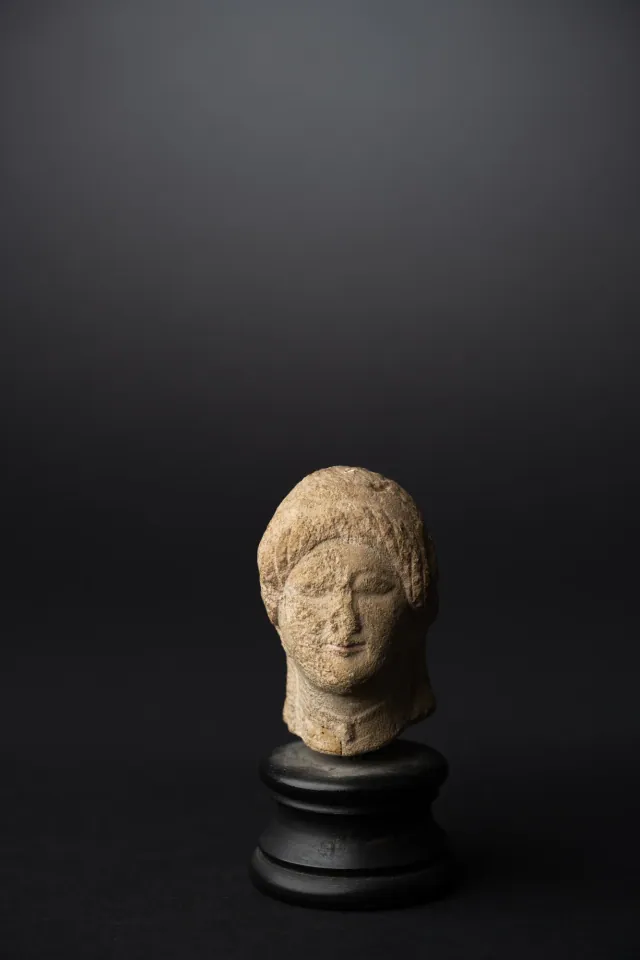 Limestone Head of a Votary with a WreathDrakopoulos Collection
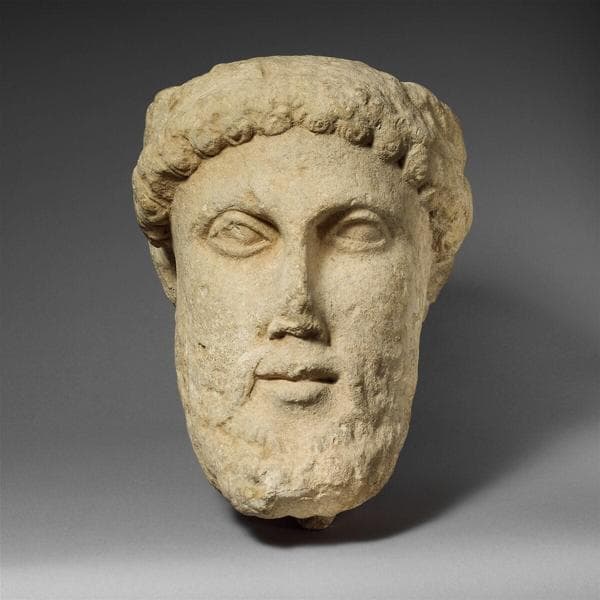
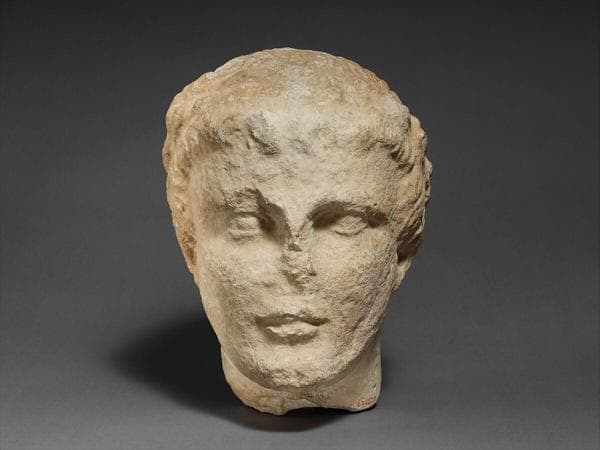 Limestone head of a bearded male votaryMetropolitan Museum of Art
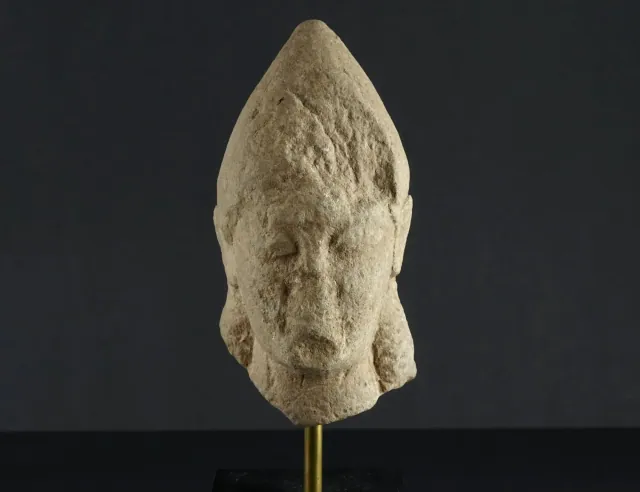 Weathered Limestone Head of a Votary in a Tall Pointed CapDrakopoulos Collection
 Stone sculpture, headSwedish Cyprus Expedition
 Limestone Head of a Boy, probably from a Temple Boy StatuetteDrakopoulos Collection
 Limestone head of a bearded male with a wreath of leavesMetropolitan Museum of Art
 Head from a votive statuetteLiverpool Museum
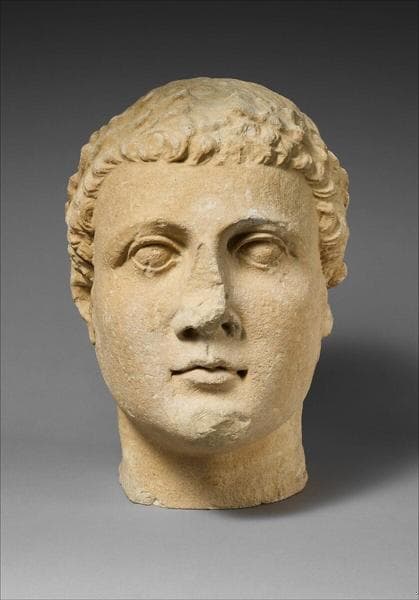 Limestone head of beardless male votaryMetropolitan Museum of Art
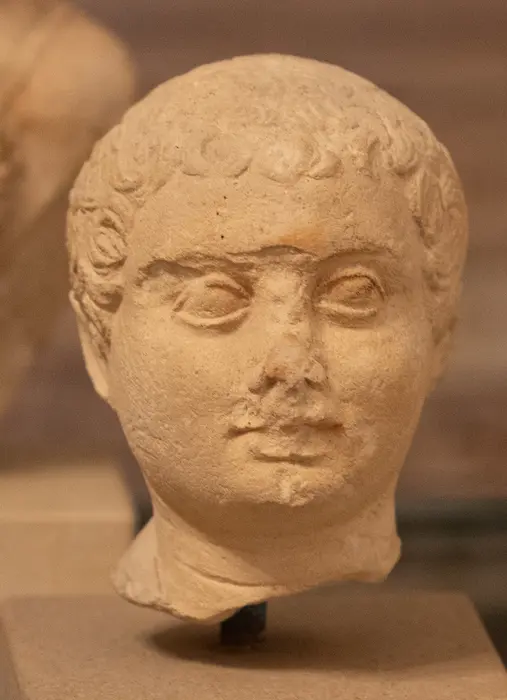 limestone headPierides Museum, Larnaca
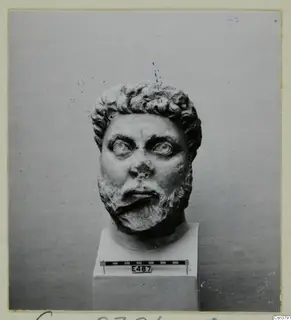 Stone sculpture, headSwedish Cyprus Expedition
 Head from a votive statueLiverpool Museum
 Head from a votive statueLiverpool Museum
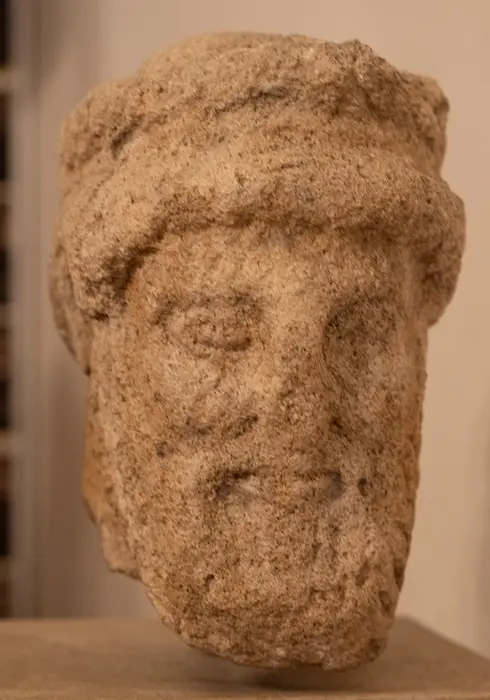 Limestone HeadPierides Museum, Larnaca
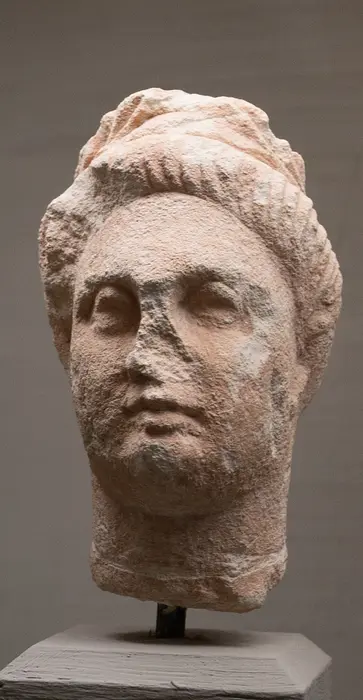 Limestone head of a womanKourion Museum
 Stone sculpture, headSoli
 Stone sculpture, headMersinaki
 Limestone HeadLarnaca Museum
 Limestone headPierides Museum, Larnaca
 FragmentMedelhavsmuseet (Museum of Mediterranean and Near Eastern Antiquities)