
Traveller / antiquarian
Domingo Badia y Leiblich
1767–1818 · Spain
Catalan traveller who, as "Ali Bey el Abbassi", toured Cyprus in March to May 1806 and had the first plan and elevations of the Kouklia temenos wall drawn.
Biography
Domingo Badia y Leiblich was a Catalan traveller who, disguised as a Muslim prince named Ali Bey el Abbassi, spent the spring of 1806 in Cyprus and wrote what F. Escribano Martín calls the first archaeological study of the island7,8.
A Spaniard in disguise
The sources disagree on the year of his birth: Escribano Martín and C. D. Cobham give Barcelona, 1 April 1767, and L. Bonato gives 1767, while the New International Encyclopaedia, Chambers and the Encyclopédie catholique of 1839 give 17662,7,8,9,10,11. Escribano Martín names his parents as Pedro Badía Castillo, secretary to the governor of the Ciudadela at Barcelona, and Catalina Leblich Mestres8. The family moved to Málaga in 1774 and to Vera, in Almería, in 17798. In 1786 he enrolled at the Real Academia de Bellas Artes de San Fernando in Madrid and studied at the Royal Schools of Chemistry and Physics8. In 1791 he married María Lucía Asunción Berruezo, of Vera, and in 1793 he was made administrator of the Royal Tobacco Revenue at Córdoba8.
The Encyclopédie catholique says he won over to his plan the Prince of the Peace, then in highest favour with Charles IV, and went to London to study the peoples of the East, where he was circumcised to complete his likeness to them11. Escribano Martín writes that he was sent with Simón de Rojas Clemente y Rubio, a specialist in Semitic languages, to Paris and London to consult scientists and buy instruments8. Commissioned by the government of Carlos IV for a scientific journey through Morocco, which in Escribano Martín's account took on political aims, he crossed from Cádiz to Tangier on 29 June 18038. Bonato calls him a career soldier sent by the king's chief minister, who travelled round the Mediterranean from 1803 to 1807 claiming to be a Muslim of Abbasid descent educated in Europe7.
Cyprus, March to May 1806
A storm carried his ship, bound for Alexandria, to Cyprus8. The sources disagree on his dates on the island: his own account and Escribano Martín have the ship anchor at Limassol on 7 March 1806, and Cobham gives 4 March1,2,8. At Limassol his affairs were handled by Demetrio Franiondi, vice-consul of England and Russia and consul of Naples1. Early in the stay, Escribano Martín writes, he made friends with Rooke, an Englishman bound for Cairo who dressed as a Muslim and talked constantly of the Mamluk Elfi Bey8. Escribano Martín adds from other papers that Elfi Bey was Britain's candidate for Egypt, that Rooke took him for an English spy and introduced him to the English colony on the island, and that this later let him undo the British plan in Alexandria8.
On 28 March 1806 he set out with Franiondi, his son and four servants to visit Kythrea, Idalion, Paphos and Amathus1. At Idalion he looked for the ancient town on a rise a mile from the village and could not see "the slightest vestige of antiquity"1. On 3 April he left Nicosia for Kythrea1. Of the rock-cut tombs at Paphos he wrote that "well directed researches" might find many objects there, "as at Herculaneum and Pompeii"1. He took a solar reading among the ruins of ancient Paphos and found his latitude to be 34° 48′ 4″ N1.
On 27 April he went from Yeroskipou to Kouklia1. There a wall of two rows of enormous stones lying flat on each other surprised him: "but what a wall !"1. A Greek priest showed him two newly found patches of fine mosaic pavement on a hill a short distance from the door of the palace, and he wondered that no amateur had uncovered the rest, under only a few inches of earth1. At Amathus he described two colossal jars cut from the rock, one nearly destroyed and the other fairly whole, which he supposed were meant for the libations or sacrifices of Adonis1. He copied the inscriptions cut in the rock there and drew the tombs to the west of the town1. He also proposed that there had been two queens named Aphrodite, the first reigning at Paphos, Yeroskipou and Kouklia and the second living later in the palace on the mountains of Nicosia1.
Near his departure he sent the archbishop a study on fighting the locusts and snakes that plagued Cyprus8. The Travels print the reply of Chrysanthos, Archbishop of Cyprus, dated Nicosia, 13 May 1806, thanking him for his letter from Limassol and the dissertation on destroying the locusts1. The sources disagree on when he left: in his own account he embarked on the evening of 7 May, Escribano Martín adds that a second storm kept the ship in until the night of 9 to 10 May, and Cobham gives 12 May1,2,8.
The book and later judgements
After his return he served Joseph Bonaparte as intendant at Segovia and prefect at Córdoba, in the New International Encyclopaedia's words, or, in Escribano Martín's, as intendant at Segovia or prefect at Córdoba8,9. At the end of 1813 he went into exile in France, and in 1814 he published his book in French, signing as Ali Bey el Abbassi; an English translation followed in 18162,8. Bonato writes that it was illustrated with very many careful and precise drawings and greatly influenced the travel writing that followed7. For Bonato he was the figure who most marked this period, curious about everything, and also obsessed with the search for the birthplace of Aphrodite7. Bonato also faults him for trusting too much in the legends the Cypriots told him7.
Franz Georg Maier calls him the first traveller to have a plan and two elevations of the temenos wall at Kouklia drawn, showing the wall in 1806 much as it is today3,12. Maier judges that the mosaics he was shown were most likely those Joseph von Hammer had already noted12. George Jeffery wrote in 1918 that Amathus seems to have been still imposing in 1806, and that one of the two giant vases is now in the Louvre13. J. Młynarczyk treats his etching of Nea Paphos, with the city wall apparently climbing the Fabrika hill, as a most important testimony for that wall14. Escribano Martín calls his Cyprus studies pioneering but hardly known to international scholarship, and says he sought the origin of the Aphrodite myth with hypotheses we might not accept today8.
He set off east again and was at Constantinople on 20 March 1818 and at Tripoli in Syria on 8 June8. The sources disagree on his death: Escribano Martín gives the night of 31 August to 1 September 1818, and Cobham gives 1 September 1818, two days' journey from Mazarib with a caravan for Mecca2,8. The New International Encyclopaedia says he died suddenly at Aleppo, and the Encyclopédie catholique gives Aleppo in 18199,11. Escribano Martín gives two versions of the cause, dysentery from the strain of the journey or poisoning, as he himself indicated8.
Life and work
1803
1803–1807
Named in the École française d'Athènes reports on Amathus (BCH): Reported two vases at Amathus in his travels (1803-1807): «Parmi les voyageurs : Ali Bey el-Abassi, Travels of Ali Bey (1803-1807)»
1806
4 March 1806 – 12 May 1806
Stayed in Cyprus, travelling as the Muslim 'Ali Bey el Abbassi'; visited Limassol, Nicosia, Larnaca, Kouklia, Yeroskipou, Paphos and Amathus, writing up ruins.CyprusC. D. Cobham (1908). Excerpta Cypria: Materials for a History of Cyprus. Cambridge, Cambridge University Press; Ali Bey el Abbassi (1816). Travels of Ali Bey in Morocco, Tripoli, Cyprus, Egypt, Arabia, Syria, and Turkey, between the years 1803 and 1807. London, Longman
- At Kouklia had the first plan and two elevations of the Temenos wall drawn (Maier); described the Cuclia 'palace' (manor) whose Greek farmer was absent, and sent him a description of nearby antiquities.
KoukliaF. G. Maier (2004). Guide to Palaipaphos (Kouklia). Nicosia, Bank of Cyprus Cultural Foundation; Ali Bey el Abbassi (1816). Travels of Ali Bey in Morocco, Tripoli, Cyprus, Egypt, Arabia, Syria, and Turkey, between the years 1803 and 1807. London, Longman
- Recorded at Amathus that of the two giant vases one was 'almost entirely destroyed' (as quoted by Fivel and Masson).
AmathusLéon Fivel (1990). Le second vase d'Amathonte. Cahiers du Centre d'Études Chypriotes 13
- At Larnaca his affairs were handled by Demetrio Franiondi, vice-consul of England and Russia and consul of Naples.
- Visited Kouklia 1806; first to have a plan and two elevations of the Temenos wall drawn; reported newly found mosaics and described the Lusignan manor house.
- Visited Cyprus in 1806; found Ktima a mere mass of ruins: «At the time of Ali Bey's visit to Cyprus (in 1806) Ktima was a mere»
1807
- Travel writer who recorded remarks on Yeroschipos (Geroskipou) in 1807, linking it to the sacred garden of Venus: «Ali Bey’s (Domingo Badia-y-Leyblich) 1807 remark: ...we reached Yeroschipos»
C. A. Stewart, Domes of Heaven: The Domed Basilicas of Cyprus (2008), p. 91
1814
1814–1816
Voyages en Afrique et en Asie 1803-1806 (Paris 1814); English translation Travels of Ali Bey (1816).Paris/LondonVeronica Tatton-Brown (ed.) (2001). Cyprus in the 19th Century AD: Fact, Fancy and Fiction. Oxford, Oxbow, n. 14; Ali Bey el Abbassi (1816). Travels of Ali Bey in Morocco, Tripoli, Cyprus, Egypt, Arabia, Syria, and Turkey, between the years 1803 and 1807. London, Longman
1816
- Traveller who described Kouklia and its Manor House (Travels, 1816).
Maier & Karageorghis 1984, Paphos: History and Archaeology, n. 5 p. 21, n. 10 p. 355
After 1818
1852
- L. Ross (1852) reported: Earlier traveller who took the Paphos rock tombs for dwelling houses: «Pococke und mit noch größerer Naivetät Ali-Bei hielten fie für Wohn: häuſer»
Undated
n.d.
- Travelled in the East and noticed the palace at Couclia and two spots of newly uncovered mosaic at Kuklia.
- Named in the BCH Chronique des fouilles à Chypre: Traveller who depicted the Agios Tychonas church in ruins at the end of the 18th and beginning of the 19th century.
In the field
1 recordisle of Cyprus
SurveyedAli Bey surveyed curious remains of antiquity on Cyprus that had usually been overlooked.
In the Archive
1 item1 photograph in the field.
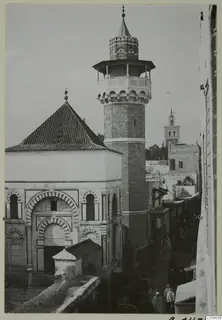
Photographs: Swedish Cyprus Expedition, Medelhavsmuseet, Stockholm (CC0)
Connections
5 peopleFieldwork & employment
- Guided by Demetrio FraniondiAli Bey's 1806 journey from Limassol to the interior and the ancient sites Ali Bey el Abbassi (Domingo Badia y Leiblich), 1816, Travels of Ali Bey in Morocco, Tripoli, Cyprus, Egypt, Arabia, Syria, and Turkey, between the years 1803 and 1807, vol. 11806
Scholarship
Colleagues & contacts
- Worked with Demetrio Franiondijourney to Cithera, Idalia, Paphos and Amatante Bey, Ali, Travels in Morocco, Tripoli, Cyprus, Egypt, Arabi, Syria and Turkey, between the years 1803-1807, in Two Volumes, Vol. I (1816)1806
- Met Demetrio FraniondiLarnaca: Franiondi transacted his affairs Ali Bey el Abbassi, 1816, Travels of Ali Bey in Morocco, Tripoli, Cyprus, Egypt, Arabia, Syria, and Turkey between the years 1803 and 1807, vol. 11806
- Connected with Luigi Mayerchurch ruins at Amathonte Pierre Aupert, Le peintre Luigi Mayer à Amathonte, vers 1780-1790 (1990), p. 81806
- Met RookeLimassol Ali Bey, 1816, Travels of Ali Bey in Morocco, Tripoli, Cyprus, Egypt, Arabia, Syria, and Turkey, between the years 1803 and 18071806
- Connected with RookeThe Saturday Review 1921-06-11: Vol 131 Iss 3424 (1921)1814
- Worked with Joseph von Hammer-PurgstallPaphos sanctuary site Chipiez, Charles, Histoire De Lart Dans Lantiquite Tome.3 (1885)
Recording and study
12 records- Studied7
1805Ali Bey visited and described the castle.
Castle of BuffaloCastle of BuffaloGunnis 1936, p. 301
Ali Bey el Abbassi climbed to the Queen's palace and examined its ruins.
Queen's palace, also called BuffaventBuffavent, near the monastery of St. John ChrysostomeAbbassi 1816, p. 279
Ali Bey el Abbassi visited the site of ancient Idalia but saw no trace of antiquity.
A Greek priest showed Ali Bey el Abbassi two newly discovered Mosaic pavements.
Ali Bey el Abbassi visited Ieroschipos Aphroditis, the sacred garden of Venus.
sacred garden, rock-cut grottoes, and remains of a Greek churchAbbassi 1816, p. 293
Ali Bey el Abbassi copied inscriptions engraved on large portions of rock at Amathante.
inscriptions at AmathanteAbbassi 1816, p. 301
Ali Bey described one of the vases as almost entirely destroyed.
the damaged second vaseAmathonteFivel 1990
- Drew4
1806Ali Bey el Abbassi drew the stone vase at Amathus.
the same vaseHadjisavvas 2010, p. 171
1806Ali Bey drew a summary sketch of the monastery.
Monastery of St. Chrysostomos at KoutsovendisMango et al. 1990, p. 66
Ali Bey el Abbassi made a drawing from the point near the ruins of the Queen's palace.
Queen's palace, also called BuffaventBuffavent, near the monastery of St. John ChrysostomeAbbassi 1816, p. 279
Ali Bey el Abbassi made sketches of what appeared most remarkable at Amathante.
notable remains at AmathanteAbbassi 1816, p. 301
- Other work1
1806Domingo Badia y Leiblich had a plan and two elevations of the Temenos wall drawn.
KoukliaMaier 2004, p. 32
Mentioned in
18 mentionsDocuments · 13
- Historic Cyprus: A Guide to its Towns and Villages, Monasteries and Castles
1805 · p. 301
Ali Bey visited and described the castle.
Gunnis 1936
- Cyprus: Crossroads of civilizations
1806 · p. 171
Ali Bey el Abbassi drew the stone vase at Amathus.
Hadjisavvas 2010
- Guide to Palaipaphos (Kouklia)
1806 · p. 32
Domingo Badia y Leiblich had a plan and two elevations of the Temenos wall drawn.
Maier 2004
- The Monastery of St. Chrysostomos at Koutsovendis (Cyprus) and Its Wall Paintings. Part I: Description
1806 · p. 66
Ali Bey drew a summary sketch of the monastery.
Mango et al. 1990
- Le second vase d'Amathonte
1990
Ali Bey described one of the vases as almost entirely destroyed.
Fivel 1990
- Chypre, Cyprus, Zypern, Cipro, Cypern, Κύπρος… Les voyageurs européens à Chypre au XIXe siècle
2012
travelled in Cyprus in 1806
Bonato 2012
- People · 5listed under Connections
- Archivelisted under In the Archive
Sources
- 1.Ali Bey el Abbassi (1816). Travels of Ali Bey in Morocco, Tripoli, Cyprus, Egypt, Arabia, Syria, and Turkey, between the years 1803 and 1807. London, Longman.
- 2.C. D. Cobham (1908). Excerpta Cypria: Materials for a History of Cyprus. Cambridge, Cambridge University Press.
- 3.F. G. Maier (2004). Guide to Palaipaphos (Kouklia). Nicosia, Bank of Cyprus Cultural Foundation.
- 4.Léon Fivel (1990). “Le second vase d'Amathonte”. Cahiers du Centre d'Études Chypriotes 13. Online
- 5.Jacques Foucart-Borville (1985). “La correspondance chypriote d'Edmond Duthoit (1862 et 1865)”. Cahiers du Centre d'Études Chypriotes 4, 3-60. Online
- 6.Veronica Tatton-Brown (ed.) (2001). Cyprus in the 19th Century AD: Fact, Fancy and Fiction. Oxford, Oxbow.
- 7.L. Bonato (2012). “Chypre, Cyprus, Zypern, Cipro, Cypern, Κύπρος… Les voyageurs européens à Chypre au XIXe siècle”. Cahiers du Centre d'Études Chypriotes 42. Online
- 8.F. Escribano Martín (2022). “El viaje de Alí Bey el Abbassí a Chipre en 1806 y sus estudios arqueológicos”. Hesperia, culturas del Mediterráneo, 41-54.
- 9. (1917). “Badia y Leblich, Domingo”. The New International Encyclopaedia, 2nd ed. 2.
- 10.“Badia-y-Leblich, Domingo”. Chambers Biographical Dictionary.
- 11.J.-A. Walsh (ed.); article signed J. V. G. (1839). “Encyclopédie catholique, répertoire universel et raisonné des sciences, des lettres et des arts”. Encyclopédie catholique 3.
- 12.Veronica Tatton-Brown (ed.) (2001). Cyprus in the 19th Century AD: Fact, Fancy and Fiction. Oxford, Oxbow.
- 13.George Jeffery (1918). A Description of the Historic Monuments of Cyprus. Government Printer, Nicosia.
- 14.J. Młynarczyk (2020). “New research in the sacred zone of the Fabrika hill, Nea Paphos”.
- 15.R. Gunnis (1936). Historic Cyprus: A Guide to its Towns and Villages, Monasteries and Castles. London, Methuen.
- 16.S. Hadjisavvas (ed.) (2010). Cyprus: Crossroads of civilizations. Washington, DC, National Museum of Natural History, Smithsonian Institution.
- 17.Cyril Mango, E. J. W. Hawkins, Susan Boyd (1990). “The Monastery of St. Chrysostomos at Koutsovendis (Cyprus) and Its Wall Paintings. Part I: Description”. Dumbarton Oaks Papers 44, 63-94.
- 18.Maier 2001, 'From Hammer von Purgstall to F. B. Welch. The archaeology of Old Paphos, 1802–1899', in Tatton-Brown (ed.), Cyprus in the 19th Century AD, pp. 71–72–95).
- 19.Maier & Karageorghis 1984, Paphos: History and Archaeology, n. 5 p. 21, n. 10 p. 355.
- 20.Ernest A. Gardner, D. G. Hogarth, M. R. James and R. Elsey Smith, Excavations in Cyprus, 1887–88: Paphos, Leontari, Amargetti (1888).
- 21.Dimos Christou, «Chronique des fouilles et découvertes archéologiques à Chypre en 1992», Bulletin de correspondance hellénique 117 (1993).
- 22.G. Jeffery, A Description of the Historic Monuments of Cyprus. Studies in the archaeology and architecture of the island, with illustrations from measured drawings and photographs (1918).
- 23.L. Ross, Reisen nach Kos, Halikarnassos, Rhodos und der Insel Cypern (1852).
- 24.C. A. Stewart, Domes of Heaven: The Domed Basilicas of Cyprus (2008).
- 25.Pierre Aupert, «Rapport sur les travaux de la mission de l'École française à Amathonte en 1976», Bulletin de correspondance hellénique 101 (1977).
- 26.Ali Bey el Abbassi (Domingo Badia y Leiblich), 1816, Travels of Ali Bey in Morocco, Tripoli, Cyprus, Egypt, Arabia, Syria, and Turkey, between the years 1803 and 1807, vol. 1.
- 27.Bey, Ali, Travels in Morocco, Tripoli, Cyprus, Egypt, Arabi, Syria and Turkey, between the years 1803-1807, in Two Volumes, Vol. I (1816).
- 28.Ali Bey el Abbassi, 1816, Travels of Ali Bey in Morocco, Tripoli, Cyprus, Egypt, Arabia, Syria, and Turkey between the years 1803 and 1807, vol. 1.
- 29.Chipiez, Charles, Histoire De Lart Dans Lantiquite Tome.3 (1885).
- 30.Pierre Aupert, Le peintre Luigi Mayer à Amathonte, vers 1780-1790 (1990).
- 31.Claude Delaval Cobham, Excerpta Cypria: Materials for a History of Cyprus (1908).
- 32.Ali Bey, 1816, Travels of Ali Bey in Morocco, Tripoli, Cyprus, Egypt, Arabia, Syria, and Turkey, between the years 1803 and 1807.
- 33.The Saturday Review 1921-06-11: Vol 131 Iss 3424 (1921).
Corrections and additions
Did you know this person?
We would like to hear from relatives, colleagues and anyone who knows more about this person's life and work.
Missing from this record
- No photograph
We would like to hear about
- Dates and places of birth and death
- Other spellings or names they used
- Photographs, letters or papers
- Their work, collections or excavations
- A mistake in what we say
If this page is about you, write to us and we will correct it or take it down. Tell us if you would like to be thanked by name on the page.