
Traveller / antiquarian · Consul / diplomat
Alexander Drummond
1709–1769 · United Kingdom
Scottish traveller and British consul at Aleppo whose letters from Cyprus in 1745 and 1750, printed in 1754, described Larnaca, Amathus, Paphos and Salamis.
Biography
Alexander Drummond, "His Majesty's Consul at Aleppo", published in London in 1754 a series of letters to his brother and other friends that describe his visits to Cyprus in 1745 and 17502. He was the son of George Drummond of Newton and the younger brother of George Drummond, lord provost of Edinburgh, and the Dictionary of National Biography has no account of his early years6. Ulbrich and Kiely give his dates as "before 1709-1769"7.
Drummond set out in May 1744 by way of Harwich and Helvoetsluys, reached Venice in August, Smyrna in December and Cyprus in March 17456. On 6 March he landed in Salines road and went up to Larnaca to dine with Consul Wakeman2. The Dictionary of National Biography says his excursions were made "in the intervals of what appear to have been commercial pursuits" while he lived in Cyprus and Asia Minor in 1745-50, and Yon calls him a Levant Company merchant6,8.
Two tours of Cyprus
During his first stay Drummond wrote that, as he was informed, there was "not the least vestige of antiquity" in the island, though he would willingly see Paphos2. He complained that nobody had heard of Amathus or Urania2. He judged that in English or Dutch hands Cyprus would become "the garden of the east"2.
The sources disagree on how long that first stay lasted: Cobham has him leave Cyprus on 15 May 1745 for Alexandretta and Aleppo, and Laidlaw describes a crossing from Cyprus to Iskenderun in May 17452,9. Yet one of his letters is dated from Cyprus on 25 September 1745, and Hackett quotes him visiting Mount Croce with Wakeman and Mr Boddington at the beginning of September 174510,11. Clarke says that he visited Cyprus three times while he was consul at Aleppo12.
In April 1750 he came back to congratulate Wakeman and his wife on their marriage, and made a second short tour2,10. He now called the derivation of Chitty from Citium "altogether absurd" and held that Larnaca showed "undeniable proofs" of being Citium2. At Amathus he found no trace of a temple of Venus or Adonis and blamed Isaac Comnenus and Richard I for its destruction2. At Paphos an old man, reckoned the best antiquary there, guided him; Drummond fixed Old Paphos at the port of Baffo and put Kouklia in place of Arsinoe10. At Salamis he measured what he took for the temple of Jupiter as 192 by 72 feet, in a court of 660 by 390 feet2. He reckoned the tour at about six hundred miles, and sent home a revised chart of the island10,13. The letter describing it is dated at Alexandretta, 13 November 17502.
Life and work
1744
11 May
Left London for the Levant.
1745
6 March
Reached Larnaca; left Cyprus again on 15 May 1745 for Alexandretta and Aleppo. Wrote that the island had hardly any vestige of antiquity, yet would like to see Paphos.1745–1750
British Consul at Aleppo; visited Cyprus 1745 and 1750, commented on the ruins of Kition and ancient geography (placed Soloi near Lefka, mislocated Palaepaphos).1745–1754
English Consul at Aleppo who described Famagusta town and its entrance, bridge and fosse trophies in 1745: «Alex. Drummond, English Consul at Aleppo in 1745, describes the town of Famagusta much in the state in which it exists at the present day»; English traveller who gave a lengthy description and copperplate view of St. Mamas monastery church as it appeared in 1754: «The English traveller Drummond gives a lengthy description and a copperplate view of it as it appeared in 1754»- Testimony on poverty of Cypriot priests, quoted for 1745 situation: «the testimony which Drummond bears on the subject so far back as 1745»; Visited Mount Croce in September 1745 with Consul Wakeman and Mr. Boddington and described the church: «I accompanied Mr. Drummond's Consul Wakeman, and Mr. Boddington to Mount Croce»
D.D. the Rev. J. Hackett, History of the Church of Cyprus (1901), pp. 268
- Gave an account of the appearance of the ruins of Salamis at his date: «Mr. Consul Drummond (1745) gives a somewhat unintelligible»
1750
April
Second short tour of the island.- Consul of Aleppo who visited Cyprus in 1750 and described Bekir Pasha's water works at Larnaca and Solea valley irrigation.
- Visited the Afentrika-Urania churches in 1750: «and later, by Alexander Drummond in 1750»; Wrote a letter describing ruins of a village at Athendrae, possibly ancient Carpasia: «The British diplomat Alexander Drummond wrote twenty-five years later, “About two miles eastward are fine ruins of a village»
C. A. Stewart, Domes of Heaven: The Domed Basilicas of Cyprus (2008), pp. 43
1754
- Published in London in folio 'Travels through different cities of Germany, Italy, Greece and several parts of Asia', letters to his brother and friends, with sections on Cyprus (map). Cobham reprints extracts from Letters VI, VII, VIII and XIII, and judges that 'his industry is more noteworthy than his taste'.
LondonC. D. Cobham (1908). Excerpta Cypria: Materials for a History of Cyprus. Cambridge, Cambridge University Press, p. 270; A. G. Marangou (ed.) (2000). The Consul Luigi Palma di Cesnola 1832-1904: Life and Deeds, p. 29
- Described the ruins of Salamis (temple court 650 by 390 feet, a possible circus), cited by the 1890 Cyprus Exploration Fund excavators.
- Described vaults and a 'Templum Veneris' at Paphos, placed west of the port, per Papuci-Wladyka (ed.) 2020.
Undated
n.d.
- Traveller who described three ancient underground vaults at Paphos and mapped a 'Templum Veneris' west of the port.
Papuci-Władyka (ed.) 2020, Paphos Agora Project I, pp. 118–119–79), Miszk ch. 2.2 (citing Vörös)
- Named in 6 records of the CVAR (Costas and Rita Severis Foundation, Nicosia) collections (4 as creator, 2 as named), of Limassol, Morphou, Bellapais, Lythrangomi, 1882–1931.
In the Archive
1 item1 photograph in the field.
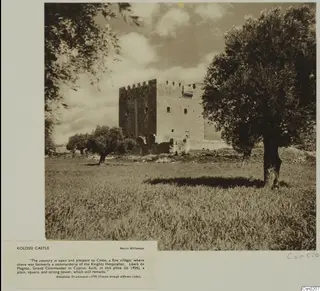
Photographs: Swedish Cyprus Expedition, Medelhavsmuseet, Stockholm (CC0)
Connections
4 peopleDisputes & the law
- Rival of Richard Pocockesituation of Citium and coastal map Clarke, Edward Daniel, 1769-1822, Travels in various countries of Europe, Asia and Africa (1810)1743–1754
Colleagues & contacts
- Met WakemanClaude Delaval Cobham, Excerpta Cypria: Materials for a History of Cyprus (1908), p. 2711745
- Connected with Claude Delaval CobhamCobham reprinted his Cyprus letters in Excerpta Cypria (1908) C. D. Cobham (ed.), 1908, Excerpta Cypria: Materials for a History of Cyprus, pp. 270-277 (printed)1908
- Connected with Edward Daniel ClarkeMarangou places Drummond's silence on exports before Clarke (1801), who first reports an export Anna G. Marangou, 2000, Life and Deeds: The Consul Luigi Palma di Cesnola 1832-1904, p. 29
Recording and study
8 records- Studied5
Drummond inspected places where stones had been dug and observed large squared stones in cement.
squared stones and ancient foundationsChittyCobham 1908, p. 279
Drummond described a subterranean vault near the southern ruins of the city walls.
Drummond revisited and examined the ruins of Amathus and old Limesol.
Drummond examined remains at Lapithos and partly traced the foundations of a building.
foundations of one buildingCobham 1908, p. 298
Drummond examined the foundations at Salamis and identified remains he considered those of the temple dedicated to Jupiter Salamine.
foundations and remains of the temple dedicated to Jupiter SalamineCobham 1908, p. 301
- Drew2
Alexander Drummond drew an Old French tomb-stone inscription that he said he could not understand.
Old French inscription on a tomb-stoneNo. N°. 4Tzounakas et al. 2023, p. 275
Alexander Drummond recorded and depicted the Latin inscription at Sancta Nappa.
- Found1
Drummond reported finding a Latin inscription on a marble stone at Ayia Napa.
Mentioned in
18 mentionsDocuments · 13
- Chypre au XVIIIe siècle. Témoignages écrits et iconographiques de quelques voyageurs européens
2005
diplomat and travel writer
Gilet 2005
- Excerpta Cypria: Materials for a History of Cyprus
p. 279; 287, 288; p. 289; p. 298; p. 301
Drummond inspected places where stones had been dug and observed large squared stones in cement.
Cobham 1908
- Historic Cyprus: A Guide to its Towns and Villages, Monasteries and Castles
p. 191
Drummond reported finding a Latin inscription on a marble stone at Ayia Napa.
Gunnis 1936
- The Reception of Ancient Cyprus in Western Culture
p. 275
Alexander Drummond drew an Old French tomb-stone inscription that he said he could not understand.
Tzounakas et al. 2023
- Cyprus (Blue Guides)
- Excavations in Cyprus, 1890: Third Season's Work: Salamis
Munro et al. 1891
Institutions · 1
- British Consulate, Aleppo
Consul
Cobham 1908, p. 270
- People · 4listed under Connections
- Archivelisted under In the Archive
Sources
- 1.Alexander Drummond (1754). Travels through different cities of Germany, Italy, Greece and several parts of Asia. London.
- 2.C. D. Cobham (1908). Excerpta Cypria: Materials for a History of Cyprus. Cambridge, Cambridge University Press.
- 3.A. G. Marangou (ed.) (2000). The Consul Luigi Palma di Cesnola 1832-1904: Life and Deeds.
- 4.J. A. R. Munro, H. A. Tubbs, W. Wroth (1891). “Excavations in Cyprus, 1890: Third Season's Work: Salamis”. Journal of Hellenic Studies 12, 59-198. Online
- 5.E. Papuci-Władyka (ed.) (2020). Interdisciplinary Research of the Jagiellonian University in Nea Paphos UNESCO World Heritage Site (2011-2015): First Results.
- 6.Henry Manners Chichester (1888). “Drummond, Alexander (d. 1769)”. Dictionary of National Biography 16. Online
- 7.Anja Ulbrich, Thomas Kiely (2012). “Britain and the Archaeology of Cyprus. I. The long 19th century”. Cahiers du Centre d'Études Chypriotes 42, 305-356. Online
- 8.Marguerite Yon (2011). “Kition-Larnaca aux XVIIIe et XIXe siècles”. Cahiers du Centre d'Études Chypriotes 41.
- 9.Christine Laidlaw (2010). The British in the Levant: Trade and Perceptions of the Ottoman Empire in the Eighteenth Century.
- 10.Alexander Drummond (1754). Travels through Different Cities of Germany, Italy, Greece, and Several Parts of Asia, as far as the Banks of the Euphrates: in a Series of Letters. Printed by W. Strahan for the Author.
- 11.J. Hackett (1901). A History of the Orthodox Church of Cyprus. Methuen, London.
- 12.Edward Daniel Clarke (1814). Travels in Various Countries of Europe, Asia and Africa. Part the Second: Greece, Egypt and the Holy Land, Section the First.
- 13.Andrés T. Reyes (1994). Archaic Cyprus: A Study of the Textual and Archaeological Evidence. Oxford, Clarendon Press.
- 14.George Jeffery (1918). A Description of the Historic Monuments of Cyprus. Government Printer, Nicosia.
- 15.J. A. R. Munro, H. A. Tubbs, W. Wroth (1891). “Excavations in Cyprus, 1890: Third Season's Work: Salamis”. Journal of Hellenic Studies 12, 59-198. Online
- 16. (1843). “Drummond (Alexandre)”. Biographie universelle ancienne et moderne.
- 17.J.-A. Walsh (ed.) (1839). “Drummond (Alexandre)”. Encyclopédie catholique.
- 18.R. Gunnis (1936). Historic Cyprus: A Guide to its Towns and Villages, Monasteries and Castles. London, Methuen.
- 19.Spyridon Tzounakas (ed.), Stella Alekou (ed.), Stephen Harrison (ed.) (2023). The Reception of Ancient Cyprus in Western Culture. Berlin and Boston, De Gruyter.
- 20.Ulbrich & Kiely 2012.
- 21.Papuci-Władyka (ed.) 2020, Paphos Agora Project I, pp. 118–119–79), Miszk ch. 2.2 (citing Vörös).
- 22.Centre of Visual Arts and Research (CVAR), Costas and Rita Severis Foundation, Nicosia, online catalogue: PNT-00737, “Kolossi Castle: Built by the Hospitallers of Cyprus in the 16th century”, 1931, PNT-00746, “Kolossi Tower, near Limassol, Cyprus”, 1882, ARF 00381b, “Monastery of St Mamas”, [s.d.], and 3 more records. Online
- 23.Charlotte Schriwer (2015). Water and Technology in Levantine Society, 1300–1900: An Historical, Archaeological and Architectural Analysis. In BAR International Series 2728. Oxford, BAR Publishing. p. 27..
- 24.G. Jeffery, A Description of the Historic Monuments of Cyprus. Studies in the archaeology and architecture of the island, with illustrations from measured drawings and photographs (1918).
- 25.D.D. the Rev. J. Hackett, History of the Church of Cyprus (1901).
- 26.C. A. Stewart, Domes of Heaven: The Domed Basilicas of Cyprus (2008).
- 27.C. D. Cobham (ed.), 1908, Excerpta Cypria: Materials for a History of Cyprus, pp. 270-277 (printed).
- 28.Anna G. Marangou, 2000, Life and Deeds: The Consul Luigi Palma di Cesnola 1832-1904.
- 29.Clarke, Edward Daniel, 1769-1822, Travels in various countries of Europe, Asia and Africa (1810).
- 30.Claude Delaval Cobham, Excerpta Cypria: Materials for a History of Cyprus (1908).
Corrections and additions
Did you know this person?
We would like to hear from relatives, colleagues and anyone who knows more about this person's life and work.
Missing from this record
- No photograph
We would like to hear about
- Dates and places of birth and death
- Other spellings or names they used
- Photographs, letters or papers
- Their work, collections or excavations
- A mistake in what we say
If this page is about you, write to us and we will correct it or take it down. Tell us if you would like to be thanked by name on the page.