
Lecture·Archaeological Research Unit - University of Cyprus·2019·In Greek
Neither Minoanised nor Mycenaeanised: Karpathos in the Bronze Age
Ούτε εκμινωισμένη, ούτε εκμυκηναισμένη : η Κάρπαθος στην Εποχή του χαλκού
A guest lecture in the University of Cyprus series on a subject outside Cyprus.
Chapters
About the lecture
Given in Greek, this lecture by Maria Mina of the University of the Aegean examines the Middle and Late Bronze Age archaeology of Karpathos, between Rhodes and Crete. Mina begins by reviewing the debate around the terms Minoanisation and Mycenaeanisation, citing critiques of acculturation models by Cyprian Broodbank, Carl Knappett and Irene Nikolakopoulou, and A. Bernard Knapp's concept of hybridisation.
Drawing on the survey work of Manolis Melas and rescue excavations, she tests these concepts against the Karpathian record. From the Middle Minoan II period, settlement shifts toward coastal sites and farmsteads such as Pigadia and Afiartis (Fournoi and Kontokefalos), yielding Minoan imports, locally made conical cups, discoid loom weights, wall plaster, and murex shells from purple-dye production. In the Late Helladic IIIA and IIIB phases, fortified acropoleis appear at Pigadia and Arkasa alongside chamber tombs at Makeli, Vonies, and Avlona containing Mycenaean pottery from the Argolid and Rhodes, Cretan vessels from Palaikastro, and Cretan-type bronze weapons.
Throughout both phases, local coarse cooking wares continued in use alongside imported and locally imitated fine tableware, while the Vonies tomb combined a Mycenaean chamber with a Cretan larnax burial and possible Anatolian cremation. Mina concludes that Karpathos was neither Minoanised nor Mycenaeanised; rather, island communities selectively adopted external crafts and public consumption habits to form a hybrid local identity along the sea routes toward Cyprus and the Levant. In the discussion, she notes that no Cypriot or Near Eastern imports have yet been found on Bronze Age Karpathos.
Background
Where to read more on this site before or after watching.
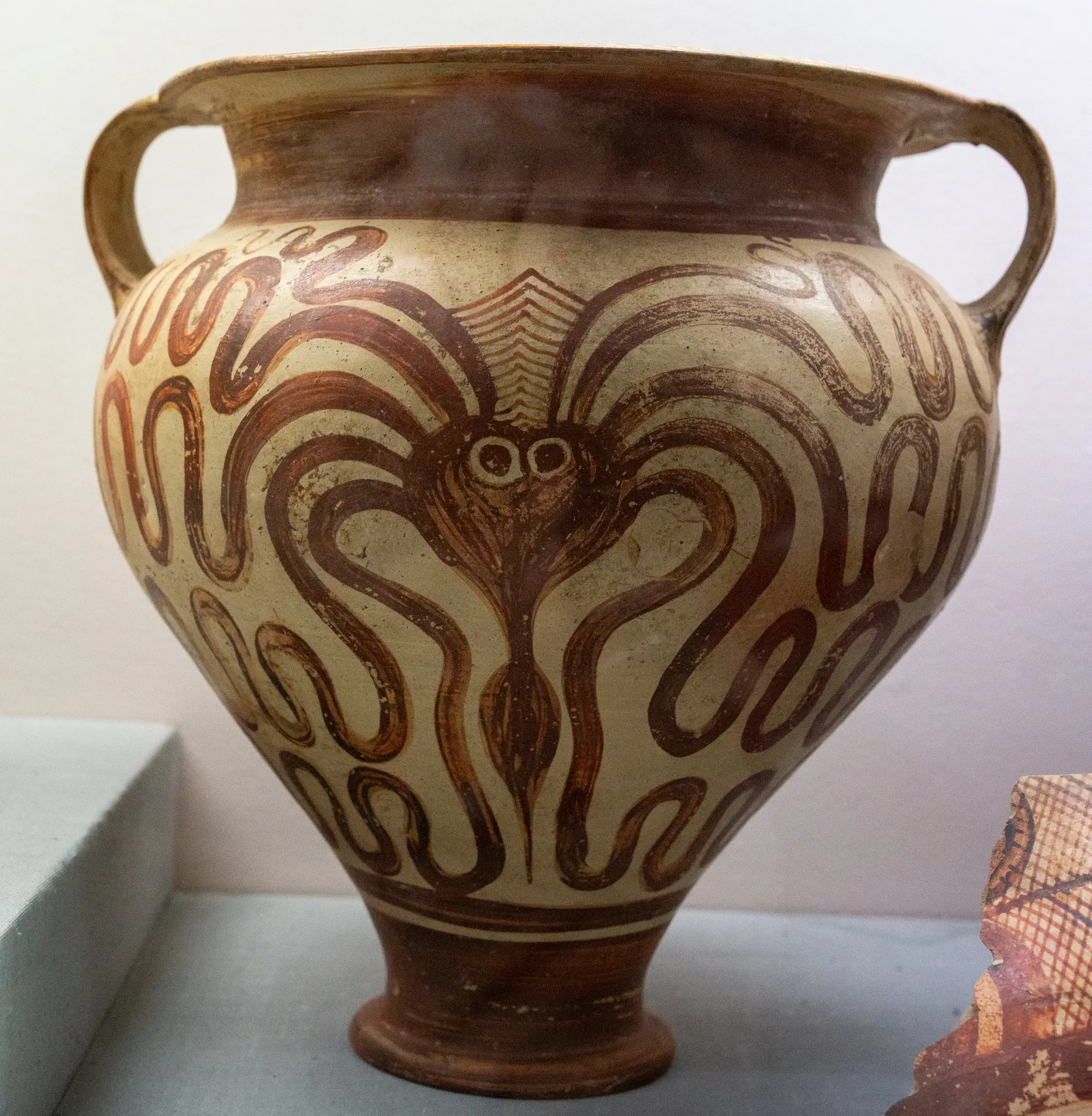
In the compendium
The Minoans
The palatial Bronze Age civilization of Crete, which took Cypriot copper and passed writing to Cyprus in the early Late Bronze Age.
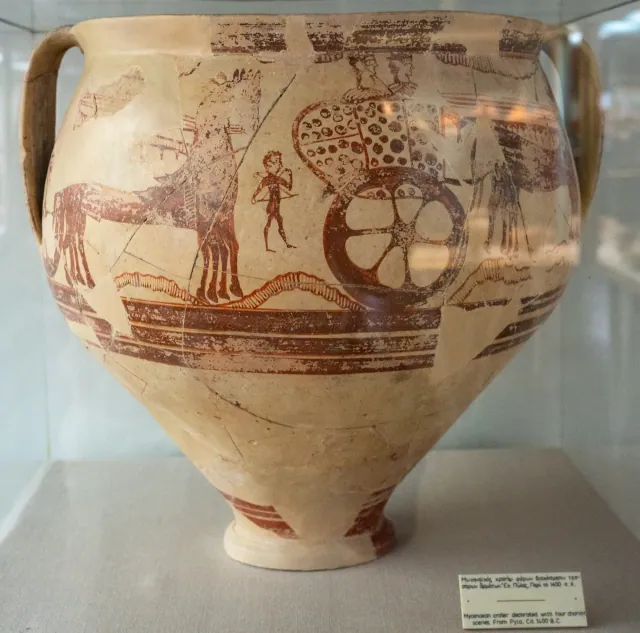
In the compendium
The Mycenaeans and Cyprus
The palatial Late Bronze Age societies of mainland Greece, whose pottery flooded Cypriot coastal towns in the 14th and 13th centuries BCE.