
Early Bronze Age II
Black-topped Red Polished Hemispherical Bowl
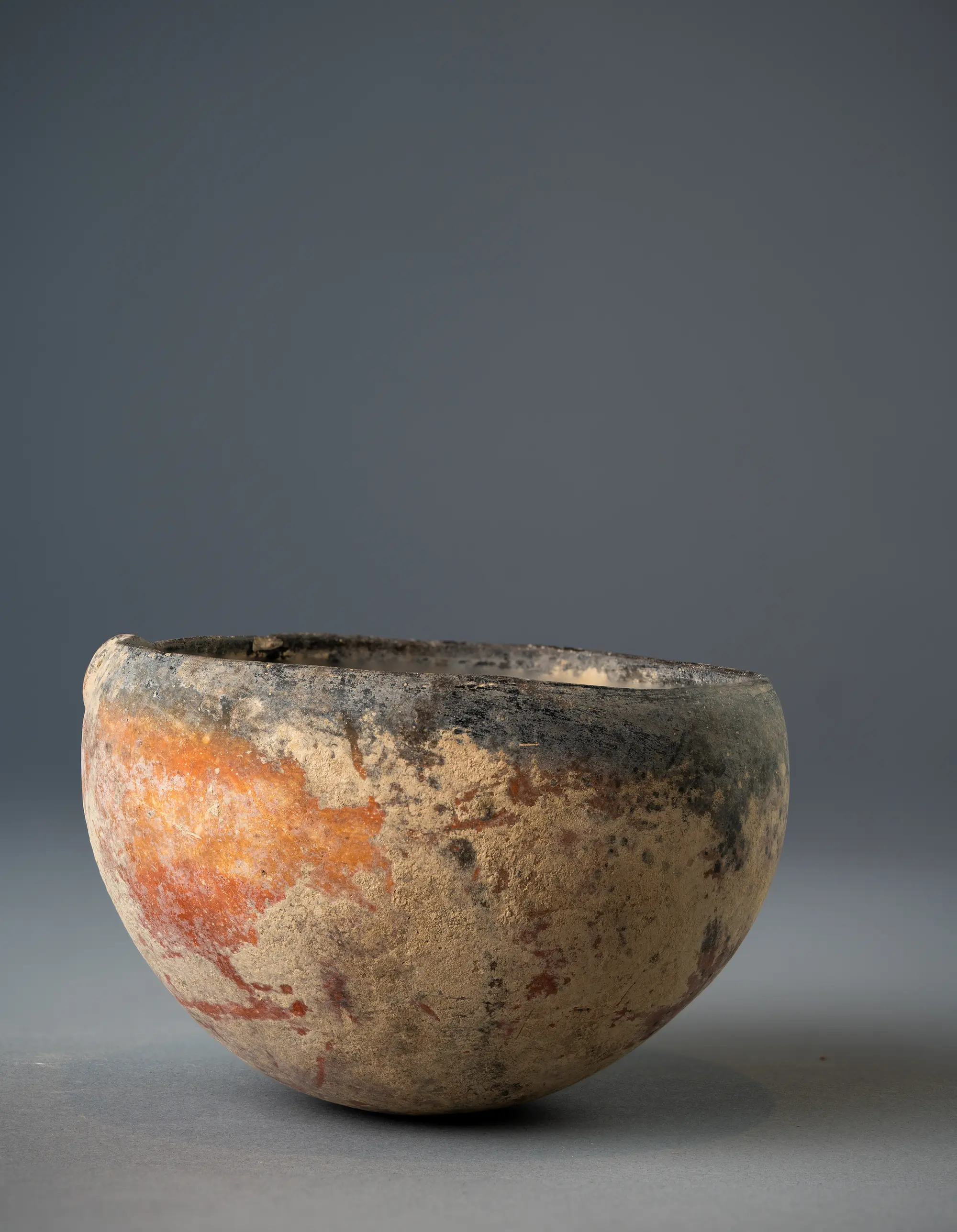
Deep hand-made Red Polished bowl with a smoky black-fired rim zone, largely hidden under buff burial crust. Early Bronze Age Cyprus, c. 2200–1900 BCE.
Date
2200 - 1900 BC
Accession No.
BWL-BA-013
Collection
Alexis Drakopoulos
Provenance
- 1965–1969, The Goodman Collection
- 2025–present, Alexis Drakopoulos, London
Early Cypriot II–Middle Cypriot I, c. 2200–1900 BCE · Red Polished ware (black-topped) · Hand-made
A deep hemispherical bowl on a rounded base, its walls rising in a single even curve to a plain, slightly incurving rim. The upper body is fired a smoky grey-black that fades unevenly downward into the red lower body; the dark zone is densest on the right, where it runs in streaks well below the rim. Across most of the exterior a thick buff calcareous crust lies over the slip, and the polished surface shows through only in windows: a bright orange-red patch on the left side and scattered red flecks across the lower wall. The interior is pale with deposit. A small rounded projection at the left edge of the rim may be the stub of a lug. The vessel appears intact.
Commentary
The bowl belongs to the large family of plain hemispherical bowls in Red Polished ware that Stewart grouped as Class XIII F [1]. Under the crust it is a black-topped piece: the potter slipped and burnished the whole vessel red, and the rim and upper body turned black in the firing because that part lay in a reducing, smoky environment, most likely with the bowl set mouth-down in ash or fuel. The effect was deliberate and recurs on hundreds of bowls of the type. Red Polished ware was built by hand and fired at low temperatures, below about 750°C [3], which suits this kind of open, bonfire-style firing, where a clean line between red and black was hard to control. On this bowl the boundary wanders and the black bleeds down the right side in long tongues, the mark of an uneven firing.
Much of the surface is hidden by burial deposit. The buff material is calcareous crust from the soil, and it covers the transition from black to red, so the full extent of the black zone and the quality of the burnish cannot be judged from the exterior. Where the red shows through at left, the slip is glossy and saturated, which suggests a well-polished surface beneath.
Close parallels for the black-topped scheme are a bowl from Bellapais-Vounous in the British Museum, fired orange-red below and black in the upper part inside and out, with a pierced lug at the rim [4], and a smaller black-topped bowl from Dhali, also in London, with one pierced lug for suspension [5]. Both are dated within c. 2200–1900 BCE. Plain knob-lug bowls of this class were among the commonest vessels in Early Cypriot tombs on the north coast: Vounous Tomb 19 held forty-three and Palealona Tomb 3A fifty-nine [2]. A plain bowl of this kind cannot be dated closely without its context, and the range given here follows the life of the type from Early Cypriot II into Middle Cypriot I.
Morris cautions that calling such bowls "cups" assumes a drinking use for which there is no direct proof; they may equally have held small portions of food [6]. Most complete bowls of the type come from multi-burial chamber tombs. The find-place of this example is unrecorded. Whether the projection at the rim is a broken lug, and whether it was pierced, can be settled only by examining the bowl in hand, perhaps after careful cleaning of the rim.
References
- 1.Stewart, J.R. (1962) The Early Cypriote Bronze Age. The Swedish Cyprus Expedition IV.1A. Lund, Index of Types, Class XIII F.
- 2.Kehrberg, I. (1982) Early and Middle Cypriote Chronology Again. Levant 14, 59–72.
- 3.Barlow, J.A. (1991) New Light on Red Polished Ware. In Barlow, J.A., Bolger, D.L. and Kling, B. (eds) Cypriot Ceramics: Reading the Prehistoric Record. Philadelphia: University Museum, p. 75.
- 4.British Museum, London, 1980,1126.4. Red Polished (Black Topped) bowl with pierced lug, Bellapais-Vounous, c. 2100–1900 BC.
- 5.British Museum, London, 1868,0905.47. Red Polished black-topped bowl with one pierced lug, Dhali, c. 2200–1900 BC.
- 6.Morris, D. (1985) The Art of Ancient Cyprus. Oxford: Phaidon, p. 69 and pl. 115b.
More from the Catalogue
Browse related objects
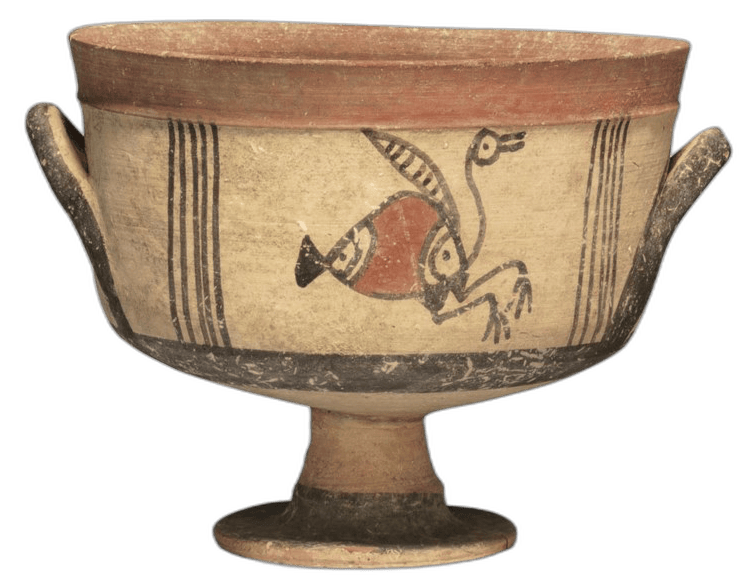
Bichrome Kylix with Bird Free Field Art
Geometric III
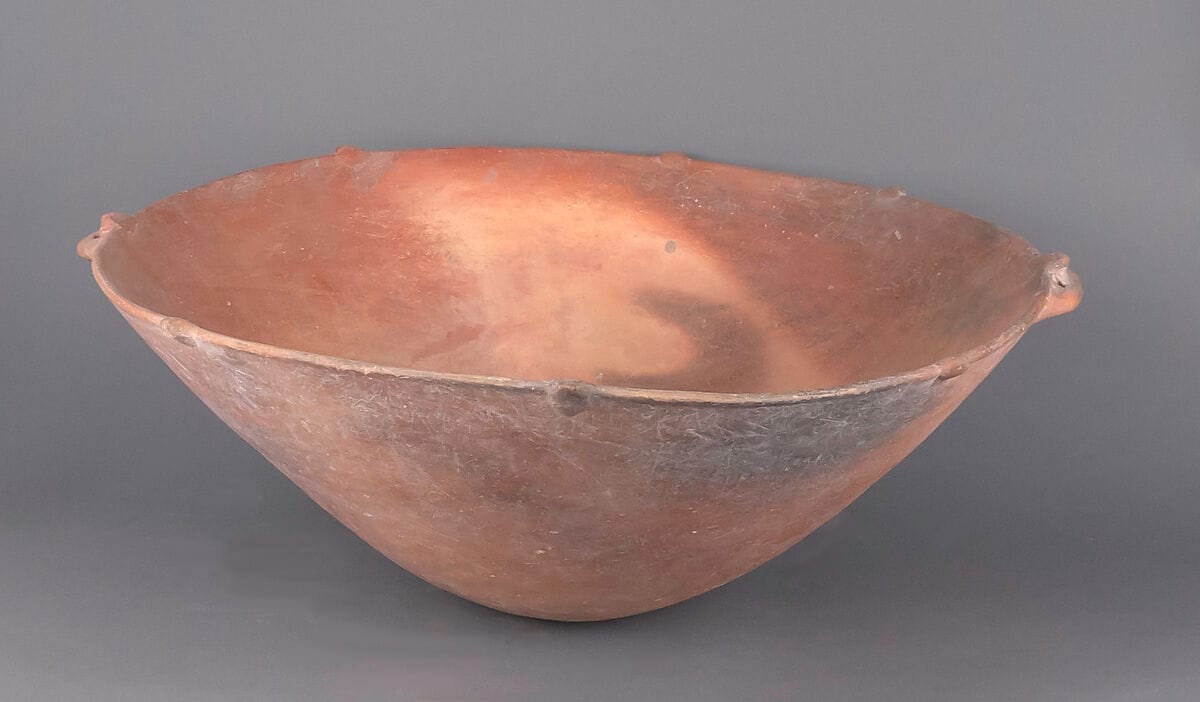
Milk bowl
Bronze Age
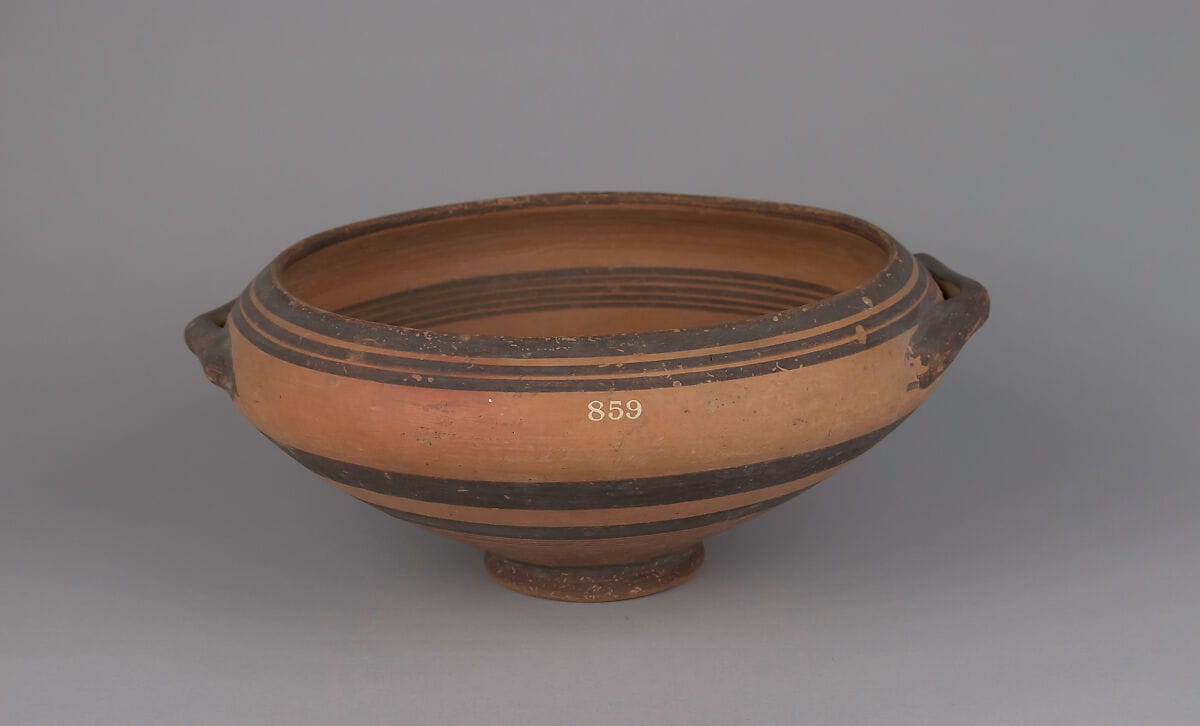
Bowl
Geometric III
Krater
Archaic I
Handle of a bowl
Bronze Age
Bowl
Geometric I
Bowl
Bronze Age
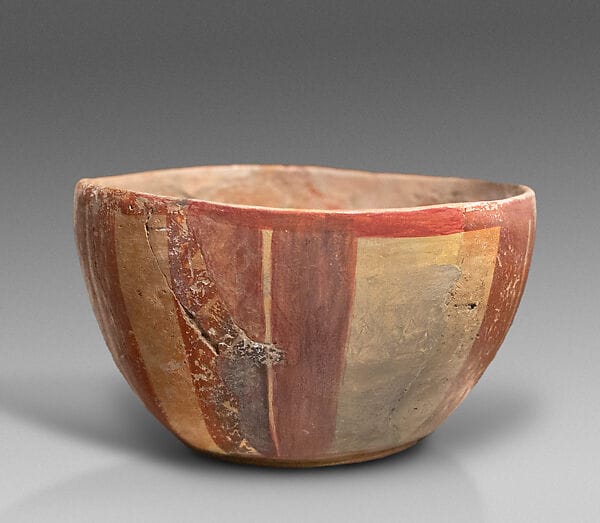
Terracotta bowl
Chalcolithic
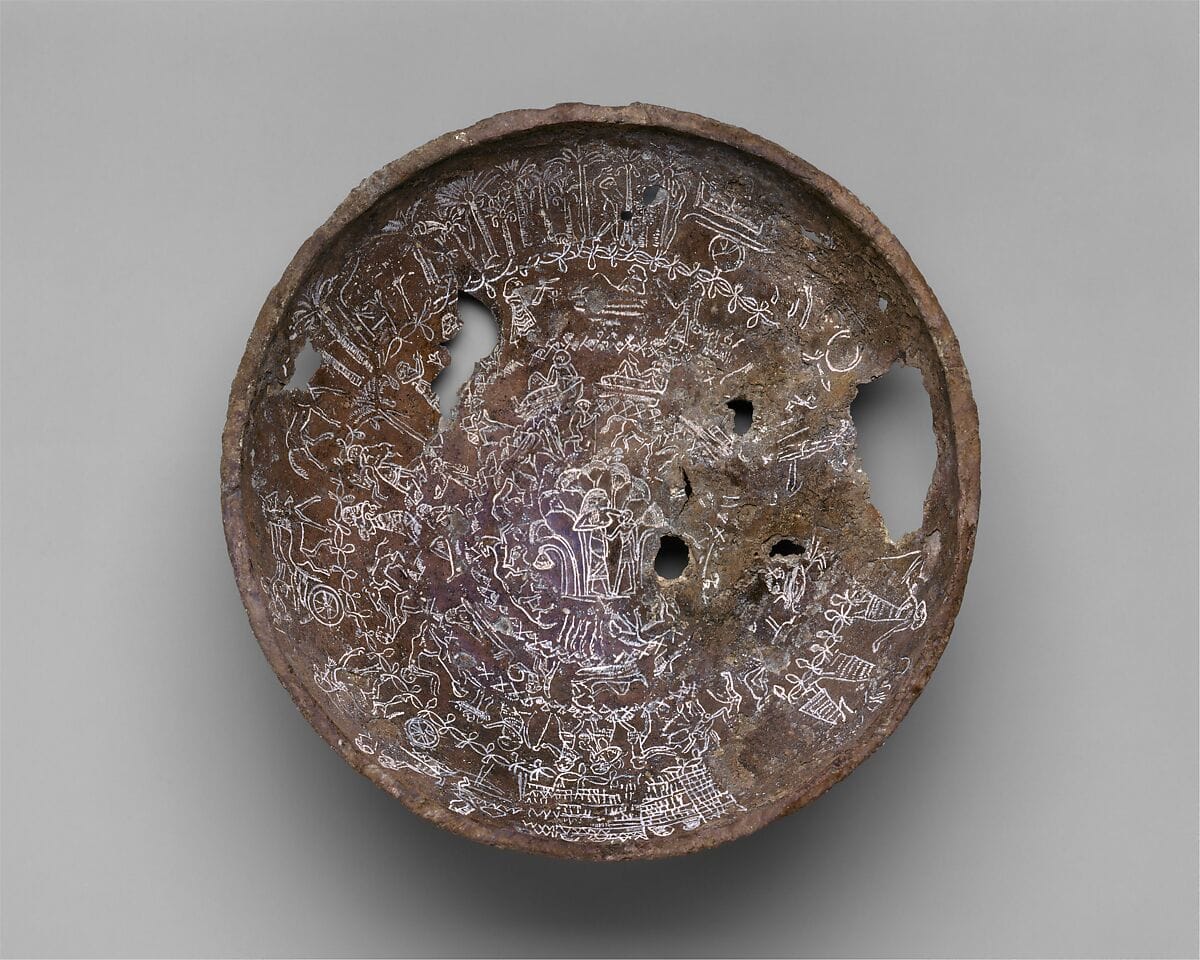
Silver bowl
Archaic I
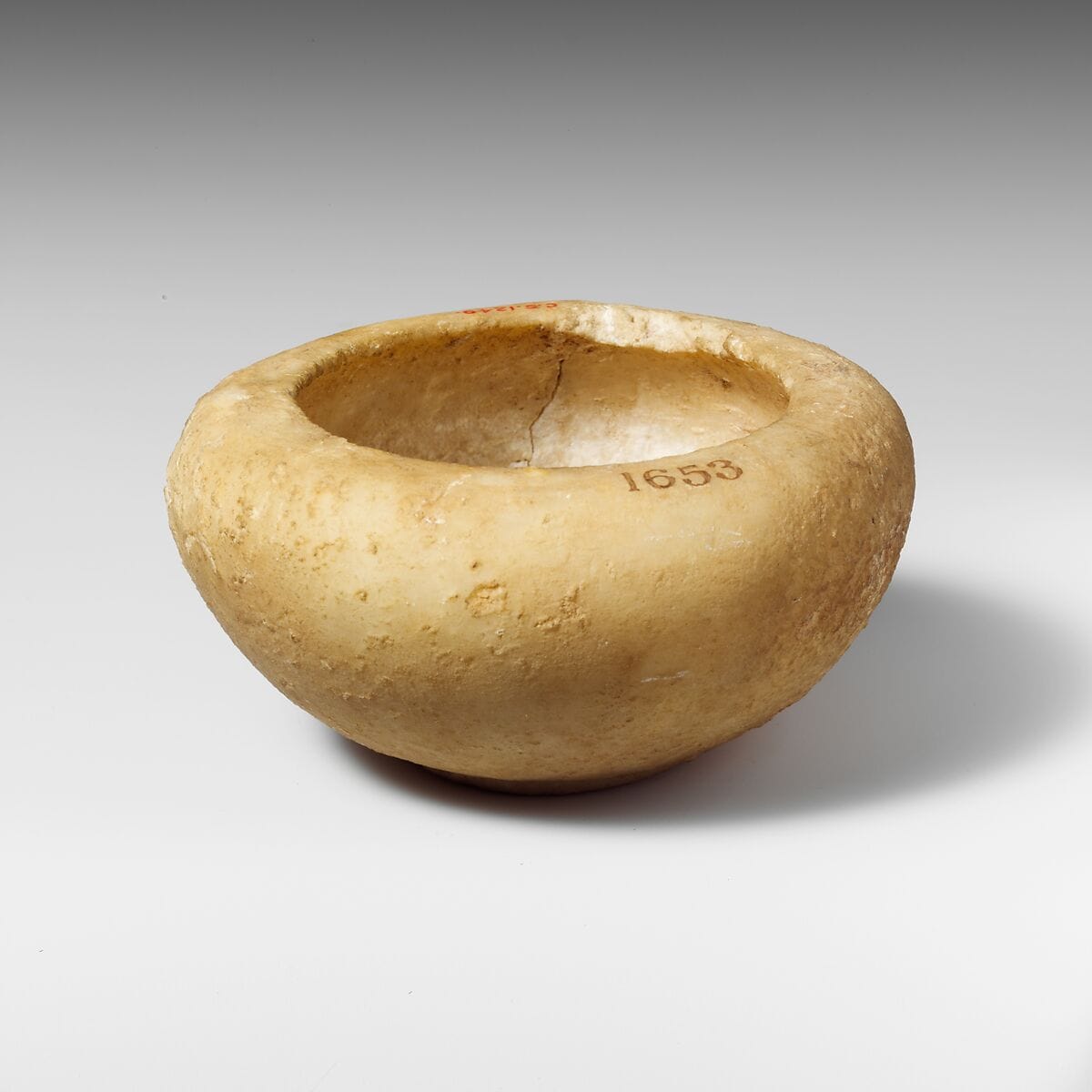
Alabaster bowl
Classical
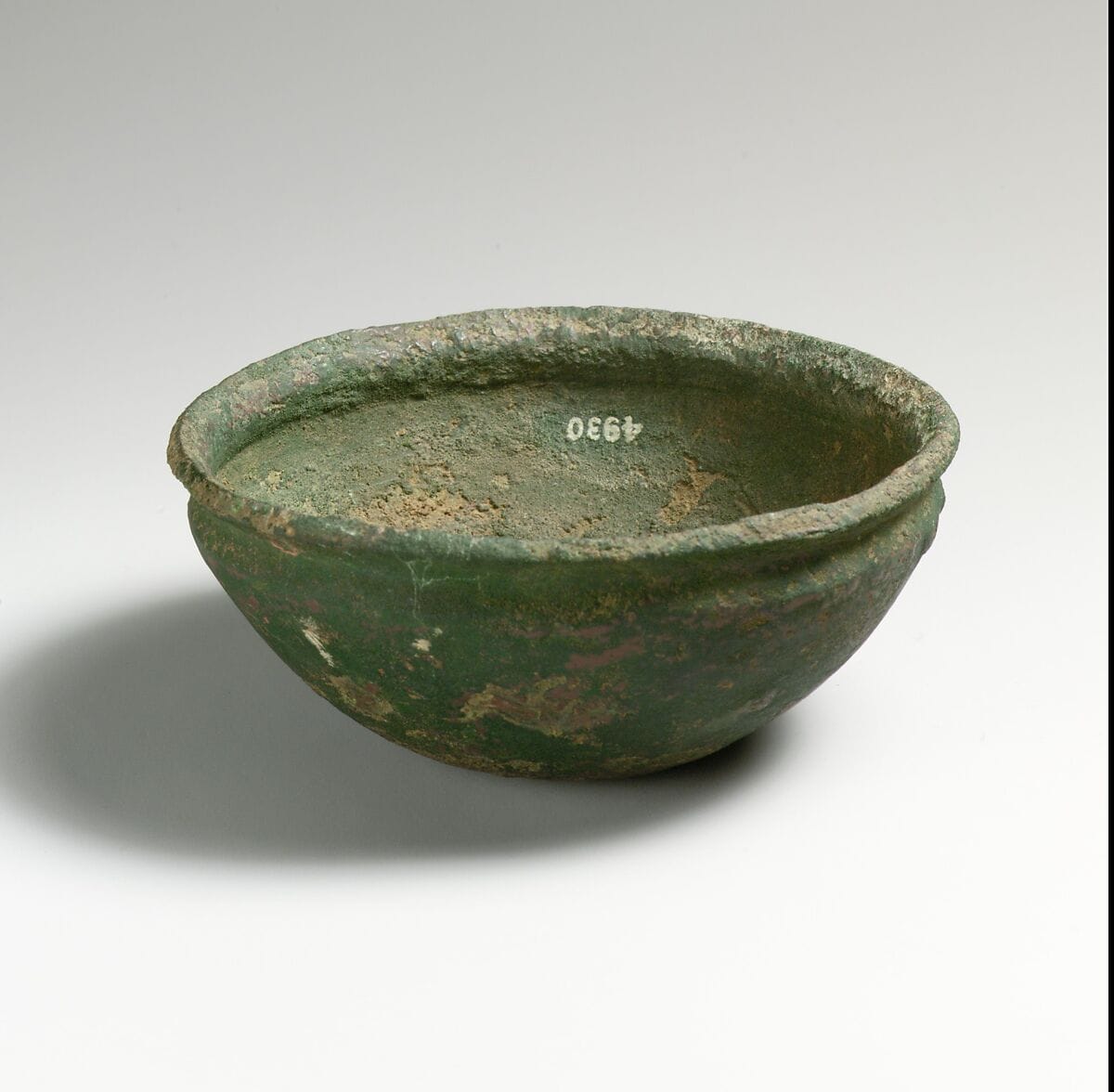
Bronze phiale (libation bowl)
Archaic II
Bowl fragment, inscribed
Archaic II
Bowl
Bronze Age
Bowl
Archaic I
Bowl
Late Bronze Age II
Bowl
Geometric III
Terracotta footed bowl
Archaic I
Marble bowl fragment with Phoenician inscription
Classical