
Early Bronze Age II
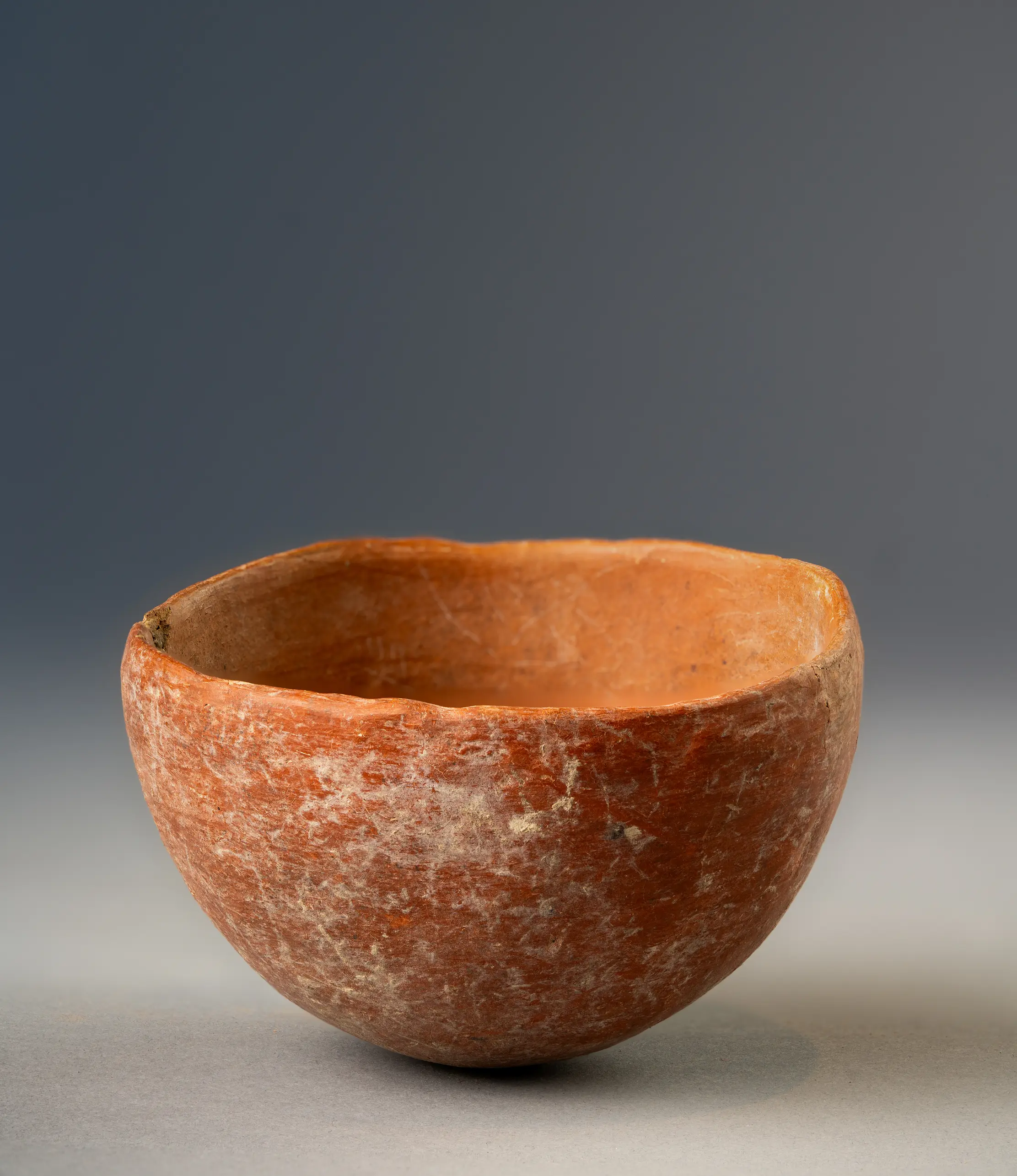
Deep Red Polished Hemispherical Bowl
Deep, hand-made Red Polished hemispherical bowl with a wavering hand-formed rim and a brick-red burnished slip marked by root scratches.
Date
2200 - 1900 BC
Accession No.
BWL-BA-006
Collection
Alexis Drakopoulos
Provenance
- By 1965–1969, The Goodman Collection
- 2025–present, Alexis Drakopoulos, London
Early Cypriot II–Middle Cypriot I, c. 2200–1900 BCE · Red Polished ware · Hand-made
A deep, almost semi-globular bowl on a rounded base, taller in proportion than most plain bowls of its class. The rim is simple, and it rises and falls unevenly around the circuit, bowing outward on one side where the potter's fingers pressed the wall. No lug is visible in the view photographed.
The exterior carries a brick-red slip, burnished but now dulled, and laced with a network of fine whitish scratches and root marks from burial, with a few small spots of lime. The interior is a warmer, smoother orange-red, streaked with the faint strokes of the burnishing tool. A small chip interrupts the rim at one side.
Commentary
This is a plain Red Polished hemispherical bowl of Stewart's Class XIII F [1]. Most bowls of the class carry a single knob lug or string-hole at the rim; none is visible on this one from the side shown here. Its depth is its most distinctive feature. Two Ashmolean bowls of the class measure 6.1 cm high by 10.6 cm across and 6.5 cm by 9.8 cm [3][4]; this bowl appears steeper in the wall and rounder in profile, though the comparison rests on the eye until it is measured.
The rounded base, simple rim and hand-built irregularity place it in the long Early to Middle Cypriot run of the shape, c. 2200–1900 BCE. Nothing in a plain bowl allows a closer date without its original context. Red Polished pottery was built by hand, slipped, burnished and fired at a low temperature without the potter's wheel [5], and the wobble of this rim is a record of that process.
Whole bowls of this kind are known mostly from tombs, which has given them a funerary reputation. The settlement at Marki-Alonia in central Cyprus corrects that picture. There the small open vessels are generally hemispherical bowls, and they are the most uniform group in the household pottery: three quarters of those recorded share the same incurved, thinning rim with a rounded end [2]. They were ordinary household vessels. Morris's caution applies: there is no direct evidence of what such bowls held, and they may have been used for food as much as drink [6]. The find-place of this bowl is unrecorded.
References
- 1.Stewart, J.R. (1962) The Early Cypriote Bronze Age. The Swedish Cyprus Expedition IV.1A. Lund: Swedish Cyprus Expedition, Index of Types, Class XIII F.
- 2.Frankel, D. (1993) Inter- and Intrasite Variability and Social Interaction in Prehistoric Bronze Age Cyprus: Types, Ranges, and Trends. Bulletin of the American Schools of Oriental Research 292, 59–72, p. 63.
- 3.Ashmolean Museum, Oxford, AN1953.267. Red Polished hemispherical bowl, H. 6.1 cm, D. 10.6 cm, Early Cypriot III–Middle Cypriot II. Collection record.
- 4.Ashmolean Museum, Oxford, AN1965.721. Red Polished hemispherical bowl, H. 6.5 cm, D. 9.8 cm, Early Cypriot III–Middle Cypriot II. Collection record.
- 5.Barlow, J.A. (1991) New Light on Red Polished Ware. In J.A. Barlow, D.L. Bolger & B. Kling (eds), Cypriot Ceramics: Reading the Prehistoric Record. University Museum Monograph 74. Philadelphia: University Museum.
- 6.Morris, D. (1985) The Art of Ancient Cyprus. Oxford: Phaidon, pp. 69–72.
More from the Catalogue
Browse related objects
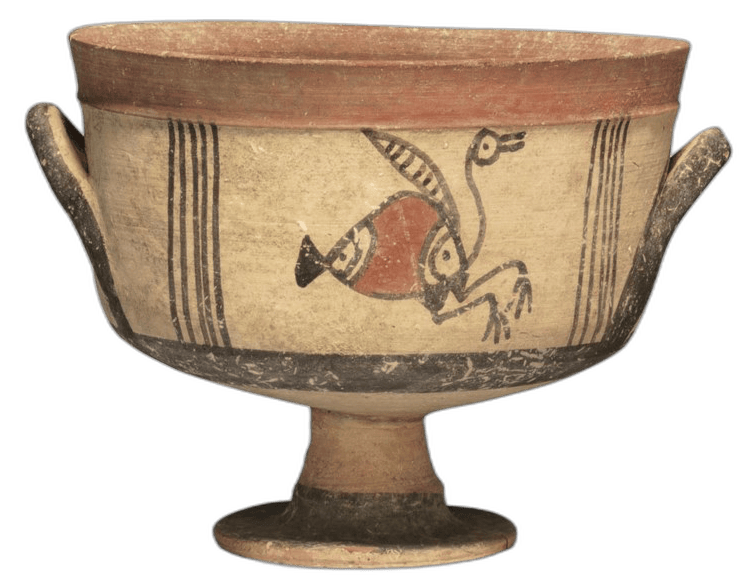
Bichrome Kylix with Bird Free Field Art
Geometric III
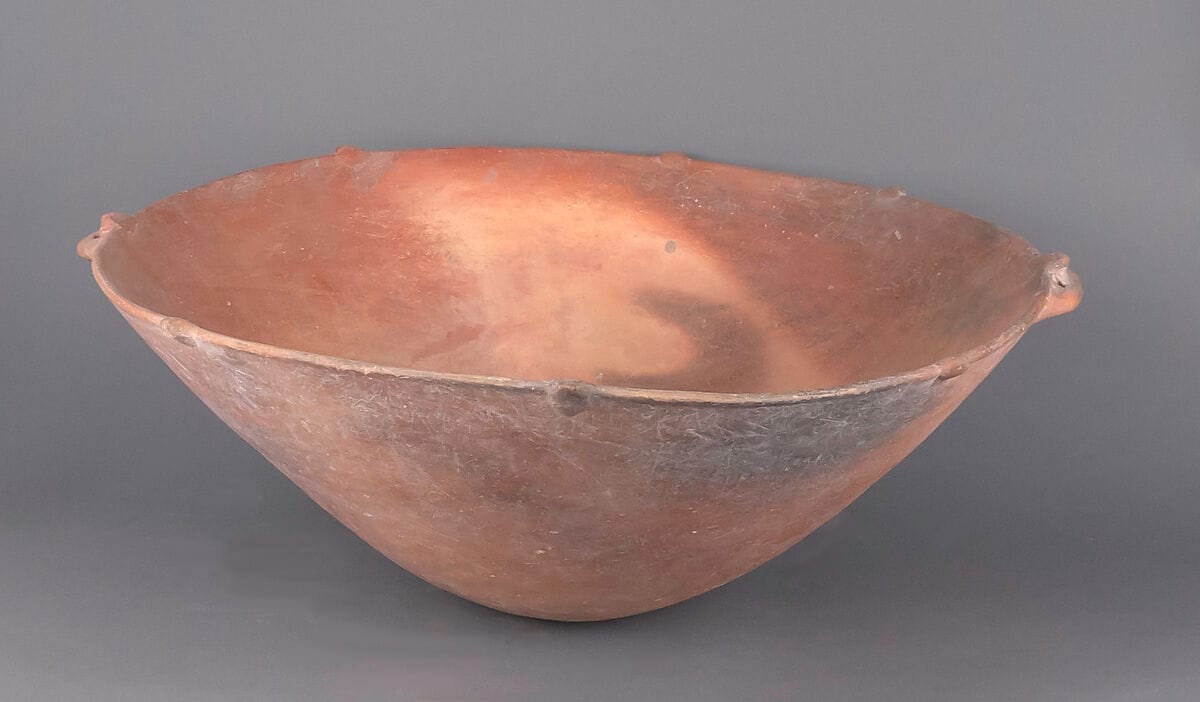
Milk bowl
Bronze Age
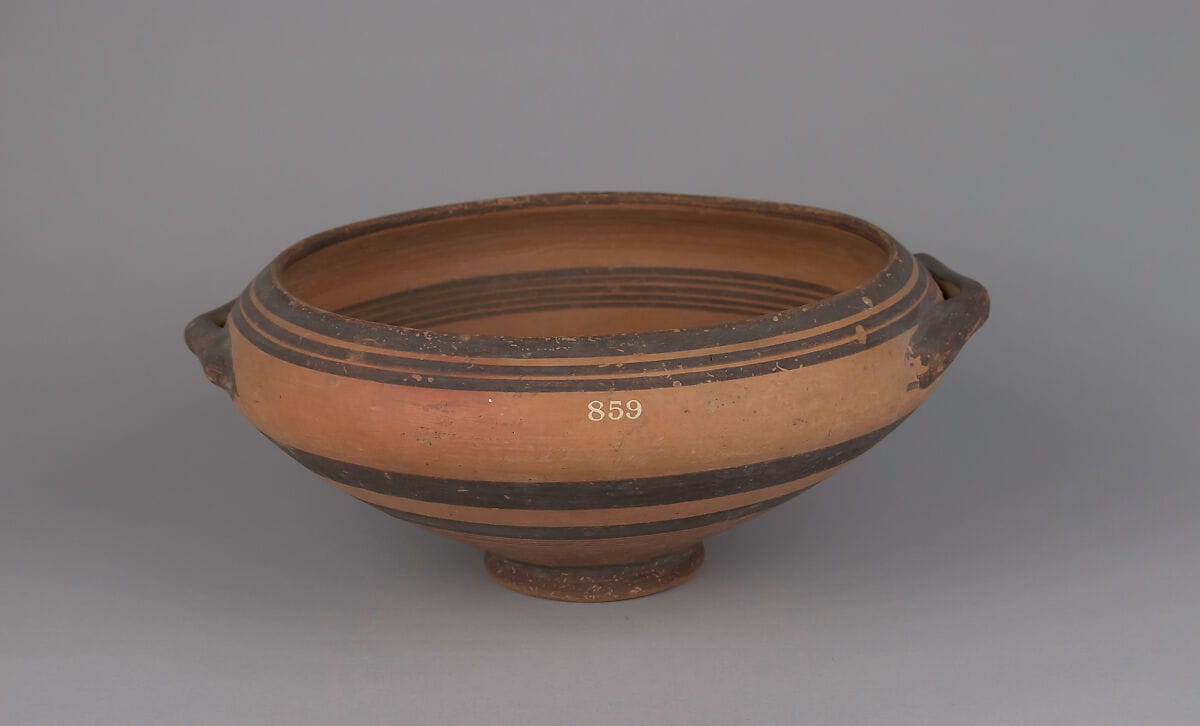
Bowl
Geometric III
Krater
Archaic I
Handle of a bowl
Bronze Age
Bowl
Geometric I
Bowl
Bronze Age
Terracotta bowl
Chalcolithic
Silver bowl
Archaic I
Alabaster bowl
Classical
Bronze phiale (libation bowl)
Archaic II
Bowl fragment, inscribed
Archaic II
Bowl
Bronze Age
Bowl
Archaic I
Bowl
Late Bronze Age II
Bowl
Geometric III
Terracotta footed bowl
Archaic I
Marble bowl fragment with Phoenician inscription
Classical