
Archaic I
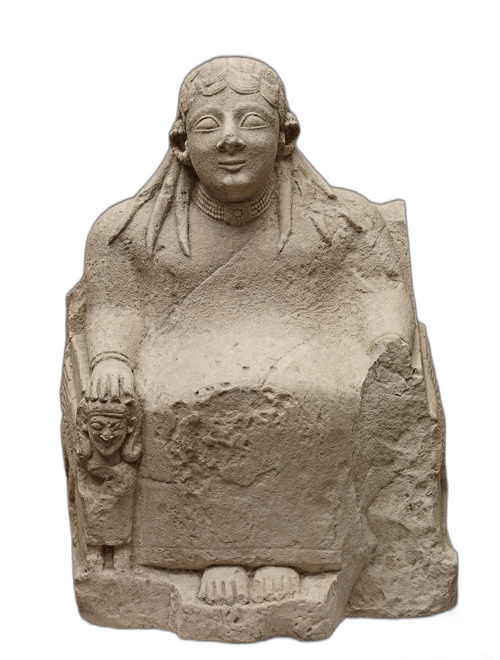
Throne goddess (Astarte?)
Throne goddess (Astarte?) In the course of the 9th century BCBC was populated by Phoenician immigrants, the Astarte, the goddess of fertility, love and death, built a sanctuary.The cult image of this oriental deity is presumably preserved in the lower lifetime limestone statue of a seated woman.The armrests of the throne male are worn by winged sphingen, the companions of the Astarte, who are trained in their front parts as clad male full figures.The goddess, with spirals and in a long robe, is richly decorated: the heavy necklace and the artistically educated earrings based on the model of forged trailers are characteristic of Cyprus.Through the block-shaped structure of the figure, the idol-like character and the characteristic head design, which is based on archaic-east Greek models, the throneing goddess embodies the independent Cypric mixture, which in the 6th century BC.BC developed under Egyptian, Oriental and Greek influences.Bernhard-Walcher and others, the Cypricer Antique Collection in the KHM.Collection catalogs of the KHM Vol. 2, Vienna 1999 (A. Bernhard-Walcher) H. 81 cm, B. 54 cm, T. 43 cm
Classification
- Object type
- Stone sculpture
- Motif
- Sphinx and griffin
- Period
- probablyIron AgeCypro-Archaic
- Date
- 650 - 600 BC
- Place of production
- Cyprus
Collection
Provenance
- Popper by Podhragy, Leopold, Vienna;former Count Anton von Prokesch-East;1936 purchase
Identifiers
- Accession no.
- Antikensammlung, I 1548, Vienna Museum
Corrections and additions
Do you know this object?
We are always looking for more of an object's history: who owned it, where it was sold or shown, and where it was published.
Missing from this record
- No publication recorded
We would like to hear about
- Earlier owners, sales or exhibitions
- Publications that illustrate or mention it
- Where it is now, if it has moved
- Better photographs, or a close parallel
- A mistake in what we say about it
Messages are read by us alone and kept confidential, unless the law requires otherwise. Tell us if you would like to be thanked by name on the page.
Similar pieces
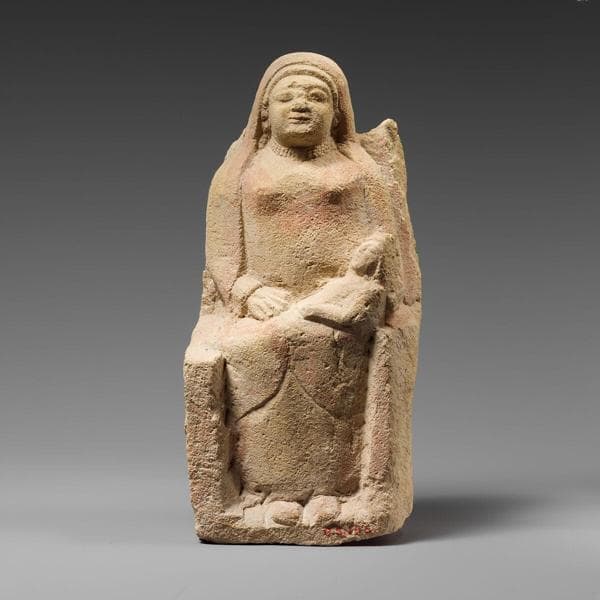 Seated limestone kourotrophosMetropolitan Museum of Art
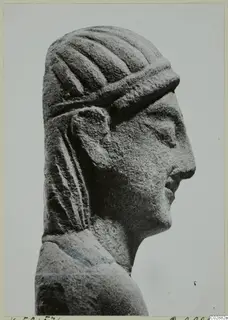 Stone sculpture, headKition
 Limestone Female HeadBritish Museum
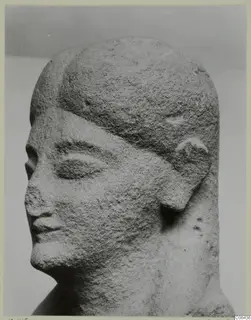 SculptureMedelhavsmuseet (Museum of Mediterranean and Near Eastern Antiquities)
 Limestone Female Head StatueBritish Museum
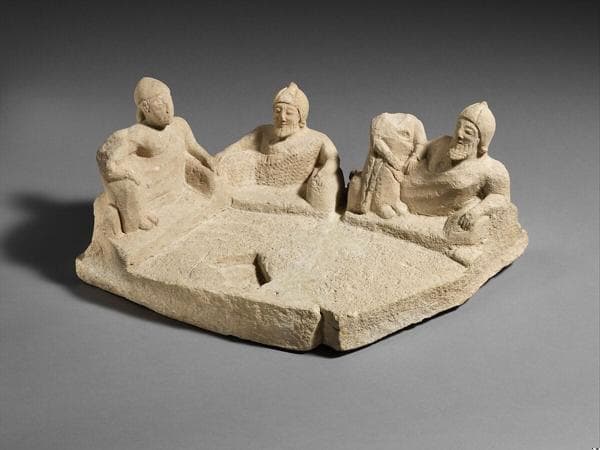 Limestone group: banquetMetropolitan Museum of Art
 StatuetteMedelhavsmuseet (Museum of Mediterranean and Near Eastern Antiquities)
 Large LimestoneLarnaca Museum
 FigurineMedelhavsmuseet (Museum of Mediterranean and Near Eastern Antiquities)
 Limestone Female HeadBritish Museum
 Stone sculpture, headKition
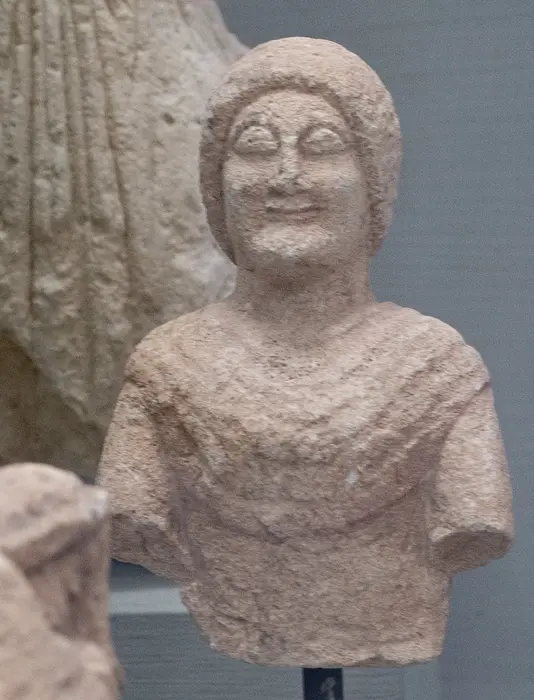 Limestone bustKourion Museum
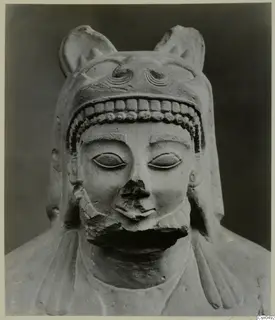 Stone sculpture, bustSwedish Cyprus Expedition
 Limeston headLarnaca Museum
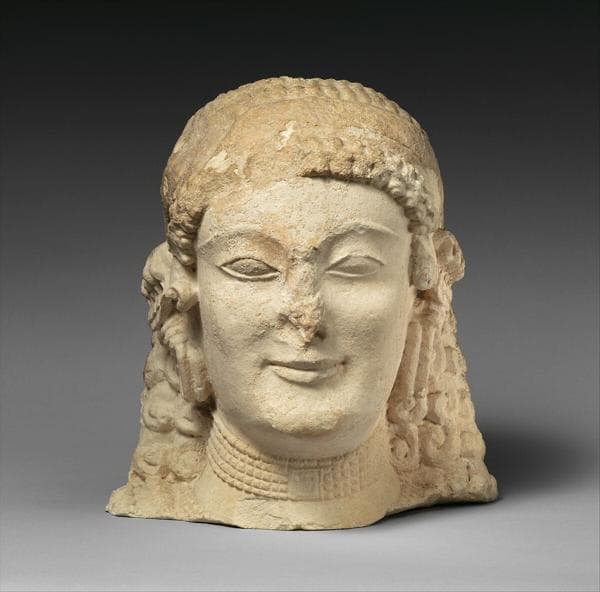 Limestone female headMetropolitan Museum of Art
 Stone sculpture, fragmentSalamis
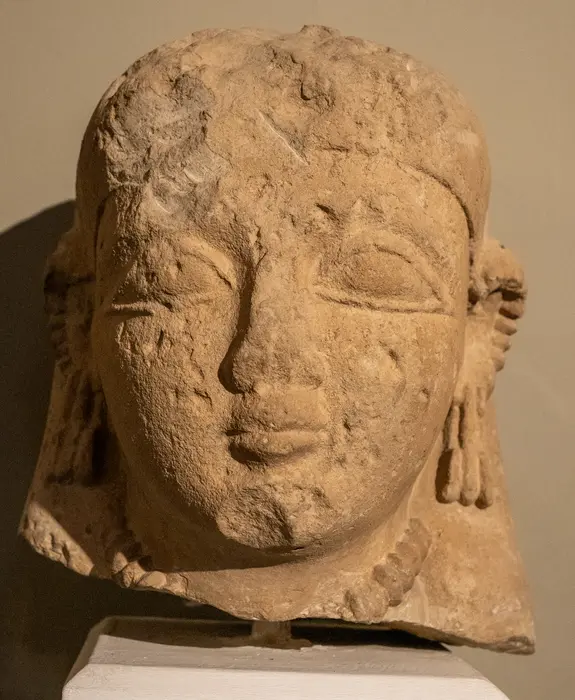 Limestone HeadCyprus Museum, Nicosia
 Upper part of a male votive statueVienna Museum
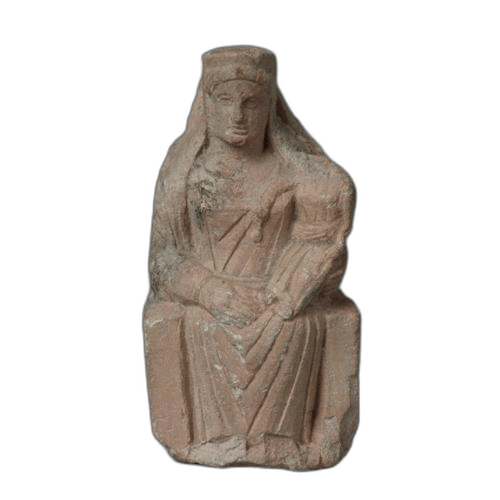 Figure of a seated woman holding a child, possibly Isis and HarpocratesOntario Museum
 Kourotrophos statuetteLiverpool Museum