
Field photograph·C02785·1930
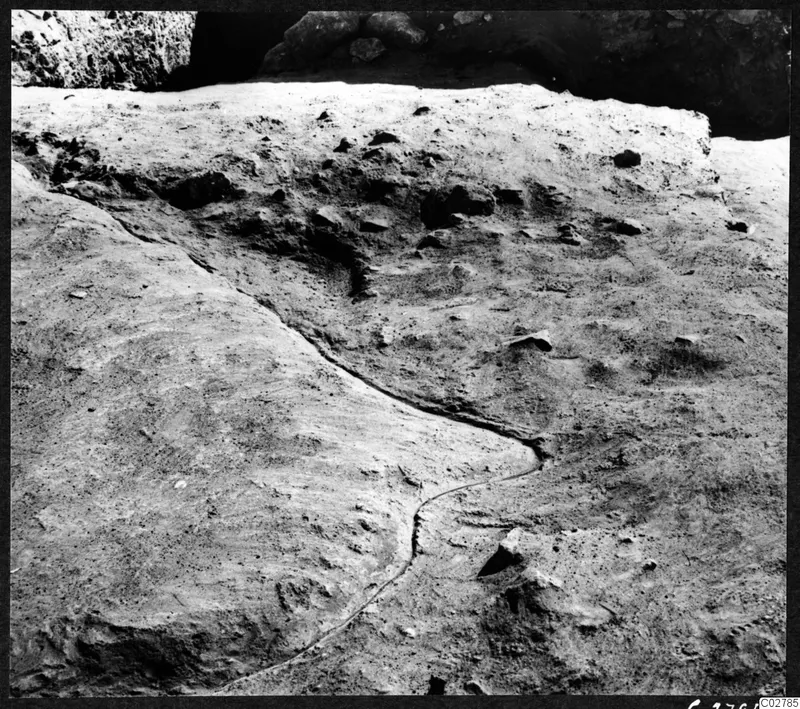
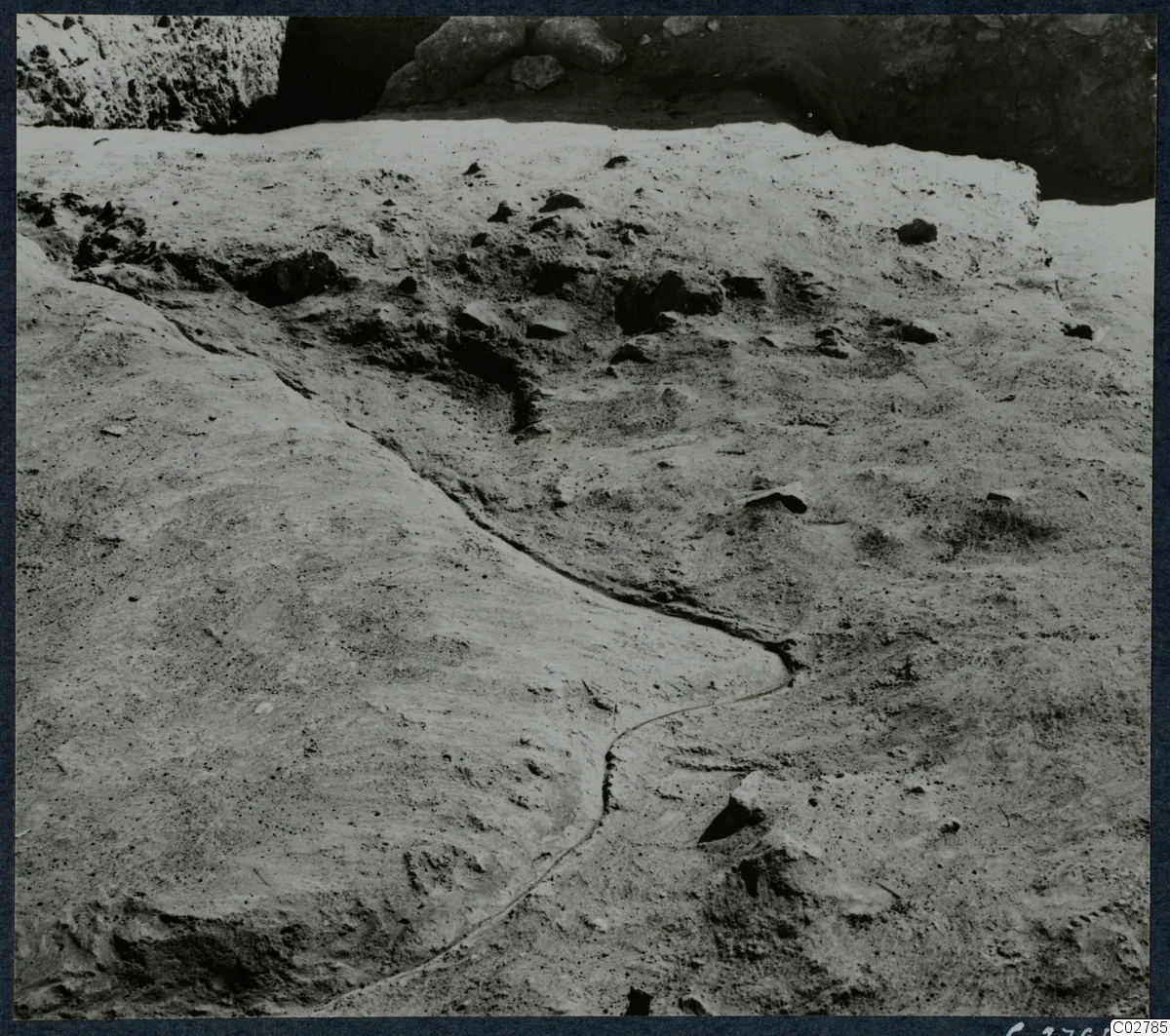
How a pit can be distinguished from the natural sand at Mersinaki
Description
A close view down onto pale, pitted sand in an excavation, with a dark curved line tracing the edge of a pit that runs diagonally across the frame. Small stones lie scattered on the surface, and a larger pale stone block and a dark cavity with rubble appear along the top edge. No people are shown.
Other scans of this record (2)
 Full resolution
- Description, scan 2
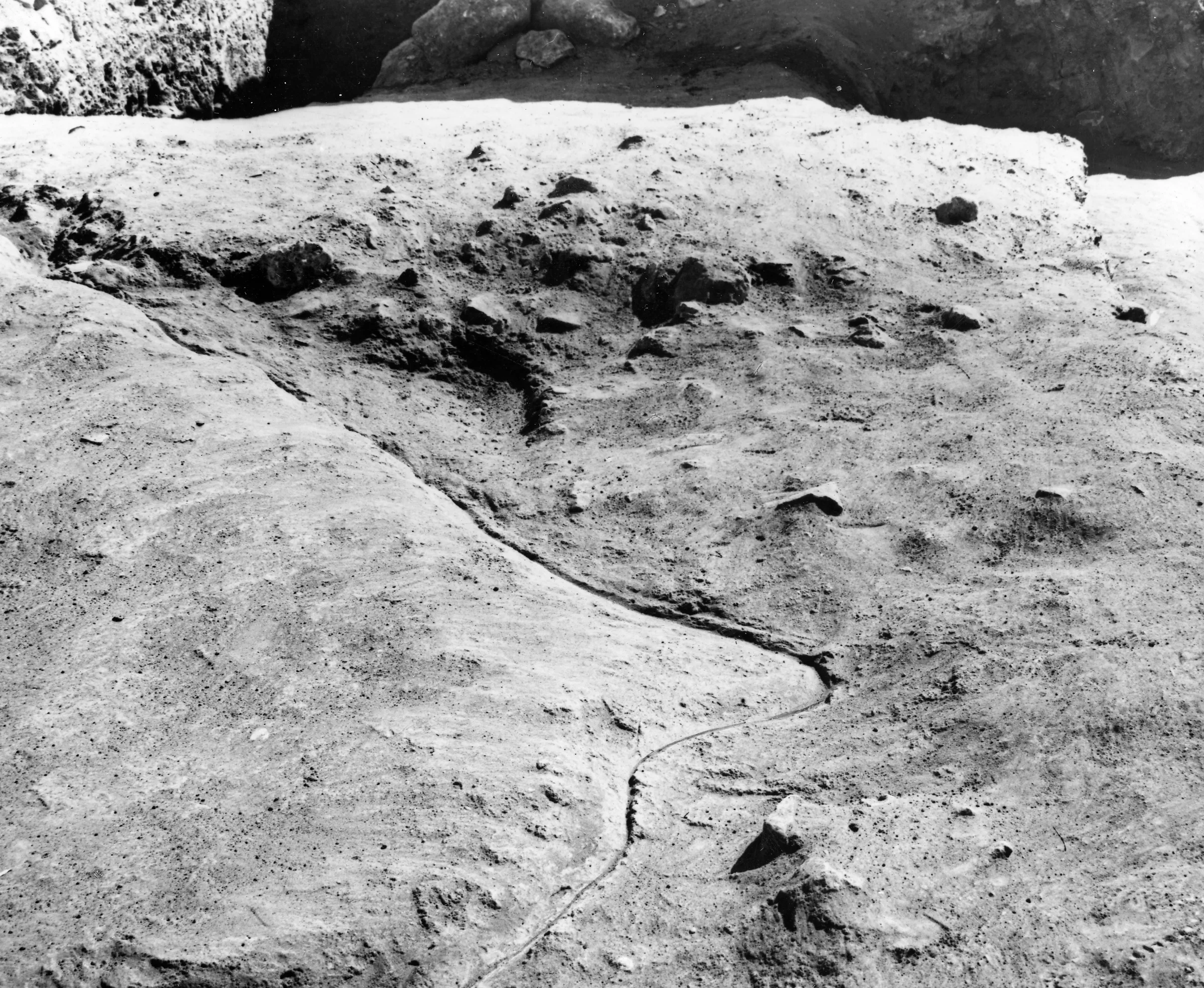
- A close view down onto a sandy excavation surface where a pit is outlined by a darker, curving edge running diagonally from the upper centre toward the lower middle. The pale natural sand lies on one side, while the fill inside the pit is darker and more disturbed, with scattered small stones and pebbles. A few larger stones and dark cut faces appear at the top edge, and a thin line follows part of the pit's rim.
- Description, scan 3
- Close view looking down at a sandy excavation surface at Mersinaki. A thin curving line marks the edge of a pit cut into the pale natural sand, and darker fill with small stones lies within the pit. A rough stone face or rock edge appears at the top of the frame.
English, translated from the Swedish record
This is how a pit can be distinguished from the natural sand. Mersinaki.
Swedish, as on the record
Så här urskiljs en grop från den naturliga sanden. Mersinaki. Svenska Cypernexpeditionen
More from Mersinaki
382 items in the archive
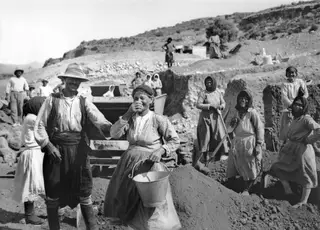 C02762Work in progress with men and women at Mersinaki
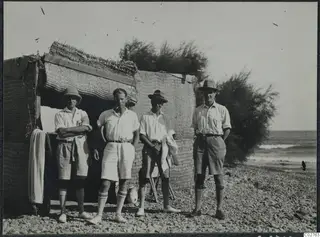 C02763The Expedition 1930: Lindros, Westholm, Sjöqvist and Gjerstad
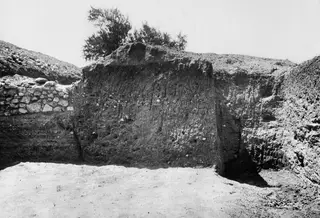 C02764Soil profile at Mersinaki
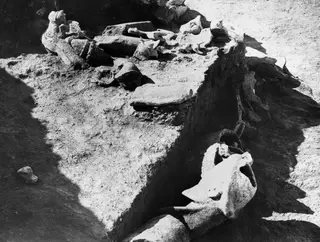 C02767Accumulation of statues in K 17-18 at Mersinaki
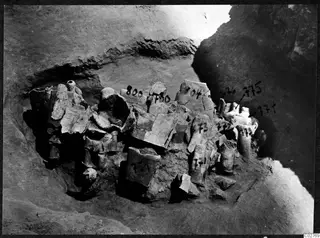 C02769Statues in pit H 14-15 at Mersinaki
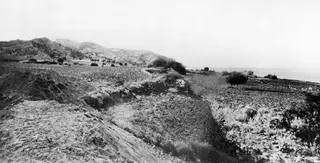 C02770View towards Vouni from the excavation, Mersinaki
Photographs: Swedish Cyprus Expedition, Medelhavsmuseet, Stockholm (CC0)