
Fieldwork·In brief
250 kg of pottery shows how Pyla-Vigla's garrison cooked and drank before c. 294 BCE
The team also studied the garrison's animal bones; dog remains in the fort's wall appear to have been put there deliberately, the Department of Antiquities said.



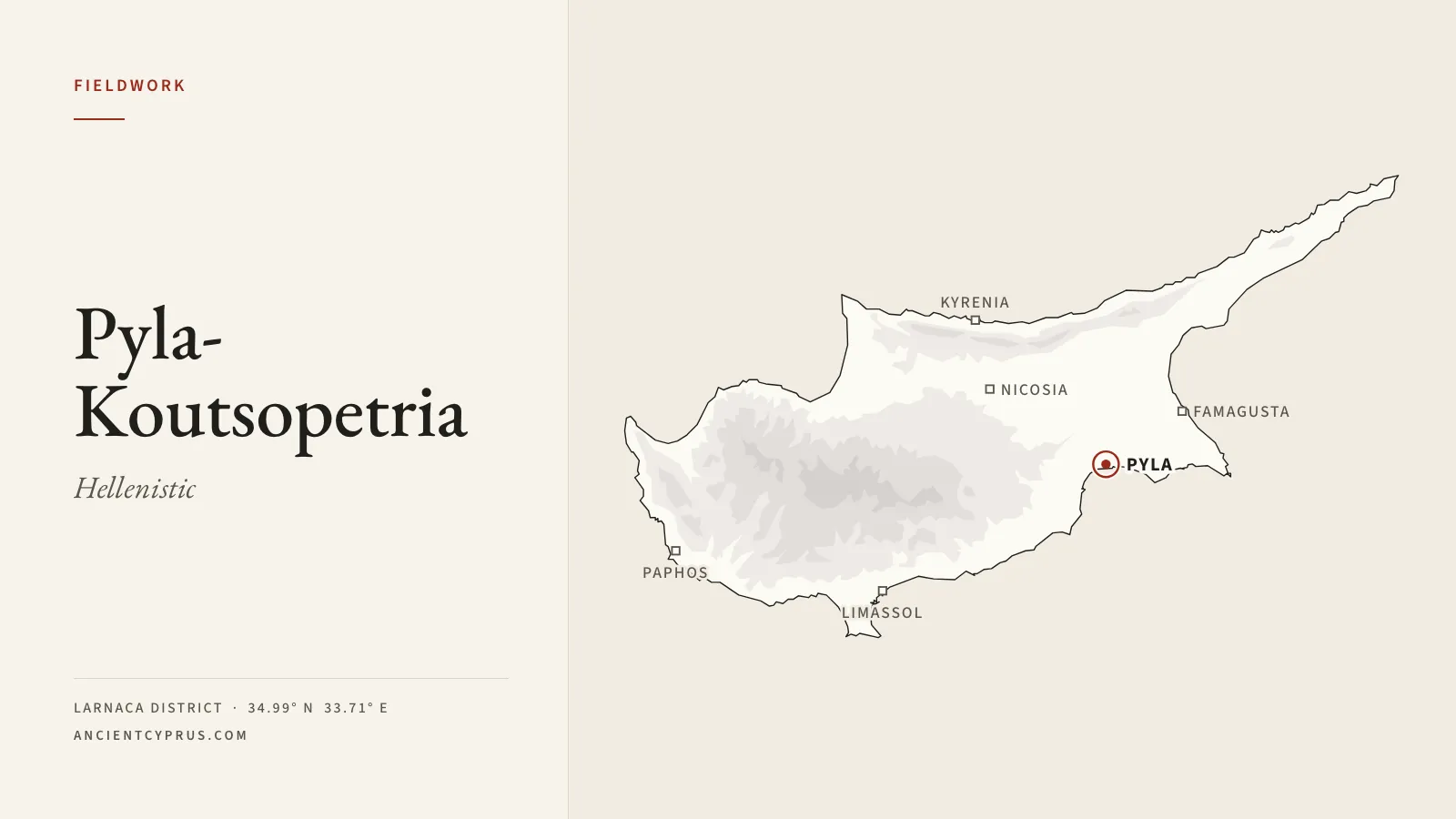
Researchers of the Pyla-Koutsopetria Archaeological Project have examined about 250 kg of pottery from Building I at Pyla-Vigla, a fortified plateau above Larnaca Bay, the Department of Antiquities announced on 20 November. The work belonged to the project's 20th season, held in June and July by a team from three American universities.
The sherds were recovered from Building I over the seasons from 2018 to 2025. The Department describes the building as the best evidence for the site's last phase of occupation, which ended when the settlement was abandoned around 294 BCE. About 60 per cent of the material from six excavation units has been studied. It contains tableware for food and drink, cooking pots of four or more types, and amphorae (transport jars), both local and imported. Animal bones were studied for the garrison's diet. Most are from animals commonly eaten; the dog remains in the fortification wall, according to the Department, look like a deliberate deposit.
The 19th season, in 2025, was directed by Brandon R. Olson, Melanie Godsey and Tom Landvatter. It exposed rooms of at least four buildings in the centre of the plateau, with weapons, cooking wares and numerous transport amphorae, the Department reported in October 2025. Olson and his colleagues argue that the plateau of about 1.6 ha held a short-lived Hellenistic garrison, built by either Ptolemy or Antigonus, and date its construction, use and abandonment by its coins to 323–294 BCE [1, pp. 288, 302].
Original source
On ancientcyprus.com
- People
- Brandon R. Olson
- Periods
- Hellenistic
References
- 1.Olson, B. R., Moore, R. S., Landvatter, T. and Stephens, J. (2021). Pyla-Vigla: A Case Study Assessing the Imperial Strategies of the Hellenistic Diadochoi in Cyprus. Études et Travaux 34, 287–306.
More in Fieldwork
- Graz survey logs a new Roman and medieval site at Amargeti and identifies a Cleopatra VII coin
- Bicommunal committee has worked on 210 monuments, from Apostolos Andreas to Othello's Tower
- French team finds 8th–7th century BC walls beneath Classical stone robbing at Kition
- Heritage committee to restore Maronite churches and an Armenian monastery in the occupied north
- Geophysical survey searches for buried remains at Agia Marina Xyliatou, a Roman copper-smelting site