
Fieldwork·In brief
Swedish team reaches Hala Sultan Tekke's earliest town levels, of the 17th–15th centuries BCE
In City Quarter 1 the 2026 season found buildings and pottery from the Middle to Late Bronze Age transition, with Anatolian imports but no Aegean pottery yet.



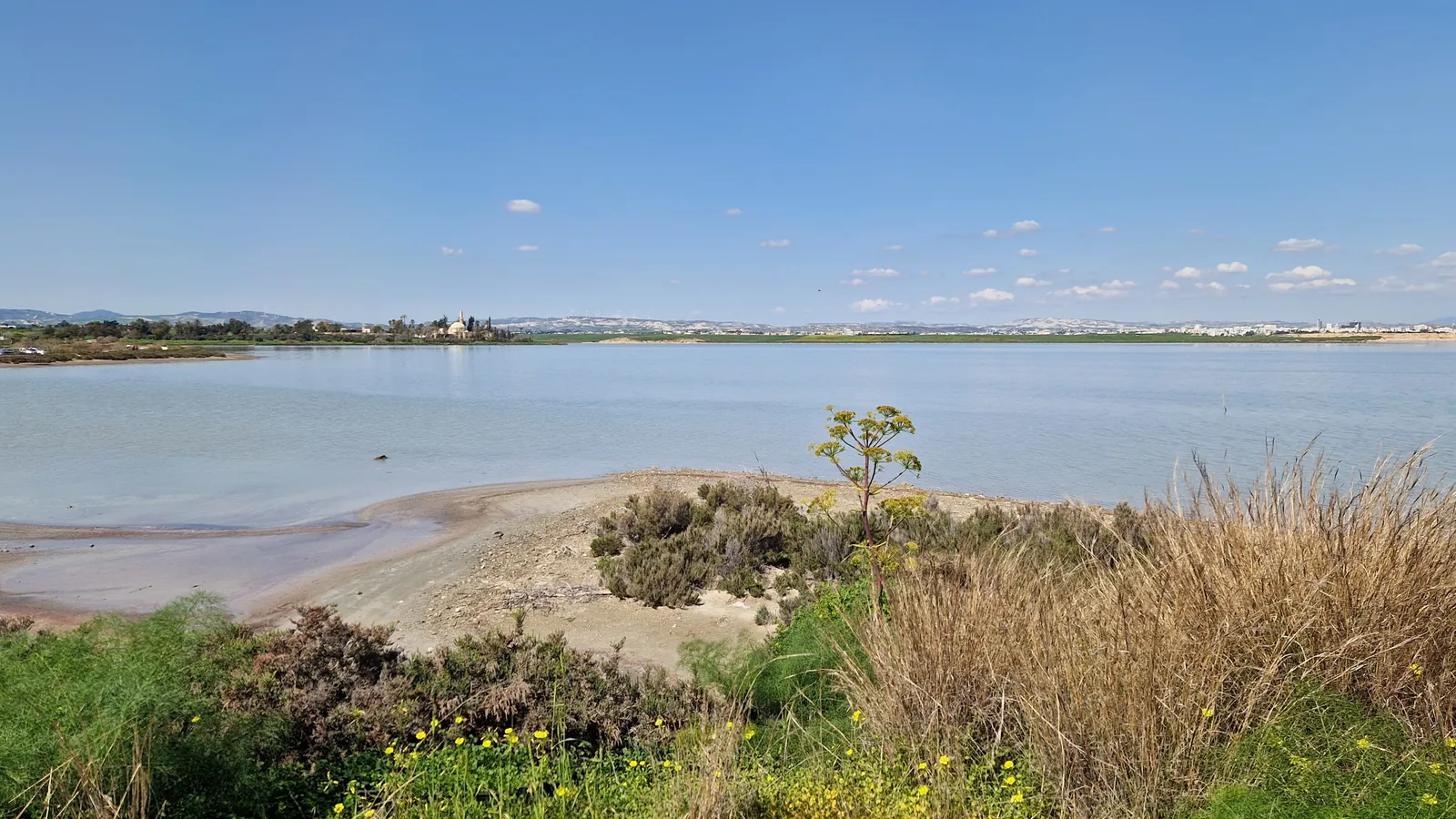
Excavators at Hala Sultan Tekke, near Larnaca, have reached stratified buildings and pottery of the 17th to 15th centuries BCE (Strata 4 to 6), a first for the Swedish mission, the Department of Antiquities announced on 20 October. An international team dug in February, May and June under Professor Peter M. Fischer of the University of Gothenburg and Professor Teresa Bürge of Gothenburg and Bern. The season centred on City Quarter 1, plus work in the cemetery.
Stratum 4 held White Slip I (monochrome and bichrome), Base-ring I, Bichrome Wheel-made and Black and Red Slip wares; its only imported pottery so far is Anatolian Red Lustrous Wheel-made spindle bottles. Aegean pottery is absent, which the Department takes as confirming that Mycenaean imports peaked only in the later 14th and early 13th centuries BCE. Strata 5 and 6 have almost no White Slip I or Base-ring I, only a few possible Proto White Slip and Proto Base-ring pieces; Red-on-Red, Red-on-Black and White Painted IV–VI dominate, wares usually tied to the Middle to Late Bronze Age transition and partly to Middle Cypriot III. The Department calls this the earliest occupation documented at the site so far.
Professor Kirsi Lorentz and Dr Yuko Miyauchi led the bioarchaeology, Professor Sorin Hermon the 2D and 3D recording and non-destructive analyses. In earlier seasons the expedition had exposed Strata 1 to 3 in City Quarter 1, of the 13th and 12th centuries BCE.
On ancientcyprus.com
- Institutions
- Department of Antiquities of Cyprus
- Periods
- Middle Bronze Age, Late Bronze Age
More in Fieldwork
- French team finds 8th–7th century BC walls beneath Classical stone robbing at Kition
- Heritage committee to restore Maronite churches and an Armenian monastery in the occupied north
- Geophysical survey searches for buried remains at Agia Marina Xyliatou, a Roman copper-smelting site
- Karavas churches of 1804 and 1854 restored by Greek Cypriot and Turkish Cypriot conservators
- New Central Prisons at Agios Sozomenos to be kept apart from the Bronze Age site