
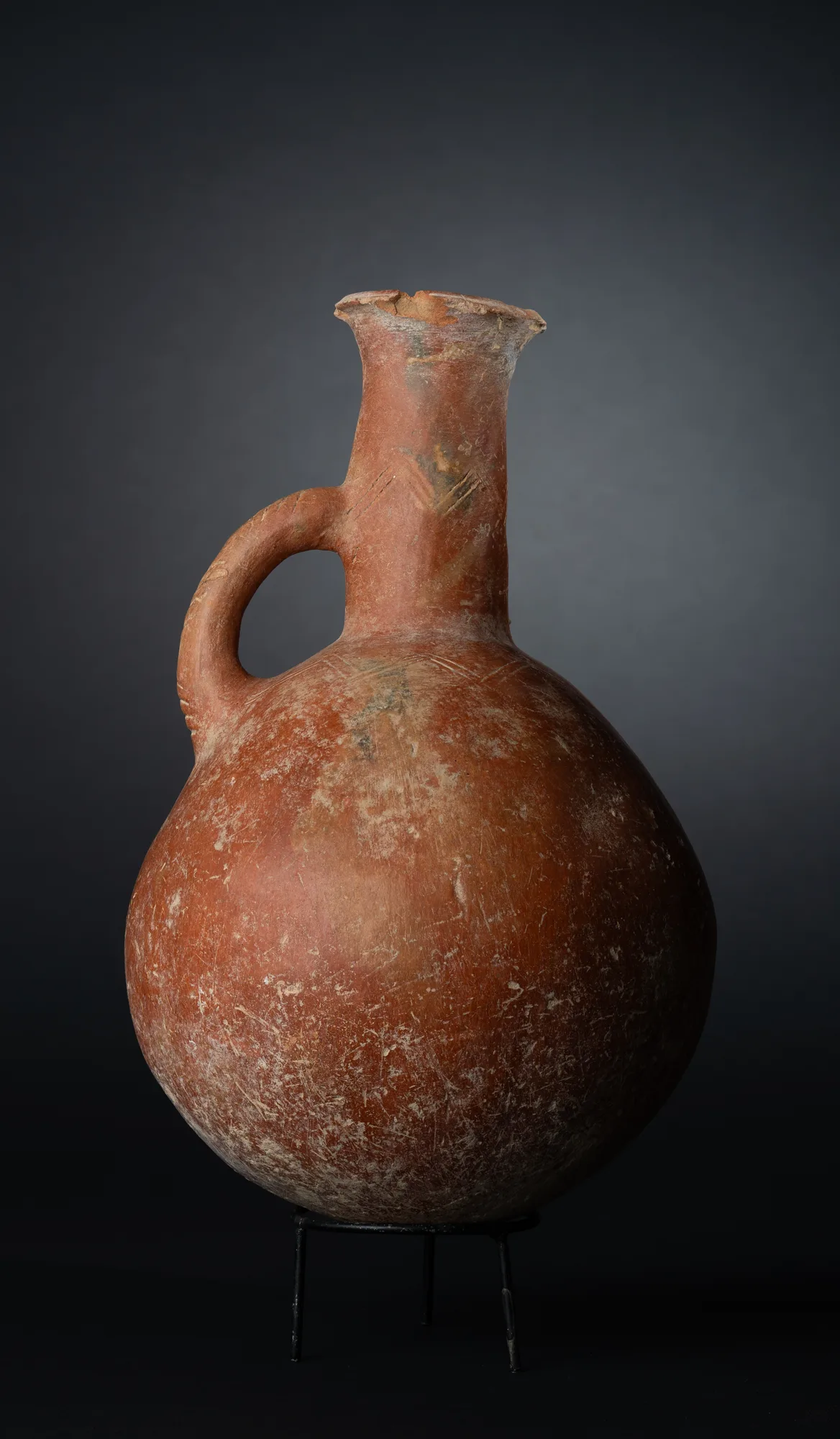
Middle Bronze Age I
Red Polished Jug with Incised Chevron Collars
Large handmade Red Polished jug with round body, tall flaring neck and mid-neck handle, incised zigzag bands at neck and shoulder and a grooved handle.
Date
2000 - 1850 BC
Accession No.
JUG-BA-022
Collection
Alexis Drakopoulos
Early Cypriot III–Middle Cypriot I, c. 2000–1850 BCE · Red Polished ware · Handmade
A large jug with a full, near-spherical body, a little deeper than it is wide, on a rounded base. A tall cylindrical neck, faintly concave, rises from the shoulder and flares at the top into an out-turned rim. A thick handle of round section leaves the neck at about half its height and drops in a tight loop to the shoulder.
The decoration is incised and sparing. A band of zigzag, cut with three or four parallel strokes, rings the neck just above the handle, and a fainter zigzag runs higher up. A second zigzag band encircles the base of the neck like a collar. Short diagonal grooves cross the top of the handle, and horizontal grooves mark its lower end. The red slip is even but now matt, scored with fine scratches and root marks, flecked with lime, and darkened by a grey firing cloud on the shoulder. The rim is chipped, with one larger loss.
Commentary
This is a Red Polished jug of the long-necked, round-mouthed class in which the handle springs from the middle of the neck, the family grouped by James Stewart among his Type I jugs [1]. The closest parallel is a jug from Phoenikiais in the British Museum, classed as Red Polished III, Stewart Type I B2 r1 and dated Middle Cypriot I–II; it has the same ovoid body, round base, cylindrical neck with everted rim and a thick handle from mid-neck to shoulder, with an incised wavy line on the neck [2]. Its height, 17.5 cm, is well below that of this jug, and a precise Stewart subtype for ours would need its measurements.
Larger members of the family come from the tombs of Lapithos, among them two jugs in Stockholm from Tombs 313A and 313B, dated Early Cypriot III and Middle Cypriot I [4]. A long-necked jug from a tomb at Lapatsa in northern Cyprus, excavated by the Melbourne University Cyprus Expedition and now in Christchurch, has a handle from mid-neck to shoulder and plain bands round the upper neck and the base of the neck, the same placing of ornament as here [5]. In Athens, a jug of Early Cypriot III to Middle Cypriot II date carries incised lines in groups on the neck, shoulder and handle, and a globular jug with a long concave neck, probably from Pendayia, has incised zigzags on the body and oblique strokes on the handle [3]. The Athens catalogue describes the latter as "Red Polished to Drab Polished", a reminder that the western variant of the ware shades into Red Polished.
These parallels place the jug at the transition from Early to Middle Cypriot, c. 2000–1850 BCE, with Middle Cypriot I the most likely phase. The label Red Polished III is used here as a ware description only, since the numbered subdivisions were never a reliable sequence of dates [6][7].
The restraint of the ornament is typical of large jugs of this phase: decoration is kept to the neck, the junction of neck and shoulder, and the handle, leaving the body plain. The slashes on the handle would also have given a surer grip on a heavy vessel when full. Incised lines in Red Polished were often filled with white lime paste; no fill survives here, though it may once have been present.
Jugs of this size stored and poured water, milk, oil or wine in the household before being placed in chamber tombs, which is where nearly all complete examples have been found. The rim chip exposes the fabric, and its colour would show whether the jug belongs with the ordinary Red Polished of the north coast or with the Drab Polished, blue-cored fabrics of the west.
References
- 1.Stewart, J.R. (1962) The Early Cypriote Bronze Age. The Swedish Cyprus Expedition IV:1A. Lund: Swedish Cyprus Expedition.
- 2.London, British Museum, 1884,1210.20, Red Polished III jug from Phoenikiais, Stewart Type I B2 r1, collection record.
- 3.Karageorghis, V. (2003) Ancient Cypriote Art in the National Archaeological Museum of Athens. Athens: A.G. Leventis Foundation, cat. 1 (inv. 19547) and cat. 2 (inv. 15381).
- 4.Stockholm, Medelhavsmuseet, L. 313B:069 (Red Polished III jug, Lapithos Tomb 313B) and L. 313A:111 (Red Polished III jug, Lapithos Tomb 313A), collection records.
- 5.Christchurch, Teece Museum of Classical Antiquities, University of Canterbury, 137.73, Red Polished jug from Lapatsa, collection record.
- 6.Merrillees, R.S. (1991) in Barlow, J.A., Bolger, D.L. and Kling, B. (eds) Cypriot Ceramics: Reading the Prehistoric Record. Philadelphia: University Museum, p. 263.
- 7.Morris, D. (1985) The Art of Ancient Cyprus. Oxford: Phaidon, pp. 16, 48.
More from the Catalogue
Browse related objects
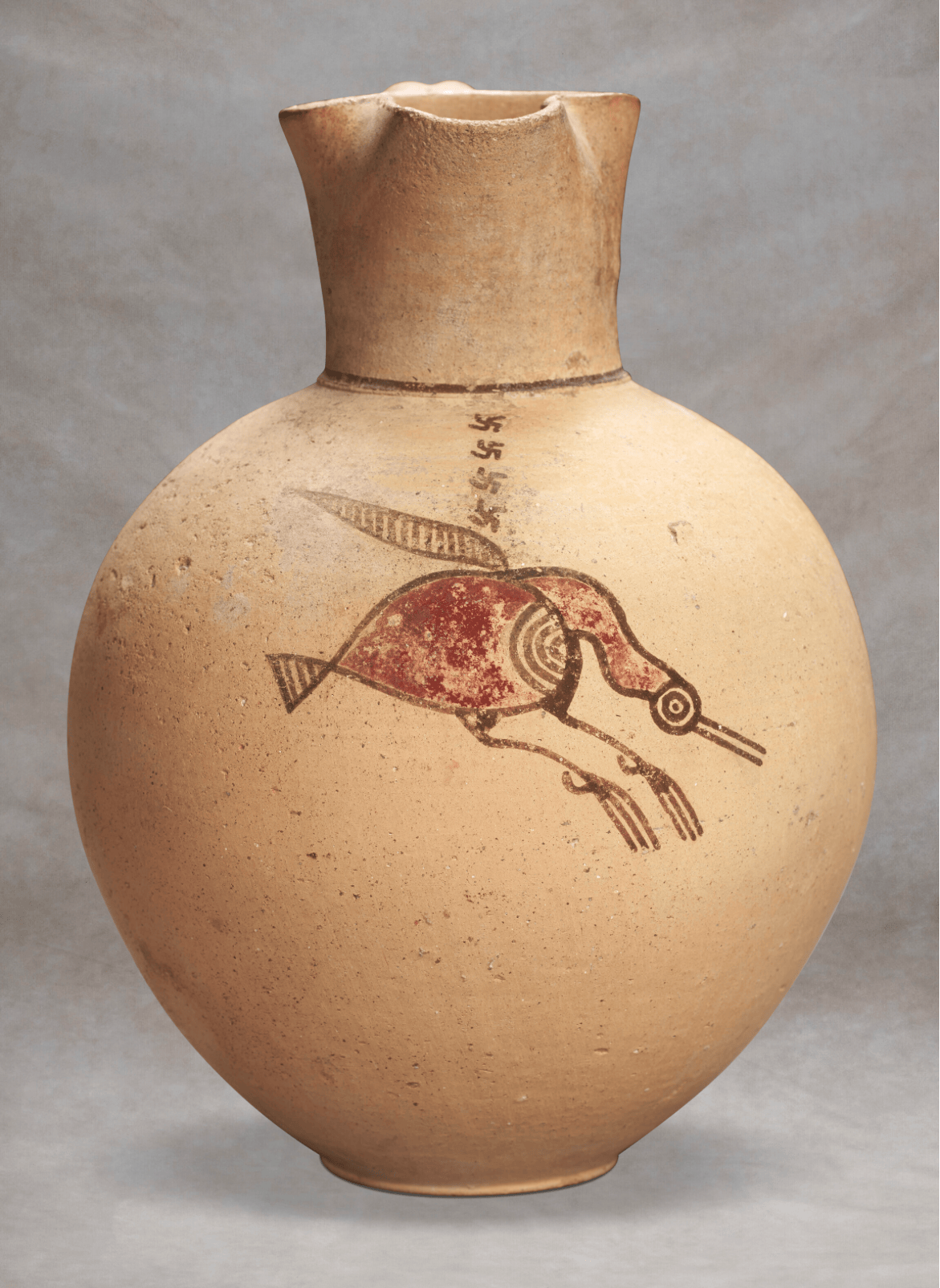
Bichrome Oinochoe
Archaic I
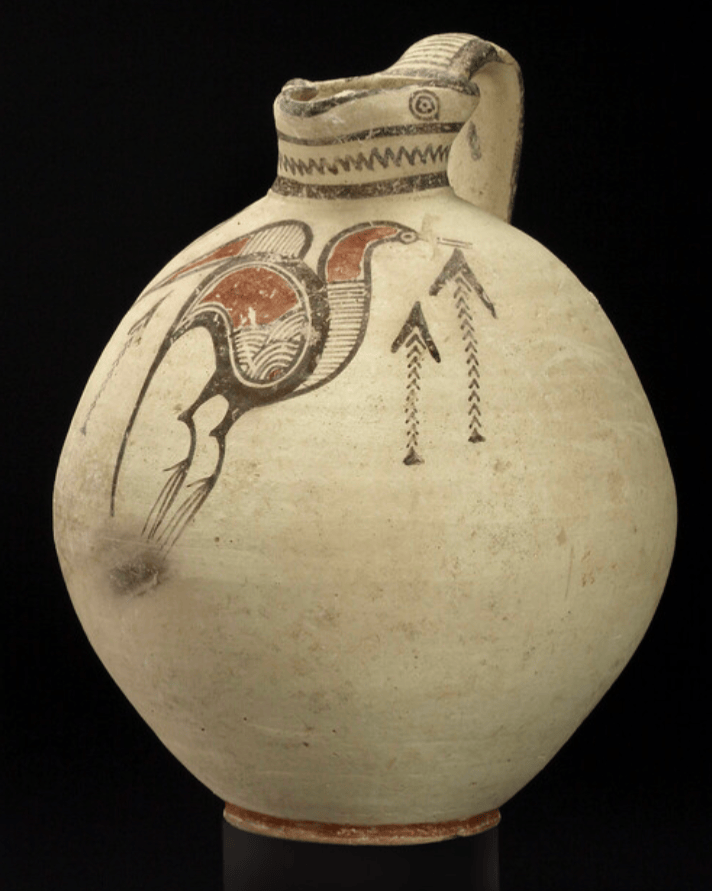
Free-field bichrome jug with image of an Ibis bird and reeds
Archaic
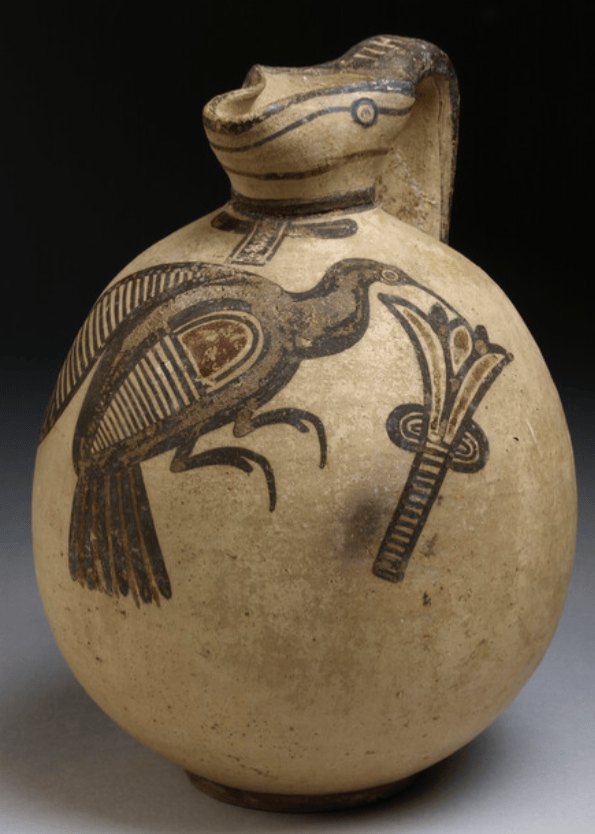
Squat bichrome jug in free-field style with image of bird picking a lotus flower
Archaic
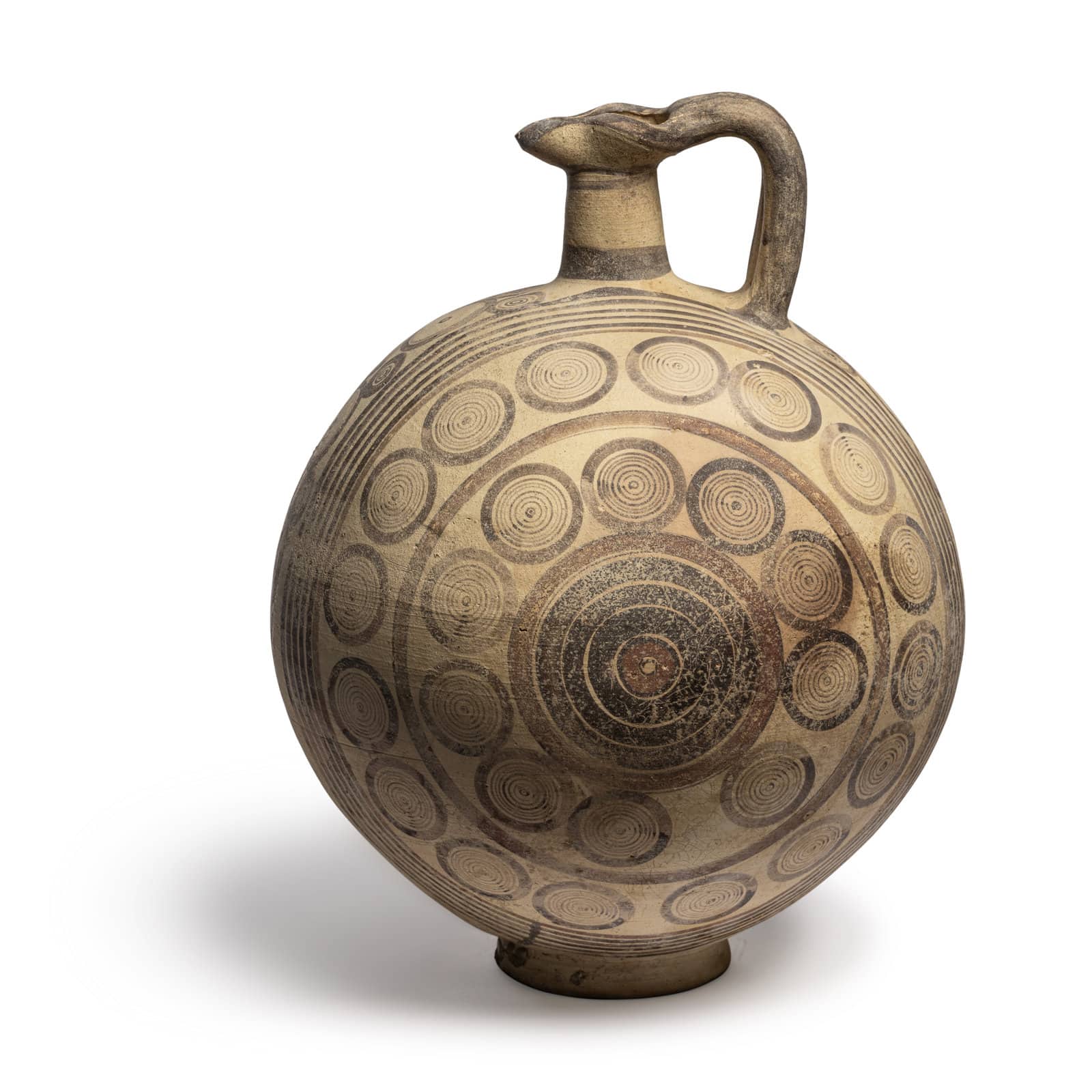
A Cypriot Bichrome-Ware Oinochoe Jug
Archaic I
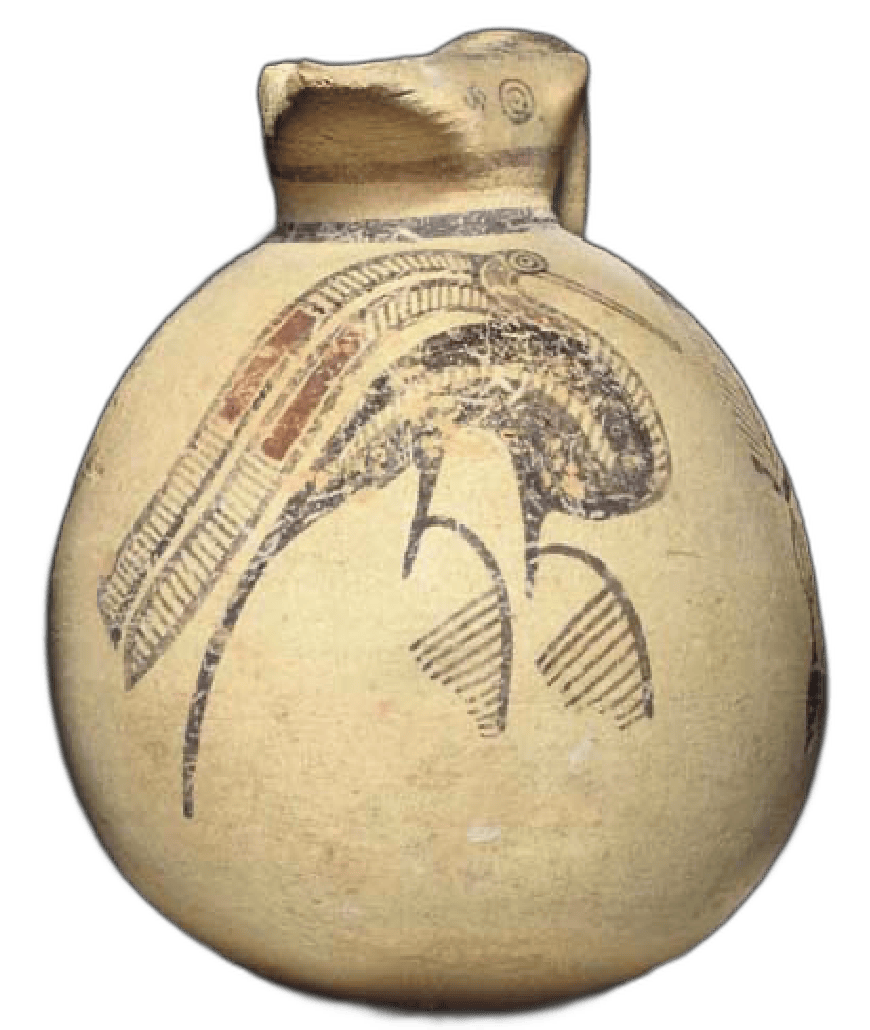
Oinochoe with Free Field Bird
Archaic I
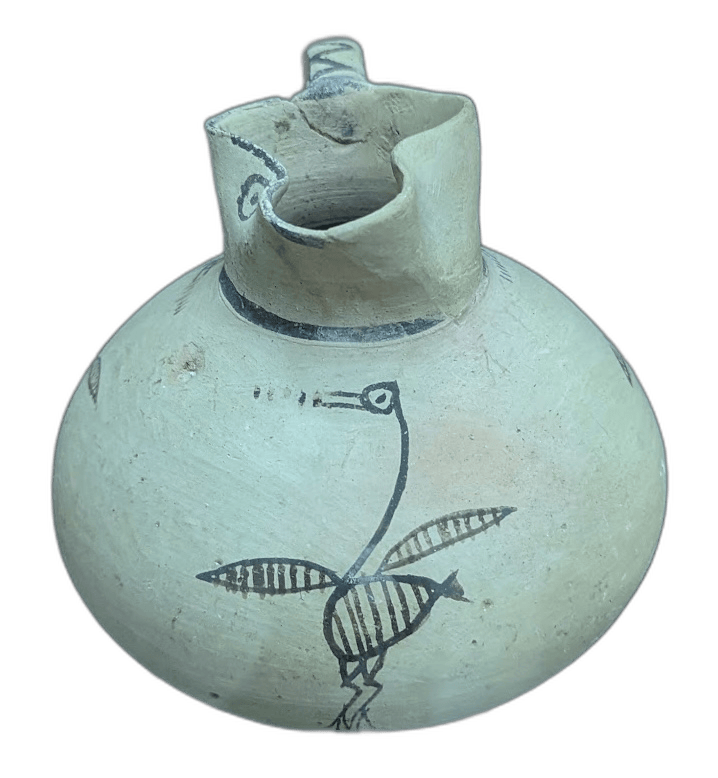
Small Oinochoe with Free Field Bird
Archaic I
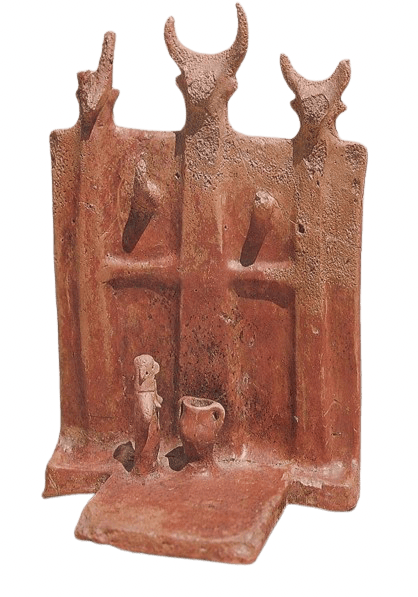
Red Polished Shrine
Middle Bronze Age I
Black-On-Red Geometric Jug Sherd
Geometric II
Bichrome Jug
Geometric
Bichrome Juglet
Geometric
Bichrome Oinochoe
Geometric
Juglet
Archaic II
Oinochoe
Geometric III
Jug
Archaic I
Juglet
Archaic I
Jug
Geometric I
Terracotta jug
Early Bronze Age I
Juglet
Geometric I