
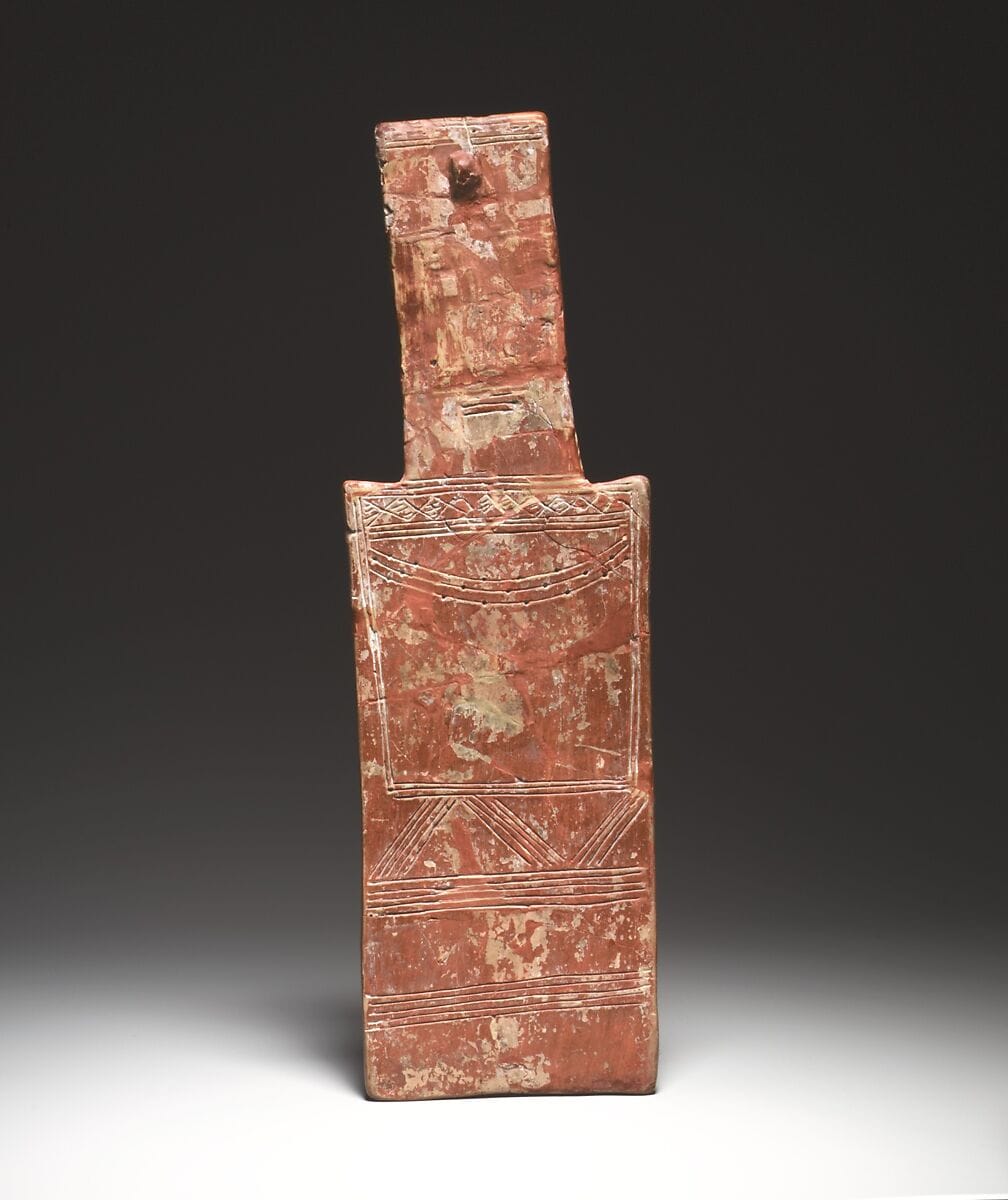
Middle Bronze Age I
Terracotta plank-shaped figurine
This is an example of an early type of plank-shaped figurine, with rectangular head and shoulders. The patterns on the body most likely indicate a woven garment, overlaid with jewelry. Such figurines may recall cult statues of stone or wood that were placed in sanctuaries. H. 11 3/16 in. (28.4 cm)
Classification
- Object type
- Terracotta figurine
- Material
- Clay
- Place of production
- probablyCyprus
- Findspot
- Alambra
- Date
- 2000 - 1800 BC
Collection
Provenance
- Said to be from Alambra, Cyprus
References
- Cesnola, Luigi Palma di. 1894. A Descriptive Atlas of the Cesnola Collection of Cypriote Antiquities in the Metropolitan Museum of Art, New York, Vol. 2. pl. I.4, Boston: James R. Osgood and Company.Metropolitan Museum of Art. 1895. The Terracottas and Pottery of the Cesnola Collection of Cypriote Antiquities in Halls 4 and 15. no. 1, p. 1, New York: The Metropolitan Museum of Art.Myres, John L. 1914. Handbook of the Cesnola Collection of Antiquities from Cyprus. no. 2001, p. 333, New York: The Metropolitan Museum of Art.Orphanides, Andreas G. 1983. ""Bronze Age Anthropomorphic Figurines in the Cesnola Collection at the Metropolitan Museum of Art." Master's Diss.." Master's Diss. no. 1, pp. 5-6, pl. I.Karageorghis, Vassos. 1991. The Coroplastic Art of Ancient Cyprus, Vol. 1. no. Ba.7, pp. 55-56, pl. XXI.1, Nicosia: Foundation Anastasios G. Leventis.Barnes, Lorna and Ellen Salzman. 1998. "Preliminary Investigations of Surface Decoration on a Group of Ancient Terracottas from Cyprus." Glass, Ceramics and Related Materials : ICOM Committee for Conservation Glass, Ceramics, and Related Materials Working Group, & Institute of Arts and Design Department of Conservation Studies, Alice B. Paterakis, ed. p. 83, Vantaa, Finland: EVTEK Institute of Art and Design, Dept. of Conservation Studies.Karageorghis, Vassos, Joan Mertens, and Marice E. Rose. 2000. Ancient Art from Cyprus: The Cesnola Collection in The Metropolitan Museum of Art. no. 2, pp. 20-21, New York: The Metropolitan Museum of Art.Karageorghis, Vassos, Gloria Merker, and Joan R. Mertens. 2016. The Cesnola Collection of Cypriot Art : Terracottas. no. 1, pp. 16, 252, Online Publication, [CD-Rom 2004], New York: The Metropolitan Museum of Art.
Identifiers
- Accession no.
- 74.51.1534, Metropolitan Museum of Art
- In catalogues
- Myres 1914, no. 2001
Corrections and additions
Do you know this object?
We are always looking for more of an object's history: who owned it, where it was sold or shown, and where it was published.
We would like to hear about
- Earlier owners, sales or exhibitions
- Publications that illustrate or mention it
- Where it is now, if it has moved
- Better photographs, or a close parallel
- A mistake in what we say about it
Messages are read by us alone and kept confidential, unless the law requires otherwise. Tell us if you would like to be thanked by name on the page.
Similar pieces
 Red Polished plank-shaped rectangular idolMedelhavsmuseet (Museum of Mediterranean and Near Eastern Antiquities)
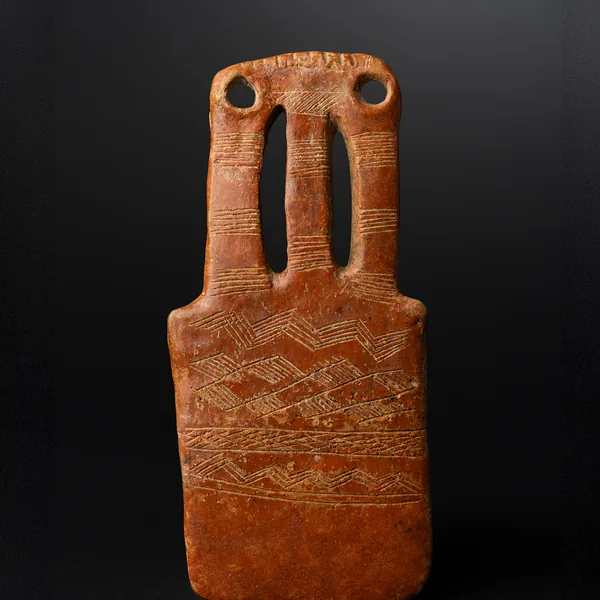 Red Polished Three-Necked Plank FigureDrakopoulos Collection
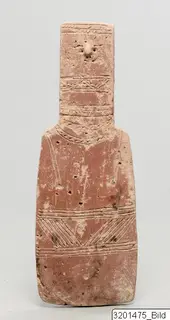 Red Polished flat idolMedelhavsmuseet (Museum of Mediterranean and Near Eastern Antiquities)
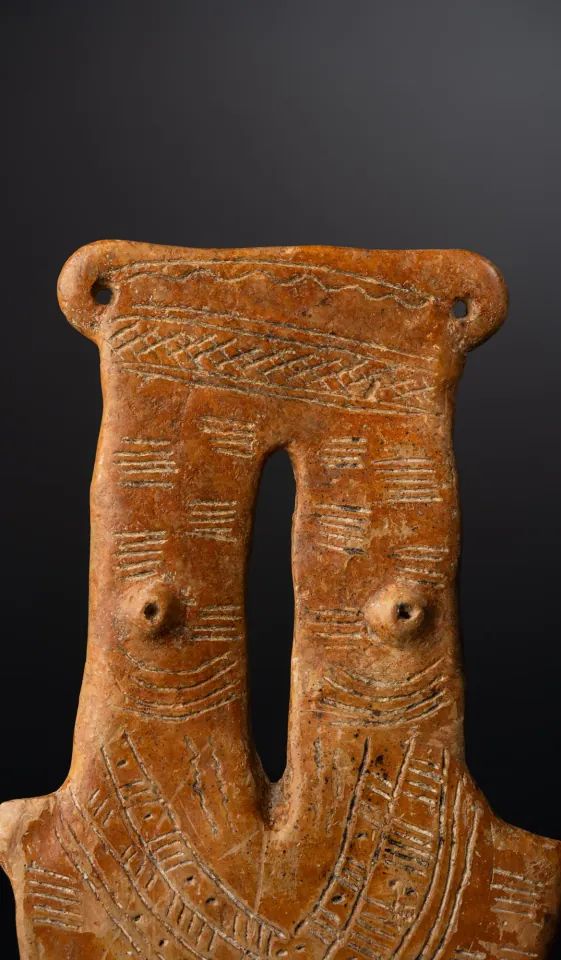 Red Polished Two-Necked Plank FigureDrakopoulos Collection
 Flat rectangular terracotta idolLapithos-Vrysi tou Barba, SCE Tomb 305
 FigurineSwedish Cyprus Expedition
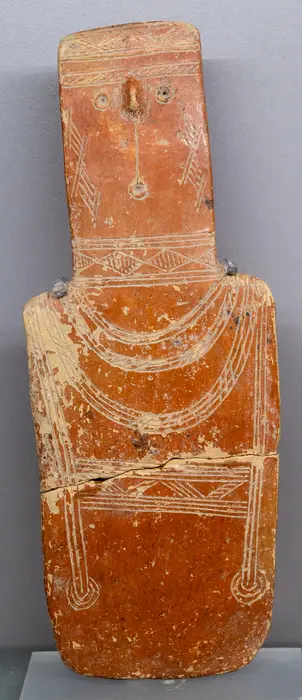 Plank FigureCyprus Museum, Nicosia
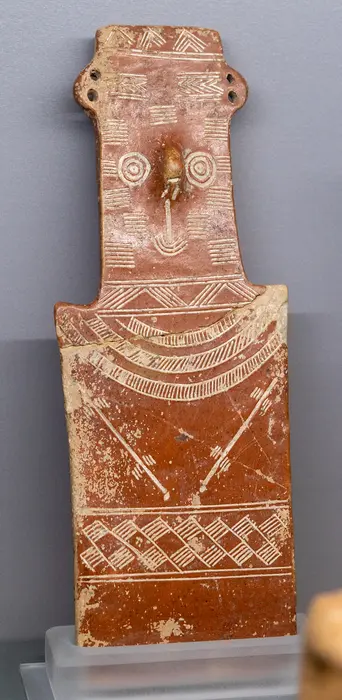 Plank FigureCyprus Museum, Nicosia
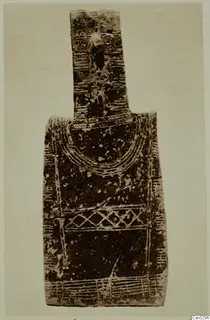 FigurineSwedish Cyprus Expedition
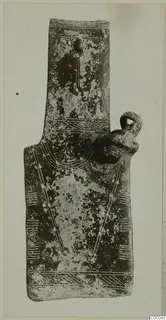 Red Polished flat rectangular idolMedelhavsmuseet (Museum of Mediterranean and Near Eastern Antiquities)
 Plank-shaped votive figure of a woman and childOntario Museum
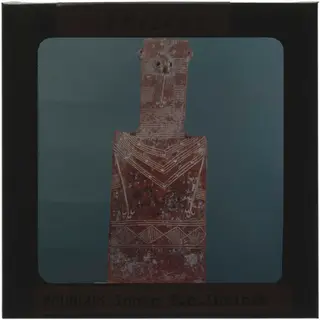 Clay figurineBellapais-Vounous
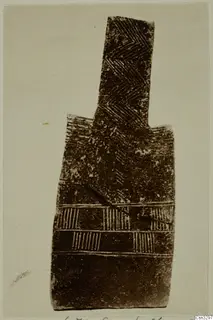 Terracotta figurineSwedish Cyprus Expedition
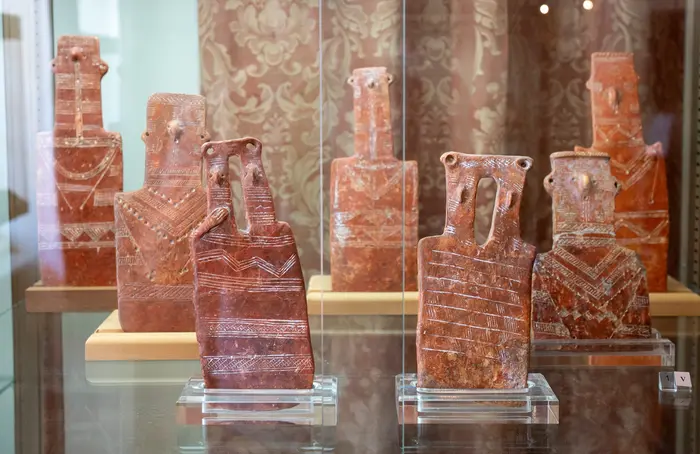 Assorted Plank FiguresPierides Museum, Larnaca
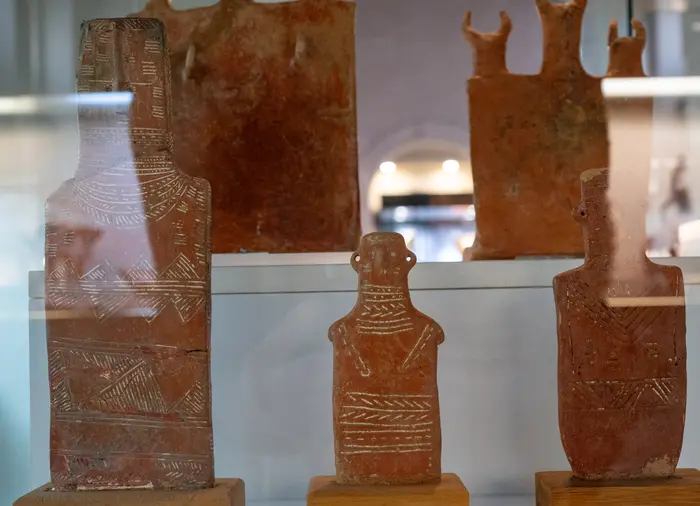 Plank FiguresCyprus Museum, Nicosia
 Terracotta two-headed, plank-shaped figurineMetropolitan Museum of Art
 Plank idolOntario Museum
 Cypriot Early Bronze Age Polished Red Ware Plank IdolCyprus Museum, Jacksonville
 Plank figure Anthropomorphic formVienna Museum
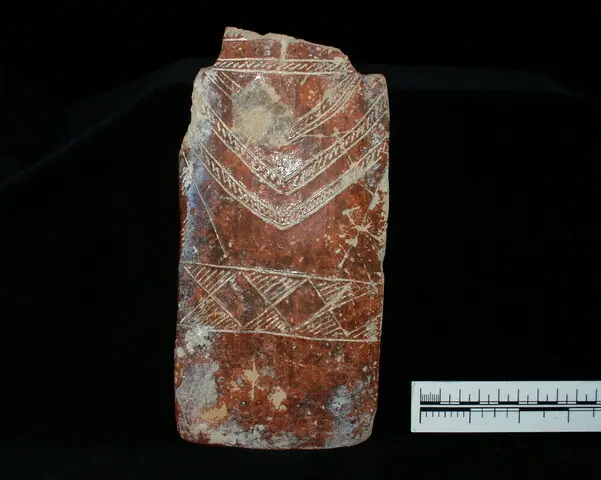 Red Polished plank figurine, body without headAshmolean Museum