
Page 85Scan 79 of 147
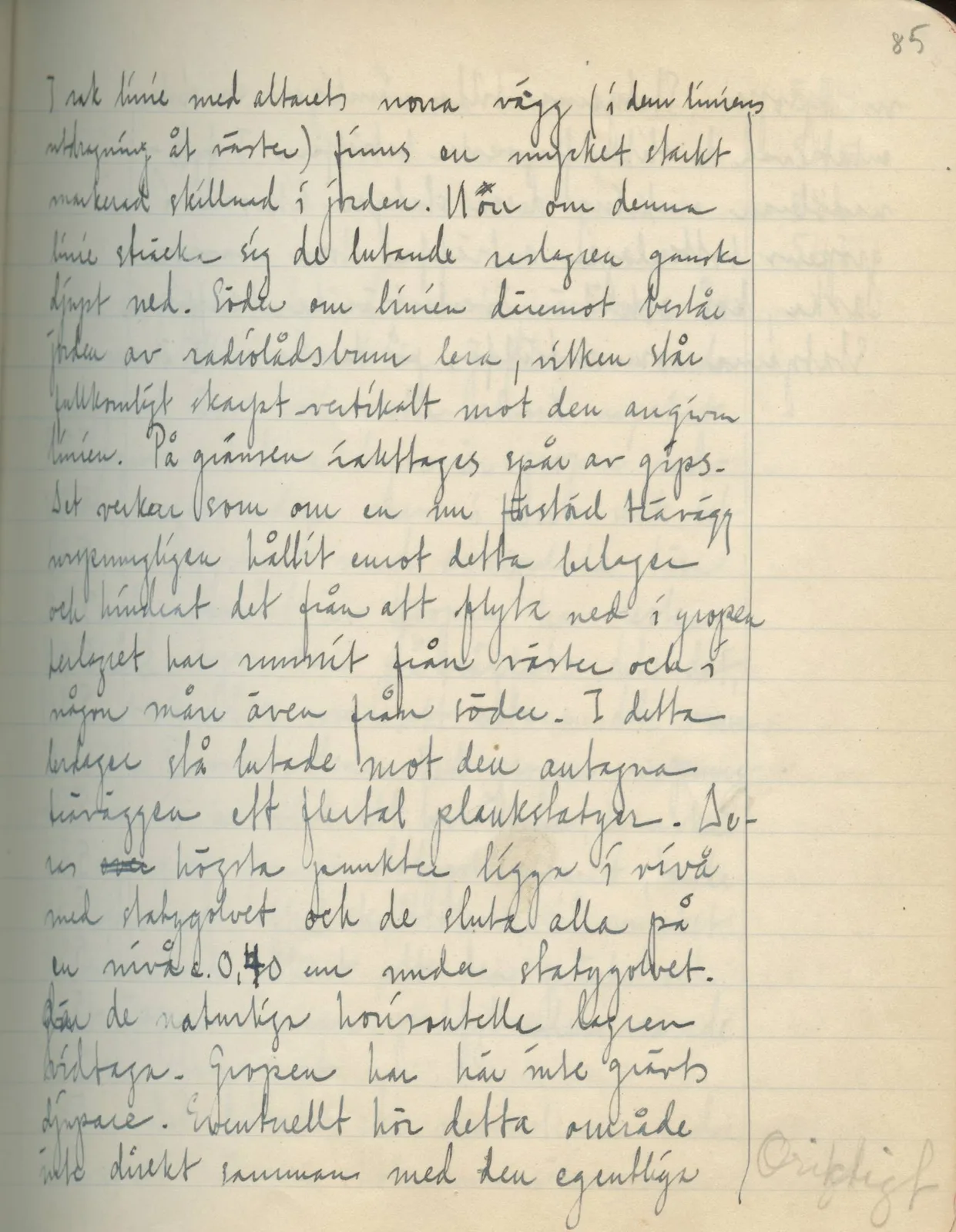
IncorrectIn line with the north wall of the altar (in the extension of this line toward the west) there is a very strongly marked difference in the earth. North of this line the sloping collapse layers extend down quite deep. South of the line, on the other hand, the earth consists of reddish-brown clay, which stands perfectly sharply vertical against the indicated line. At the boundary, traces of gypsum are observed. It seems as if a now destroyed wooden wall originally held back this clay layer and prevented it from flowing down into the pit. The clay layer has run from the west and to some extent also from the south. In this clay layer, leaning against the presumed wooden wall, stand a number of plank statues. Their highest points upper lie at the level of the statue floor, and they all end at a level c. 0,40 m below the statue floor. Where the natural horizontal layers begin. The pit has not been dug deeper here. Possibly this area does not belong directly together with the actual … continues
65 figures hard to readstruck struck outadded written in above” jug ditto, and what it repeatsword reading not certain