
Unnumbered pageScan 78 of 147
Continued from p. 83
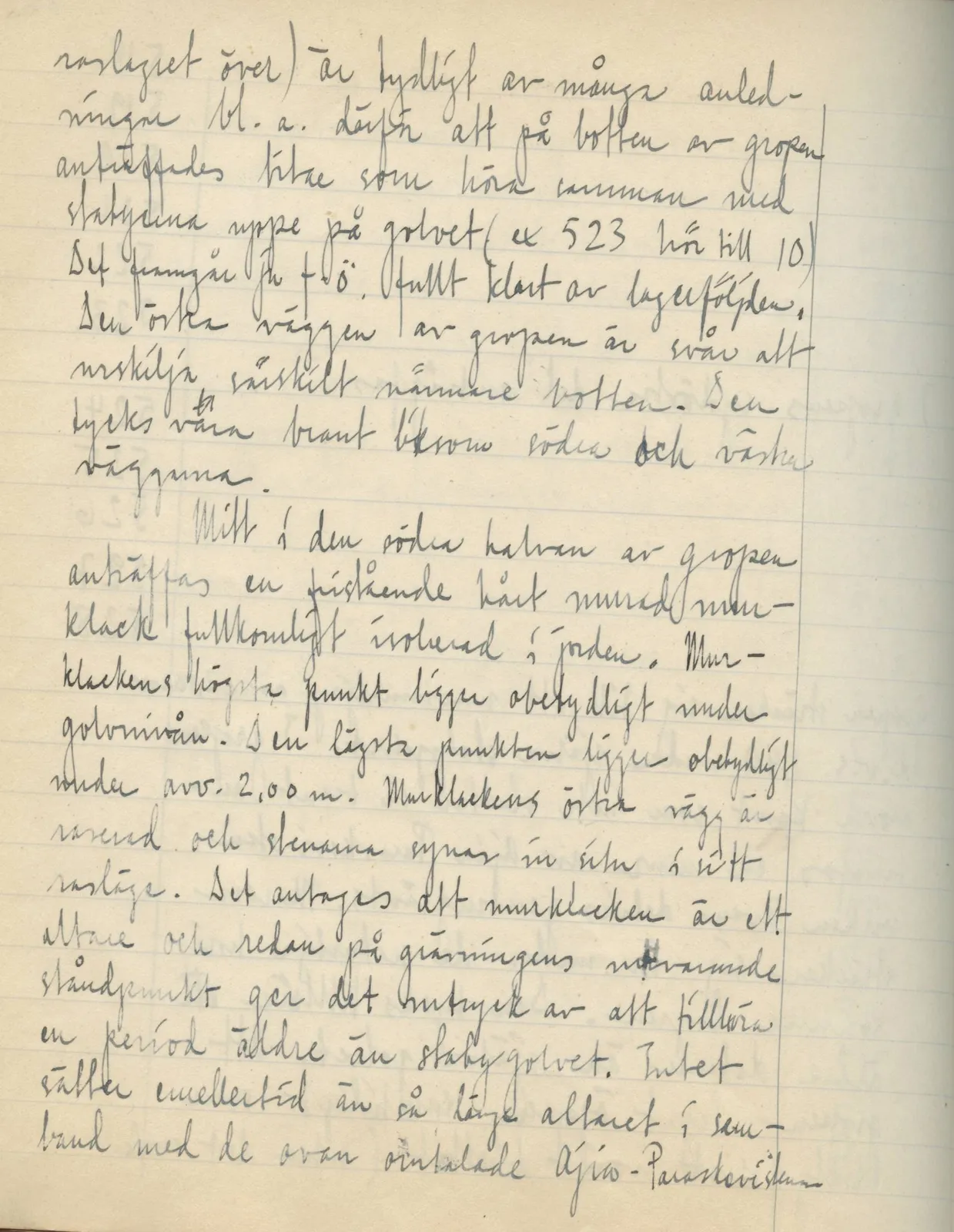
… the collapse layer above) is clear for many reasons, among others because at the bottom of the pit reasons, e.g. because at the bottom of the pit pieces were found that belong together with the statues up on the floor (ex 523 belongs to 10). This is in any case quite clear from the layer sequence. The eastern wall of the pit is difficult to make out , especially closer to the bottom. The wall appears to be steep, as are the southern and western walls. In the middle of the southern half of the pit a free-standing, hard-built wall-spur lies completely isolated in the earth. The wall-spur's highest point lies slightly below the floor level. The lowest point lies slightly below avv. 2,00 m. The eastern wall of the wall-spur is collapsed and the stones are seen in situ in their collapse position. It is assumed that the wall-spur is an altar, and already at the present stage of the excavation it gives the impression of belonging to a period earlier than the statue floor. Nothing yet, however, connects the altar with the Ajia Paraskevi sherds mentioned above
65 figures hard to readstruck struck outadded written in above” jug ditto, and what it repeatsword reading not certain