
Page 73Scan 66 of 147
Continued from scan 65
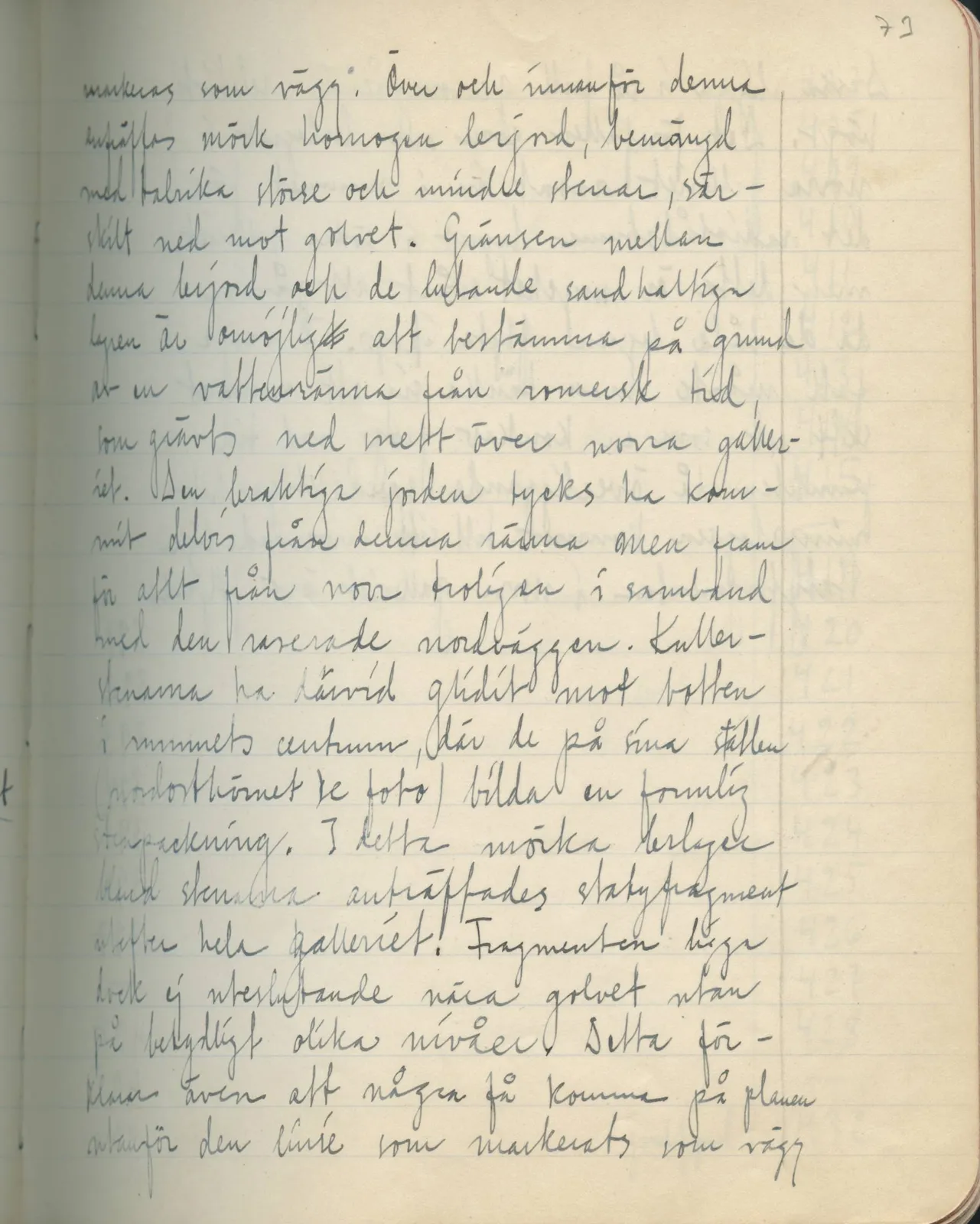
t… is marked as wall. Above and inside this there is found dark homogeneous clay earth, mixed with numerous larger and smaller stones, separately down towards the floor. The boundary between this clay earth and the sloping sandy layers is impossiblet to determine because of a water channel from Roman time, which was dug down right across the northern gallery . The clayey earth seems to have come partly from this channel but above all from the north, probably in connection with the razed north wall. The rubblestones have then slid towards the bottom in the centre of the room, where in places (north-east corner see photo) they form a formless stone packing. In this dark clay layer among the stones statue fragments were found along the whole gallery. The fragments lay however not exclusively near the floor but at considerably different levels. This explains also that a few come on the plan outside the line that has been marked as wall
65 figures hard to readstruck struck outadded written in above” jug ditto, and what it repeatsword reading not certain