
Early Bronze Age II
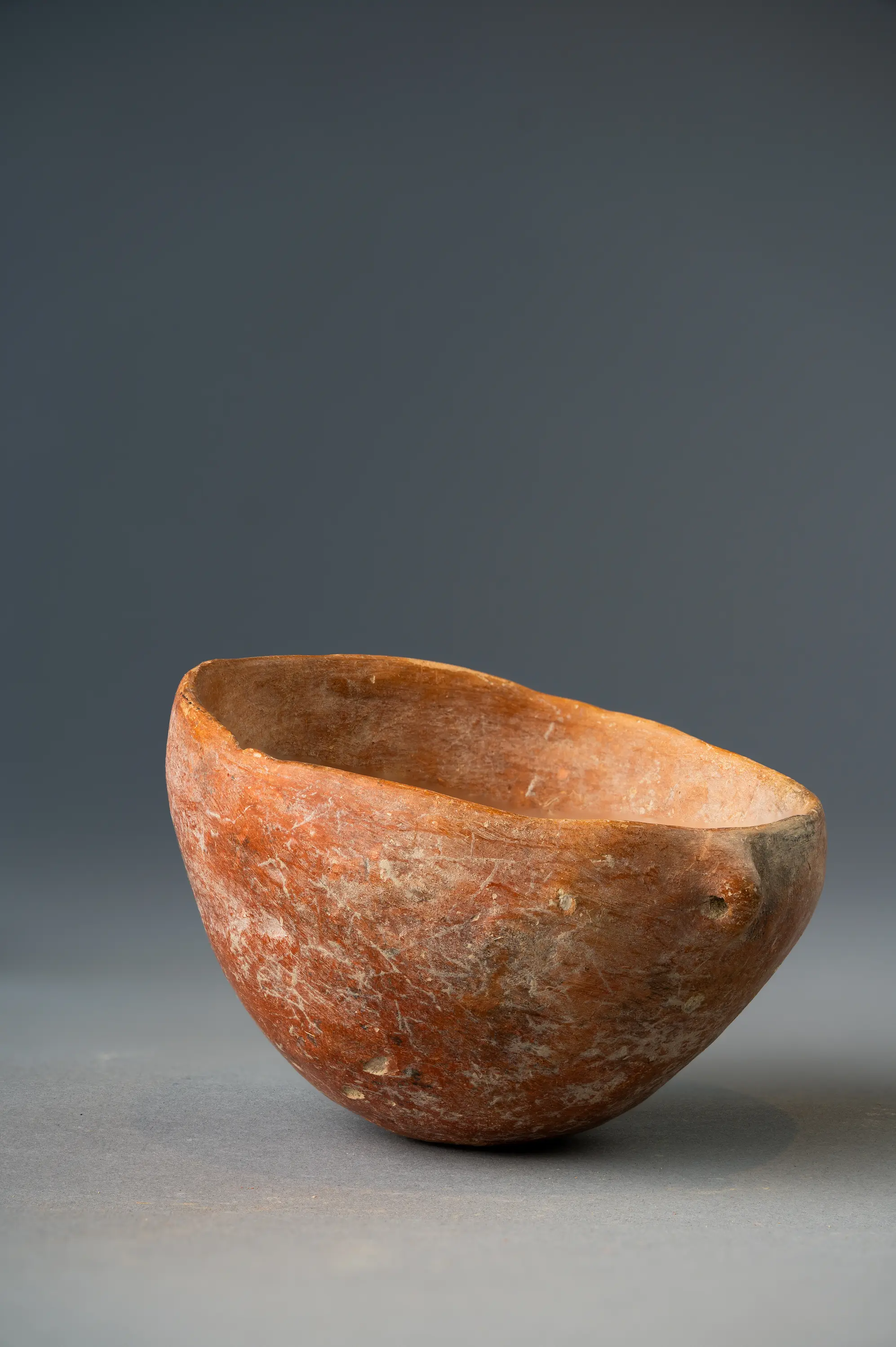
Red Polished Bowl with Pierced Knob Lug
Plain hand-made Red Polished hemispherical bowl with an uneven, slightly incurving rim and a single horizontally pierced knob lug, Early to Middle Cypriot.
Date
2200 - 1900 BC
Accession No.
BWL-BA-004
Collection
Alexis Drakopoulos
Provenance
- 1960s–2025, The Goodman Collection (acquired 1965–1969)
- 2025–present, Alexis Drakopoulos, London
Early Cypriot II–Middle Cypriot I, c. 2200–1900 BCE · Red Polished ware · Hand-made
A plain hemispherical bowl on a rounded base. The rim is thin and slightly incurving, and visibly uneven: it rises and dips round the circuit, and one side sits lower than the other, the marks of a bowl built by hand without a wheel. A small knob lug projects just below the rim and is pierced horizontally. The red slip covers inside and outside. The exterior shows a network of fine scratches, whitish calcareous flecks from burial and a few small pits on the lower body. A grey fire-cloud darkens the wall around the lug. The interior is smoother and more evenly red.
Commentary
This is the plain knob-lug bowl, Stewart's Class XIII F2 [1], the most ordinary vessel of the Red Polished repertoire. In the north-coast tombs Kehrberg tabulated it occurs in every one, and in quantity: he recorded 43 in a single Vounous tomb and 59 in one tomb at Lapithos-Palealona [2]. Close parallels include British Museum 1888,0927.9 from Nicosia-Ayia Paraskevi, a mottled Red Polished bowl with a slightly incurving rim and one pierced lug [3], and Ashmolean AN1896-1908.C.8, a red polished hemispherical bowl from the same cemetery dated Early Cypriot III–Middle Cypriot II [4].
A plain bowl of this type cannot be dated closely on its own. The form runs from Early Cypriot II into Middle Cypriot I [5], so c. 2200–1900 BCE is the safest range, and it may be somewhat wider. The find-place is unrecorded.
The rim tells how the bowl was made. The potter built the wall by hand, thinned it towards the lip and burnished the slip with a smooth tool, leaving the rim uneven where a wheel would have trued it. The lug was pressed on and pierced before firing. A cord through the hole could have hung the bowl on a wall or tied down a cover, although this use is inferred from the form alone. The fire-cloud beside the lug comes from uneven heat in an open firing.
Morris cautions that calling such bowls "cups" assumes a drinking use for which there is no hard evidence, and that they may also have held small offerings of food [6]. Most complete examples come from tombs, but bowls of this shape were also everyday tableware in Early and Middle Cypriot villages.
References
- 1.Stewart, J.R. (1962) The Early Cypriote Bronze Age. In The Swedish Cyprus Expedition IV.1A. Lund: Swedish Cyprus Expedition, Index of Types, pp. 303–348 (Class XIII F).
- 2.Kehrberg, I. (1982) Early and Middle Cypriote Chronology Again. Levant 14, pp. 59–72.
- 3.British Museum, London, 1888,0927.9. Red Polished (mottled) bowl with pierced lug, Nicosia-Ayia Paraskevi. Collection record.
- 4.Ashmolean Museum, Oxford, AN1896-1908.C.8. Red Polished hemispherical bowl, Nicosia-Ayia Paraskevi. Collection record.
- 5.Åström, P. (1966) Excavations at Kalopsidha and Ayios Iakovos in Cyprus. SIMA 2. Lund, pp. 158–169.
- 6.Morris, D. (1985) The Art of Ancient Cyprus. Oxford: Phaidon, p. 69, pls. 115–116.
More from the Catalogue
Browse related objects
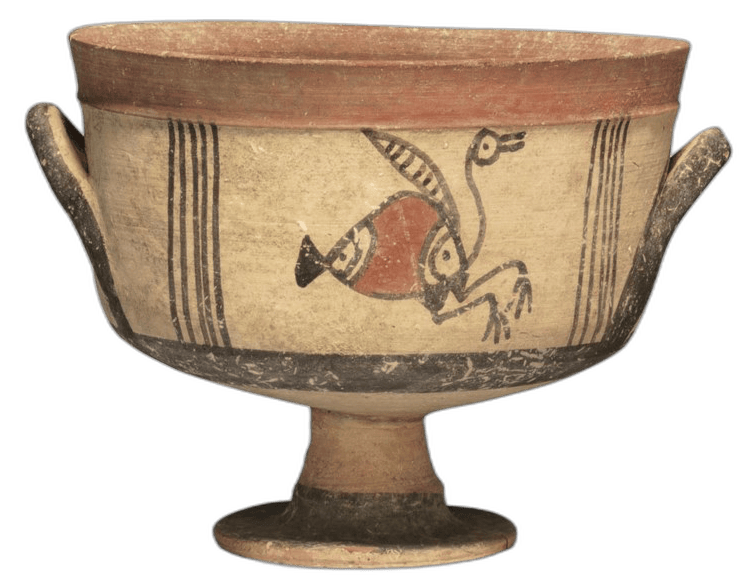
Bichrome Kylix with Bird Free Field Art
Geometric III
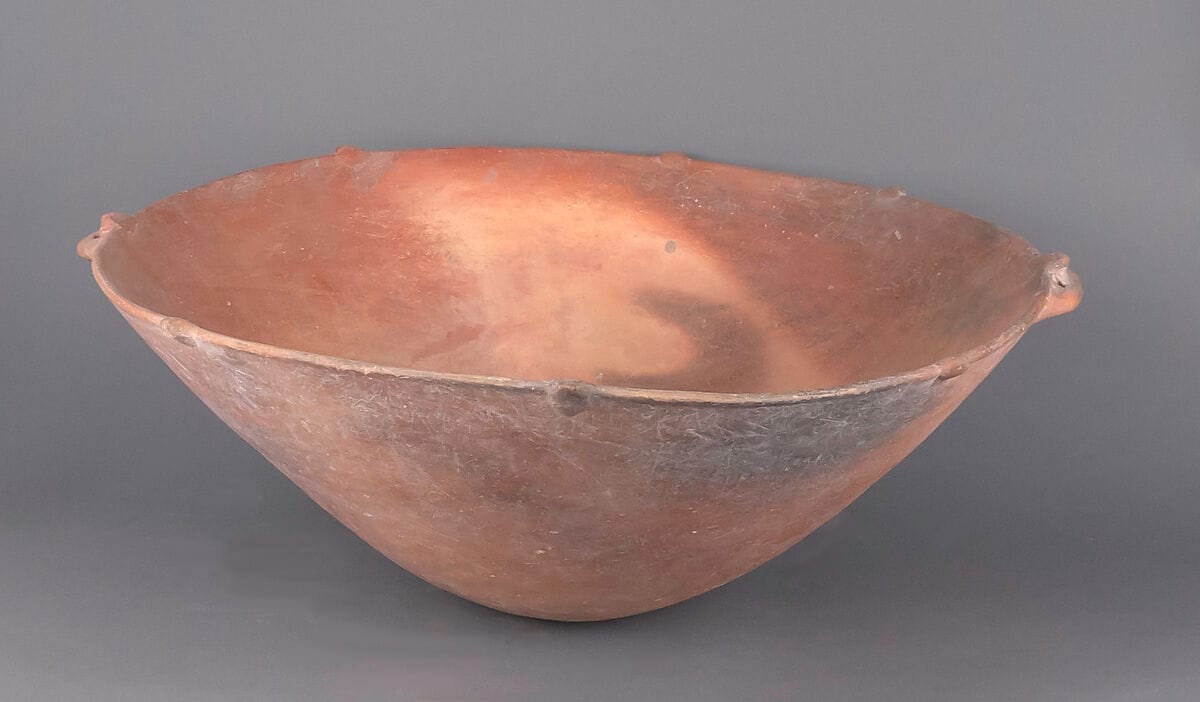
Milk bowl
Bronze Age
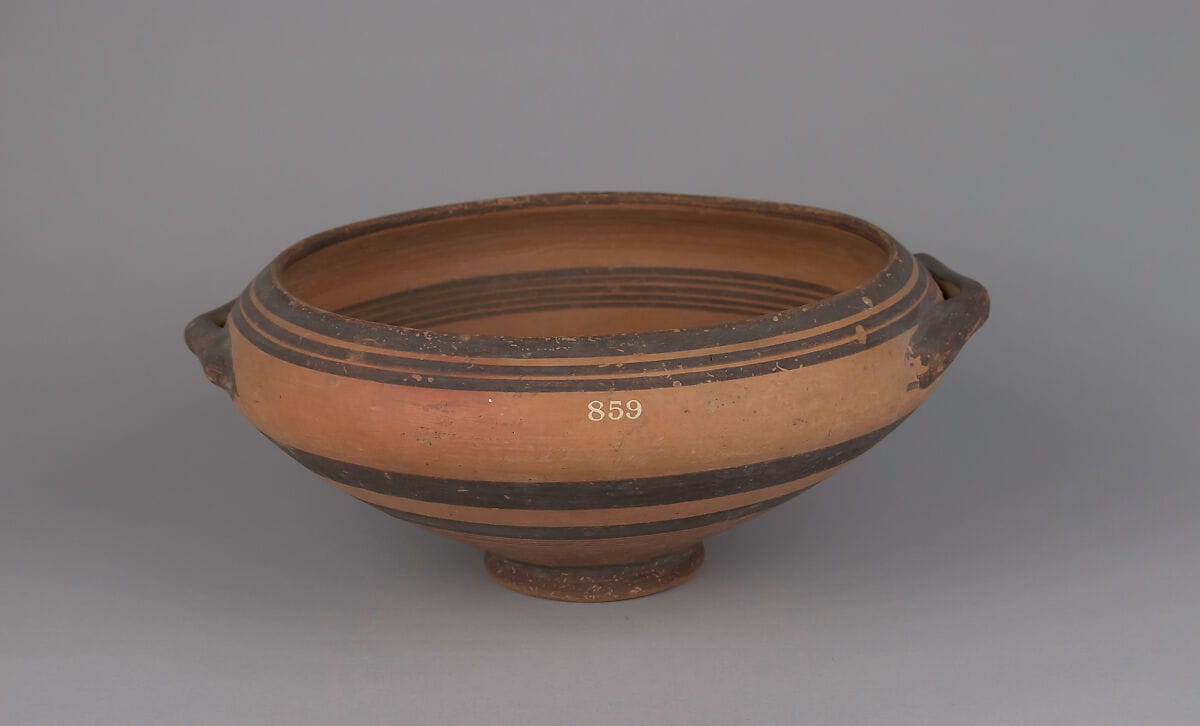
Bowl
Geometric III
Krater
Archaic I
Handle of a bowl
Bronze Age
Bowl
Geometric I
Bowl
Bronze Age
Terracotta bowl
Chalcolithic
Silver bowl
Archaic I
Alabaster bowl
Classical
Bronze phiale (libation bowl)
Archaic II
Bowl fragment, inscribed
Archaic II
Bowl
Bronze Age
Bowl
Archaic I
Bowl
Late Bronze Age II
Bowl
Geometric III
Terracotta footed bowl
Archaic I
Marble bowl fragment with Phoenician inscription
Classical