
Unnumbered pageScan 162 of 164
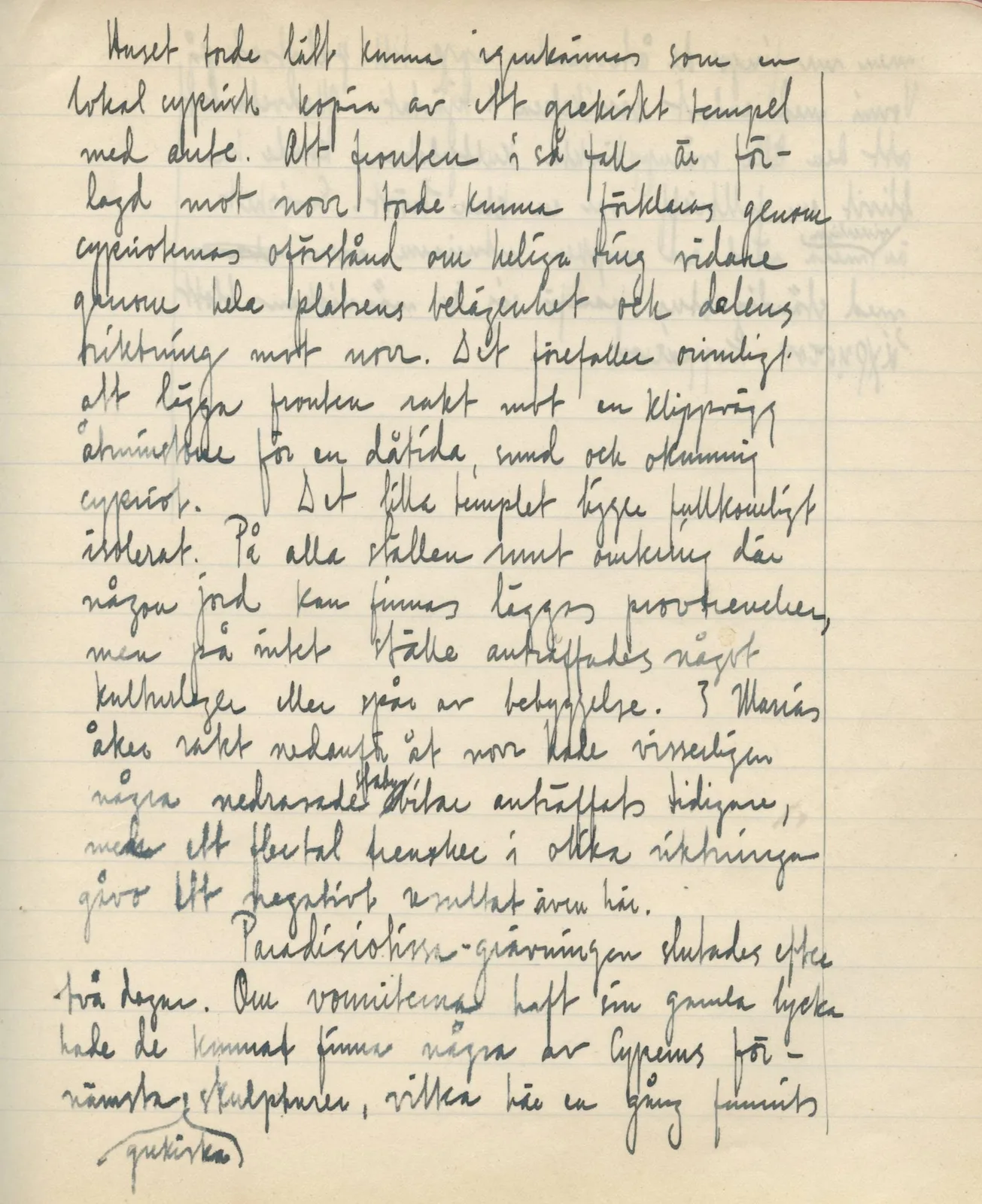
The building may readily be recognised as a local Cypriot copy of a Greek temple with antae. That the façade in that case is placed towards the north may be explained by the Cypriots' lack of understanding of sacred things, and further by the whole position of the site and the valley's direction towards the north. It seems unreasonable to place the façade straight against a rock-face, at least for a people of that time, sound and unlearned Cypriots. The little temple lies quite isolated. At all places round about where some earth may be found trial trenches are laid, but at no place was anything of a cultural layer or traces of settlement found. In Maria's field directly below to the north some fallen statue pieces had admittedly been found earlier, but several trenches in various directions gave a negative result here too. The Paradisiotissa excavation was ended after two days. If the Vounites had had their old luck they could have found some of Cyprus's foremost Greek sculptures, which once stood here.
65 figures hard to readstruck struck outadded written in above” jug ditto, and what it repeatsword reading not certain