
Unnumbered pageScan 124 of 147
Continued from p. 141
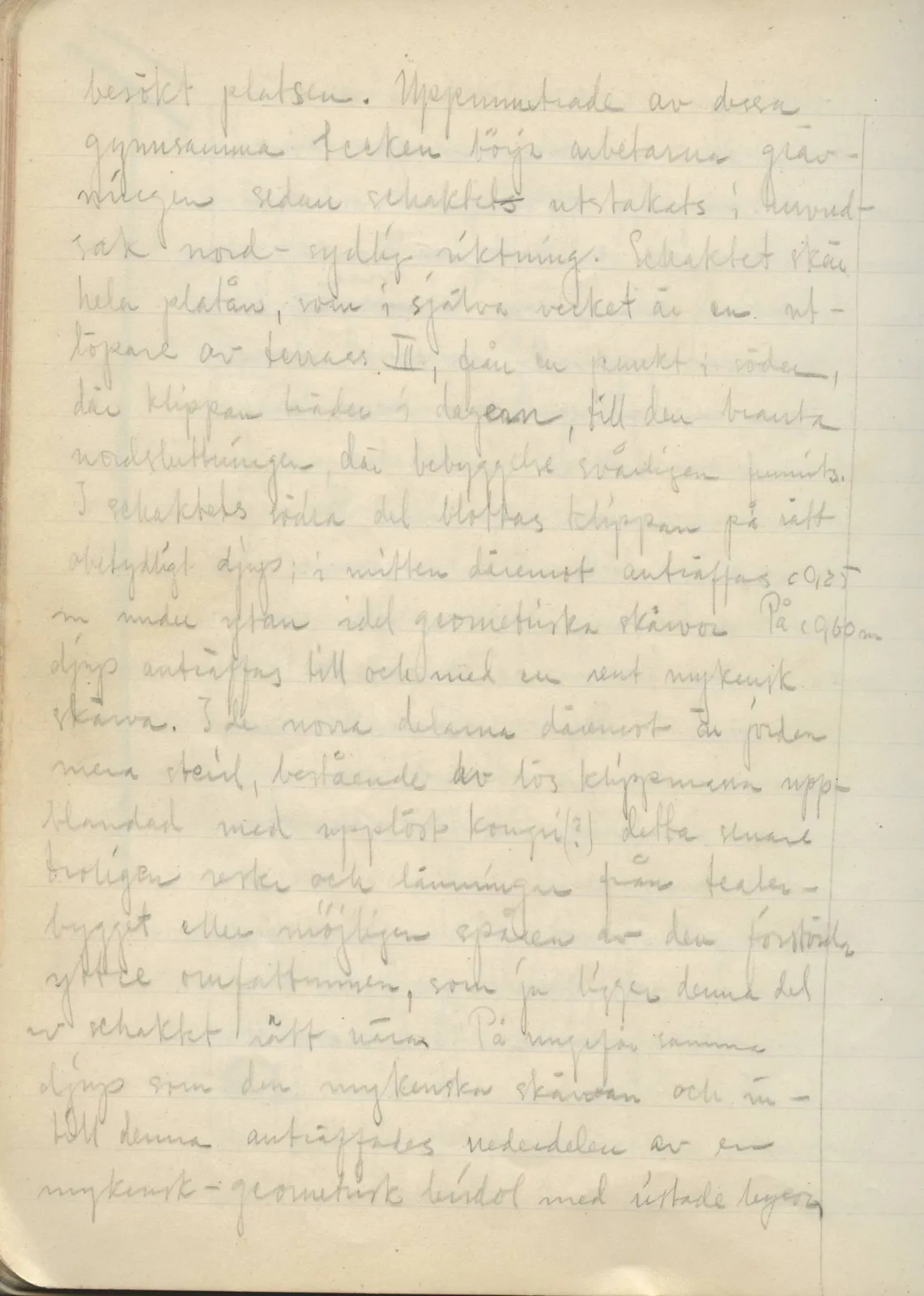
… visited the site. Encouraged by these favourable signs the workmen began the excavation once the trench had been staked out, mainly in a north-south direction. The trench cuts across the whole plateau, which is in fact an extension of terrace III, from a point in the south, where the rock comes to the surface, to the steep north slope, where settlement can hardly have existed. In the southern part of the trench the rock is exposed at quite slight depth; in the middle, however, c 0,25 m below the surface, there are found only geometric sherds. At c 0,60 m depth there is even found a purely Mycenaean sherd. In the northern parts, on the other hand, the earth is more sterile, consisting of loose rock debris mixed with dissolved kongri (?) the latter probably remains and debris from the theatre construction, or possibly traces of the destroyed outer retaining wall, which lies this part of the trench quite close. At roughly the same depth as the Mycenaean sherd and in line with it, the lower part of a Mycenaean-geometric clay idol with incised line-ornament was found.
65 figures hard to readstruck struck outadded written in above” jug ditto, and what it repeatsword reading not certain