
Page 17Scan 19 of 135
Continued from scan 18
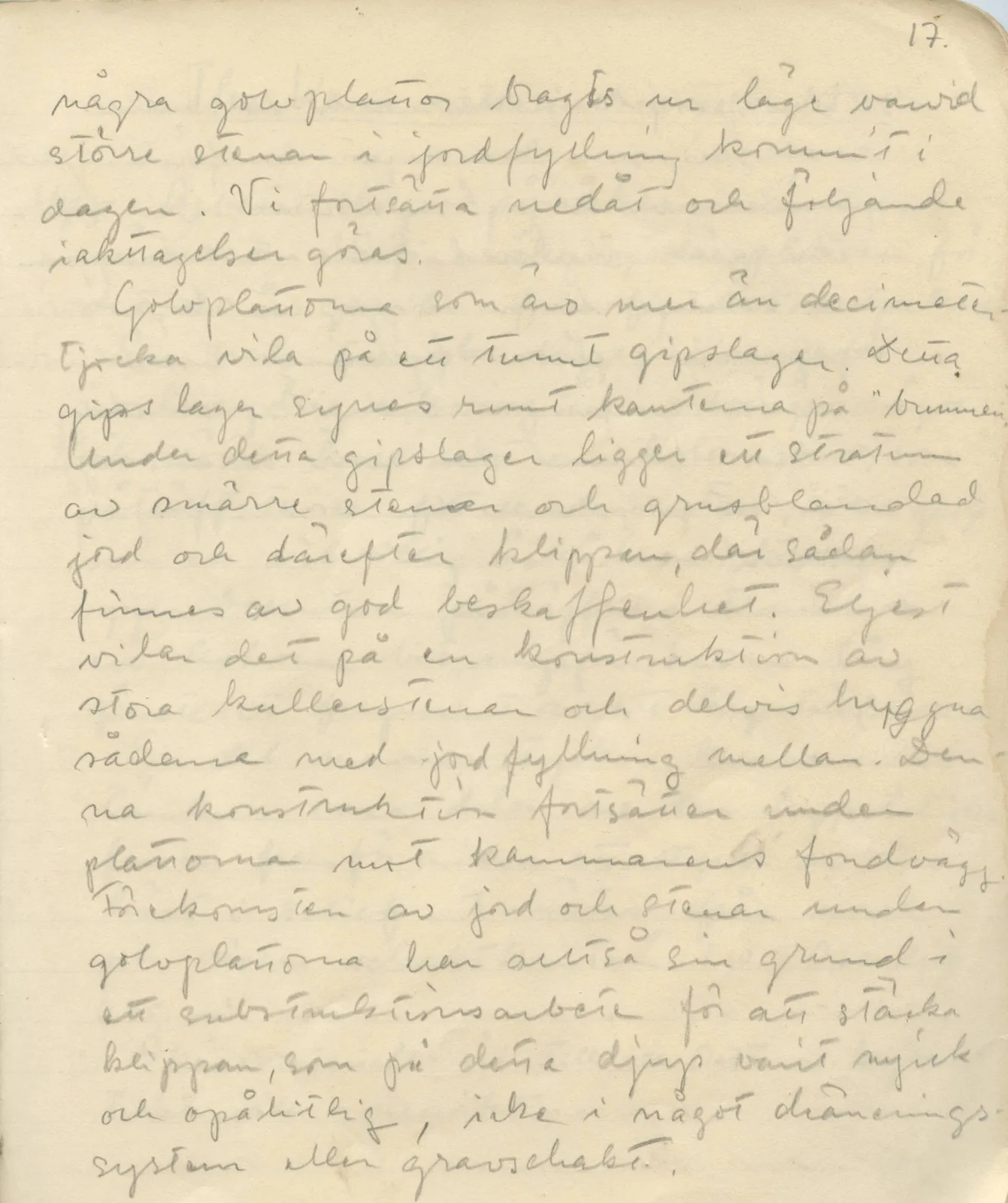
… some floor slabs have been displaced, whereby larger stones in earth fill have come into daylight. We continue downward and the following observations are made. The floor slabs, which are more than a decimetrethick, rest on a thin gypsum layer. This gypsum layer is seen running round the edges of the "well" Below this gypsum layer lies a stratum of smaller stones and gravelly earth, and then the rock, where such is found in good condition. Otherwise it rests on a construction of large cobblestones and partly hewn such, with earth fill between. These construction continues under the slabs towards the back wall of the chamber. The occurrence of earth and stones under the floor slabs thus has its basis in a substructure work to strengthen the rock, which at this depth was soft and unreliable, not in any drainage system or grave trench.
65 figures hard to readstruck struck outadded written in above” jug ditto, and what it repeatsword reading not certain