
Unnumbered pageScan 220 of 438
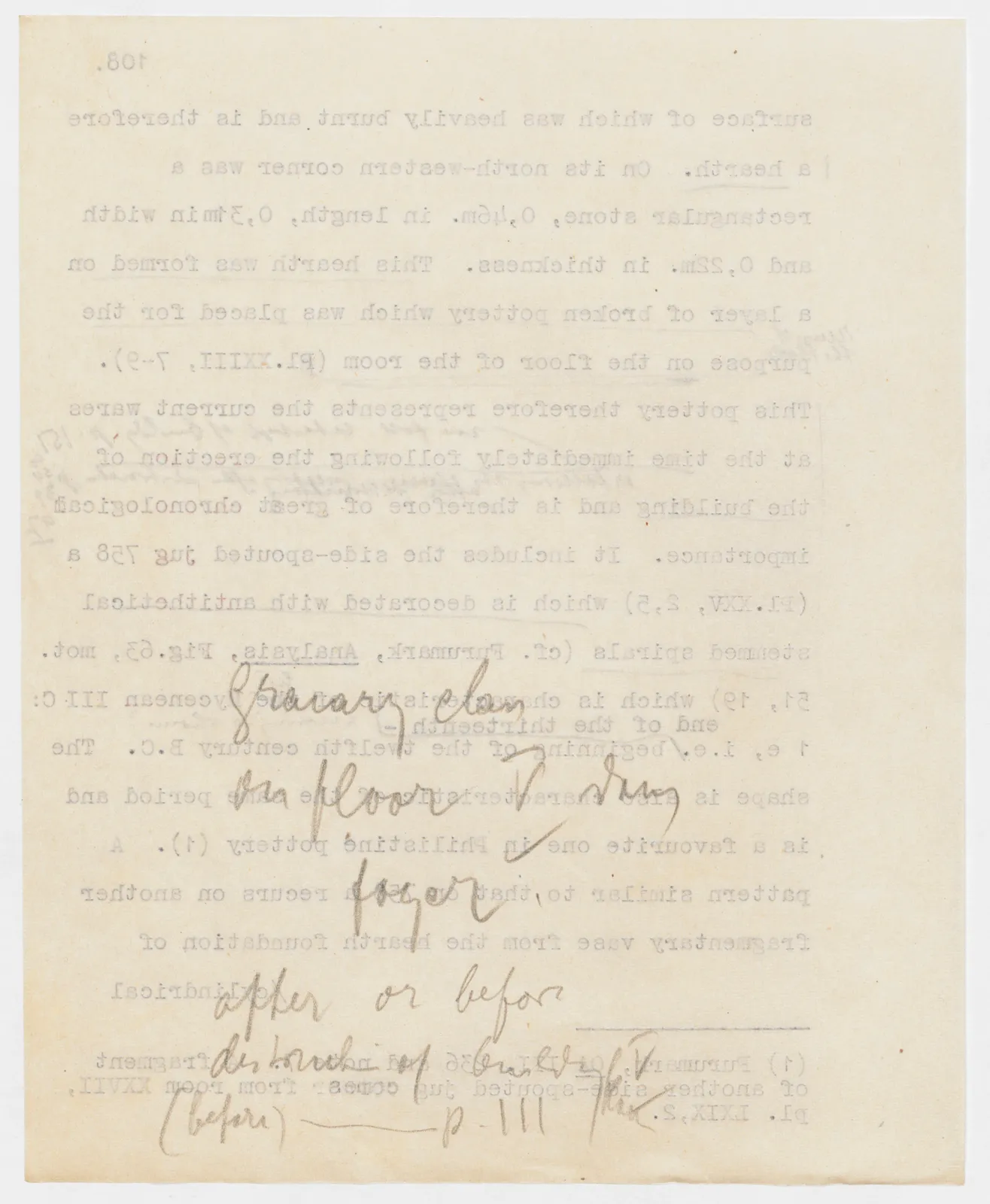
surface of which was heavily burnt and is therefore a hearth. On its north-western corner was a rectangular stone, 0,46m. in length, 0,34m in width and 0,22m. in thickness. This hearth was formed on a layer of broken pottery which was placed for the purpose on the floor of the room (pl.XXIII, 7-9). This pottery therefore represents the current wares at the time immediately following the erection of the building and is therefore of great chronological importance. It includes the side-spouted jug T58 a (pl.XXV, 2,5) which is decorated with antithetical stemmed spirals (cf. Furumark, Analysis, Fig.63, mot. 51, 19) which is characteristic of the late Mycenean III C: and of the thirteenth -
Handwritten: Stratigraphy clear
1 e., i.e. beginning of the twelfth century B.C. The shape is also characteristic of the same period and
Handwritten: and floor
is a favourite one in Philistine pottery (1). A
Handwritten: pottery
pattern similar to that which recurs on another fragmentary vase from the hearth foundation of
Handwritten: stratigraphical
Handwritten: after or before
Handwritten: destruction
(1) Furumark, op. cit. p. 336 and in another fragment of another side-spouted jug comes from room XXVII, pl. IXIX,2.
Handwritten: (before) ——— p. 111 fig
65 figures hard to readstruck struck outadded written in above” jug ditto, and what it repeatsword reading not certain