
Unnumbered pageScan 80 of 164
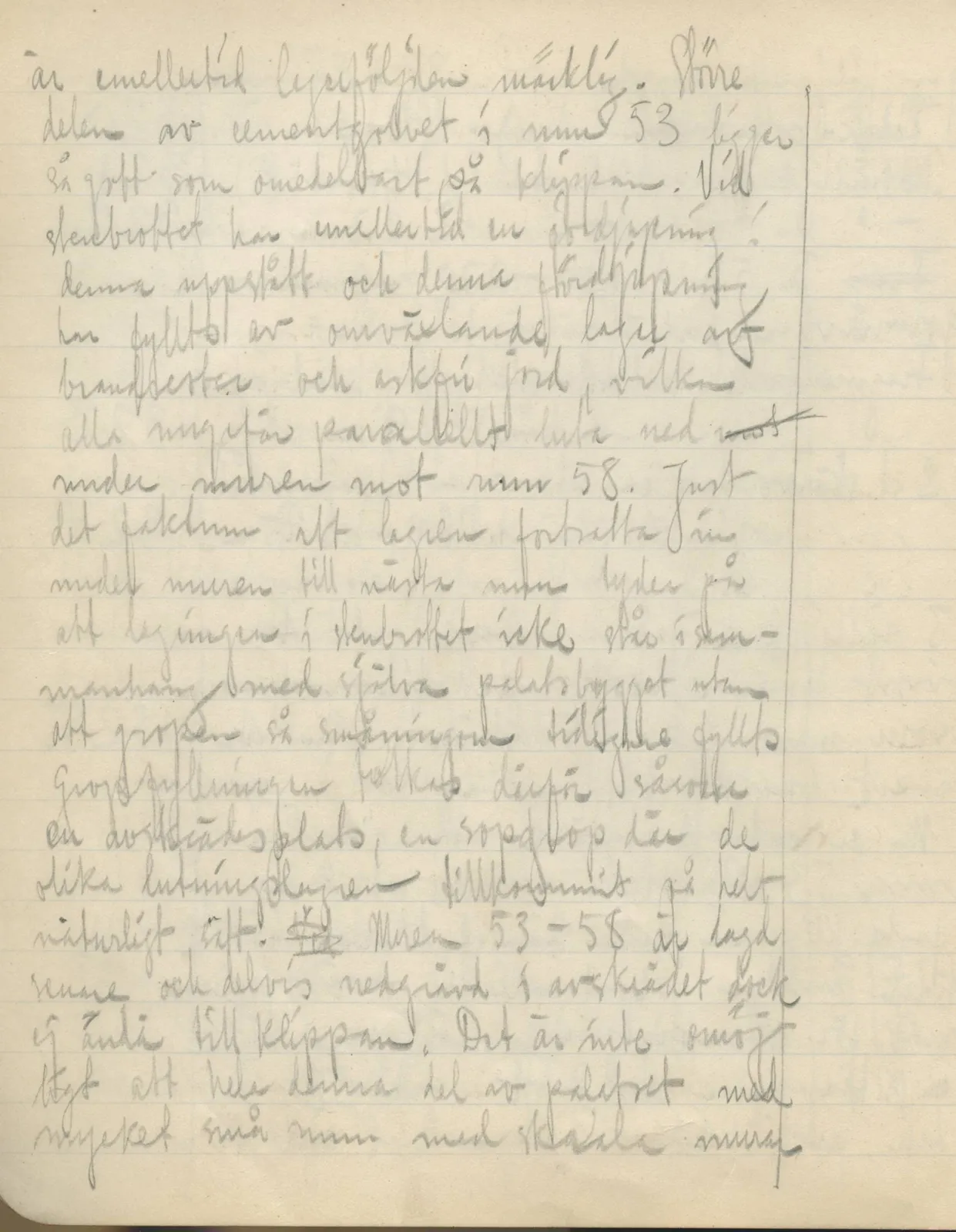
is however the stratigraphy remarkable. The greater part of the cement floor in room 53 lies practically immediately on the rock. At the quarry, however, a hollow has formed in this, and this hollow has been filled with alternating layers of burnt remains and ash-free earth, which all slope down roughly parallel towards under the wall towards room 58. Just the fact that the layers continue in under the wall to the next room indicates that the deposit in the quarry is not connected with the palace construction itself, but that the pit was gradually filled earlier the pit fill is therefore interpreted as a rubbish place, a refuse pit where the various sloping layers accumulated in a completely natural way. M The wall 53-58 is laid later and partly dug down into the refuse, though not all the way to the rock. It is not impossible that this whole part of the palace with very small rooms with poor walls … continues
65 figures hard to readstruck struck outadded written in above” jug ditto, and what it repeatsword reading not certain