
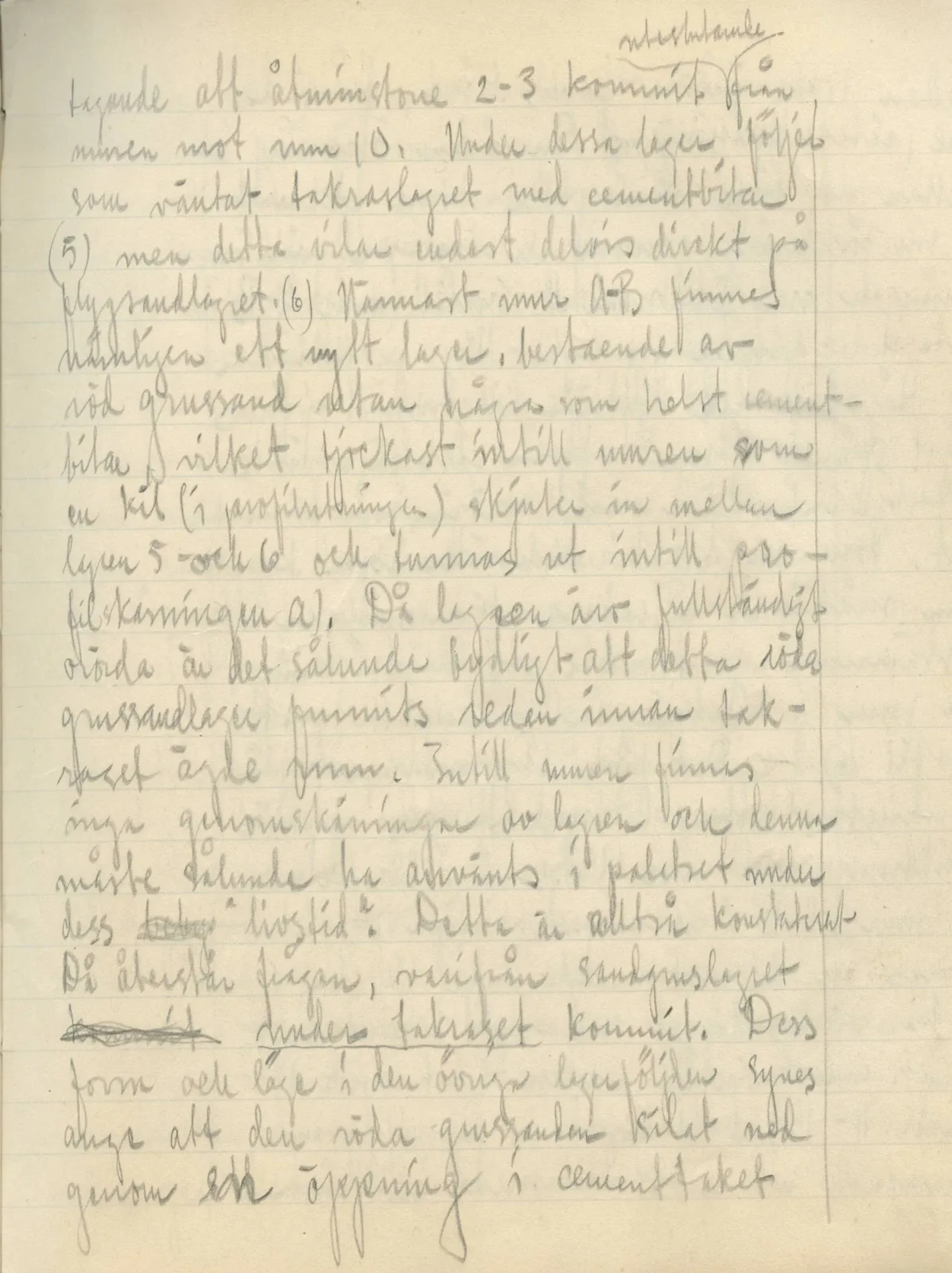
Unnumbered pageScan 153 of 165
Continued from scan 152
… taking that at least 2-3 came exclusively from the wall toward room 10. Below these layers follows as expected the roof collapse layer with cement pieces (5) but this rests only partly directly on the flying sand layer. (6) Nearest the wall A-B there is namely a new layer, consisting of red gravelly sand without any cement-pieces whatsoever, which is thickest by the wall where a wedge (in the section drawing) pushes in between the layers 5 and<s> 6 and thins out toward the profile cut a). As the layers are completely undisturbed it is thus clear that this red gravelly sand layer existed already before the roof collapse took place. Next to the wall there are no cross-sections of the layers and this must thus have been used in the palace during its beby "lifetime". This is thus established. Then remains the question of where the sand-gravel layer came from under the roof collapse came. Its form and position in the rest of the layer sequence seem to indicate that the red gravelly sand silted down through en opening in the cement roof … continues
65 figures hard to readstruck struck outadded written in above” jug ditto, and what it repeatsword reading not certain