
Unnumbered pageScan 150 of 165
Continued from scan 149
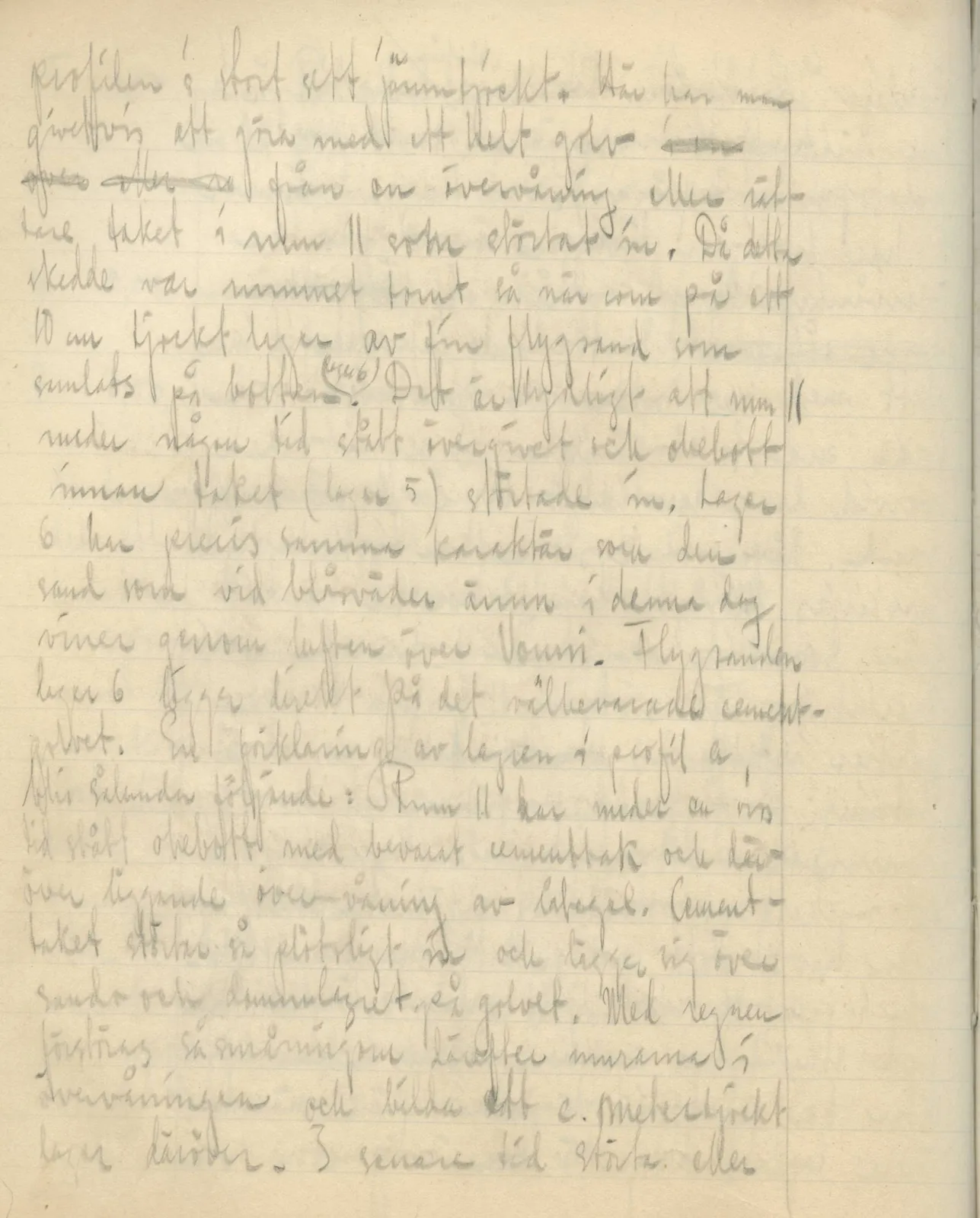
… the profile is more or less uniformly thick. Here one is certainly dealing with a whole floor in a upper or from an upper storey or rather the roof of room 11, which collapsed in. When this happened the room was empty apart from a 10 cm thick layer of fine blown sand which had collected on the bottom.(layer 6) It is clear that room 11 stood abandoned and uninhabited for some time before the roof (layer 5) collapsed. Layer 6 has exactly the same character as the sand which, in windy weather, still to this day blows through the air over Vouni. The blown sand of layer 6 lies directly on the well-preserved cement floor. An explanation of the layers in section a will thus be as follows: Room 11 stood for a certain time uninhabited with its cement roof preserved, and above it the upper storey of clay tile. The cement roof then suddenly collapsed and lay down over the sand and dust layer on the floor. With the rains the walls of the upper storey were then gradually destroyed and formed a c. metre thick layer above. At a later time they collapsed or … continues
65 figures hard to readstruck struck outadded written in above” jug ditto, and what it repeatsword reading not certain