
Unnumbered pageScan 149 of 165
Continued from scan 148
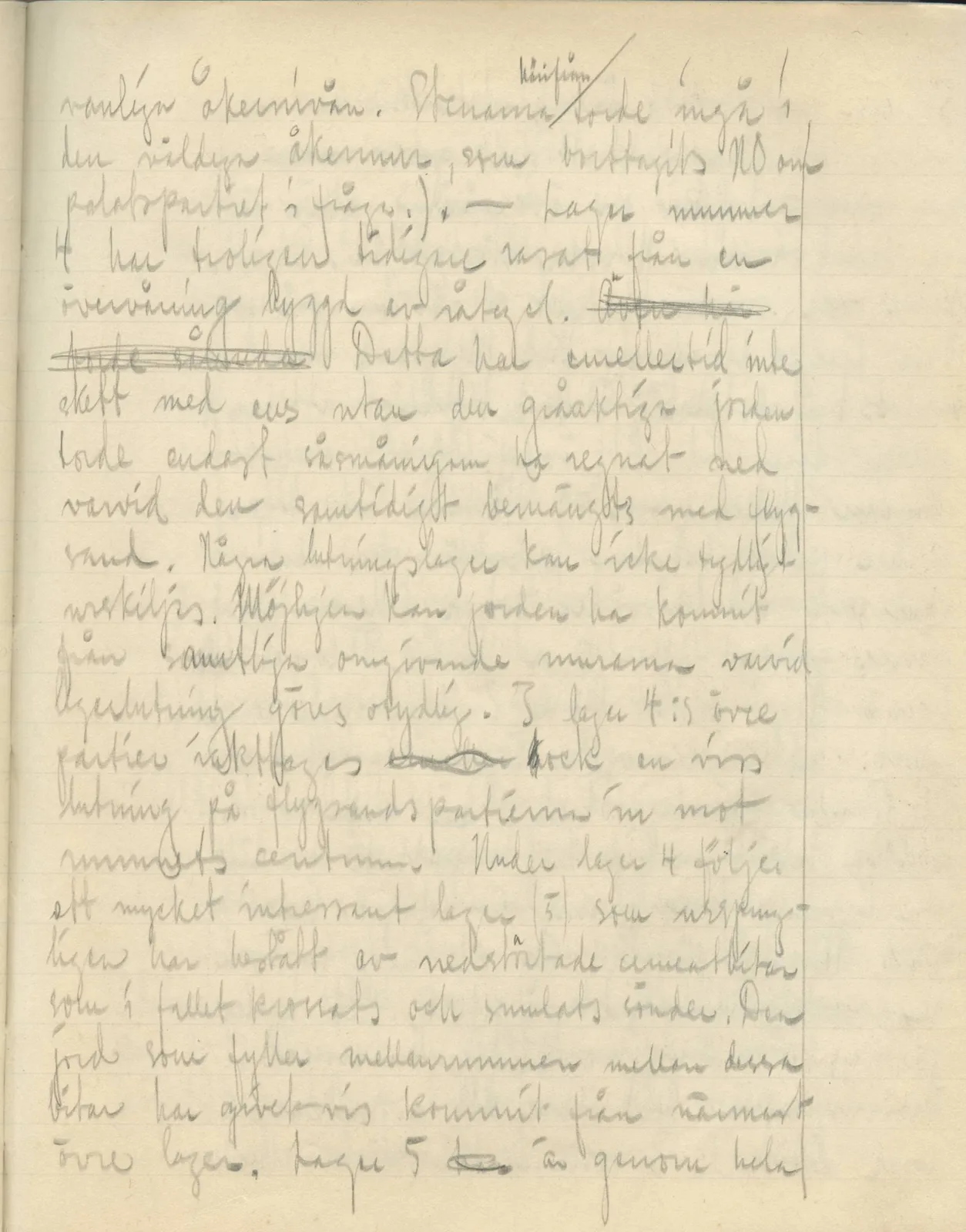
… ordinary field level. The stones from here probably belong to the huge field wall, which was removed NE of the palace area in question.). — Layer no. 4 has probably earlier collapsed from a upper storey built of mud brick. Even here probably thus This has however not happened all at once but the greyish earth probably only gradually rained down whereby it was at the same time mixed with wind-blown sand. Some sloping layers cannot clearly be distinguished. Possibly the earth may have come from all the surrounding walls, whereby the layer slope is made unclear. In the upper parts of layer 4 nevertheless however a certain slope is observed in the wind-blown sand parts towards the centre of the room. Below layer 4 follows a very interesting layer (5) which originally consisted of fallen cement pieces which in the fall were crushed and broken up. The earth which fills the spaces between these pieces has of course come from the nearest upper layer. Layer 5 has is throughout … continues
65 figures hard to readstruck struck outadded written in above” jug ditto, and what it repeatsword reading not certain